2027 Paralegal Certificate Course Sequencing: How Prerequisites Can Delay Graduation

Co-Founder and Chief Data Scientist
A paralegal certificate may fit your budget and still take longer than expected if a required course is offered only occasionally or must be completed before the next one. This guide is for prospective students comparing programs and current students planning their remaining terms.
It explains which admissions and course prerequisites can create delays, how to test a school's advertised timeline, and what to confirm about online classes, internships, costs, and credentials before committing.
Key Things You Should Know
- A prerequisite delays graduation when it blocks a later course and the next available section does not fit your schedule; a course offered once a year can create a much longer delay than one offered every term.
- An advertised completion time is reliable only if you meet entry requirements, can enroll in each course when offered, and can complete any required practicum on schedule.
- Before paying a deposit, request a term-by-term plan showing course dependencies, offering frequency, transfer decisions, and the earliest realistic completion date for your starting term.
What Is Paralegal Certificate Course Sequencing?
Course sequencing is the order in which a program requires or expects students to complete classes. A prerequisite must be completed before another course; a corequisite is taken at the same time. A recommended course order is guidance, not necessarily a registration rule. Ask the school which relationships are enforced in its registration system.
For example, a program might require introductory legal research before advanced research and legal writing, then require writing before a final project or practicum. Even a short certificate can span extra terms if those courses are not available in the order you need. The most useful planning document is not a list of required courses alone: it is a term-by-term map for your entry date and enrollment pace.
Which Prerequisites Can Delay a Paralegal Certificate?
The consequential requirements are those that control entry to another required course. Programs differ, so treat the examples below as possible bottlenecks, not universal rules.
| Requirement type | How a delay can arise | What varies by program |
| General education or prior college coursework | An applicant must complete missing coursework before entering the certificate or certain classes. | Whether it is an admission condition, a graduation condition, or not required. |
| Introductory legal research or writing | A later course remains closed until the introductory course is completed. | Course order and how often each section runs. |
| Minimum grade in a prerequisite | A passing grade may not satisfy the program's stated progression rule. | The grade threshold and repeat policy. |
| Practicum or capstone eligibility | Students may need specified coursework completed before enrolling. | Placement rules, enrollment windows, and permitted alternatives. |
Check the academic catalog against the actual course schedule. A prerequisite offered every term is a different risk from one offered only in fall, especially if a required follow-on course runs only in spring. For a practicum, confirm who arranges the placement, whether your current job can qualify, and whether remote placements are permitted. Do not assume an exception is available unless the program approves it.
How Long Does a Paralegal Certificate Program Take?
There is no single completion time. Credit requirements, course availability, admission conditions, work schedules, and practicum rules all matter. An advertised timeline often assumes that a student starts in a particular term, enters with all prerequisites satisfied, and takes the intended course load.
Consider a program that offers introductory research in fall and permits legal writing only after research. Missing that fall research section could mean waiting until the next fall, even if you have time for other classes. That is a scheduling example, not a prediction for every program. Ask for both the fastest published pathway and a plan based on the courses available when you will actually start.
If you already hold a bachelor's degree and are comparing different legal-education goals, remember that online master's in business law program lengths describe a different credential and should not be used to estimate a paralegal certificate timeline.
What Courses Are Required in a Paralegal Certificate Program?
Requirements vary, but certificates commonly address legal research and writing, civil litigation, legal ethics, and practice-area subjects. Some add interviewing, document preparation, legal technology, an internship, or a capstone. The course titles matter less for scheduling than their catalog descriptions, prerequisites, and availability.
Compare the required-course list with a proposed sequence. Identify which classes are optional electives, which must be completed in residence, and whether a practice-area elective can substitute if your first choice is not offered. An elective in employment law may be useful for someone interested in workplace matters, but it does not by itself establish a specialty or replace a required research course.
Do Online Paralegal Programs Have Different Prerequisites?
Online delivery does not, by itself, remove admissions or course prerequisites. An online program may use the same progression rules as its campus version, or it may have its own cohort sequence. "Online" also does not necessarily mean asynchronous or self-paced: scheduled class meetings, exams, campus activities, and internships can still constrain completion.
Before choosing an online program for flexibility, confirm whether required courses run each term, whether live attendance is mandatory, and whether you may enroll part time without breaking a cohort sequence. For any practicum, get the school's written rules on placement location, supervision, and remote work. Flexibility in where you study is useful only if the course calendar also works for you.
What Are the Admission Requirements for Paralegal Certificates?
A certificate may accept applicants with a high school diploma or equivalent, while another may require prior college coursework, an associate degree, or a bachelor's degree. Some schools offer different certificate tracks for different educational backgrounds. Distinguish a condition for admission from coursework you can complete after admission and a recommendation that is not mandatory.
Request a written review of your transcripts before relying on prior credits. The receiving institution decides whether and how earlier coursework applies, even when both schools are accredited. Confirm any minimum grades, course-age rules, and deadlines for submitting official records; a late evaluation can block first-term registration.
If an application essay is your main concern, no-essay application options for online legal studies may offer a separate route to investigate. A simpler application does not establish that a program is a paralegal certificate or waive its academic prerequisites.
How Much Does a Paralegal Certificate Cost?
Published tuition is only part of the decision. Obtain an itemized estimate that includes mandatory fees, books, technology and legal-research access, any prerequisite classes, and travel or placement expenses. Ask whether an extra term creates additional charges. A lower-priced program may cost more overall if missing prerequisites or limited course availability extend enrollment.
Check whether the certificate is credit-bearing or noncredit and ask the financial aid office whether that specific program qualifies for federal aid. Institutional accreditation alone does not establish a certificate's aid eligibility. If you might later pursue a degree, compare the certificate's credit value and the receiving school's transfer policy with a guide to low-cost accredited paralegal degrees. Do not assume certificate credits will transfer.
Is ABA Approval Required for Paralegal Certificate Programs?
No. American Bar Association (ABA) approval is a status available to qualifying paralegal education programs, not a universal requirement for offering a certificate or working as a paralegal. Some employers may prefer graduates of ABA-approved programs; their hiring preferences are not the same as a nationwide legal requirement.
If approval matters to you, check the ABA's current paralegal program directory for the specific program, rather than assuming every credential at a listed school is approved. Separately verify the institution's accreditation. ABA program approval and institutional accreditation answer different questions, and neither resolves whether the course schedule fits your graduation target.
Does a Paralegal Certificate Lead to Certification or Licensing?
Completing a certificate is an educational achievement; it does not automatically make someone a professionally certified paralegal. Professional certification is granted through a credentialing organization under its own eligibility and assessment rules. State-specific requirements and employer preferences can also differ. The ABA does not certify individual paralegals.
A paralegal certificate does not qualify its holder to practice law as an attorney. Neither does a non-JD legal studies degree. If your goal is broader legal knowledge rather than paralegal work, compare the purpose and opportunity cost of a master's or graduate certificate in legal studies before enrolling in a paralegal sequence.
What Jobs, Salaries, and Outlook Can Paralegal Graduates Expect?
Paralegals and legal assistants support lawyers with tasks such as research, document organization, and case preparation under appropriate supervision; they do not independently practice law. Entry-level hiring standards vary, and a certificate alone does not guarantee a job.
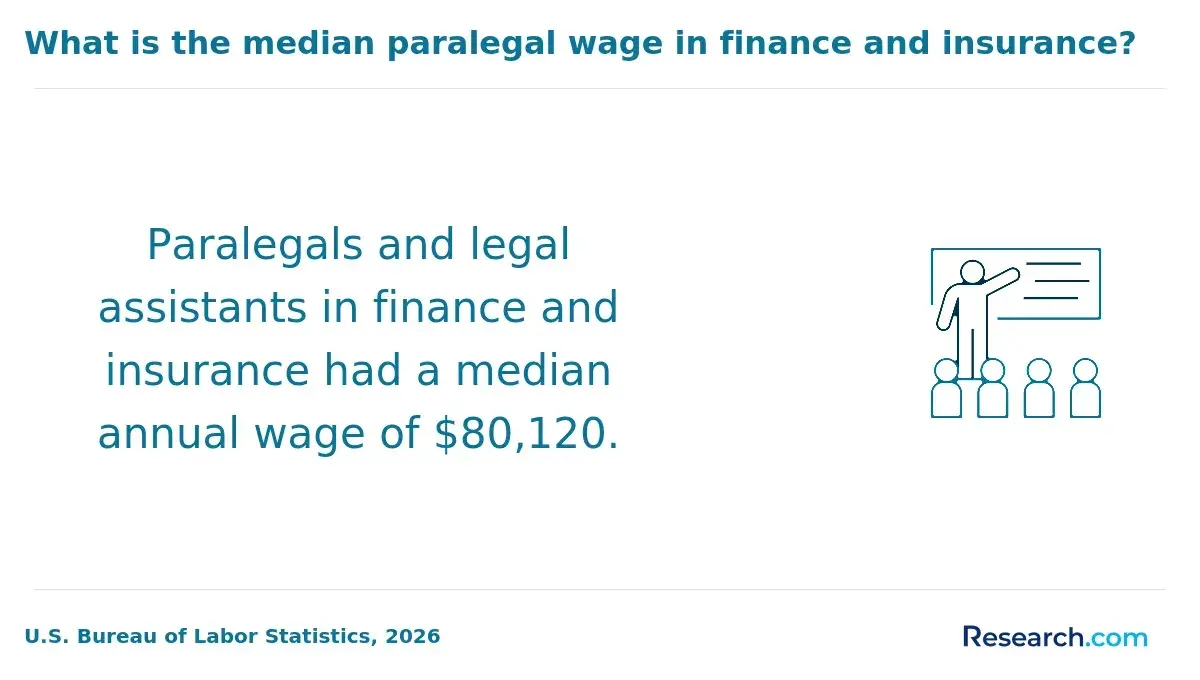
The U.S. Bureau of Labor Statistics reports median annual pay of $62,890 in May 2025 for paralegals and legal assistants, with 0% projected growth, 2025-2035, and about 40,800 openings per year. Those are occupation-wide figures, not starting salaries or outcomes for certificate graduates. They make it especially important to weigh an added term of tuition and delayed job searching against the skills and experience a program offers.
For readers whose goal is workplace policy or HR-related legal knowledge rather than paralegal casework, legal studies programs combining legal knowledge and HR law are an alternative to compare - not a substitute for paralegal training when a job calls for those skills.
Other Things You Should Know About Law & Paralegal
Only if the program explicitly permits concurrent enrollment or grants an exception. Check the catalog rule and obtain approval before planning both courses for the same term.
You may need to repeat it before progressing. Ask how repeats affect course availability, financial aid eligibility, and your expected completion term.
Possibly, but get written confirmation from your certificate program before enrolling. It decides whether the outside course meets its requirement and when it must receive the transcript.
It depends on the school's catalog-year and continuing-student policies. Ask which requirements apply to you and request an updated graduation plan if courses or prerequisites change.
References
- Academic Years, Academic Calendars, Payment Periods, and Disbursements | 2025-2026 Federal Student Aid Handbook https://fsapartners.ed.gov/knowledge-center/fsa-handbook/2025-2026/vol3/ch1-academic-years-academic-calendars-payment-periods-and-disbursements
- Recommended Course Sequence | Texas Higher Education Coordinating Board https://www.highered.texas.gov/data-submission-reporting/recommended-course-sequence/
- Paralegal Studies Certificate Program in Downtown LA | Cal State LA https://www.calstatela.edu/dtla/paralegal-studies-certificate-program-downtown-la
- Academic Credit and Placement | 2026-2027 University Bulletin https://bulletin.loyno.edu/regulations/academic-credit-and-placement
- Course Prerequisites | dallascollege.edu https://catalog.dallascollege.edu/content.php
- How Long Does It Take to Become a Paralegal? | Pepperdine Caruso School of Law https://law.pepperdine.edu/blog/posts/how-long-to-become-paralegal.htm
- Paralegal Certificate Course© | CSULB - CPaCE https://www.cpace.csulb.edu/courses/paralegal-certificate-course
- Transfer Credit & Waivers | Southern Virginia University Catalog https://catalog.svu.edu/policies/transfer-credit-and-waivers
- Modes of Instruction | Lehman College https://www.lehman.edu/registrar/modes-of-instruction/
- Choosing between Online, Hybrid, Hyflex | uoregon.edu https://teaching.uoregon.edu/choosing-between-online-hybrid-hyflex