
2027 Legal Studies Master's Programs for Bank Compliance Analysts

Co-Founder and Chief Data Scientist
Bank compliance analysts must turn changing rules into workable policies, monitoring procedures, and clear advice for business teams. A master's in legal studies can strengthen that work, but it is a substantial investment - and it is not a standard hiring requirement.
This guide is for current analysts and career changers deciding whether graduate legal study is worth pursuing. It explains which programs and courses are most relevant, how to compare costs and formats, and when experience or a narrower credential may be the better next step.
Key Things You Should Know
- A Master of Legal Studies (MLS) or similar non-JD degree can deepen regulatory knowledge, but bank compliance analysts generally do not need one to enter the field.
- Prioritize coursework in banking regulation, anti-money-laundering controls, consumer financial protection, and applied risk assessment - not a concentration name alone.
- The Bureau of Labor Statistics reports $80,730 in median annual pay for the broader compliance officers occupation in May 2025, with 4% projected growth from 2025-2035; those figures are not bank-analyst-specific.
What is a master's in legal studies for bank compliance analysts?
A Master of Legal Studies (MLS), Master of Studies in Law (MSL), or Master of Jurisprudence is a graduate degree designed to help nonlawyers understand and apply legal concepts. For a bank compliance analyst, that may mean interpreting regulatory requirements, documenting controls, reviewing marketing or lending practices, investigating exceptions, and explaining findings to colleagues.
The most useful programs connect legal interpretation to operational decisions: identifying which rule applies, testing whether a bank's process meets it, and documenting a defensible response when it does not. These are non-JD degrees. They do not, by themselves, qualify graduates to practice law or provide legal advice as attorneys.
A degree is most compelling when you already handle complex regulatory work or are aiming for a broader compliance leadership role. If you primarily need training in a single rule set or a specific job function, employer training, a focused graduate certificate, or supervised experience may be a faster and less costly choice.
What degree do you need to become a bank compliance analyst?
There is no single degree required for every U.S. bank compliance analyst job. Employers commonly evaluate a combination of education, relevant banking or risk experience, regulatory knowledge, writing ability, and attention to detail. A bachelor's degree in business, finance, accounting, criminal justice, or a related field can be an entry route; an MLS is typically an optional advancement tool rather than the starting credential.
Someone moving from branch operations, lending, audit, fraud investigations, or customer complaints may already understand bank workflows. Their gap may be regulatory interpretation rather than another full degree. Someone starting without a bachelor's degree should first check the education requirements in actual job postings. Choosing an associate degree in paralegal studies may help with legal research skills, but it is not a substitute for banking experience or the degree an employer requests.
Which legal studies master's programs prepare students for banking compliance?
The strongest fit is an accredited university's non-JD legal studies program with substantial, current financial-services coursework and assignments that resemble compliance work. A program need not use "bank compliance" in its name, but a general business-law curriculum with no banking electives is a weaker match. Compare the following program structures by what students can actually take and complete.
| Program structure | Potential fit | What to confirm |
| Formal financial regulation or compliance concentration | Useful when required courses cover several banking-related risks | Whether the concentration appears on the transcript and whether all required courses are offered regularly |
| General MLS or MSL with relevant electives | Flexible for analysts whose work spans multiple regulatory areas | Whether banking, consumer finance, and financial crime courses fit within elective limits |
| MLS with an embedded compliance certificate | May provide a defined, narrower course sequence within the degree | Whether the certificate is awarded separately and adds credits or fees |
A concentration is a defined program requirement; a few relevant electives are not the same thing. Before shortlisting a school, review its current catalog and course schedule, not just promotional descriptions. A useful comparison asks whether you can graduate with work samples - such as a regulatory analysis or control-testing project - that match your intended role.
What courses do bank compliance legal studies programs cover?
Course titles differ, so judge the syllabus and assignments rather than the label. The subjects below matter because they map to common compliance questions, although no single analyst role requires every specialty.
| Subject | Application in bank compliance |
| Banking law and financial regulation | Identify applicable rules and translate them into policies and controls |
| Anti-money-laundering and sanctions compliance | Understand monitoring, escalation, recordkeeping, and financial-crime risks |
| Consumer financial protection and fair lending | Assess disclosures, servicing, complaints, or lending practices |
| Privacy, cybersecurity, and data governance | Evaluate how customer information is collected, protected, and shared |
| Administrative law, legal research, and writing | Read agency rules and guidance, then document a supported interpretation |
Practical assignments matter as much as topic coverage. Ask whether students draft policies, analyze a regulatory change, test sample controls, or write findings for a nonlegal audience. A course that only surveys statutes may build background knowledge without developing those workplace skills.
Are online master's programs in legal studies suitable for bank compliance?
Yes, an online MLS or MSL can suit a working analyst if its courses and schedule match the job. "Online" does not necessarily mean self-paced: classes may include live meetings, group projects, timed exams, or occasional campus visits. A flexible format is valuable only if required courses are available when you need them and their deadlines fit your work schedule.
Ask admissions staff for a sample course rotation and written details on live attendance, residency requirements, and any capstone or internship. If rapid completion matters, comparing fast-track legal studies graduate options can help frame the trade-off: a shorter calendar may require a heavier course load, particularly during a full-time banking job.
Online study can support applied projects using workplace problems, but do not assume your employer will permit real customer information or internal documents in coursework. Confirm the school's alternatives and your employer's confidentiality rules first.
How much do bank compliance master's programs cost and how long do they take?
There is no reliable single price or completion time for this category. Schools differ in required credits, per-credit tuition, fees, course availability, and whether a student attends part time. To compare offers fairly, request each program's current 2026-27 tuition and mandatory-fee schedule, then estimate the cost using the credits you must complete. Include books, technology, any campus travel, and the potential cost of reducing work hours.
Ask how often required banking courses run: a low per-credit price may lose its appeal if course sequencing extends enrollment. Employer tuition assistance may change the calculation, but check grade conditions, annual caps, and repayment obligations before relying on it.
Federal aid eligibility also depends on the student and the specific program; an institution's general participation in federal aid does not establish eligibility for every certificate or course of study. Start with a guide to affordable online master's in legal studies degrees, then verify each candidate's current charges directly.
What are the admission requirements for a legal studies master's program?
Applicants generally need a bachelor's degree, while policies on GPA, work experience, recommendations, essays, and test scores vary by school. An MLS is designed for nonlawyers, so a JD is not ordinarily a prerequisite. Bank experience may strengthen an application, but do not assume it is required unless the program says so.
If you have not yet completed a bachelor's degree, map that step before comparing graduate admissions. Transferring an associate degree into legal studies bachelor's study explains questions worth raising with the receiving institution; that institution decides which credits apply. Applicants who already hold a graduate certificate should likewise obtain a written decision before assuming its credits will count toward an MLS.
Does a legal studies master's qualify you for bank compliance certifications?
Not automatically. An academic degree and a professional certification are different credentials. Certification bodies set their own rules for experience, education, examinations, and continuing education, and those rules can change. Relevant options may focus on banking compliance, anti-money-laundering work, or broader compliance and ethics; choose one that matches your actual responsibilities.
Before enrolling to pursue a credential, read that certification body's current eligibility rules and ask whether graduate coursework counts toward any education requirement. Do not assume a university certificate embedded in an MLS grants an external certification or waives an exam. For someone already eligible for a role-specific certification, that route may address an immediate career goal with less time away from work than a full master's. If your actual goal is paralegal education rather than bank compliance, paralegal degree tuition plans and payment timing address a different credential and should not be treated as MLS financing options.
What jobs and salaries can graduates pursue in bank compliance?
Potential roles include bank compliance analyst, regulatory change analyst, fair lending specialist, financial-crime compliance analyst, compliance testing specialist, and, with sufficient experience, compliance manager. The degree may help an analyst move into work requiring deeper interpretation or cross-functional judgment; it does not replace the operational experience many senior roles demand.
The closest broad federal benchmark is the Bureau of Labor Statistics' compliance officers occupation: median annual pay was $80,730 in May 2025, with 4% projected growth from 2025-2035 and about 32,700 projected openings per year. That occupation includes employers outside banking and people with varied credentials. Its median is not a starting salary, a bank-only estimate, or an MLS graduate outcome.
For a realistic return-on-investment assessment, compare your current pay and advancement prospects with the requirements in the specific jobs you want. Look for evidence that those employers value graduate legal study alongside - or instead of - direct experience, certification, and bank-specific training.
How do you choose an accredited legal studies program for banking compliance?
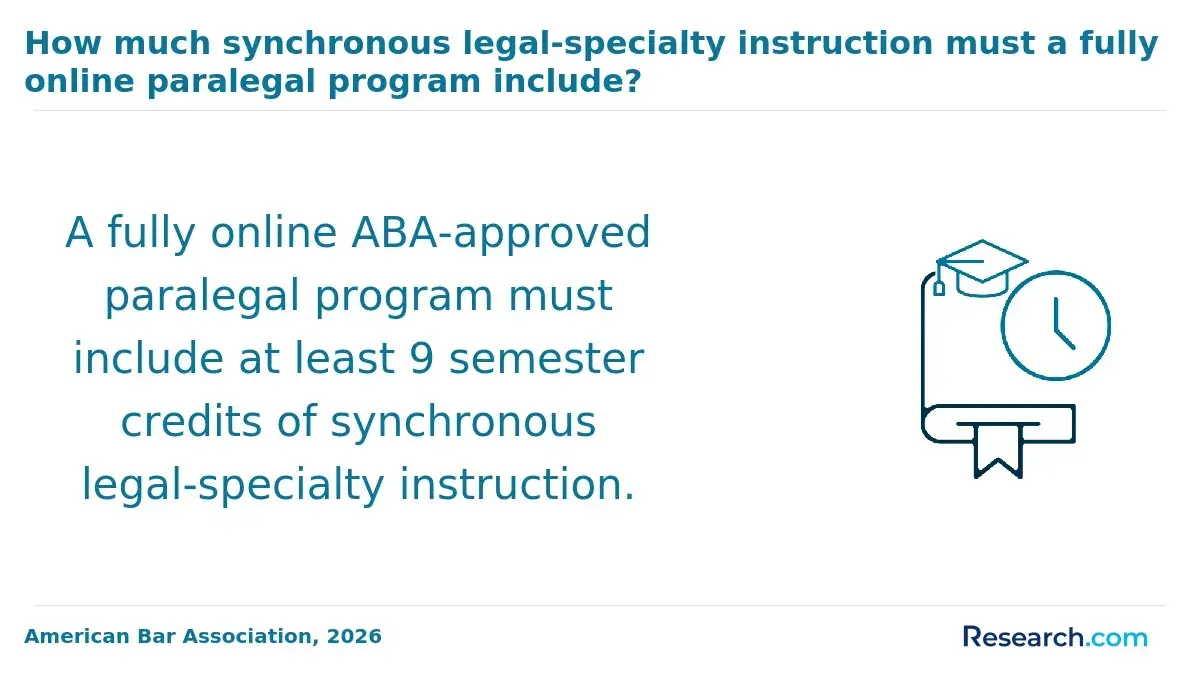
Start by checking that the university holds recognized institutional accreditation; then assess the particular degree's curriculum and delivery. Institutional accreditation does not mean every program has a separate specialty endorsement. American Bar Association approval, when relevant to certain paralegal programs, is a different concept and is not a substitute for evaluating an MLS.
Use this sequence to narrow your shortlist before committing tuition or application fees:
- Collect current job postings for your target bank compliance role and identify the regulations, tasks, and credentials they actually request.
- Match those requirements to required courses, available electives, and applied assignments in each school's current catalog.
- Confirm institutional accreditation, course rotation, online attendance rules, total expected charges, and employer-aid conditions in writing.
- Compare the degree with a focused certificate, professional certification, or internal training plan, including the time each would take away from work.
A red flag is a program marketed for financial compliance that cannot show when its relevant courses will run. Another is a claim that the degree itself assures certification, a promotion, or a particular salary. Choose the option that closes a documented skills gap at a cost and pace you can sustain.
Other Things You Should Know About Law & Paralegal
Do not count on it. A law school decides whether any prior graduate credits apply to its JD, and many MLS courses are not treated as substitutes for JD requirements. Ask the specific law school before enrolling for that purpose.
Some skills, including control testing and regulatory writing, may transfer. Credit unions operate under a distinct regulatory framework, so you would still need to learn the rules and supervisory expectations relevant to that institution.
No. Oversight depends on a bank's charter, insurance, and activities. Agencies including the Office of the Comptroller of the Currency, Federal Reserve, Federal Deposit Insurance Corporation, and Consumer Financial Protection Bureau have different responsibilities.
Only if their employer permits it and the school's rules allow it. Customer information, examination materials, and internal findings may be confidential. A fictionalized or publicly documented case is often the safer choice.
References
- Cost of Attendance (Budget) | 2025-2026 Federal Student Aid Handbook https://fsapartners.ed.gov/knowledge-center/fsa-handbook/2025-2026/vol3/ch2-cost-attendance-budget
- Bank Secrecy Act (BSA) | OCC.gov https://www.occ.gov/topics/supervision-and-examination/bsa/index-bsa.html
- Employer-offered educational assistance programs can help pay for college | Internal Revenue Service https://www.irs.gov/newsroom/employer-offered-educational-assistance-programs-can-help-pay-for-college
- The Bank Secrecy Act | FinCEN.gov https://www.fincen.gov/resources/statutes-and-regulations/bank-secrecy-act
- Types of Financial Aid: Grants, Work-Study, and Loans | studentaid.gov https://studentaid.gov/understand-aid/types
- Master of Legal Studies Jobs: Career Paths, Salaries & ROI | Wake Forest MLS https://mls.law.wfu.edu/articles/what-can-you-do-with-a-master-of-legal-studies/
- Online LLM in Financial Compliance and Risk Management | Albany Law School https://www.albanylaw.edu/graduate/online-llm-financial-compliance-and-risk-management
- Master of Legal Studies in Financial Compliance | Seattle U School of Law https://onlinelaw.seattleu.edu/financial-compliance/
- Understanding the Legal Side of Financial Compliance with an M.L.S. | University of Miami School of Law https://news.miami.edu/law/stories/2025/08/understanding-the-legal-side-of-financial-compliance-with-an-mls.html
- Curriculum - FSU College of Law - Florida State University https://law.fsu.edu/academics/academic-programs/juris-master-online-program/financial-regulation-and-compliance-concentration/curriculum


