2027 Choosing an MLS Concentration When Your Job Covers Several Areas of Law

Co-Founder and Chief Data Scientist
Your job may involve contracts on Monday, employment policies on Tuesday, and a privacy question by Friday. Choosing a Master of Legal Studies (MLS) concentration around just one of those tasks could leave important gaps. This guide is for professionals whose responsibilities cross legal or regulatory areas.
It explains when a general legal studies path, business law, or compliance concentration makes sense - and how to test that choice against actual courses, scheduling, and cost before enrolling.
Key Things You Should Know
- Choose a broad legal studies path when your responsibilities change often; choose a concentration when one subject consistently drives your work or next career move. Compare required courses and available electives, not concentration labels.
- A flexible curriculum can be more useful than a narrowly named track.
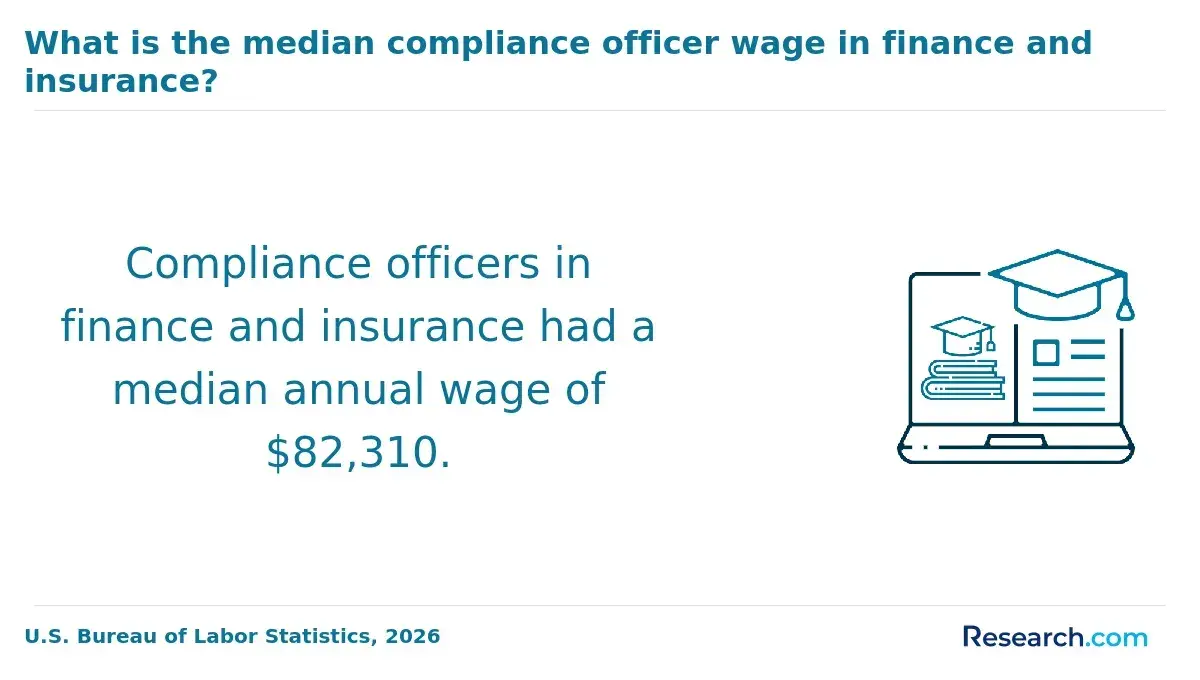
- For context, the U.S. Bureau of Labor Statistics reports $80,730 in median annual pay for compliance officers in May 2025 and 4% projected growth, 2025-2035. Those occupation-wide figures do not measure an MLS graduate's likely pay.
What Is an MLS Concentration for Professionals Working Across Legal Areas?
An MLS is a graduate degree designed primarily to build legal knowledge for people who do not plan to become attorneys. A formal concentration is a defined area of study within that degree, usually with specified courses or completion rules. Business law, compliance, healthcare law, and employment law are examples of subjects a school might offer; names and requirements vary.
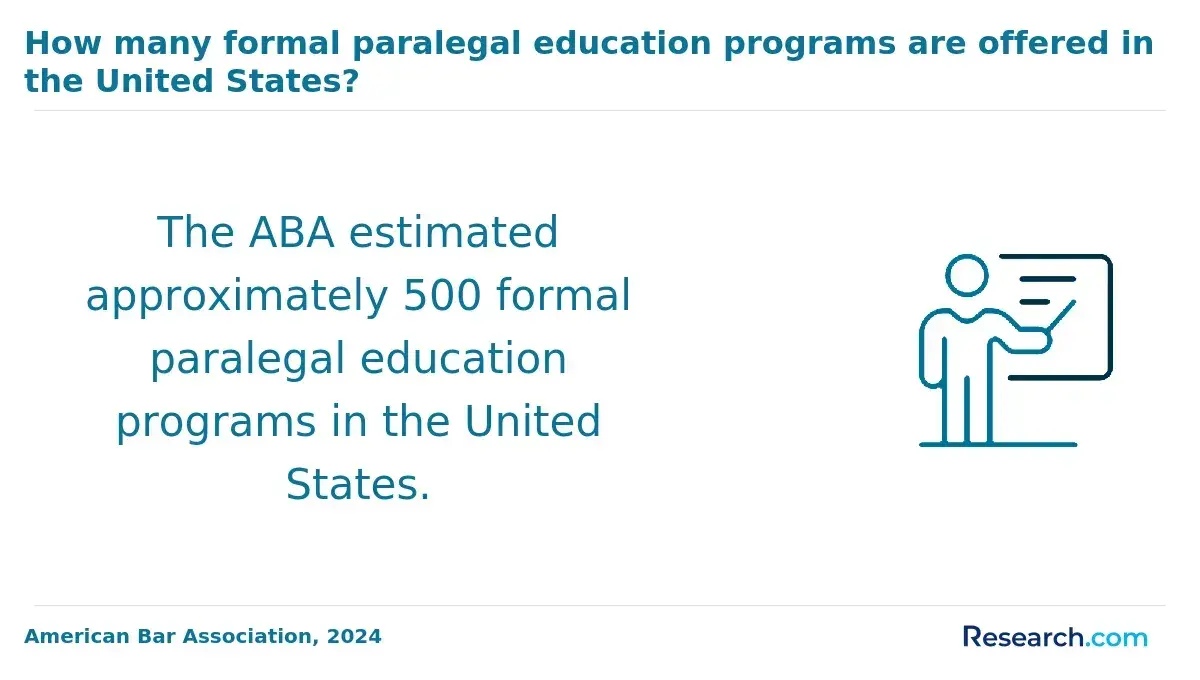
A concentration is not the same as selecting several related electives. Nor is it necessarily a separate graduate certificate, even if the courses overlap. Check the catalog to see whether the specialization has its own requirements and whether it appears on the transcript or diploma. If your work is predominantly paralegal support rather than cross-functional policy or management, compare an MLS with a more directly targeted paralegal education route, including our list of affordable ABA-approved paralegal programs. The two routes serve different goals.
How Do You Choose an MLS Concentration When Your Role Spans Multiple Legal Fields?
Start with the legal questions you handle, not your job title. A human resources manager and an operations manager may both review contracts, but employment rules may dominate one role while vendor risk dominates the other.
Use the following sequence to turn that distinction into a program choice:
- Review recent projects and identify which legal or regulatory subjects recur, which carry the greatest responsibility, and which you expect to handle next.
- Compare those subjects with each concentration's required courses; then check whether electives cover the other areas you cannot afford to ignore.
- Choose the concentration only if its required courses strengthen your main career direction without crowding out essential cross-functional study. Otherwise, favor a general track or flexible electives.
For example, a professional who regularly manages vendor agreements and internal policies may benefit from business law plus electives in employment and privacy. Someone whose work centers on monitoring rules, documenting controls, and responding to audits may get more from compliance. If neither pattern is stable, specializing early has a real opportunity cost: required courses can displace subjects you use more often.
Which MLS Concentration Offers the Broadest Career Flexibility?
A general legal studies track with well-chosen electives usually offers the broadest curricular flexibility. It lets you combine foundational legal analysis with courses tied to changing responsibilities. Among named concentrations, business law may be versatile for professionals working across contracts, transactions, employment, and organizational policy - but its scope depends on the school's actual curriculum.
Compliance can also transfer across departments, particularly when your work involves identifying obligations, assessing risk, and building internal procedures. It is less useful as an all-purpose label if the courses focus narrowly on one regulated industry. Before committing to a business-law route because it sounds broad, compare its required subjects and pace with accelerated business law master's options. A faster schedule is valuable only if it leaves room for the courses you need and a manageable workload.
How Do Generalist and Specialized MLS Programs Compare?
The central trade-off is elective freedom versus a prescribed sequence in one subject. This comparison describes common curriculum structures, not rules that apply to every school.
| Program structure | Potential advantage for a cross-functional role | Principal limitation |
| Generalist MLS | More room to combine courses across legal subjects | Requires you to build a coherent course plan yourself |
| MLS with a formal concentration | Defined sequence may support a clear occupational focus | Required courses may limit coverage of other responsibilities |
| MLS with flexible electives but no formal concentration | Can approximate a specialty while retaining choice | The specialty may not be separately recorded as a credential |
Do not assume a formal concentration is inherently more valuable to employers than relevant coursework and experience. If you need only a focused set of courses, examine legal studies master's degree and certificate trade-offs before paying for a full degree. A graduate certificate is an educational credential, not automatic professional certification.
What Courses Should You Take for a Cross-Functional Legal Career?
Build a foundation you can use across subjects, then spend electives on the legal questions you actually encounter. Legal research and writing, contracts, regulatory process, ethics, and risk assessment may be more transferable than a sequence devoted entirely to a single practice area.
Course descriptions matter more than titles. A useful contracts course for a procurement professional should address interpreting terms and spotting issues for counsel; a useful compliance course should connect rules to operational controls. Privacy, employment, dispute resolution, and corporate governance can fill gaps according to your role. If a course promises legal technology skills, check whether students complete hands-on assignments rather than merely discuss a tool. Legal knowledge should improve how you recognize issues, document decisions, and work with counsel - not lead you to provide legal advice independently.
Do MLS Programs Prepare Graduates to Practice Law or Pass the Bar?
No. An MLS or similarly named non-JD legal studies degree does not, by itself, qualify someone to practice law or sit for a bar examination. Attorney admission rules are set by state authorities, and the usual attorney-education route is distinct from an MLS. A program may teach legal reasoning or include courses taught by law faculty without being an attorney-qualifying degree.
That distinction affects your concentration choice. If you want to manage legal risk within a nonlawyer role, select courses that improve collaboration with attorneys and decision-making within your authority. If your goal is to represent clients or become counsel, investigate the applicable state's attorney-admission requirements instead of choosing an MLS concentration as a substitute.
How Do Online and Campus MLS Programs Differ for Working Professionals?
Online delivery can remove a commute, but it does not necessarily mean self-paced study. Programs may require live classes, fixed deadlines, group work, examinations at set times, or campus visits. Campus courses may offer a predictable routine and in-person discussion, yet travel and class timing can be harder to reconcile with a variable job.
Ask for the course schedule - not just the program's delivery label - and check whether the electives needed for your cross-functional plan are offered in your preferred format. A required concentration course that appears infrequently can affect completion more than the program's advertised flexibility. For a closer look at scheduling trade-offs, see planning business law degree study around employment.
What Are the Admission Requirements, Length, and Cost of an MLS?
MLS programs generally target applicants who already hold a bachelor's degree, but prerequisites, application materials, credit requirements, and completion timelines vary by institution. Some schools request a statement of purpose or relevant work background; others use different admissions criteria. If an essay is a barrier, legal studies study options without an application essay can help you identify a starting point, but confirm the current application rules directly with each school.
Compare the total cost of the course plan you would actually take, not just advertised tuition. Ask about mandatory fees, books and research platforms, technology, travel, and any extra courses needed to finish a concentration. Also check whether employer tuition assistance applies and whether the specific degree qualifies for the financial aid you intend to use. A shorter program may reduce time away from other priorities, but it is not automatically the least expensive or the best match.
Which MLS Careers Offer the Strongest Salary and Job Outlook?
An MLS may strengthen work in compliance, legal operations, policy, contracts, or human resources, but it is not a standard entry requirement for every such role. The U.S. Bureau of Labor Statistics figures below describe broad occupations - not MLS alumni, concentration-specific outcomes, or starting salaries. They are most useful for comparing occupational context alongside your existing experience.
| Occupation | Median annual pay | Projected employment growth |
| Compliance officers | $80,730 in May 2025 | 4%, 2025-2035 |
| Labor relations specialists | $95,420 in May 2025 | 2%, 2025-2035 |
| Paralegals and legal assistants | $62,890 in May 2025 | 0%, 2025-2035 |
These medians do not establish that one concentration produces higher pay. For a cross-functional professional, the stronger career case is usually a course plan that addresses responsibilities an employer already needs you to handle. Before enrolling, compare job postings for your intended role: note which skills they request, whether they prefer a graduate degree, and whether experience or a narrower credential would address the same gap.
How Can You Evaluate an MLS Program's Accreditation and Professional Standards?
Verify the university's current institutional accreditation through the institution and its recognized accreditor. Then examine the MLS in the current academic catalog for degree requirements, concentration rules, course availability, and any restrictions on electives. Institutional accreditation does not mean that a particular concentration has a separate professional endorsement.
Do not confuse this check with American Bar Association approval of qualifying paralegal education programs. ABA paralegal program approval is separate from institutional accreditation and is not a standard approval to assume for an MLS. Before accepting an offer, request a written course plan showing how your preferred classes satisfy graduation requirements; confirm the total charges and schedule against that plan. A prominent concentration name is a weak substitute for courses you can actually take.
Other Things You Should Know About Law & Paralegal
Possibly. The school determines whether changes are allowed and whether completed courses will count toward the new requirements. Ask how a change would affect your graduation timeline before registering for specialized courses.
Not necessarily. Schools may record a concentration on the transcript, the diploma, both, or neither. Check the registrar's policy if formal recognition matters to you.
Yes. A supervisor can identify recurring projects and skills gaps, but you should retain a course plan that also supports work beyond your current position. Confirm any employer tuition-assistance conditions separately.
Do not assume they will. A receiving law school decides whether it accepts prior coursework and how, if at all, that work applies to its JD requirements. Get its policy before enrolling in an MLS for that purpose.
References
- When Is It the Right Time To Earn a Master of Legal Studies? | UMKC Online Master of Legal Studies https://onlinemls.law.umkc.edu/articles/when-to-get-a-master-of-legal-studies/
- What to Look For in an Online MLS Program | stevenson.edu https://www.stevenson.edu/online/about-us/news/what-to-look-for-in-an-online-mls-program/
- Paths to Success | Texas A&M Law https://www.law.tamu.edu/degrees-programs/jd-degree/concentrations-and-career-paths.html
- Choosing Upper Level Courses | SMU https://www.smu.edu/law/academics/jd-programs/planning-your-academic-program/choosingupperlevelcourses
- MLS Concentrations - Arizona Law https://law.arizona.edu/academics/degrees/master-legal-studies-mls/concentrations
- How to Choose the Right LLM Specialization for Your Career Goals | Drexel University Kline School of Law https://drexel.edu/law/news/legal-studies-blog/how-to-choose-the-right-llm-specialization-for-your-career-goals/
- MLS vs JD: Which Legal Path Is Right for You? | wsulaw.edu https://www.wsulaw.edu/news/mls-vs-jd-which-legal-path-is-right-for-you/
- Master of Legal Studies (MLS) vs. JD: What's the Difference? | SMU Online Master of Legal Studies https://onlinemasterlegalstudies.smu.edu/articles/mls-vs-jd/