2027 Legal Studies Master's Programs for Intellectual Property Compliance in Creative Businesses

Co-Founder and Chief Data Scientist
A creative business needs people who can track rights, review licenses, document permissions, and spot potential misuse before a project launches. A legal studies master's degree may help you take on that work, but its value depends on the courses, practical training, and role you want - not the degree title alone. This guide is for professionals in publishing, entertainment, design, marketing, and related fields who are weighing graduate study against shorter training options. It explains what to look for, what the degree cannot authorize you to do, and how to judge the cost against your career goals.
Key Things You Should Know
- Prioritize coursework in copyright, trademarks, licensing, contracts, and rights management; a program with a few IP electives is not necessarily a formal IP concentration.
- A non-JD legal studies master's can support compliance work but does not qualify you to practice law. Compliance officers had median annual pay of $80,730 in May 2025, a broad benchmark - not an IP-specific salary.
- Compare the full cost and schedule with a graduate certificate, employer training, or relevant experience before enrolling; the more expensive degree is not automatically the better route.
What Is a Legal Studies Master's Degree for Intellectual Property Compliance?
It is a non-Juris Doctor graduate degree - often called a Master of Legal Studies (MLS), Master of Studies in Law (MSL), or Master of Jurisprudence - that teaches professionals to work with legal rules without becoming attorneys. In a creative business, intellectual property (IP) compliance means applying policies and agreements to the use of creative assets, such as photographs, music, writing, designs, and brands.
Degree labels do not tell you how much IP instruction you will receive. A formal concentration has published requirements; an elective pathway lets students assemble relevant courses; and a graduate certificate is a separate credential that may or may not be available within the degree. Compare required courses and available electives rather than assuming these arrangements are equivalent. A broader guide to legal studies master's degree specializations can help you decide whether IP should be your primary focus or part of a wider compliance education.
The degree is most useful when legal knowledge complements work you already do or hope to enter. It does not itself confer a law license, authorize independent legal advice, or replace an attorney's judgment on disputed rights.
What Careers Can Intellectual Property Compliance Master's Graduates Pursue?
Relevant roles include rights and permissions coordinator, licensing specialist, brand-protection analyst, contracts administrator, IP-focused legal assistant, and compliance officer. Duties differ by employer: a publisher may need image permissions, while a studio may need music-clearance records and licensing workflows. Hiring requirements differ too; a master's is rarely the only entry route.
The comparison below separates typical responsibilities from the degree's potential contribution. Job titles are not standardized, so use actual postings to test which skills employers seek.
| Role | Typical work | Where legal study may help |
| Rights or licensing specialist | Track permitted uses, territories, terms, and renewals | Interpret contract language and identify issues for counsel |
| Brand-protection or IP compliance analyst | Monitor asset use and document potential policy violations | Understand trademark and copyright concepts and escalation procedures |
| IP legal assistant or paralegal | Organize records, deadlines, research, and attorney-supervised filings | Build subject-matter knowledge alongside legal-support skills |
| Compliance officer | Maintain controls, training, investigations, and reporting | Connect legal requirements with operational policies |
For someone seeking legal-support work rather than a graduate-level compliance role, a paralegal credential or bachelor's degree may be a more direct route. Compare paralegal bachelor's completion speed and career considerations before paying for a master's that employers may not request.
How Do You Choose an Accredited Intellectual Property Legal Studies Program?
Start by confirming that the institution holds recognized institutional accreditation, then evaluate the specific degree. Accreditation establishes an institutional quality-review status; it does not establish that an IP pathway is strong, that credits will transfer, or that employers will prefer its graduates. Check the institution's current accreditation disclosure and the accreditor's listing.
Next, read the current catalog - not just the promotional page - to distinguish required IP courses from electives that may not run every term. Look for instruction in creative-industry licensing, applied assignments, faculty experience, and a capstone or comparable project. Ask for a recent course schedule and find out whether you can complete the IP pathway without extending your enrollment.
Do not confuse this check with American Bar Association approval. The ABA approves qualifying paralegal education programs; that is distinct from institutional accreditation and is not a general approval designation for MLS or MSL degrees. If paralegal work is your actual goal, compare degree options with affordable accredited online paralegal degrees and verify any claimed ABA approval separately.
What Do Intellectual Property Compliance Master's Programs Teach?
A useful curriculum connects legal concepts to repeatable business decisions. Copyright courses can help students assess ownership and permissions; trademark courses can clarify brand-use issues; and contract courses can build fluency in licenses, warranties, and restrictions. Courses in privacy, advertising, or platform governance may matter when creative assets include personal information, endorsements, or user-generated content.
For practical value, look beyond course titles. An assignment that asks you to build a rights inventory, flag conflicting license terms, or draft an escalation memo offers more direct preparation than a survey course alone. Confirm whether students practice with realistic documents and receive feedback; a mention of legal technology or AI in a syllabus does not establish hands-on proficiency.
AI-assisted content workflows make documentation and review especially important, but a program should teach students to check ownership, source permissions, contract terms, and applicable policies rather than promise a simple rule for every AI-generated asset. IP rules and business uses change, so the ability to recognize uncertainty and escalate it is a durable skill.
Are Online or Campus-Based IP Legal Studies Programs Better?
Neither format is inherently better for IP compliance. Online study can reduce travel and make graduate work possible alongside employment; campus study may make scheduled discussion and local professional connections easier. What matters is whether the delivery model lets you take the needed courses and complete applied work on a sustainable schedule.
"Online" does not necessarily mean asynchronous or self-paced. Before enrolling, confirm live meeting times, time-zone expectations, exam windows, course rotation, required campus visits, and whether a practicum can be completed through your current workplace. Working adults comparing a broader corporate focus can also consider business law study alongside employment rather than assuming an IP-labeled pathway is the only useful choice.
If you already work with licensing or brand assets, an online program with strong applied assignments may let you connect study to your job. If you need access to local employers or structured in-person practice, a campus option may justify its added travel or scheduling costs.
What Are the Admission Requirements for IP Compliance Master's Programs?
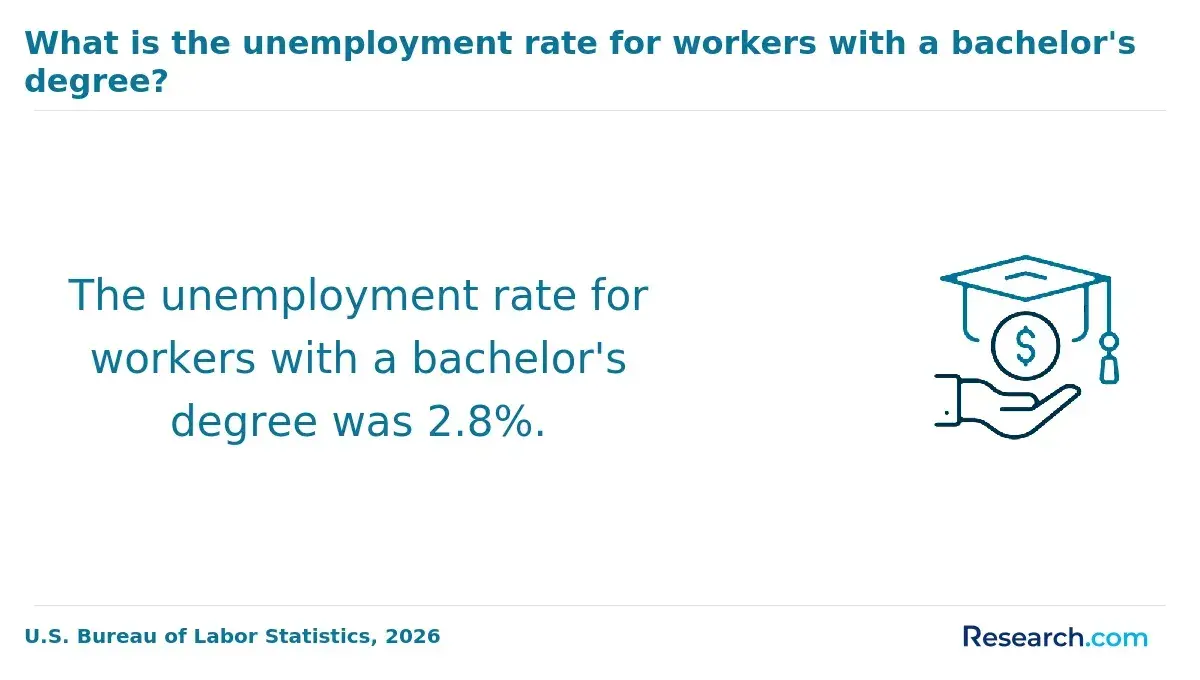
Applicants generally need a bachelor's degree, but GPA thresholds, statements, recommendations, résumés, test policies, and work-experience expectations are set by each school. A JD or prior legal coursework should not be assumed to be a prerequisite for a non-JD legal studies degree. Check the current admissions page for the specific program, including any conditions for entering an IP concentration.
If you have an associate degree but not a bachelor's, planning an associate-to-bachelor's legal studies transfer is a separate step toward graduate eligibility. The receiving institution determines which credits apply; neither institutional accreditation nor a similar course title guarantees transfer.
Applicants from creative fields can use their statements to describe concrete rights-management problems they want to solve. Experience with contracts, asset libraries, production, or brand operations may strengthen an application, but it does not replace a published degree requirement.
How Long Do Intellectual Property Legal Studies Master's Programs Take?
Completion time depends on required credits, term length, course sequencing, enrollment intensity, and capstone or practicum requirements. A school's advertised fastest completion time may assume uninterrupted full-time study and immediate access to every required course.
To estimate your own timeline, map the catalog requirements against the actual course rotation. Pay particular attention to whether key IP electives are offered regularly, whether prerequisites must be taken in sequence, and whether part-time students can finish the concentration without waiting for another offering. Ask the program to confirm a sample schedule based on the number of courses you can realistically take while working.
How Much Do Intellectual Property Compliance Master's Programs Cost?
There is no reliable single price for this category: schools set tuition and fees, and the total changes with credit requirements and enrollment choices. Compare estimated total educational cost, not just advertised per-credit tuition. Request a current program-specific estimate covering mandatory fees, books, technology, travel or residency requirements, and any extra terms caused by course sequencing.
Ask the financial aid office whether the specific degree and your enrollment qualify for federal graduate aid, and check employer tuition benefits and their repayment conditions. Do not assume that a separate noncredit course or certificate has the same aid eligibility as the master's degree.
The opportunity cost matters as much as the bill. If a shorter certificate, targeted coursework, or supervised experience would meet the requirements in your target job postings, a full master's may be unnecessary. If postings call for broader responsibility across contracts, policy, and compliance, the additional study may be easier to justify.
Do IP Compliance Professionals Need a Law License or Certification?
Many internal rights-management and compliance roles do not require a law license. An MLS, MSL, or similar degree does not qualify its holder to practice law, represent clients, or independently give legal advice. When a matter requires a legal opinion, filing strategy, or representation, the appropriate licensed attorney should handle it; the boundary also depends on applicable state law and the work performed.
Certification is different from completing an academic certificate or degree. An employer may value training in a particular compliance process or tool, but there is no single professional certification universally required for creative-business IP compliance. Check individual job postings and the credentialing organization's current eligibility rules before paying for an optional credential.
What Are the Salaries and Job Outlook for Intellectual Property Compliance Careers?
The Bureau of Labor Statistics does not publish a salary specifically for "creative-business IP compliance specialist." The closest broad benchmark depends on the work: compliance officers had median annual pay of $80,730 in May 2025, with 4% projected job growth for 2025-2035. Those figures cover compliance officers across industries, not graduates of a particular master's program or IP specialists specifically.
For attorney-supervised legal-support work, paralegals and legal assistants had median annual pay of $62,890 in May 2025. Their projected employment growth is 0% for 2025-2035, although about 40,800 openings per year are projected. Openings can arise even when overall employment changes little; the figures do not establish demand for an IP-focused graduate degree.
Compare job postings by duties, required education, location, and experience before using either benchmark to evaluate a program. Advancement may come from demonstrated judgment in contracts and rights workflows as well as education, and neither a degree nor the national median predicts an individual offer.
Other Things You Should Know About Law & Paralegal
Only if your employer permits it and you can comply with confidentiality and intellectual property obligations. Ask the instructor whether a redacted, fictionalized, or publicly available example can satisfy the assignment.
General IP coursework can introduce patent concepts, but patent-related roles may call for technical knowledge or specialized training. If patent practice is your goal, check the exact role and applicable requirements rather than treating a broad IP course as sufficient preparation.
Ask for the capstone requirements and examples of permissible projects. A project involving a rights inventory, licensing workflow, or brand-use policy is more directly relevant than one with no connection to the work you intend to do.
Yes, if the coursework addresses responsibilities you already hold or are expected to take on. Before accepting support, confirm reimbursement limits, required grades, eligible programs, and whether you must repay benefits if you leave.
References
- Making a Living in the Creative Industries | copyright https://www.wipo.int/en/web/copyright/creative-industries/index
- Requirements | The State Bar of California - CA.gov https://www.calbar.ca.gov/admissions/requirements
- Compliance Program Basics | Office of Inspector General | U.S. Department of Health and Human Services https://oig.hhs.gov/newsroom/oig-podcasts/compliance-program-basics/
- Types of Financial Aid: Grants, Work-Study, and Loans | studentaid.gov https://studentaid.gov/understand-aid/types
- Cost of Attendance (Budget) | 2025-2026 Federal Student Aid Handbook https://fsapartners.ed.gov/knowledge-center/fsa-handbook/2025-2026/vol3/ch2-cost-attendance-budget
- Intellectual Property Law - MLS Degree Emphasis - ASU Online https://asuonline.asu.edu/online-degree-programs/graduate/intellectual-property-law-emphasis-mls/
- Careers in Law Without Being a Lawyer | Pepperdine Caruso School of Law https://law.pepperdine.edu/blog/posts/careers-in-law-without-being-a-lawyer.htm
- Online Master of Legal Studies | AU-LAW https://onlinelaw.wcl.american.edu/legal-studies/
- Managing Compliance and Risk in Third-Party Partnerships for Online Learning - UPCEA https://upcea.edu/news/government-affairs/managing-compliance-and-risk-in-third-party-partnerships-for-online-learning/
- Research & Capstone Projects - PennWest Career Center https://career.pennwest.edu/channels/research-capstone-projects/