2027 Paralegal Education for Appellate Practice: Research, Brief Preparation, and Records

Co-Founder and Chief Data Scientist
Appellate work demands more than general familiarity with litigation: a missed filing rule, unsupported citation, or incomplete record can undermine a brief. If you are choosing paralegal training for this work, the strongest option is not necessarily the longest degree or the program that advertises a specialization.
This guide shows which courses and practical assignments matter, how to compare credentials and costs, and what appellate paralegals actually do. You can use it to choose a program - or decide whether targeted training and supervised experience would serve you better.
Key Things You Should Know
- Prioritize supervised legal research, appellate writing, citation checking, court rules, and record or appendix preparation; an "appellate" label alone does not establish those skills.
- Compare the institution's accreditation separately from any American Bar Association approval of its paralegal program. A program certificate is not professional certification, and neither authorizes independent legal practice.
- The Bureau of Labor Statistics reports $62,890 in median annual pay for paralegals and legal assistants in May 2025 and 0% projected growth for 2025-2035; those occupation-wide figures do not predict appellate-specific pay or hiring.
What does paralegal education for appellate practice involve?
Appellate practice concerns review of a lower court's decision. Rather than building a case primarily through discovery or witness preparation, an appellate team works from a defined record on appeal - the materials properly transmitted or designated for the reviewing court - and argues how the law applies to that record.
Useful paralegal education combines a foundation in legal research, writing, civil procedure, and professional responsibility with appellate-specific practice. Students should learn to locate controlling authority, track issues preserved in the lower court, organize record citations, proofread briefs against court rules, and maintain filing calendars. Coursework cannot substitute for learning the procedures of the particular federal or state court handling a case.
This is support work under attorney supervision. Paralegals may research, organize materials, and prepare draft documents as directed, but they cannot independently advise clients, decide legal strategy, or represent someone in court merely because they completed appellate coursework.
What education and accreditation do appellate paralegals need?
There is no single nationwide appellate-paralegal degree or license. Employers may accept an associate degree, a bachelor's degree with substantial paralegal coursework, a post-baccalaureate paralegal certificate, or relevant legal experience. State rules and employer preferences can differ, so check requirements in the jurisdiction and job market where you intend to work.
Two quality checks answer different questions: institutional accreditation concerns the school; American Bar Association (ABA) approval concerns a qualifying paralegal education program. Not every legitimate program seeks ABA approval, and approval does not make graduates "ABA-certified." Confirm a claimed approval against the ABA's current paralegal program directory and confirm accreditation through the institution and its recognized accreditor.
A Master of Legal Studies or similar non-JD degree may suit a professional seeking broader legal knowledge, but it is neither required for appellate paralegal work nor a route to practicing law. If that alternative interests you, compare legal studies master's completion times alongside the time needed for paralegal-specific coursework and supervised experience.
Which paralegal degree or certificate prepares students for appellate work?
Choose the shortest route that fills your actual skill gaps without sacrificing the coursework or credit value you need. The credential names below describe educational pathways, not guarantees of appellate specialization.
| Route | Likely fit | Appellate-training limitation to check |
| Associate degree in paralegal studies | Someone seeking foundational college coursework and a paralegal entry route | Whether research and writing progress beyond introductory assignments |
| Bachelor's degree with paralegal coursework | Someone seeking a broader undergraduate education | Whether added time and cost produce relevant practical work |
| Post-baccalaureate paralegal certificate | A bachelor's graduate changing fields | Whether prerequisites and compressed scheduling allow enough writing practice |
| Focused continuing education | A working paralegal who already has a legal foundation | Whether training includes feedback on actual appellate-style tasks |
Before enrolling, inspect course descriptions and ask for examples of assignments: a research memorandum, a draft argument with record citations, or an appendix exercise is more informative than a specialization label. If a certificate matches your starting point, our guide to paralegal certificate study can help frame the initial comparison. A certificate documents completion of education; professional certification is a separate credential awarded under a certifying body's rules.
What do appellate paralegal programs teach about legal research and writing?
The most relevant courses teach students to find statutes, rules, and judicial opinions; identify binding versus persuasive authority; update citations to check whether a case remains good law; and explain findings in a clear research memorandum. Appellate assignments should then connect those authorities to preserved issues and accurately cited record materials.
Look for iterative writing rather than a single final paper. Feedback on citation form, quotations, record references, and revisions develops skills closer to those used when supporting a brief. Instruction should also cover why a strong legal argument cannot cure an inaccurate factual citation or a missed court-specific formatting requirement.
Ask exactly what technology instruction includes. A syllabus may mention Westlaw, Lexis, electronic filing, or AI-assisted research without providing student access or hands-on assessment. Verify access, required assignments, and how instructors teach students to check tool output against primary authority and protect confidential information. Tool exposure alone does not establish proficiency.
How do online and campus-based appellate paralegal programs compare?
Either format can teach appellate skills if students receive substantial research and writing assignments with instructor feedback. The meaningful differences are access to supervision, scheduling, legal research resources, and opportunities to practice filing-related work - not whether lectures appear on a screen.
| Decision factor | Online program: verify | Campus program: verify |
| Schedule | Live meetings, timed exams, and course sequencing | Meeting times, commute, and required campus attendance |
| Practice | Feedback on drafts and any supervised placement rules | Feedback on drafts and any supervised placement rules |
| Resources | Remote research-platform access and technical requirements | Library and research-platform access outside class |
"Online" does not mean asynchronous or self-paced. If a program requires an internship, ask who finds the placement and whether remote work or current legal employment can satisfy it. Compare the full cost of each format, including technology or travel, rather than tuition alone. For online degree options, paralegal degree tuition payment schedules may help you assess cash flow, but a payment plan does not reduce the total price.
What are the admission requirements, program lengths, and costs?
Requirements depend on the credential. A post-baccalaureate certificate may require a completed bachelor's degree, while an associate program can have different entry requirements. Confirm prerequisites with the current catalog rather than assuming that every "certificate" is open to the same applicants. If you are also comparing non-JD graduate study, legal studies admissions without a personal statement addresses a different admissions route; it does not describe paralegal certificate requirements.
Published completion time may assume a full course load and uninterrupted sequencing. Ask when required writing courses run and whether an internship or capstone could delay completion. For cost, request an itemized estimate covering tuition, mandatory fees, books, research access, technology, and any placement-related expenses. A lower advertised price may offer fewer transferable credits or less supervised practice.
Do not assume a certificate qualifies for federal student aid. Eligibility depends on the institution, the specific program, and applicable aid rules; noncredit training and credit-bearing programs may be treated differently. Confirm eligibility and any transfer-credit decision directly with the school that would award the credential or receive the credits.
How do appellate paralegals prepare briefs and manage court records?
Appellate support is a controlled workflow in which the attorney remains responsible for legal judgment and final filings. A paralegal may help with the following sequence, subject to supervision and the court's rules:
- Calendar the notice-of-appeal, record, briefing, and filing deadlines using the applicable court rules and orders.
- Review the lower-court docket and help identify materials needed for the record, flagging gaps or questions for the attorney.
- Organize transcripts, exhibits, and orders so the team can locate and verify each proposed record citation.
- Research assigned issues and prepare memoranda or draft brief components for attorney review.
- Check the brief and any appendix for citation accuracy, required contents, formatting, and electronic-filing specifications before the attorney authorizes filing.
In federal appeals, the Federal Rules of Appellate Procedure address subjects including the record, briefs, appendices, and filing; local circuit rules and case-specific orders can add requirements. State appellate procedures differ. A common error is treating the entire lower-court docket as interchangeable with the record available for appellate review. Training should teach students to verify what is properly in the record and escalate uncertainty rather than silently filling a gap.
What certifications and professional standards apply to appellate paralegals?
Professional certification is generally optional and distinct from a school-awarded certificate. Organizations such as NALA and the National Federation of Paralegal Associations administer paralegal credentials under their own current eligibility, examination, and renewal rules. A credential can demonstrate broader professional knowledge, but it does not replace court-specific appellate training or confer authority to practice law.
Confidentiality, accuracy, supervision, and avoidance of unauthorized practice matter more than a specialty label. State rules may also affect titles or qualifications, so verify the rules where you will work. When comparing a certification with another course, ask whether the credential's eligibility requirements match your education and experience - and whether local appellate employers actually value it.
What jobs, salaries, and advancement opportunities are available?
Appellate-focused paralegals may work in appellate or litigation groups, government legal offices, or organizations that handle recurring appeals. Entry roles may mix appellate tasks with broader litigation support. With experience, a paralegal may take on more complex research assignments, coordinate brief production, manage records across cases, or supervise support workflows; advancement depends on the employer and does not turn the role into attorney practice.
The Bureau of Labor Statistics reports median annual pay of $62,890 in May 2025 for paralegals and legal assistants. That figure covers many practice areas and experience levels; it is not an appellate-paralegal salary or a forecast of what a new graduate will earn. Compare local job postings for required skills and experience before paying for additional education.
For an established professional considering a broader non-JD degree, legal studies master's affordability and career outcomes provides a separate cost-and-career comparison. Evaluate that route against targeted appellate training and the time you would spend away from paid work.
What is the job outlook for appellate-focused paralegals?
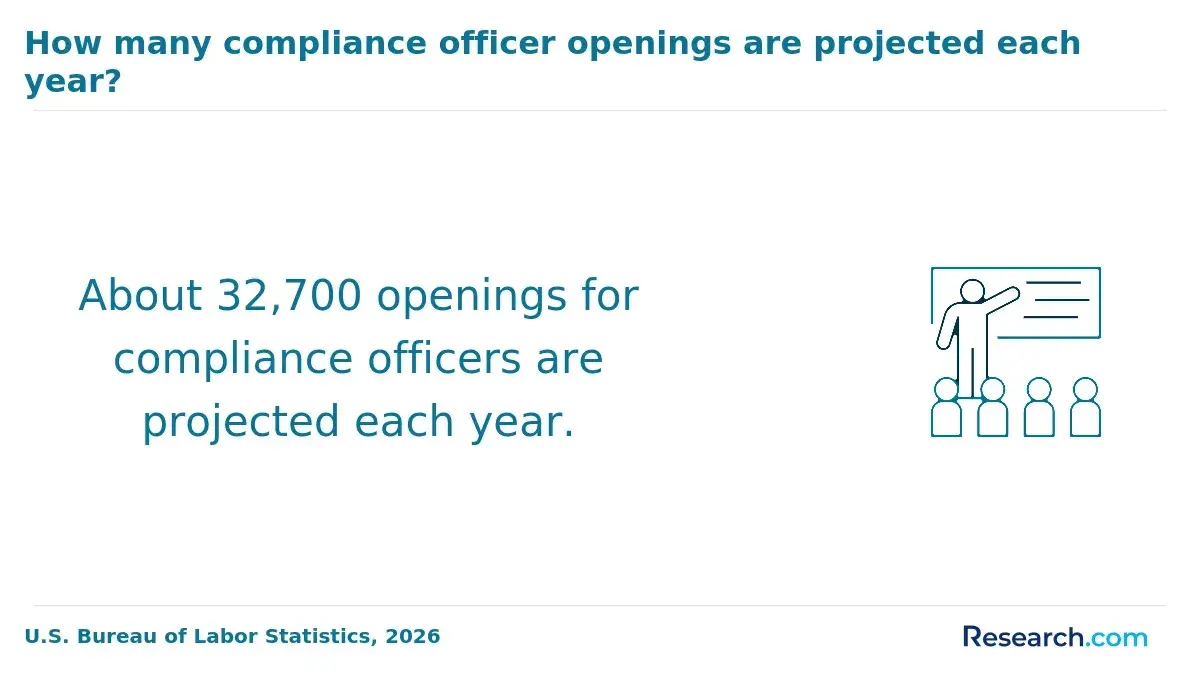
The Bureau of Labor Statistics projects 0% growth for paralegals and legal assistants during 2025-2035, with about 40,800 openings per year despite little or no net employment growth. Those figures describe the broad occupation, not a separately measured appellate specialty. Openings can arise when workers leave jobs, but competition and demand will vary by location and employer.
That outlook favors a practical entry strategy over assuming a specialty credential will create a job. Build a strong research-and-writing foundation, seek supervised litigation or appellate assignments, and retain writing samples only when confidentiality rules and employer permission allow it. Before enrolling, compare current local postings with a program's assignments: if employers ask for record citations, brief formatting, and court-rule familiarity, the curriculum should give you assessed practice in those tasks.
Other Things You Should Know About Law & Paralegal
Not without permission and a confidentiality review. Client information, sealed material, and attorney work product can make a filed or draft brief unsuitable even when it looks publicly accessible. A simulated assignment may be safer.
They should be comfortable checking citations, but the required style depends on the court, document, and employer. Learn to apply the governing court rules and the citation guide your supervising attorney uses.
Yes. Docket management, document organization, research, and deadline tracking transfer well. The main new skills are understanding the appellate record, issue preservation, briefing rules, and appellate-specific citations.
No. Deadlines, record procedures, formatting, and electronic-filing requirements can differ. Check the rules and orders of the specific court for each appeal rather than reusing another court's checklist.
References
- Appellate Practice Guide and Resources | uscourts.gov https://www.ca9.uscourts.gov/guides-resources/appeal-process/appellate-practice-guide/
- Federal Rules of Appellate Procedure, Ninth Circuit Rules, Circuit Advisory Committee Notes | uscourts.gov https://cdn.ca9.uscourts.gov/datastore/uploads/rules/rules.htm
- Practices & Procedures | First Appellate District https://appellate.courts.ca.gov/district-courts/1dca/rules-forms-filing/practices-procedures
- Appellate Division - First Judicial Department https://www.nycourts.gov/courts/ad1/Practice&Procedures/rules.shtml
- 50. Contents Of Appendices - Indiana Court Rules https://rules.incourts.gov/Content/appellate/rule50/current.htm
- Rule 30. Appendix to the Briefs | uscourts.gov https://www.ca4.uscourts.gov/rules/Rule30.html
- Guidelines on the Use of Paralegals | North Carolina State Bar https://www.ncbar.gov/paralegal-certification/guidelines-on-the-use-of-paralegals/
- 2-5.000 - Appellate Standards For U.S. Attorneys' Offices https://www.justice.gov/jm/jm-2-5000-appellate-standards-us-attorneys-offices
- LRAW Research Fall 2026: Weight of Authority | sc.edu https://guides.law.sc.edu/LRAWFall/WeightofAuthority
- Rule 26. Computing and Extending Time - Law. Cornell. Edu https://www.law.cornell.edu/rules/frap/rule_26