2027 MLS Programs for Nonprofit Compliance and Grant Management Staff

Co-Founder and Chief Data Scientist
Nonprofit staff who manage grants must interpret award terms, document spending, oversee subrecipients, and know when a legal question needs an attorney. A Master of Legal Studies (MLS) can strengthen that work, but its cost and time commitment make program fit essential. This guide is for compliance officers, grant managers, and operations staff considering graduate legal study. It explains what to look for in a curriculum, how to compare online programs and costs, and when a shorter credential or targeted training may be the better choice.
Key Things You Should Know
- An MLS is an optional, non-JD degree: it can deepen a nonprofit professional's legal knowledge but does not confer a license to practice law.
- Prioritize coursework in nonprofit governance, tax-exempt organizations, contracts, employment, and federal grant requirements over a program's general legal-studies branding.
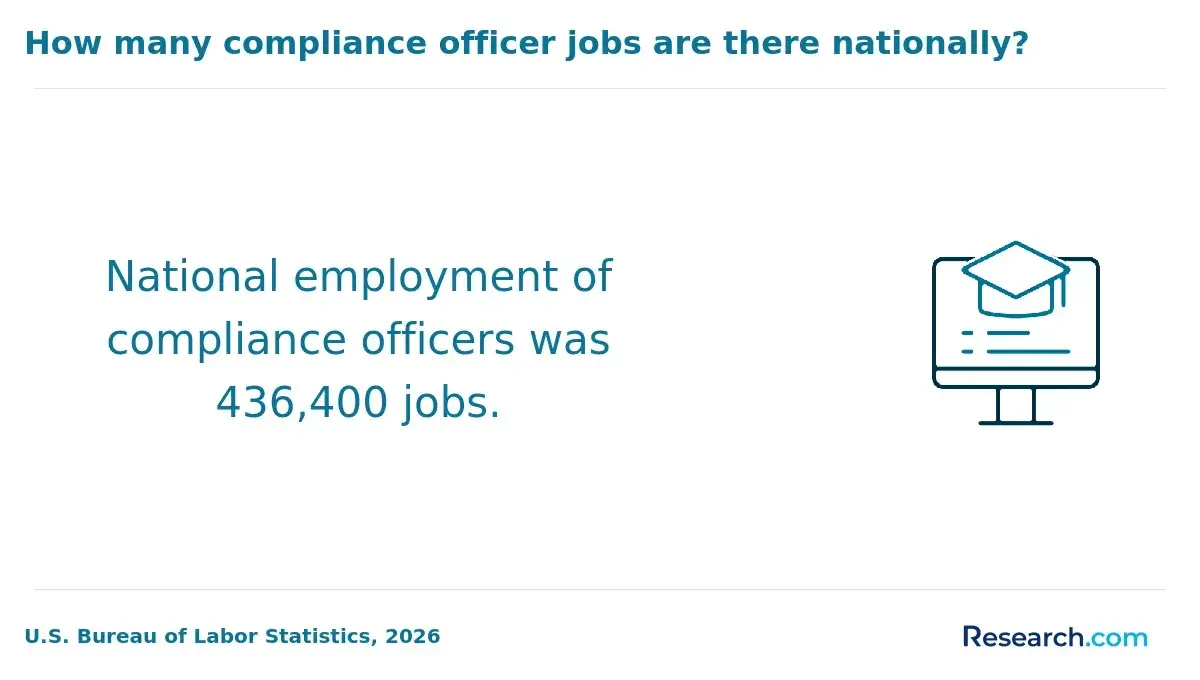
- The Bureau of Labor Statistics reports $80,730 in May 2025 median pay for compliance officers and 4% projected growth, 2025-2035; those occupation-wide figures do not establish an MLS salary premium.
What is an MLS degree for nonprofit compliance and grant management professionals?
An MLS is a graduate degree designed to teach legal concepts and methods to people who do not plan to become attorneys. Schools may use names such as Master of Studies in Law (MSL) or Master of Jurisprudence for related non-JD degrees. The name matters less than the courses a student can actually take.
For nonprofit staff, the useful connection is practical: a grant agreement creates obligations; a restricted gift limits how funds may be used; and a board decision can raise governance or conflict-of-interest questions. Legal study can help a professional spot those issues, maintain better records, and communicate clearly with counsel. It does not authorize them to give independent legal advice or represent the organization as an attorney.
An MLS may be worth considering when legal and regulatory interpretation is a recurring part of the job, rather than an occasional task. Readers weighing a full degree against a narrower credential can start with legal studies graduate study options compared.
Do nonprofit compliance and grant management staff need an MLS degree or license?
No general MLS requirement or professional license applies to nonprofit grant managers or compliance staff. Employers set hiring requirements for these roles, while particular tasks may be governed by grant terms, organizational policy, or state and federal law. An MLS is not a law license, and even an experienced staff member should refer legal opinions, representation, and other attorney-only work to qualified counsel.
The better starting point depends on the work. Someone learning grant budgets and reporting may benefit more immediately from supervised experience and training in the organization's grant systems. Someone responsible for interpreting complex agreements across many programs may gain more from graduate legal study. A grant-related professional credential, such as the Grant Professionals Certification Institute's Grant Professional Certified credential, is a separate assessment of professional qualifications - not a substitute name for an MLS.
Paralegal education serves a different goal: preparing people for legal-support work, generally under attorney supervision. For a reader considering that route, comparing accelerated paralegal program formats is more relevant than assuming an MLS will provide the same training. Neither a paralegal certificate nor an MLS, by itself, qualifies a graduate to practice law.
What are the best MLS programs for nonprofit compliance and grant management?
The best MLS is the one whose required courses, available electives, and schedule match the legal work the applicant actually performs. A "compliance" concentration is not necessarily nonprofit-focused: it might emphasize healthcare, financial services, or corporate regulation. Conversely, a general MLS with reliably available nonprofit and grant-relevant electives may be a stronger fit.
These program features describe meaningful differences to compare; they are not a ranking of schools or a claim that every program offers them.
| Program feature | Potential fit for nonprofit work | Important limitation |
| Formal nonprofit or tax-exempt-organization coursework | Supports governance, charitable-activity, and tax-status issue spotting | A course title alone does not show how deeply it covers day-to-day grant work |
| Contracts and administrative-law coursework | Supports review of award terms and understanding of agency rules | Broad courses may not address nonprofit-specific agreements |
| Compliance concentration | May provide a structured sequence in risk assessment and oversight | The concentration may focus on another industry |
| Applied project or capstone | May let a student practice policy analysis or compliance communication | Use of real employer documents may require permission and confidentiality safeguards |
Separate a formal concentration from a few electives or a certificate offered alongside the degree. Before treating a program as a finalist, check its current catalog for course requirements, elective rotation, delivery format, and whether the relevant courses are open to MLS students. A published course list is more useful than an unverified "best program" label.
What do MLS programs for nonprofit compliance and grant management teach?
A strong curriculum connects legal reasoning to the documents nonprofit staff handle. Foundational study may cover how to read statutes and regulations, research legal questions, analyze contracts, and distinguish an operational decision from one requiring counsel. Relevant electives may address nonprofit governance, tax-exempt organizations, employment, privacy, fundraising rules, and dispute resolution.
For federally funded work, look for explicit treatment of the Uniform Guidance in 2 CFR Part 200 and for assignments involving award conditions, cost documentation, procurement, subrecipient oversight, or audit findings. A class on grants or administrative law may touch these subjects without teaching the workflows a grant manager needs. Ask for a recent syllabus rather than relying on the course title.
The value is not memorizing every rule. It is learning to locate the governing award term or authority, document a defensible process, and recognize when an issue needs a specialist. Staff who mainly need help with a particular funder's reporting system may get faster value from employer training than from a broad legal curriculum.
Are online MLS programs effective for nonprofit compliance professionals?
They can be, particularly when courses require students to analyze agreements, draft policies, and receive feedback on written work. Delivery alone does not establish quality. An online MLS may include live classes, group projects, fixed exam windows, or campus visits; "online" does not mean asynchronous or self-paced.
Working applicants should compare the actual weekly schedule with grant-reporting deadlines and audit cycles. Ask whether required courses run every term, whether live attendance is mandatory, and whether a capstone can use a de-identified workplace problem. For someone also considering broader business-law education, best business law degrees for working adults offers a related route to compare against an MLS.
An online format can reduce travel, but it cannot replace access to instructors, research resources, and meaningful feedback. If a program's most relevant electives are rarely offered online, its advertised flexibility may not extend to the courses this career goal requires.
What are the admission requirements for nonprofit-focused MLS programs?
MLS programs generally serve applicants who already hold a bachelor's degree, but each school sets its own prerequisites and application rules. Requirements may include transcripts, a résumé, a statement of purpose, references, or proof of English proficiency where applicable. A law degree or paralegal certificate is not inherently required; confirm the policy of the program you intend to enter.
Relevant nonprofit experience can make an application more focused even when it is not mandatory. A useful statement of purpose identifies the applicant's actual responsibilities - such as award review, subrecipient monitoring, or board support - and the courses that would address a specific skill gap. Applicants without legal coursework should also check whether the program includes introductory legal research and writing rather than assuming every class starts at a beginner level.
How long do MLS programs take and how much do they cost?
Completion time depends on required credits, course sequencing, and whether the student attends full time or part time. For working nonprofit staff, the crucial question is not the fastest advertised completion time but how long it will take to finish the relevant courses on a realistic schedule.
Tuition alone is not the total cost. Request a current written estimate covering mandatory fees, books, technology and legal-research charges, any campus travel, and costs associated with an applied project. Compare programs using the same unit - such as estimated cost for all required credits - rather than placing one school's per-credit rate beside another's total-program figure.
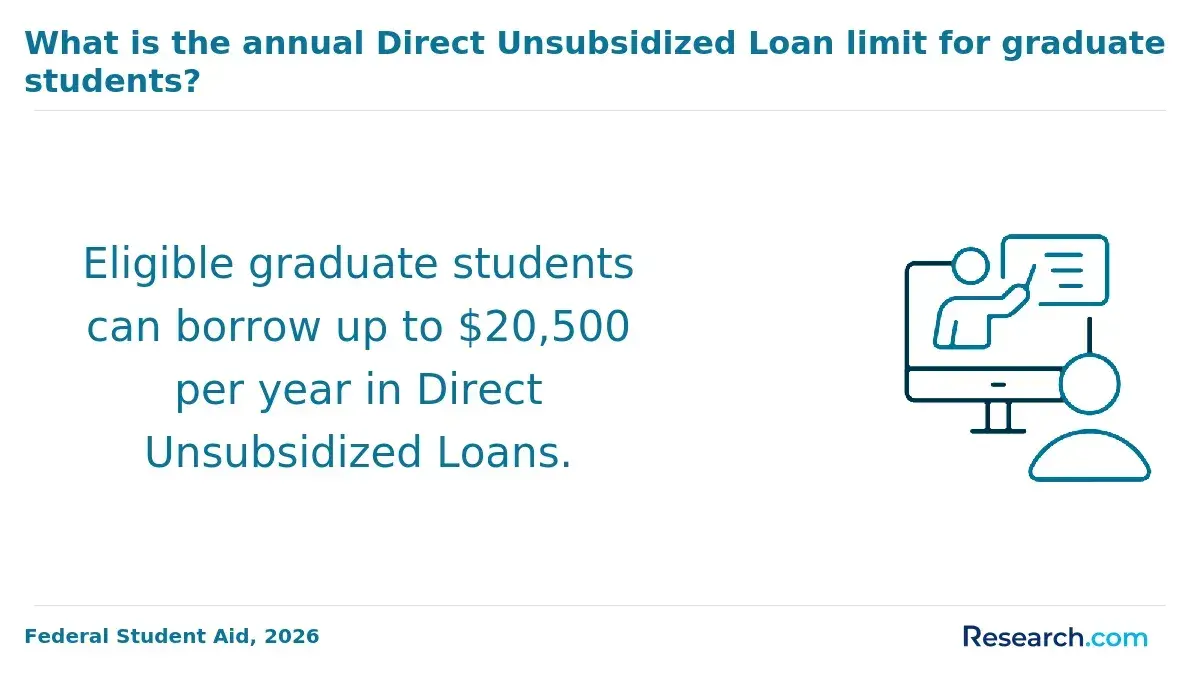
Ask the financial aid office whether the specific degree program is eligible for federal graduate aid and what eligibility conditions apply. Employer tuition assistance may change the calculation, but staff should check reimbursement caps, grade rules, and any service commitment before enrolling. A lower-cost graduate certificate may be sufficient if only a small set of courses addresses the job; a guide to low-cost online legal studies master's programs can help frame a broader price comparison without treating low tuition as proof of fit.
What careers can an MLS support in nonprofit compliance and grant management?
An MLS can complement experience in grant administration, compliance, operations, and governance. It is most useful when the next role calls for more independent issue spotting or coordination with counsel - not when an employer primarily needs someone with funder-system experience or a specialized accounting qualification.
The roles below show where legal knowledge may be relevant. Job titles and required qualifications differ across organizations.
| Role | Typical connection to legal knowledge |
| Grant compliance manager | Tracks award conditions, documentation, reporting, and corrective actions |
| Nonprofit compliance officer | Coordinates policies, internal reviews, training, and escalation of legal risks |
| Grants director | Oversees award administration, staff processes, and funder obligations |
| Governance or operations manager | Supports board processes, organizational policies, and counsel coordination |
Experience remains central. A grant coordinator moving toward management can pair legal coursework with budget review and monitoring experience; an operations professional can pair it with stronger knowledge of board and employment processes. The degree supports those paths but does not replace the work history an employer may require.
What salaries and job outlook can MLS graduates expect?
There is no single reliable salary figure for "nonprofit MLS graduates." The Bureau of Labor Statistics reports a $80,730 median annual wage in May 2025 for compliance officers, with 4% projected employment growth, 2025-2035. This broad occupation spans industries and does not isolate nonprofit employers, grant specialists, or people with an MLS.
Use that figure as labor-market context, not a pay forecast. Actual offers depend on the role, location, employer budget, responsibilities, and prior experience. Before paying for a degree, compare postings for the jobs you want: note whether they require a graduate degree, merely prefer one, or emphasize grant experience and specific compliance skills instead. That comparison is more informative for an individual decision than assuming the degree produces a salary increase.
How should you choose an accredited MLS program for nonprofit work?
First, verify that the university holds recognized institutional accreditation; then evaluate the MLS itself on curriculum, access, and cost. Institutional accreditation does not mean every elective is available on the schedule you need, and ABA approval of paralegal education programs is a separate concept - not a quality label to expect on an MLS.
A short final check can prevent an expensive mismatch:
- Match current required courses and recent syllabi to the grant, governance, or compliance tasks you want to perform.
- Confirm that the relevant electives are open to MLS students and offered often enough for your intended completion schedule.
- Get the full program cost, attendance requirements, and any employer-reimbursement terms in writing.
- Ask the registrar how prior graduate credit is evaluated; the receiving school decides whether and how it applies.
- Compare the degree with a graduate certificate, employer training, or supervised experience against actual job postings.
Transfer credit deserves particular attention if you have already studied business or law: institutional accreditation alone does not make credits transferable. The questions in checking transfer eligibility for business law degree programs provide a useful starting point, but the MLS program's own written policy controls. Choose the degree when its additional courses and depth justify the time and total cost - not simply because it is the longest option.
Other Things You Should Know About Law & Paralegal
Not automatically. Obtain your employer's permission, follow applicable award and privacy requirements, and ask the instructor whether a de-identified or hypothetical file will satisfy the assignment.
Unlikely. State requirements vary and can change. Treat coursework as preparation to identify issues, then check current requirements and involve counsel when needed.
It may, depending on the certifying organization's current eligibility rules. Review those rules directly; completing an MLS does not automatically award a professional certification.
Staff can identify operational obligations and questions for internal review. Whether a particular agreement needs counsel depends on its terms, the organization's policies, and the legal issues involved; an MLS does not remove that boundary.
References
- Cost of Attendance (Budget) | 2024-2025 Federal Student Aid Handbook https://fsapartners.ed.gov/knowledge-center/fsa-handbook/2024-2025/vol3/ch2-cost-attendance-budget
- Grant Terminology | Grants.gov https://grants.gov/learn-grants/grant-terminology
- Online MLT to MLS Program - Clinical Laboratory Science | ECU https://clinicallaboratoryscience.ecu.edu/online/
- Tuition in Detail - One Stop Student Services https://onestop.utk.edu/billing-payments/tuition-detail/
- Is an MLS Worth It? ROI and Career Outcomes for Non-Lawyers | Drexel University Kline School of Law https://drexel.edu/law/news/legal-studies-blog/is-an-mls-worth-it-roi-and-career-outcomes-for-non-lawyers/
- Office of Grants & Sponsored Programs Glossary | Southern University at Shreveport https://www.susla.edu/page/grants-and-sponsored-programs-glossary
- MSL vs. LLM vs. JD: Which Law Degree Is Best for Your Career Path? | USC Online https://online.usc.edu/news/msl-llm-jd-law-degree-best-career-path/
- Roles & Responsibilities | Office of Sponsored Programs | Kent State University https://www.kent.edu/research/sponsored-programs/roles-responsibilities
- MLS Undergraduate Program: FAQs - UW Medicine Pathology https://dlmp.uw.edu/education/mls-faqs
- Tuition and College Costs - The City University of New York https://www.cuny.edu/financial-aid/tuition-and-college-costs/