
2027 Paralegal Education for Remote Law Firms: Collaboration Tools and Supervised Practice

Co-Founder and Chief Data Scientist
A paralegal program can teach legal research and writing without preparing you to coordinate a case from home. If you hope to work for a remote law firm, the important questions are whether you will practice secure collaboration, receive meaningful attorney-supervised feedback, and meet employers' education expectations. This guide compares education routes and delivery formats, identifies the skills to look for in current coursework, and explains how to evaluate placements, costs, and credentials before enrolling.
Key Things You Should Know
- Choose a program that assesses secure document handling, shared deadlines, legal research, and attorney-reviewed work - not one that merely advertises online classes.
- Confirm how supervised practice works before enrolling: a remote internship is useful only if the school permits it, a placement is available, and a supervising attorney can review your work.
- The U.S. Bureau of Labor Statistics reports median pay of $62,890 in May 2025 for paralegals and legal assistants, with 0% projected growth, 2025-2035. Its roughly 40,800 projected annual openings make practical skills important, but do not promise a remote job.
What is paralegal education for remote law firms?
It is paralegal education that applies legal research, writing, procedure, and ethics to work coordinated across locations. A remote-ready student should learn to organize a matter in shared systems, prepare drafts for attorney review, track deadlines, and protect confidential information without relying on an office desk or an informal hallway conversation.
Remote work does not change a paralegal's professional boundaries. Paralegals support lawyers; they do not independently give legal advice, establish attorney-client relationships, or represent clients merely because they completed a program. The strongest education combines legal foundations with a documented review process: who assigns work, where drafts are stored, how questions are escalated, and when an attorney approves a final product.
What education and accreditation do remote paralegals need?
There is no single nationwide degree or certification requirement for every paralegal job. Employers' preferences and applicable state rules vary. The right starting point depends largely on your prior education and whether you need college credit, a broad legal foundation, or a shorter route into supervised work.
The routes below serve different starting points; none, by itself, qualifies someone to practice law as an attorney.
| Education route | Likely fit | Point to verify |
| Associate degree in paralegal studies | Students seeking legal coursework alongside general education | Transfer policies and opportunities for practical assignments |
| Bachelor's degree with paralegal studies coursework | Students seeking a broader undergraduate education | Whether the legal curriculum includes supervised skill-building |
| Post-baccalaureate paralegal certificate | Degree holders seeking focused paralegal training | Required prior coursework and certificate credit status |
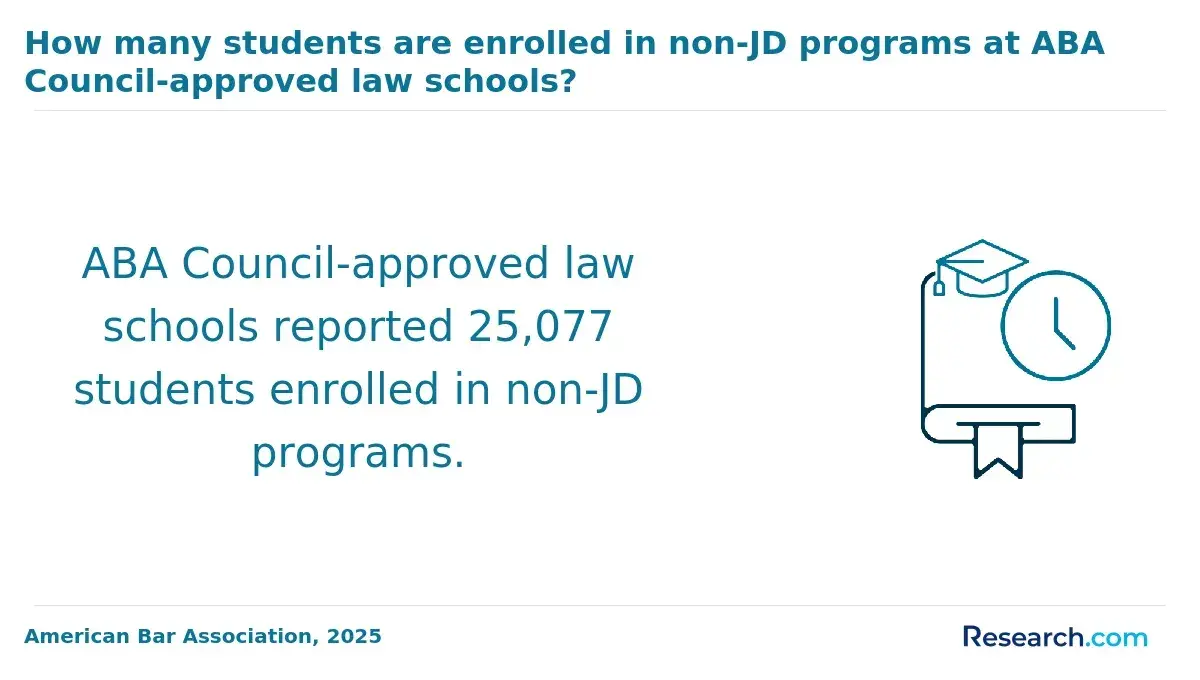
Check institutional accreditation separately from American Bar Association (ABA) program approval. The ABA approves qualifying paralegal education programs; it does not accredit the college or certify its graduates as paralegals. ABA approval is not a universal hiring or legal requirement, but it may matter to a particular employer. Verify the exact program's current status in the ABA's paralegal program directory and confirm the institution's accreditation with its recognized accreditor. If an associate degree is your likely route, you can use a comparison of best online associate degrees in paralegal studies to build a shortlist, then check each school's current disclosures.
How do online and campus-based paralegal programs compare?
Neither format automatically provides better preparation for a remote firm. Compare when participation must happen, how instructors review work, and whether the program offers supervised practice - not just whether its courses appear online.
This comparison separates delivery convenience from the practical training a prospective student needs to confirm.
| Format | Potential advantage | Constraint to check |
| Online asynchronous | Coursework may fit around work hours | Fixed assignment deadlines, live assessments, and placement hours may still apply |
| Online with live meetings | Regular opportunities to practice real-time collaboration | Scheduled sessions may conflict with work or time zones |
| Campus-based or hybrid | In-person feedback and access to local contacts | Travel, campus attendance, and the need to practice remote workflows deliberately |
Ask the school for its current schedule, technology requirements, campus-visit rules, and internship policy. "Online" does not necessarily mean self-paced, and an internship described as flexible may still require daytime availability. If you are comparing broader legal studies options, a guide to finding an online legal studies associate program can help you identify alternatives; check whether each alternative teaches paralegal procedures and supervised drafting rather than assuming the titles are interchangeable.
What collaboration tools should paralegal students learn?
Specific software changes by firm. What transfers between workplaces is the ability to use an approved system accurately, preserve a clear review trail, and recognize when a task requires attorney direction. A program's mention of a product is not the same as student access, hands-on assessment, or proficiency.
Look for assignments that require students to work across these connected systems:
- Document and matter management: apply consistent file names, permissions, version control, and attorney approval before distributing work.
- Calendaring and task tracking: record assignments and proposed deadlines, then confirm legally significant dates through the firm's review process.
- Research and drafting: document sources, check whether authorities remain valid, and prepare drafts an attorney can review efficiently.
- Secure communication and electronic discovery: use approved channels for confidential material and understand how collection, review, and production tasks are supervised.
Ask to see a current syllabus or sample assignment: Do students actually use a shared workspace, or only read about one? If generative AI is included, training should cover confidentiality restrictions, checking citations and factual claims against authoritative sources, and following the supervising attorney's and organization's policies. An AI-generated draft is not a substitute for legal review.
How does supervised practice prepare students for remote legal work?
A clinic, internship, practicum, or simulated matter can show whether a student can turn an assignment into usable work while remaining within a paralegal's role. The label matters less than the work performed, the feedback received, and whether a supervising attorney controls legal decisions and final client-facing work.
Before committing to a program, confirm the placement arrangements in this order:
- Ask whether practice is required, optional, or simulated, and whether remote placements or a current legal job can satisfy the requirement.
- Identify who finds and approves a placement, what schedule it requires, and whether the school has restrictions on the supervising workplace.
- Request an example of the feedback process, including how drafts, corrections, confidentiality, and attorney sign-off are documented.
A remote placement can be especially valuable when it includes shared-file workflows and scheduled review meetings. It can also be a poor fit if the student must find a placement the school cannot help secure, cannot attend required hours, or is assigned confidential client work without appropriate oversight. Verify those details in the current program handbook rather than assuming any online program permits remote practice.
What courses are included in remote-focused paralegal programs?
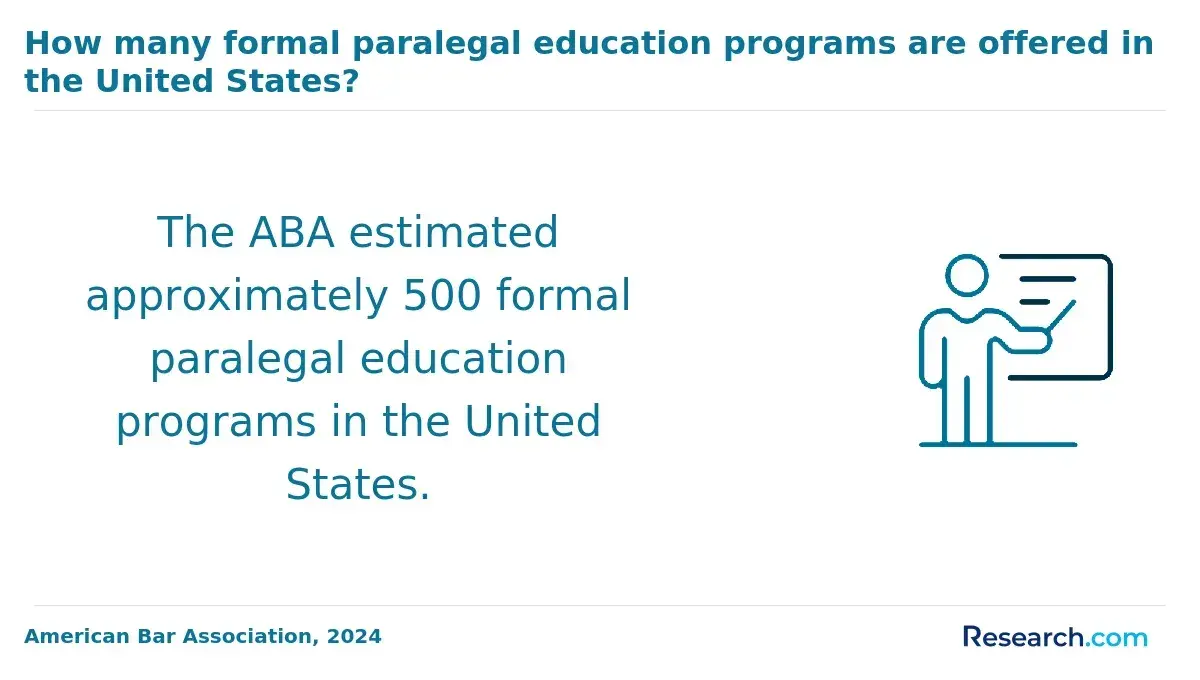
Look first for a sound paralegal curriculum: legal research and writing, civil procedure, legal ethics, and instruction in finding and applying jurisdiction-specific rules. Courses in litigation, contracts, business organizations, or other practice areas may be useful, but the mix varies by program.
For remote-firm preparation, read beyond course titles. A legal writing course is more useful if students submit revised drafts after feedback. A litigation course should connect pleadings and discovery to document organization and deadline controls. Technology instruction should distinguish secure file sharing, electronic discovery, and legal research from general computer literacy. Ask whether students complete a matter-based assignment that requires coordinated handoffs and attorney-style review.
Do not assume a single specialty course establishes expertise. If you already have legal knowledge and need only a particular software workflow, targeted employer training or continuing education may cost less time than another degree. If you lack legal foundations, software training alone will not fill that gap.
How long do paralegal programs take and what do they cost?
Completion time depends on the credential, prior credits, course sequence, and whether you attend full-time. An associate degree commonly takes about two years of full-time study; a post-baccalaureate certificate may be shorter, but its admission prerequisites can change the overall timeline. Internship scheduling and courses offered only in certain terms may matter more than an advertised fastest-completion estimate.
There is no responsible single price for "remote paralegal education." Compare each school's published 2026-27 tuition and required fees using the same unit - per credit or total program cost - then account for books, technology, research-platform charges, required travel, prerequisites, and placement expenses. A lower advertised price is less useful if the credits will not serve your next educational goal or the schedule forces you to reduce paid work.
Do not assume a certificate qualifies for federal student aid. Ask the school whether the specific program is aid-eligible and what enrollment conditions apply. For readers considering a graduate legal studies degree instead, budgeting for an online master's in legal studies is a separate comparison: that degree generally serves broader legal-knowledge goals, not paralegal training or attorney qualification.
What are the admission requirements for paralegal programs?
Requirements depend on the credential and the individual school. An associate program may admit applicants with a high school diploma or equivalent, while a post-baccalaureate certificate generally expects a completed bachelor's degree. Some programs also specify prior coursework, minimum grades, application materials, or placement-related eligibility rules. Treat a school's published requirements - not a description of what applicants "typically" have - as controlling.
Before paying an application fee, check the current catalog for prerequisites and course sequencing. If you hope to use earlier college credits, request a formal evaluation: the receiving institution decides whether credits transfer and how they apply. Also ask when any background check or workplace screening occurs; admission to a program does not necessarily mean approval for every placement.
If an admissions essay is your obstacle, you can compare legal studies programs with no admissions essay. Verify each program's current application rules and curriculum before treating it as an alternative to paralegal education.
What certifications and professional standards apply to paralegals?
A paralegal certificate documents completion of an educational program. Professional certification is a separate credential awarded under a certifying organization's rules. For example, NALA awards its Certified Paralegal credential, and the National Federation of Paralegal Associations offers the Registered Paralegal credential. Their eligibility, examinations, and maintenance rules differ, so check each organization's current requirements before planning around an exam.
Professional certification is not universally required to work as a paralegal. State-specific rules and employer preferences can also affect which credentials matter. Neither certification nor graduation from an ABA-approved program makes someone an attorney; the ABA does not certify individual paralegals.
For remote work, professional standards have a practical consequence: confidential information must stay within authorized systems, and the supervising lawyer must be able to direct and review the work. Ask prospective employers how they handle access permissions, client communications, conflicts, and escalation when a paralegal spots an error or a deadline risk. Check the rules in the jurisdiction where the work will be performed rather than assuming one state's approach applies everywhere.
What careers, salaries, and job outlook can paralegal graduates expect?
Graduates may seek paralegal or legal assistant roles with law firms, corporate legal departments, government offices, or legal aid organizations. Typical supervised tasks include research, drafting, document review, case organization, and coordinating filings. A remote opening may still require experience, particular working hours, or access to a specific jurisdiction's courts; a program cannot guarantee a work-from-home position.
The U.S. Bureau of Labor Statistics reports median annual pay of $62,890 in May 2025 for the combined occupation of paralegals and legal assistants. It projects 0% growth, 2025-2035, but about 40,800 openings per year, largely as workers leave the occupation. These figures cover the occupation as a whole, not remote jobs, new graduates, or any one practice area.
For an entry-level remote-firm goal, prioritize evidence of accurate research, clear writing, secure collaboration, and supervised case work over collecting unrelated credentials. An experienced professional aiming instead for a corporate legal-knowledge or compliance role might investigate online business law master's programs with shorter timelines. That is a different educational investment: a non-JD master's does not qualify its holder to practice law, and relevant work experience or narrower training may be sufficient for the intended role.
Other Things You Should Know About Law & Paralegal
Only if the placement permits it and you can meet its security requirements. Ask about device management, secure access, storage, and what happens if your equipment fails.
Do not share client material or work product without permission. Ask the supervisor whether you may use a redacted sample; otherwise, create an original writing sample using a fictional matter.
Possibly, but obtain employer approval first. The arrangement may raise workplace, confidentiality, tax, and jurisdiction-specific practice issues that the supervising firm must address.
Notify the supervising attorney immediately through an approved backup channel. Do not assume an outage extends a deadline or decide independently how to file; follow the attorney's instructions and applicable court procedures.
References
- Educational Program Standards | North Carolina State Bar https://www.ncbar.gov/paralegal-certification/educational-program-standards/
- Legal Ethics for Paralegals: Essential Principles and Real-World Dilemmas | Rasmussen University https://www.rasmussen.edu/degrees/justice-studies/blog/legal-ethics-for-paralegals/
- Best Practices - Working Remotely https://privsec.harvard.edu/best-practices-working-remotely
- Reimagining Innovation in Law: Emphasizing Interpersonal Skills - Harvard Law School Center on the Legal Profession https://clp.law.harvard.edu/knowledge-hub/insights/reimagining-innovation-in-law-emphasizing-interpersonal-skills/
- Online Certified Paralegal Training | Iowa Western Community College https://careertraining.iwcc.edu/training-programs/certified-paralegal/
- Employer Resources for Virtual Internship Programs | UC Berkeley Law https://www.law.berkeley.edu/careers/for-employers/employer-resources-for-virtual-internship-programs/
- Paralegal Studies Prepares You for the Real World | ucr.edu https://extension.ucr.edu/features/paralegalstudies
- The 5 Essential Tools Every Paralegal Needs to Succeed | Bryan University Online© https://bryanuniversity.edu/faq/five-essential-tools-paralegals-need-to-succeed/
- Continuing Legal Education (CLEs) | paralegals.org https://www.paralegals.org/page/continuing-legal-education
- ABA Approved Paralegal Programs Directory | americanbar.org https://www.americanbar.org/groups/paralegals/paralegal-resource-directory/


