2027 Legal Studies Master's Programs for Charity Governance and Fundraising Compliance Teams

Co-Founder and Chief Data Scientist
Managing a charity's board records, donor restrictions, and fundraising registrations requires legal knowledge, but it rarely requires every team member to be a lawyer. For nonprofit staff considering graduate study, the decision is whether a legal studies master's will build useful compliance skills - or whether a shorter, less expensive option will do. This guide explains which coursework matters, how to evaluate online programs and costs, and where the degree fits alongside experience, certificates, and attorney advice.
Key Things You Should Know
- A Master of Legal Studies (MLS), Master of Studies in Law (MSL), or similar non-JD degree can strengthen nonprofit compliance work, but it does not qualify graduates to practice law.
- Look for substantive instruction in tax-exempt organizations, state charitable-solicitation rules, board governance, and restricted gifts - not just a broadly labeled compliance concentration.
- For a career benchmark, the U.S. Bureau of Labor Statistics reports median pay of $80,730 in May 2025 for compliance officers across industries; that is not a nonprofit-specific salary or a promised return on the degree.
What are legal studies master's programs for charity governance and fundraising compliance?
These are graduate legal-knowledge programs designed for people who generally do not intend to become attorneys. A nonprofit professional might use the coursework to recognize legal risks, maintain sound internal processes, and work more effectively with counsel. Schools may call the credential an MLS, MSL, or Master of Jurisprudence; the name alone says little about its nonprofit relevance. A broader explanation of the types of legal studies master's degrees can help clarify those labels.
Programs describe nonprofit-focused study in different ways. This distinction matters because a concentration shown on a transcript may require a defined sequence, while an advertised area of interest may depend on electives being offered when you enroll.
| Program description | What it generally indicates | What to verify |
| Formal concentration | A specified set of required courses within the degree | Whether charity governance and fundraising law are actually among those requirements |
| Relevant electives | Courses that may be selected within a broader degree | Availability, prerequisites, and whether courses are offered often enough to finish on schedule |
| Embedded certificate | A separately defined course sequence completed alongside the degree | Whether it adds credits, appears on the transcript, and changes the total cost |
A graduate academic certificate documents completed coursework; it is not the same thing as professional certification awarded by a credentialing organization.
What careers can a legal studies master's prepare you for in nonprofit compliance?
Relevant work includes charity compliance officer, grants compliance manager, fundraising operations manager, governance administrator, and roles overseeing donor records or policy implementation. Duties can include tracking filing deadlines, checking gift restrictions, documenting board decisions, and escalating legal questions to counsel. Job titles and hiring requirements vary widely among charities, foundations, and their service providers; an MLS is usually a possible qualification, not a universal requirement.
The Bureau of Labor Statistics projects 4% growth for compliance officers from 2025 to 2035 and about 32,700 openings per year across industries. That broad occupation offers useful context, but it does not forecast hiring specifically for nonprofit fundraising compliance. Experience with grant conditions, finance controls, or development operations may be more decisive than another degree for some openings.
For someone seeking an entry-level legal-support role rather than graduate-level compliance work, choosing an associate degree in legal studies may be a more proportionate starting point. Legal-support education does not authorize someone to give independent legal advice.
What coursework do charity governance and fundraising compliance programs include?
A useful curriculum starts with legal research, statutory interpretation, contracts, and organizational governance, then applies those foundations to nonprofit decisions. Especially relevant subjects include federal tax exemption, public-charity rules, board fiduciary duties, conflicts of interest, charitable-solicitation registration, donor restrictions, grant agreements, privacy, and employment issues. A fundraising course that focuses only on campaign strategy is not a substitute for instruction in legal compliance.
Look closely at assignments, not just course titles. Reviewing a sample gift agreement, mapping state registration responsibilities, or drafting a board policy can be more relevant to the job than memorizing legal terms. Ask whether nonprofit examples are taught in required courses, available electives, or only an optional capstone. If the work involves interpreting an organization's actual obligations, it should be reviewed by qualified counsel rather than treated as legal advice from a class project.
Are online legal studies master's programs suitable for nonprofit compliance professionals?
Yes, if the program's schedule and teaching methods support the skills the employee needs. Online delivery can let a professional study without leaving a nonprofit job, but "online" does not necessarily mean asynchronous or self-paced. Live classes, timed examinations, group projects, campus visits, and courses offered only in certain terms can still affect work and fundraising calendars.
Request the current course rotation and a sample weekly schedule. Check how students receive feedback on legal writing, whether research resources are available remotely, and whether a capstone can address a nonprofit problem without exposing confidential donor information. Readers comparing accelerated formats can use guidance on choosing a legal studies master's by completion time, then confirm each school's actual sequencing and attendance rules. A faster calendar is worthwhile only if required courses remain accessible and the workload is manageable.
What accreditation should you look for in a legal studies master's program?
Verify that the university holds institutional accreditation from an accreditor recognized by the U.S. Department of Education or the Council for Higher Education Accreditation, and confirm the status through the accreditor or an official federal listing. Institutional accreditation is a baseline check on the school; it does not establish that a particular MLS curriculum is strong in nonprofit law or that the program qualifies for a particular form of aid.
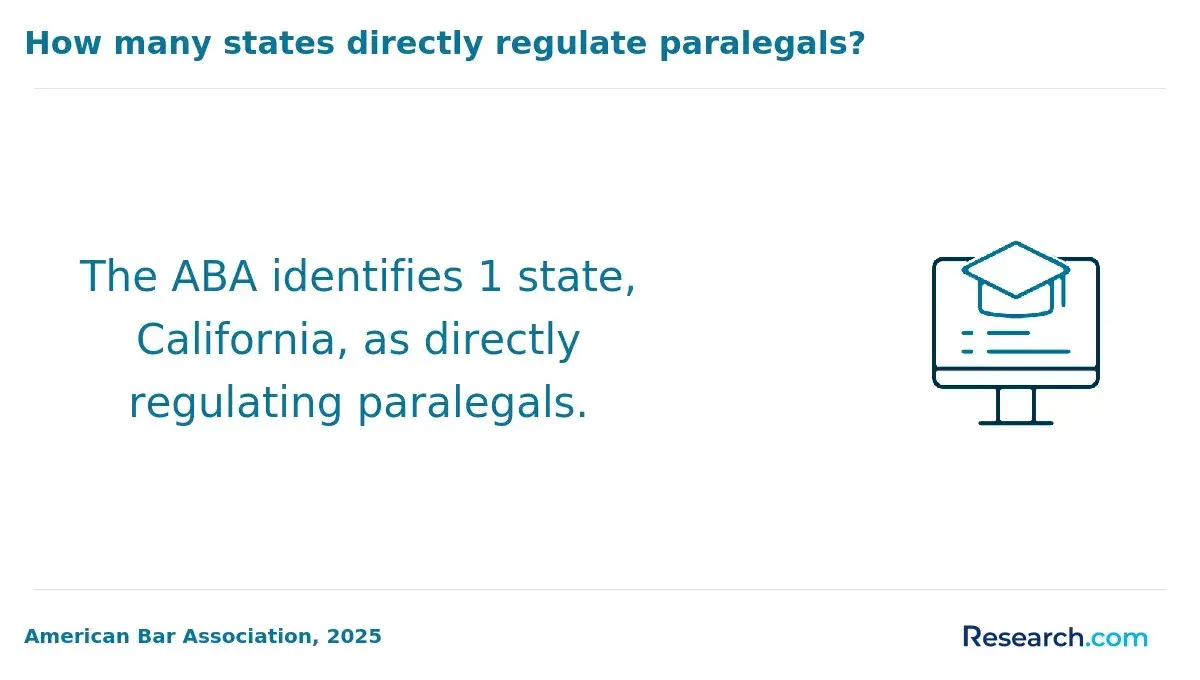
Do not confuse this check with American Bar Association approval. ABA approval applies to qualifying paralegal education programs, not as a general quality label for non-JD legal studies master's degrees. Nor does a law school's ABA-approved Juris Doctor program mean its separate non-JD master's prepares graduates for a bar examination. Evaluate the master's curriculum on its own terms.
What are the admission requirements for nonprofit-focused legal studies master's programs?
Applicants should expect to verify each program's published requirements. Schools commonly evaluate a completed bachelor's degree, transcripts, and an application explaining professional goals; recommendations, a résumé, writing materials, or prior work experience may also be requested. A JD or prior law coursework is generally not the point of a non-JD legal studies degree, but individual program rules control. Check whether the school requires a minimum academic record or offers conditional admission rather than assuming either policy applies everywhere.
Applicants with earlier paralegal coursework should not assume those credits will shorten a master's: the receiving graduate school decides whether prior study qualifies for transfer, and undergraduate credits typically serve a different degree level. If completing a bachelor's is the immediate obstacle, research paralegal bachelor's degree transfer options before applying to graduate programs. Ask admissions staff to distinguish required preparation from experience that merely strengthens an application.
How long do charity governance legal studies master's programs take, and what do they cost?
Completion time depends on required credits, part-time enrollment, course rotation, and any capstone or residency. Compare the schedule for the courses you actually want, not just the shortest completion time advertised for the general degree. Working professionals also need to account for time spent on reading and writing during campaign or audit periods.
For cost, request a written estimate covering tuition, mandatory university and program fees, books, research-platform charges, technology, and any required travel. Then compare that total with employer education benefits and the cost of reduced work hours. Published tuition alone cannot show whether a program is affordable; an overview of online paralegal degree affordability illustrates why credential level and full educational costs matter when weighing a less extensive alternative.
Ask the financial aid office whether the specific graduate program is eligible for federal aid and what borrowing would mean for your budget. Do not assume that an embedded or standalone certificate has the same aid eligibility as a degree. If the job calls for one focused skill, compare the master's with a graduate certificate or employer-supported training before taking on the larger commitment.
What fundraising compliance laws and regulations do graduates need to understand?
Federal tax rules shape how tax-exempt charities maintain their status, document contributions, and report activities to the Internal Revenue Service. State law governs many aspects of nonprofit corporations and charitable solicitation; a campaign reaching donors in several states may raise more than one state's registration and reporting questions. Requirements and exemptions vary by jurisdiction and organization.
Compliance work also extends beyond registrations. Restricted gifts require careful tracking of donor terms, while grant agreements can impose separate spending and reporting conditions. Fundraising communications may implicate privacy, email, or telemarketing rules depending on the method used. Effective staff learn to identify which rules apply, keep reliable records, and seek legal review when a solicitation, gift condition, or planned activity presents an unfamiliar issue. No single course can replace checking current federal and state requirements for the organization's activities.
Do nonprofit compliance professionals need a law license or certification?
There is no general U.S. law-license requirement simply to hold a nonprofit compliance or fundraising operations job. Employers can set their own qualifications, and particular activities may be regulated differently by state. A compliance professional can manage procedures and coordinate with lawyers, but an MLS or MSL does not confer an attorney license or permit independent legal practice.
Professional certifications may help demonstrate fundraising, grants, or compliance knowledge when they match a role. Their eligibility rules come from the awarding organization and should be checked directly; they are not interchangeable with an academic certificate. If a position expects someone to give legal opinions or represent the charity as counsel, determine whether it instead requires a licensed attorney.
How do you choose a reputable legal studies master's program for nonprofit careers?
Start with the work you want to do. A governance-focused employee may need board and tax-exemption coursework; a fundraising operations manager may benefit more from solicitation rules, gift agreements, and data practices. A public administration degree may better serve someone whose main goal is nonprofit leadership rather than legal analysis. The following checks turn that distinction into an enrollment decision:
- Match required courses - not just the concentration's name - to the legal issues in your target job, and confirm when relevant electives run.
- Verify institutional accreditation and ask who teaches nonprofit law and assesses applied legal-writing work.
- Obtain the full current cost and a realistic part-time schedule, including live meetings, visits, and capstone requirements.
- Compare the master's with a targeted certificate, supervised work experience, or employer training for the same goal.
- Ask a prospective employer or supervisor which qualification would change your responsibilities or candidacy; do not treat a school's career claims as a hiring commitment.
A red flag is a program that implies its non-JD credential leads to attorney licensure or relies on a "nonprofit compliance" label without identifying the courses behind it. Choose the degree when its legal depth fills a specific gap you cannot reasonably address through a shorter route - and when its cost and schedule remain workable.
Other Things You Should Know About Law & Paralegal
Not without appropriate organizational permission and safeguards. Ask the instructor whether anonymized, fictional, or publicly available materials can meet the assignment requirements, and follow your employer's data policies.
Possibly, but credit is not automatic. Check the credentialing body's rules for eligible courses, providers, documentation, and reporting periods before enrolling for that purpose.
It can provide exposure to governance and organizational records, particularly when you have defined responsibilities. It is not a substitute for training or legal advice, and board members must follow the duties that apply in their state.
Prioritize U.S. federal and relevant state rules if those govern the job you want. International coursework becomes more useful when the organization makes cross-border grants or operates abroad, where local legal advice may also be necessary.
References
- Types of Financial Aid: Grants, Work-Study, and Loans | studentaid.gov https://studentaid.gov/understand-aid/types
- Charitable Fundraising Platforms | State of California https://oag.ca.gov/charities/pl
- Charities and nonprofits | Internal Revenue Service https://www.irs.gov/charities-and-nonprofits
- Master of Legal Studies (MLS) vs. JD: What's the Difference? | SMU Online Master of Legal Studies https://onlinemasterlegalstudies.smu.edu/articles/mls-vs-jd/
- Master's Degree in General Legal Studies | Seton Hall Law School https://law.shu.edu/academics/mls-general-legal-studies-online.html
- MLS vs. LLM - Degree Comparison - Online LLM | Online Master of Laws (LLM) at Northeastern https://llmonline.northeastern.edu/articles/mls-vs-llm/
- 8 Non-Lawyer Jobs in the Legal Field | Purdue Global https://www.purdueglobal.edu/blog/legal-studies/non-lawyer-jobs-legal-field/
- Nonprofit Administration - Trinity Law School https://www.tiu.edu/law/master-legal-studies/nonprofit-administration-track/
- Master of Legal Studies (MLS) vs. JD: Which Is Right for You? | Wake Forest MLS https://mls.law.wfu.edu/articles/mls-vs-jd-which-is-right-for-you/
- 10 Key Issues in 501(c)(3) Nonprofit Legal Compliance - ICNL https://www.icnl.org/post/news/10-key-issues-in-501c3-nonprofit-legal-compliance-a-resource-roadmap-for-public-charities