2027 Online MLS Programs With In-Person Immersions: Travel, Attendance, and Employer Approval

Co-Founder and Chief Data Scientist
An "online" Master of Legal Studies program can still require a trip you cannot miss. For working professionals, the deciding factor may be less about online coursework than whether campus dates, travel costs, and time off fit a job. This guide explains how to identify required immersions, estimate the full commitment, and secure employer approval before enrolling. It also shows when a fully online program - or a shorter legal education route - may be the better choice.
Key Things You Should Know
- "Online" does not mean campus-free: obtain the current immersion calendar and written attendance policy before accepting an offer.
- Compare tuition with airfare or driving, lodging, meals, and paid time off; a tuition payment plan does not necessarily cover travel.
- Get separate employer approval for time away and tuition reimbursement, including any grade, deadline, or repayment conditions.
What is an online MLS program with an in-person immersion?
A Master of Legal Studies (MLS), sometimes called a Master of Studies in Law (MSL) or offered under a related non-Juris Doctor (non-JD) name, teaches legal concepts to people who generally do not plan to practice law. An immersion is a scheduled face-to-face component within otherwise online study. It might involve workshops, simulations, faculty sessions, or group projects at a campus or another designated site.
An MLS is a graduate degree, not a paralegal certificate, professional certification, or JD. It does not by itself qualify a graduate to practice law or provide legal advice. Applicants generally need a bachelor's degree, though each school sets its own admissions rules. If you are starting with an associate degree, continuing from an associate degree to legal studies addresses a different, undergraduate step before graduate admission.
How do in-person immersion requirements differ among online MLS programs?
There is no standard MLS immersion schedule. Schools may require a visit near the beginning or end of the degree, visits tied to particular courses, or attendance at a recurring event. Other programs advertise an optional campus experience rather than a graduation requirement. Even programs using the same word, "immersion," may differ in location, duration, scheduling notice, and whether attendance is graded.
Read the current catalog and student handbook alongside the program page. Ask whether the published schedule applies to your entering cohort and concentration, whether events occur on weekdays, and whether a required visit can be completed at another time or location. A promotional description of an online format is not a substitute for the degree's attendance rules.

How much travel and attendance do online MLS immersions require?
The practical commitment includes more than time in a classroom. Travel may require an arrival the day before an event or a departure after it ends; weather, flight schedules, and work shifts can add further constraints. A local student may commute, while a distant student may need transportation, lodging, and leave from work. Do not assume that a weekend event requires no time off.
Build an estimate for each required visit using the dates and location supplied by the school. These are the costs and time commitments most likely to change whether the program is workable:
- Transportation, lodging, local travel, meals, and any required event fees.
- Work hours missed, paid time off used, and caregiving arrangements.
- Extra travel if a course change or missed immersion delays completion.
Ask the school which costs are included in tuition, whether it negotiates lodging rates, and when final dates will be confirmed. If you are comparing this degree with a lower-cost paralegal route, a guide to paralegal degree tuition installment plans can help distinguish spreading tuition payments from actually reducing education costs. An installment plan should not be assumed to finance immersion travel.
Are in-person immersions mandatory for online MLS students?
Only the specific program's published requirements can answer this. If an immersion is required for a course or degree, students should plan to attend even if lectures and assignments are online. A school may offer a documented alternative for a particular circumstance, but an alternative should not be presumed available for work conflicts, travel expense, or a missed flight.
Before paying a deposit, request a written answer to what happens if you cannot attend: Can you make up the work, join a later cohort, or take a different course? Would an absence affect your grade, graduation date, or eligibility for a concentration? If the school cannot confirm a workable path and travel is uncertain, treat the immersion as a firm obligation rather than a flexible feature.
How do online MLS programs compare with fully online and campus programs?
The best format depends on which commitment you can reliably meet. This comparison separates location flexibility from scheduling flexibility; neither an online label nor a campus label tells you whether individual classes meet at fixed times.
| Format | Location commitment | Main trade-off |
| Online MLS with required immersion | Online coursework plus specified in-person visits | Face-to-face activities come with travel and attendance risk. |
| Fully online MLS | No required campus visit, if confirmed by the school | Eliminates immersion travel but may still include live classes and deadlines. |
| Campus MLS | Regular travel to a teaching site | Frequent in-person access requires a workable commute or relocation. |
If your aim is supervised paralegal work rather than graduate-level legal knowledge for a current profession, compare the MLS with associate-level paralegal programs online before committing to a master's degree. Those programs serve a different career goal; neither route qualifies a graduate to practice law.
What accreditation should students verify when choosing an online MLS program?
Verify that the university holds current institutional accreditation from an accreditor recognized by the U.S. Department of Education, and confirm that the MLS is an authorized degree offered by that institution. Check the school's official accreditation and catalog information rather than relying solely on an advertisement. Accreditation matters for academic credibility and may affect aid eligibility, but it does not guarantee that another school will accept transfer credit.
Do not confuse institutional accreditation with American Bar Association (ABA) approval. ABA approval of qualifying paralegal education programs is a separate program-level status; it is not a general quality label for an MLS. Likewise, a law school's JD-related status does not turn its non-JD MLS into a degree that qualifies students for attorney licensure. If you may later pursue a JD, ask prospective JD schools directly about their admissions and credit policies.
What do online MLS programs teach, and how long do they take?
MLS curricula commonly introduce legal research, reasoning, contracts, and the workings of U.S. legal institutions, then offer courses relevant to fields such as compliance, employment, healthcare, or privacy. Course names alone do not establish a formal concentration: check whether the catalog requires a defined sequence, simply offers electives, or awards a separate certificate.
Completion time depends on required credits, course sequencing, enrollment intensity, and when required immersions are offered. Request a term-by-term plan for both part-time and full-time study, including any course available only at particular times. A missed immersion or prerequisite can matter more to your finish date than the flexibility of individual online assignments.
If you do not yet hold a bachelor's degree, shorter routes to an online paralegal bachelor's degree may be worth comparing as an undergraduate option. A faster advertised timeline still depends on accepted transfer credit and the courses you have left to complete.
What are the admission requirements and costs for online MLS programs?
Schools set their own requirements, but MLS applicants generally need a bachelor's degree and may be asked for transcripts, a statement of purpose, recommendations, or a résumé. Confirm whether a particular program requires prior legal study, work experience, or a test; none should be assumed from the MLS label alone.
Compare total expected cost, not advertised tuition alone. Include mandatory fees, books or research materials, technology requirements, and every required visit. Ask the financial aid office whether the specific degree and your enrollment status qualify for federal aid, and review borrowing terms before relying on loans. Employer assistance may reduce your cost but can come with separate conditions.
If your goal is entry into paralegal work rather than advancement in a role that uses legal or regulatory knowledge, compare online paralegal degrees with affordable tuition. A less expensive credential is not automatically interchangeable with an MLS, but paying for graduate study without a clear use for it is a substantial opportunity cost.
Do employers recognize online MLS degrees with in-person immersions?
An employer may value legal knowledge gained through an online MLS, but recognition is role- and employer-specific. The immersion itself does not guarantee a promotion, satisfy a licensing requirement, or make the degree equivalent to a JD. For a current job, a more useful question is whether the courses address responsibilities your manager expects you to take on - and whether the employer will support the required time away.
Seek two approvals before committing: one from your supervisor for the actual travel and attendance dates, and one from human resources or the benefits administrator for any tuition assistance. Get the reimbursement rules in writing, including eligible expenses, grade or completion requirements, submission deadlines, and any obligation to repay assistance after leaving. If dates are not yet final, explain that uncertainty and agree on when approval must be revisited.
What careers, salaries, and certifications can an online MLS degree support?
An MLS may help someone apply legal knowledge in compliance, policy, contracts, human resources, or regulated operations, especially when paired with relevant work experience. It is not generally a required entry credential for those fields. Before enrolling, compare the degree with employer training, a focused graduate certificate, or a professional certification tied to your target role.
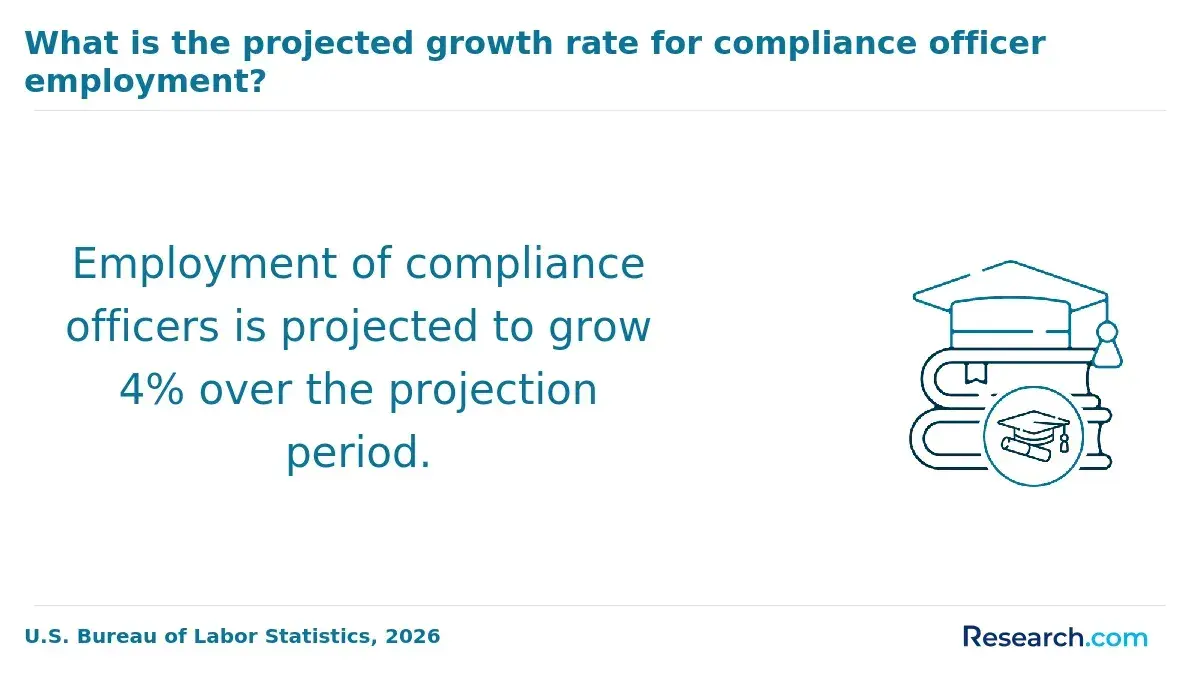
For context, the U.S. Bureau of Labor Statistics reports median annual pay of $80,730 in May 2025 for compliance officers and projects 4% growth for 2025-2035. Those figures describe the occupation, not MLS graduates or the pay effect of an immersion. Job duties and hiring standards vary by industry and employer.
Professional certifications are separate from academic degrees and have their own eligibility rules, set by the organization granting each credential. If a job posting names one, check that organization's current requirements rather than assuming an MLS satisfies them. For paralegal roles, completing a degree or certificate also does not automatically make someone a professionally certified paralegal; paralegals work within applicable rules on attorney supervision and unauthorized practice of law.
Other Things You Should Know About Law & Paralegal
Do not assume they will. A JD program decides whether it accepts any prior graduate credit and how that credit applies. Ask prospective law schools before enrolling in an MLS for this purpose.
Possibly, but confirm that the school can enroll students in your state and that you can meet any required in-person components. Ask admissions to verify your state-specific eligibility.
Contact the school's disability services office early to discuss the event's activities and accommodation process. An accommodation request does not automatically replace a required in-person visit.
It may help demonstrate relevant experience, but admission and graduate transfer credit are separate decisions. The MLS program determines whether your prior coursework meets its policies.
References
- Cost of Attendance (Budget) | 2025-2026 Federal Student Aid Handbook https://fsapartners.ed.gov/knowledge-center/fsa-handbook/2025-2026/vol3/ch2-cost-attendance-budget
- Auxiliary Aids and Services for Postsecondary Students with Disabilities | U.S. Department of Education http://www.ed.gov/laws-and-policy/individuals-disabilities/auxiliary-aids-and-services-for-postsecondary-students-with-disabilities
- Online Master of Legal Studies (MLS) - Emory Law School https://law.emory.edu/admission/online-master-legal-studies-mls/index.html
- Master of Legal Studies (MLS) | ASU https://law.asu.edu/degree-programs/mls
- Navigating Disability Accommodations, including those affecting instruction | Academic Affairs https://academicaffairs.ucdavis.edu/accommodations
- What does college actually cost? | About the University of Cincinnati https://www.uc.edu/blog/hidden-costs-of-college.html
- Master of Legal Studies (MLS) - Arizona Law https://law.arizona.edu/academics/degrees/master-legal-studies-mls
- Online Master of Legal Studies Program | University of Miami School of Law https://admissions.law.miami.edu/academics/mls/
- Online Master's Degree in Legal Studies | Purdue Global https://www.purdueglobal.edu/degree-programs/legal-studies/online-master-degree-legal-studies/
- Online Master of Legal Studies | AU-LAW https://onlinelaw.wcl.american.edu/legal-studies/