2027 Legal Studies Master's Programs for Grants and Sponsored Research Administrators

Co-Founder and Chief Data Scientist
Grants and sponsored research administrators handle agreements, budgets, and rules that can determine whether an institution receives and keeps research funding. A master's in legal studies may strengthen contract and compliance skills, but a research administration degree may be more directly useful.
This guide compares those routes, identifies programs worth examining, and explains how to weigh curriculum, cost, scheduling, and professional credentials before enrolling.
Key Things You Should Know
- For day-to-day grants management, a research administration master's is usually the more direct fit; choose legal studies when contracts, regulatory interpretation, or institutional compliance are your main development goals.
- Compare programs by actual coursework - not degree title alone - and request a complete 2026-27 cost estimate before judging value.
- A legal studies master's is not required to administer grants or practice law; the Bureau of Labor Statistics reports $80,730 in May 2025 as the median pay for the broader compliance officer occupation, not for research administrators specifically.
What is a master's degree in research administration?
A research administration master's is graduate education focused on the funding lifecycle: finding opportunities, preparing proposals, negotiating awards, managing expenditures, monitoring compliance, and closing out projects. "Sponsored research" generally means work supported by an external funder under an award or agreement. Administrators may work with faculty, finance teams, legal counsel, and sponsors before and after an award is made.
A Master of Legal Studies (MLS) or similarly named non-JD degree takes a different approach. It teaches legal concepts to professionals who need to recognize issues and work effectively with counsel, rather than qualify as attorneys. That can be valuable for administrators who review agreement terms or oversee compliance, but it does not replace training in proposal development, sponsor systems, or post-award accounting.
These degrees also serve a different purpose from paralegal education. Someone primarily seeking legal-support work can examine best online associate degrees in paralegal studies before committing to a graduate program aimed at institutional administration.
What careers can a legal studies master's support in sponsored research administration?
Legal study is most useful where an administrator must identify contractual or regulatory risks, document decisions, and know when to involve an attorney. It can support advancement, but employers may value demonstrated award-management experience more than a particular graduate degree.
The roles below show where legal knowledge may help - and where operational expertise remains essential.
| Role | Typical work | Where legal study helps |
| Pre-award administrator | Proposal requirements, submissions, and sponsor deadlines | Interpreting solicitation conditions and identifying unusual terms |
| Post-award administrator | Spending oversight, reporting, and closeout | Understanding award restrictions and compliance obligations |
| Research contracts specialist | Coordinating agreement review and negotiation | Recognizing issues involving intellectual property, publication, and liability |
| Research compliance manager | Policies, monitoring, training, and escalation | Connecting regulatory requirements to institutional procedures |
Research compliance can overlap with employment policies when institutions manage staffing and training. Professionals targeting that intersection can also review legal studies degree pathways focused on human resources law; that focus is less relevant if the immediate goal is managing sponsor budgets or submissions.
What are the best master's programs for grants and sponsored research administrators?
There is no single best degree for every administrator. Start with the work you want to do more confidently, then compare a specialist research administration program with a legal studies program using the same criteria. The examples below are starting points, not a ranking; confirm current requirements and availability in each school's catalog.
| Program | Degree and delivery | Strongest fit | Key curriculum check |
| University of Central Florida | Online Master of Research Administration | Administrators seeking education across the sponsored-project lifecycle | Check how pre-award, post-award, and compliance courses align with your role. |
| Johns Hopkins University | Online Master of Science in Research Administration | Professionals seeking a research-administration-specific graduate degree | Compare required courses and electives against your desired specialty. |
| Arizona State University | Online Master of Legal Studies | Administrators whose work increasingly involves legal and regulatory issues | Confirm that available courses cover the contracts and compliance topics you need. |
UCF and Johns Hopkins are the more direct comparisons for grants work. ASU represents a different decision: investing in legal literacy rather than a degree organized around research administration. None should be treated as automatically superior based on its name or institutional reputation. If an MLS appears to be the right route, compare its full cost with other low-cost online master's degrees in legal studies before choosing a school.
What accreditation should you look for in a research administration master's program?
Confirm that the university holds institutional accreditation from an accreditor recognized by the U.S. Department of Education. Institutional accreditation addresses the school as a whole; it does not mean that a particular research administration or legal studies degree has separate professional accreditation.
Ask the school which institution awards the degree, whether the specific program is credit-bearing, and how its accreditation and program status affect any employer tuition benefit or future study you are considering. Do not confuse this check with American Bar Association approval of certain paralegal education programs. ABA paralegal program approval is not institutional accreditation and is not a requirement for these master's degrees.
What do you learn in a grants and sponsored research administration master's program?
A research administration curriculum may cover proposal preparation, budgets, award negotiation, financial management, audits, and sponsor reporting. Legal studies curricula more often emphasize how to read rules, analyze contracts, understand organizational obligations, and communicate issues to counsel. Course titles alone cannot establish how much practice you will get.
For a role working with U.S. federal awards, look for instruction that applies the Uniform Guidance, found in 2 CFR Part 200, to realistic award decisions. For contracts-heavy work, look for assignments involving agreement terms, intellectual property, data handling, or research compliance. Ask to see current syllabi or sample assignments: a course that mentions a topic may offer much less hands-on work than its description suggests.
Are online master's programs in research administration as effective as campus programs?
Online delivery can work well for employed administrators when courses require substantive analysis, feedback, and applied projects. The delivery label alone does not establish quality or convenience: online classes may have scheduled meetings, fixed deadlines, group work, or a required course sequence.
Before enrolling, confirm meeting times, campus visits, software access, and whether projects can draw on your current job. If the program requires a practicum, ask who arranges it and whether current employment qualifies. Students primarily seeking a shorter legal curriculum can compare fastest online master's programs in business law, while checking that faster completion still leaves room for the courses their grants role requires.
What are the admission requirements for a research administration master's degree?
Expect to need a bachelor's degree and to submit materials such as transcripts and a statement of purpose; specific GPA, recommendation, résumé, test, and work-experience rules vary by program. Do not assume that a law or accounting background is mandatory unless the school explicitly says so.
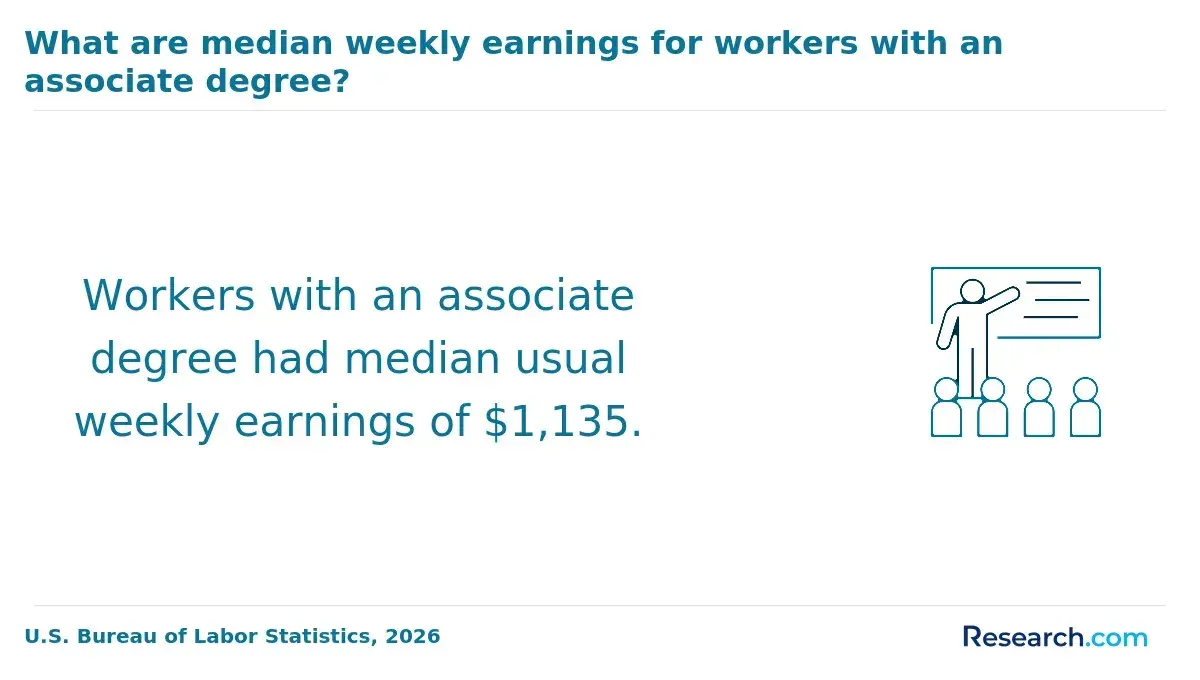
If you currently hold an associate degree, establish the bachelor's-level admission pathway before comparing master's programs. You can compare legal studies transfer pathways after an associate degree, but the receiving university decides which credits transfer and how they apply. Experienced applicants should also ask whether the program offers prerequisites, introductory courses, or advising for students new to sponsored research.
How long does a research administration master's take and cost?
Completion time depends on required credits, course frequency, and whether you study part time while working. Tuition also varies by school and enrollment status, so a quoted per-credit rate is not a reliable total-program comparison. Obtain a written 2026-27 estimate from each school that covers required tuition and fees, books or technology, and any travel or practicum expense.
Compare that total with what you would give up in time and earnings. If employer-funded training or a graduate certificate addresses a specific skills gap, a full master's may be an unnecessary expense. Ask whether your employer reimburses this exact degree, whether reimbursement requires a minimum grade or continued employment, and whether the school confirms the program's eligibility for federal student aid. Eligibility should not be assumed from institutional accreditation alone.
What certifications are useful for grants and research administrators?
A degree, an academic certificate, and a professional certification are different credentials. The Research Administrators Certification Council offers the Certified Research Administrator (CRA), Certified Pre-Award Research Administrator (CPRA), and Certified Financial Research Administrator (CFRA) credentials. Their eligibility and examination rules depend on the credential; completing a master's does not automatically award one.
For professionals whose work centers on grant development rather than institutional award administration, the Grant Professional Certified (GPC) credential, administered through the Grant Professionals Certification Institute, may be more relevant. Review each certifying organization's current eligibility rules and your target job postings before paying for preparation. If employers primarily want experience with proposals, sponsor rules, or financial systems, supervised work and targeted training may be a better first investment than either certification or another degree.
What salaries and job outlook can research administration graduates expect?
There is no single Bureau of Labor Statistics salary or projection that precisely describes grants and sponsored research administrators. As a related - but broader - benchmark, compliance officers had median annual pay of $80,730 in May 2025, with 4% projected job growth for 2025-2035, according to the Bureau of Labor Statistics. Those figures include compliance jobs outside research and should not be read as a graduate salary forecast.
Pay and advancement depend on the employer, location, scope of responsibility, and prior experience. A practical return-on-investment test is whether the program teaches skills requested in the jobs you want and whether those roles offer enough advancement to justify the full cost. Compare actual postings and internal promotion criteria before treating any master's as a necessary step.
Other Things You Should Know About Law & Paralegal
No. A non-JD legal studies degree does not authorize its holder to practice law. Administrators can identify and coordinate review of agreement issues, but legal advice and representation must be handled according to applicable state rules and employer policies.
It may help with understanding regulatory obligations, but the most relevant preparation is often institution-specific training and experience with the applicable review process. Check whether a program teaches the research compliance topics your role actually handles.
First verify what the label means. A formal concentration, an optional set of electives, and a few related courses can provide different levels of preparation. Request the current degree requirements rather than relying on a marketing description.
Some skills transfer, including interpreting funder requirements, maintaining records, and managing deadlines. Nonprofit roles may place more emphasis on prospect research, proposal writing, or donor relationships, so compare job descriptions before choosing additional education.
References
- 2 CFR Part 200 -- Uniform Administrative Requirements, Cost Principles, and Audit Requirements for Federal Awards https://www.ecfr.gov/current/title-2/subtitle-A/chapter-II/part-200
- Types of Financial Aid: Grants, Work-Study, and Loans | studentaid.gov https://studentaid.gov/understand-aid/types
- Chapter II: Proposal Preparation Instructions | NSF https://www.nsf.gov/policies/pappg/23-1/ch-2-proposal-preparation
- The post-award effort of managing and reporting on funded research: a scoping review - PMC https://pmc.ncbi.nlm.nih.gov/articles/PMC10570692/
- Master of Science in Research Administration and Compliance | CUNY School of Professional Studies | CUNY SPS https://sps.cuny.edu/academics/graduate/master-science-research-administration-and-compliance
- What Can a Master's in Research Administration Do for You? | UCF Online https://www.ucf.edu/online/healthcare/news/what-can-a-masters-in-research-administration-do-for-you/
- Sponsored Project Handbook - Office of Research Services | University of Pennsylvania https://researchservices.upenn.edu/resources/sponsored-project-handbook/
- Research Administration, Certificate | umaryland.edu https://graduate.umaryland.edu/researchadmin/
- Subaward Procedures - Contract & Grant Accounting - UMBC https://cga.umbc.edu/subaward-procedures/
- Post-Award Administration | Rutgers Research https://research.rutgers.edu/resource/post-award