2027 MLS Programs for Corporate Whistleblower and Investigations Program Staff

Co-Founder and Chief Data Scientist
Corporate whistleblower staff need to assess reports fairly, protect sensitive information, document findings, and recognize when a matter needs legal counsel. A Master of Legal Studies (MLS) may strengthen that work, but it is a substantial investment—and it is not the only route.
This guide is for compliance, HR, audit, and investigations professionals deciding whether graduate legal study fits their responsibilities. It explains what to look for in a program, how to compare it with shorter training, and which costs and career limits to check before enrolling.
Key Things You Should Know
- An MLS can build knowledge of employment law, corporate compliance, and investigations, but it is generally not required for whistleblower program work and does not qualify graduates to practice law.
- The closest broad federal pay benchmark is compliance officers: their median annual pay was $80,730 in May 2025, with 4% projected job growth from 2025 to 2035; those figures do not describe whistleblower investigators specifically.
- Favor programs with relevant coursework, practical assignments, recognized institutional accreditation, and a manageable total cost; compare them with employer training, targeted courses, and professional certification before committing.
What Is an MLS Degree for Corporate Whistleblower Investigations?
An MLS is a graduate degree designed to teach law to professionals who do not plan to become attorneys. Schools may use related names, such as Master of Studies in Law (MSL) or Master of Jurisprudence. For whistleblower program staff, the useful subject matter is typically employment law, corporate governance, regulatory compliance, evidence handling, and the legal risks surrounding retaliation and confidentiality.
The job is broader than knowing statutes. Staff may receive hotline reports, decide who should investigate, preserve records, interview witnesses, assess conflicts of interest, document findings, and coordinate remediation. An MLS can help them recognize legal issues and work effectively with counsel. It does not replace investigation experience or a Juris Doctor (JD), and it does not authorize graduates to give legal advice or practice law.
Do not assume a school offers a formal whistleblower investigation concentration. A named concentration, a set of electives, and a graduate certificate embedded in a degree are different offerings. Check the current catalog for what appears on the transcript and which courses students can actually take.
What Careers Can an MLS Support in Corporate Investigations?
Relevant roles include ethics hotline analyst, compliance specialist, corporate investigator, employee-relations investigator, internal audit investigator, and investigations program manager. Their work differs: a hotline analyst may triage reports, while a manager may oversee case assignment, quality controls, escalation, and reporting to leadership. Employers may value an MLS for legally complex matters, but hiring requirements vary, and advancement usually also depends on judgment and documented investigative experience.
Professionals entering from HR, audit, security, or compliance often bring interviewing, record review, or risk-assessment skills. They may still need training in privilege protocols, evidence preservation, retaliation risk, and writing defensible findings. A paralegal route can be useful for someone seeking legal-support work, but it is not a substitute for a corporate investigations curriculum. Readers considering that distinct entry path can review a guide to online paralegal associate degrees.
What Education Is Required for Corporate Whistleblower Program Staff?
There is no single MLS requirement for corporate whistleblower program staff. Employers set qualifications according to the role, industry, and complexity of their investigations; attorney-led legal work has separate professional requirements. The options below differ most in the problems they prepare someone to handle and the time they take away from work.
| Education route | Potential fit | Important limit |
| Employer training or targeted courses | Staff adding intake, interviewing, case-management, or anti-retaliation skills to an existing role | May leave gaps in broader legal and regulatory knowledge |
| Professional certification | Experienced staff seeking an externally assessed credential in compliance, fraud, or audit | Eligibility and scope depend on the issuing organization |
| MLS or related non-JD master's degree | Professionals whose work regularly crosses legal, compliance, and governance issues | Requires substantial tuition and study time; does not confer attorney status |
| JD and attorney licensure | People seeking to practice law, subject to jurisdictional requirements | A different, more extensive professional route |
If the immediate goal is entry-level legal support rather than leading investigations, compare the required preparation before paying for graduate school. Shorter routes to an online paralegal bachelor's degree address a different career target and should be evaluated against the positions you actually intend to pursue.
How Do You Choose an Accredited MLS Program?
Start by confirming that the institution holds recognized institutional accreditation and that the MLS is a current, degree-granting program. Then examine the catalog—not just promotional descriptions—for required courses, available electives, instructors, assessment methods, and any capstone. Institutional accreditation does not establish that a particular investigations course is rigorous or that the degree will meet an employer's preferences.
For this specialty, look for work that resembles real decisions: triaging allegations, planning an investigation, assessing records and interviews, writing findings, and recommending remediation. Ask whether students complete such assignments, how often relevant electives run, and whether they can enroll in them before graduation. A program with a compelling course list but infrequent offerings may be a poor fit for a fixed completion schedule.
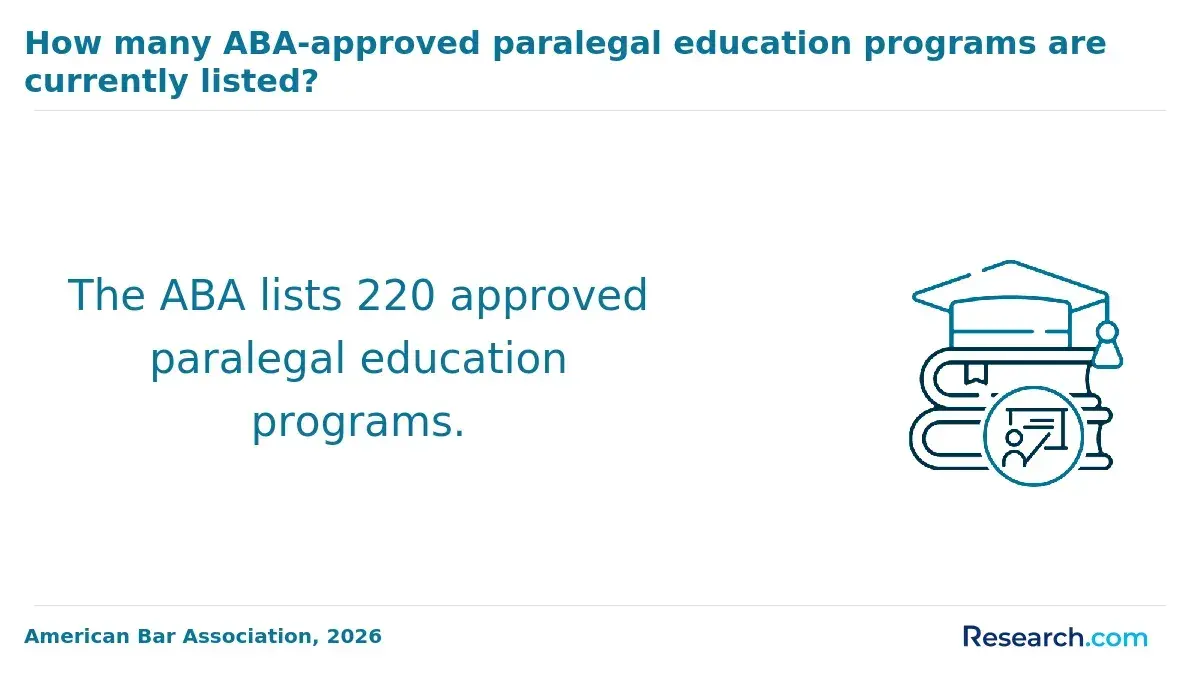
Do not confuse institutional accreditation with American Bar Association approval of some paralegal education programs. ABA paralegal program approval is a separate designation and is not a general endorsement of MLS degrees. Nor does an MLS earn its graduate permission to practice law.
Should You Choose an Online or Campus-Based MLS Program?
Delivery format matters less than whether you can attend the classes and complete the work consistently. The comparison below highlights scheduling questions that are especially important when investigators must respond to unpredictable reports.
| Format | Potential advantage | Commitment to verify |
| Online | Study without routine commuting | Live meetings, exams, group work, campus visits, and course sequencing |
| Campus-based | Regular in-person discussion and access to on-site activities | Travel time, class times, and attendance policies |
| Hybrid | A mix of remote study and in-person contact | How frequently attendance on campus is required |
Online does not necessarily mean asynchronous or self-paced. Ask for a recent course schedule and sample workload, especially if you handle urgent cases or travel for interviews. If an MLS schedule or cost does not work, a shorter legal-support program may offer another route for a different career goal; finding online paralegal programs with monthly payment plans can help readers compare that alternative. A payment plan changes when tuition is due, not necessarily its total cost.
What Courses Cover Whistleblower Compliance and Investigations?
No course title guarantees practical preparation. Read descriptions and assignments to see whether the curriculum connects legal rules with the decisions program staff make. Particularly relevant subjects include employment and anti-retaliation law, organizational ethics, corporate compliance, privacy, evidence, administrative law, and internal investigations.
Look for a chance to practice producing an investigation plan, a neutral interview outline, a chronology, and a findings memorandum. Ask how the program addresses confidentiality, record retention, conflicts of interest, and referrals to counsel. Case-management systems and AI-assisted review may appear in coursework, but a mention of a tool is different from student access or hands-on training. Do not assume a course prepares students for a software certification.
Sector fit also matters. Someone investigating financial services reports may need different regulatory electives from someone handling workplace misconduct in a healthcare company. If the most relevant courses are optional, confirm their availability before treating the curriculum as a reason to enroll.
What Are the Admission Requirements for MLS Programs?
MLS programs generally target applicants who already hold a bachelor's degree, but each school sets its own rules for transcripts, recommendations, statements, résumé experience, tests, and international credentials. Legal work experience may strengthen an application without being mandatory. Read the current admissions page to distinguish requirements from preferences, and ask whether prerequisite or introductory courses are needed.
If you have college credits but no bachelor's degree, establish your undergraduate path before planning an MLS application. Paralegal bachelor's options for students with college credits may be worth comparing if legal support work also interests you. The receiving institution decides whether earlier credits transfer and how they apply; transfer credit at the bachelor's level does not itself satisfy a graduate program's admission rules.
How Long Do MLS Programs Take and What Do They Cost?
Completion time depends on required credits, part-time availability, course sequencing, and whether relevant electives run when you need them. An advertised fastest completion time may assume a full course load that is unrealistic alongside investigation work. Request a term-by-term plan based on the hours you can actually study.
Compare the total expected cost, not tuition alone: include mandatory fees, books, technology requirements, travel for any campus sessions, and income you might forgo by reducing work hours. Ask each school for its current tuition and fee schedule and a cost estimate for your intended pace. Federal aid eligibility depends on the institution, program, and student; do not assume a stand-alone certificate or every enrollment pattern qualifies.
Use employer tuition assistance and any reimbursement conditions in the comparison. To identify lower-priced degree candidates, you can compare affordable online legal studies master's degrees, then verify each school's current charges and relevant coursework directly. A less expensive degree is not better value if it lacks the courses or schedule your role requires.
What Salaries Can Corporate Investigations Professionals Earn?
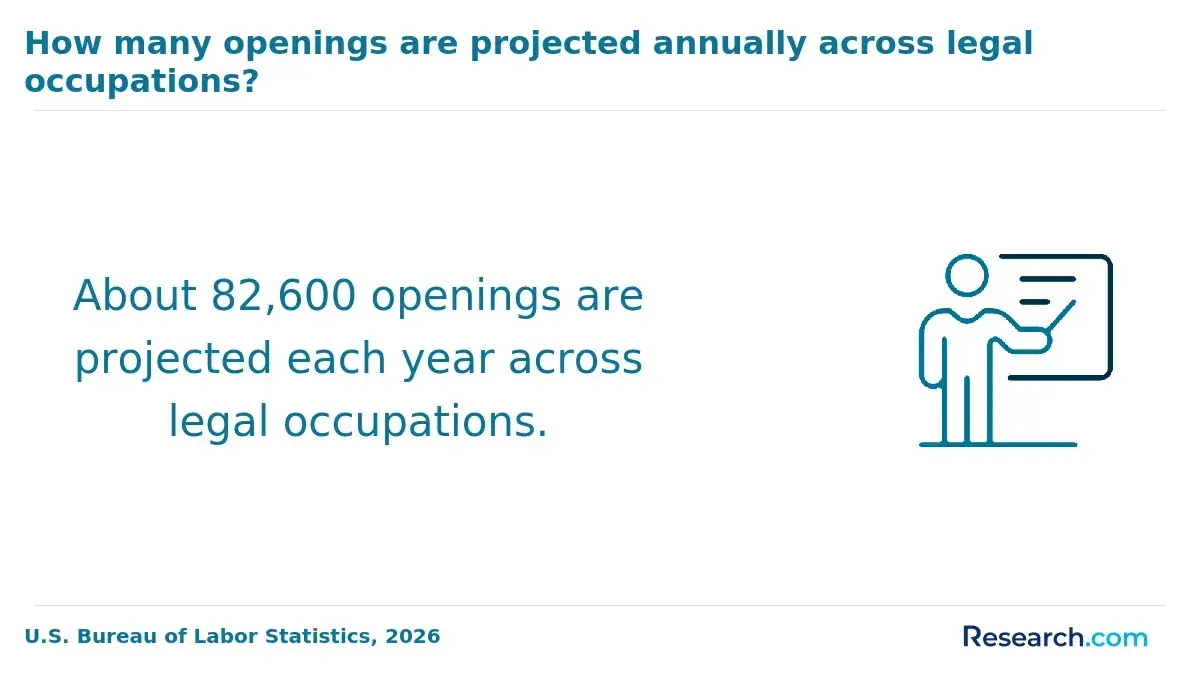
The U.S. Bureau of Labor Statistics reports a median annual pay of $80,730 in May 2025 for compliance officers, with 4% projected job growth from 2025 to 2035 and about 32,700 openings per year. This broad occupation is a useful benchmark for compliance-oriented roles, not a salary forecast for whistleblower investigators or MLS graduates. Pay for a particular opening depends on the employer, location, industry, responsibilities, and the candidate's experience.
When judging the degree's financial value, compare actual job postings and internal promotion criteria with the program's full cost. If your target roles emphasize investigation experience or a specific professional credential rather than a master's degree, gaining those qualifications first may be the lower-risk choice.
What Certifications and Standards Apply to Whistleblower Investigations?
Professional certification is an optional credential awarded by a certifying organization; it is not the same thing as a university certificate or degree. Depending on the job, relevant credentials may include Certified Compliance & Ethics Professional (CCEP) from the Compliance Certification Board, Certified Fraud Examiner (CFE) from the Association of Certified Fraud Examiners, or Certified Internal Auditor (CIA) from The Institute of Internal Auditors. Each organization controls its own eligibility, examinations, fees, and renewal rules. Check its current requirements rather than assuming MLS coursework qualifies you.
For program design, the U.S. Department of Justice's Evaluation of Corporate Compliance Programs provides a framework for examining reporting channels, investigations, and whether compliance processes work in practice. ISO 37002 offers guidance on whistleblowing management systems. Neither is an individual investigator license, and neither makes a particular MLS necessary.
A sensible next step is to compare your employer's job requirements with one MLS curriculum and one shorter training or certification route. If the degree fills a recurring legal-knowledge gap that those alternatives cannot—and its schedule and total cost are workable—it may justify the investment. If the immediate gap is interviewing practice or case handling, start with supervised experience and focused training.
Other Things You Should Know About Law & Paralegal
They should not make a blanket promise. An investigation may require limited disclosure to people who need the information to assess or address the report. Follow the employer's policy, explain applicable limits, and involve counsel when necessary.
A potential conflict should be disclosed and assessed before assignment. An independent investigator, another internal team, or an outside provider may be appropriate, depending on the facts and company policy.
Only under approved company procedures. Check confidentiality, data-handling, accuracy, and record-retention requirements first; a human reviewer remains responsible for checking the summary against the underlying evidence.
Not generally. The applicable standard comes from company policy, contractual obligations, and relevant law or regulation. Investigators should establish the standard before evaluating evidence and apply it consistently, with counsel's guidance where needed.
References
- Criminal Division | Whistleblower Awards Pilot Program https://www.justice.gov/criminal/criminal-division-corporate-whistleblower-awards-pilot-program
- Whistleblower Protections | dol.gov https://www.dol.gov/general/topics/whistleblower
- Inspection, Investigation, and Compliance | intelligence.gov https://www.intelligence.gov/careers/explore-careers/inspection-investigation-and-compliance
- The Whistleblower Protection Programs | Whistleblower Protection Program https://www.whistleblowers.gov/
- What Admissions Committees Look for in MLS Applicants | Goodwin College of Professional Studies https://drexel.edu/law/news/legal-studies-blog/what-admissions-committees-look-for-in-mls-applicants/
- How an M.L.S. Degree Prepares You for Employment Law | miami.edu https://news.miami.edu/law/stories/2025/09/how-an-mls-degree-prepares-you-foremployment-law.html
- MLS vs Graduate Certificate: What's the Better Career Investment? | wsulaw.edu https://www.wsulaw.edu/news/why-choose-a-master-of-legal-studies-over-a-graduate-certificate/
- MLS vs. LLM - Degree Comparison - Online LLM | Online Master of Laws (LLM) at Northeastern https://llmonline.northeastern.edu/articles/mls-vs-llm/
- Curriculum - Fordham MSL Online https://onlinelaw.fordham.edu/master-studies-law/curriculum/
- Whistleblower and Whistleblower Protection - Local Procedures | Compliance https://compliance.ucr.edu/whistleblower-and-whistleblower-protection-local-procedures