2027 Do Paralegal Certificates Require Previous Legal Work Experience?

Co-Founder and Chief Data Scientist
A paralegal certificate can be an entry point into legal work, but the word "certificate" appears on programs built for very different applicants. Some welcome people with no legal background; others require a college degree or prior coursework. If you are changing careers or entering the workforce, the distinction can save you from applying to a program you cannot enter—or paying for more education than you need.
This guide explains the usual prerequisites, separates education from professional certification, and shows what to check before enrolling.
Key Things You Should Know
- Previous legal work experience is generally not required for admission to a paralegal certificate program; a particular program may instead require a degree or college coursework.
- A school certificate is not professional certification. Certification bodies set separate eligibility rules, which may include legal work experience.
- Compare preparation with cost. Paralegals and legal assistants had median annual pay of $62,890 in May 2025, but that occupation-wide figure does not predict a new certificate holder's pay.
Do Paralegal Certificates Require Previous Legal Work Experience?
Usually, no. A paralegal certificate is an educational credential awarded for completing a school's program. Many such programs are designed to teach legal research, writing, and procedure to people who have never worked in a law office. Admissions requirements vary, however: a program may require a bachelor's degree, prior college credits, or specific general education coursework without requiring legal employment.
The frequent source of confusion is professional certification. That is a credential awarded by a professional organization or state system after an applicant meets its rules, which may involve an exam, education, experience, or a combination. A school's certificate does not automatically make its graduate a certified paralegal.
When reviewing a program, read its current admissions page rather than assuming "post-baccalaureate" means "experienced paralegal" or "entry-level" means "no college prerequisite." Those labels describe different things. If a requirement is unclear, ask admissions whether your existing education qualifies and whether any legal work is mandatory before enrollment.
What Are the Requirements to Enroll in a Paralegal Certificate Program?
There is no nationwide admissions standard for paralegal certificates. Schools set their own academic prerequisites, and those rules can differ even between certificates with similar names. Legal experience is worth checking separately from educational eligibility.
The following distinctions can help you identify which applications are realistic:
- Open-entry or introductory certificates: These may accept applicants with a high school diploma or equivalent, subject to the school's published rules.
- College-level certificates: These may require prior college coursework, placement requirements, or general education classes.
- Post-baccalaureate certificates: These require a bachelor's degree but do not necessarily require legal employment.
Check whether prerequisites must be completed before applying or can be taken alongside paralegal courses. An optional résumé, an encouraged internship, and a required period of legal employment are not interchangeable admissions conditions.
Is Paralegal Certification Required to Work in the United States?
There is no single nationwide professional certification requirement for paralegal employment. Employers may prefer particular education or credentials, while state rules and specialized roles can impose different conditions. Check the rules where you intend to work rather than treating an employer preference as a national legal requirement.
For example, NALA awards the Certified Paralegal credential, and NFPA awards the PACE Registered Paralegal credential. Each organization publishes its own current eligibility and examination rules; experience requirements can depend on the route an applicant uses. Completing a paralegal certificate is not the same as earning either credential.
Another distinction matters when assessing schools: the American Bar Association approves qualifying paralegal education programs; it does not certify individual paralegals. ABA program approval is also different from an institution's accreditation. If either status matters to you or a prospective employer, verify the specific program's approval and the school's accreditation separately.
What Education Pathways Can Lead to a Paralegal Career?
The right route depends chiefly on the education you already have. A certificate may efficiently add legal training to an existing degree, while a degree pathway may make more sense if you also need broad college coursework. Neither route guarantees a job.
This comparison shows what each pathway adds and the main eligibility question to resolve before applying:
| Pathway | Potential fit | Important limitation |
| Paralegal certificate | Someone who meets the program's academic prerequisites and wants focused legal training | Entry requirements and academic credit vary by program |
| Associate degree in paralegal studies | Someone seeking legal coursework alongside broader college study | Generally requires a larger time and tuition commitment than a focused certificate |
| Bachelor's degree with relevant legal study | Someone seeking broader undergraduate education as well as legal coursework | Not every legal studies curriculum provides practical paralegal training |
If you already have an associate degree and want to continue studying, use legal studies transfer planning for associate graduates to frame questions for prospective schools. The receiving institution decides which credits apply; institutional accreditation alone does not guarantee transfer.
A non-JD legal studies degree can build legal knowledge for other work, but it does not by itself qualify someone to practice law. Attorney qualification follows a separate pathway.
What Do Paralegal Certificate Programs Teach?
Programs commonly cover legal research, source evaluation, legal writing, civil procedure, document preparation, ethics, and the boundaries of a paralegal's role. Some add contracts, litigation support, real estate, or other practice-area coursework. Curriculum depth matters more than a long list of course titles.
For a first legal role, look for assignments that require you to find authority, write a clear summary, organize case materials, and apply confidentiality rules. Ask whether students receive feedback on their work and whether an internship or practicum is required, optional, or unavailable. A program that mentions legal software is not necessarily providing access to it or requiring hands-on use.
Paralegals generally work under attorney supervision and do not independently give legal advice. Training should prepare you to support legal work while recognizing that boundary.
How Long Do Paralegal Certificate Programs Take to Complete?
Completion time depends on prerequisites, course sequencing, enrollment intensity, and any required internship. A short course sequence may be completed in several months; a credit-bearing program taken part time can take longer. Advertised duration may assume that students enter with all prerequisites satisfied and take courses whenever they are offered.
Before choosing paralegal education on an accelerated schedule, check the actual course calendar. A faster program may leave less room for paid work, a missed course, or an internship placement that takes time to arrange. Request a completion plan based on your starting credits and available study hours, not just the school's fastest advertised timeline.
How Much Do Paralegal Certificate Programs Cost?
There is no meaningful single price for paralegal certificates. Credit-bearing and noncredit programs may price tuition differently, and an advertised course or program price may exclude mandatory fees, books, research-platform access, technology, prerequisite classes, travel, or internship expenses. Compare written estimates for the entire credential rather than comparing one school's per-credit rate with another's program price.
A monthly payment schedule changes when you pay, not necessarily the total cost. If installment payments are important, our guide to monthly-payment paralegal degree options offers a related route to investigate; confirm whether any arrangement you consider also applies to your chosen certificate. Ask about added payment-plan fees and what happens if you withdraw.
Do not assume a certificate qualifies for federal student aid. Eligibility depends on the school, the specific program, and applicable aid rules; noncredit study in particular should not be presumed eligible. Get confirmation from the school's financial aid office before building an enrollment budget around grants or loans.
Can You Earn a Paralegal Certificate Online?
Yes, some paralegal certificates are available online. Online does not necessarily mean self-paced: classes may meet live, exams may occur at set times, and an internship may require local, in-person work. The format that matters is the one you can complete consistently alongside your other commitments.
When comparing online study leading to a paralegal certificate, confirm the current delivery format for every required course. Ask whether campus visits are required, whether meetings are live or recorded, and who arranges any internship. If you already work in a legal office, ask whether that employment can satisfy a placement requirement; do not assume the school will allow it.
What Jobs Can You Get With a Paralegal Certificate?
A certificate may help you compete for paralegal, legal assistant, or related legal-support roles, particularly when you can demonstrate research, writing, organization, and document-handling skills. Employers decide their own hiring criteria, and an applicant without legal work history may need to target roles that provide substantial supervision and training.
Prior experience can still be useful even when it is not an admissions requirement. Administrative work may demonstrate scheduling and file management; customer-facing work may demonstrate careful communication. Neither substitutes automatically for learning legal terminology, procedure, confidentiality, and attorney-supervised workflows.
If your goal is broader regulatory or compliance work rather than paralegal practice, compare the certificate's focused skills with the time and cost of budget-friendly online master's in legal studies options. A graduate legal studies degree is not required for every compliance role and does not qualify its holder to practice law. Choose the more extensive route only if its curriculum addresses the work you actually want to do.
How Much Do Paralegals Earn and What Is the Job Outlook?
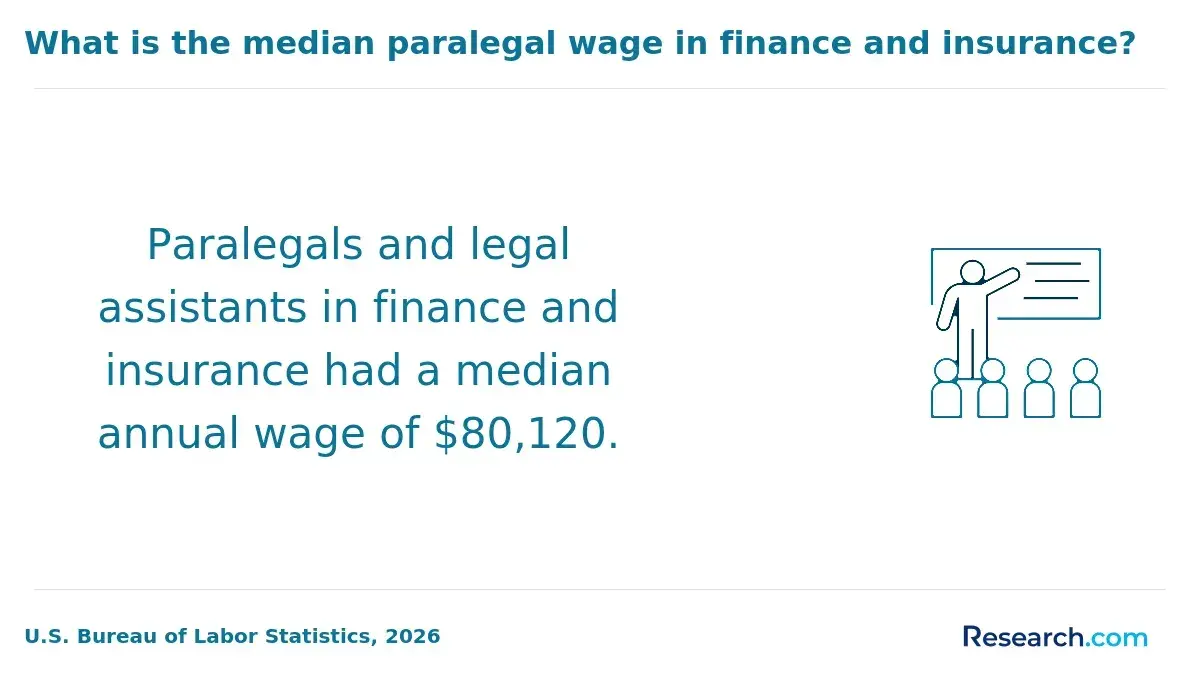
According to the U.S. Bureau of Labor Statistics, the median annual pay for paralegals and legal assistants was $62,890 in May 2025. This combined occupational figure includes workers with different experience levels, education, employers, and locations; it is not an expected starting salary for certificate graduates.
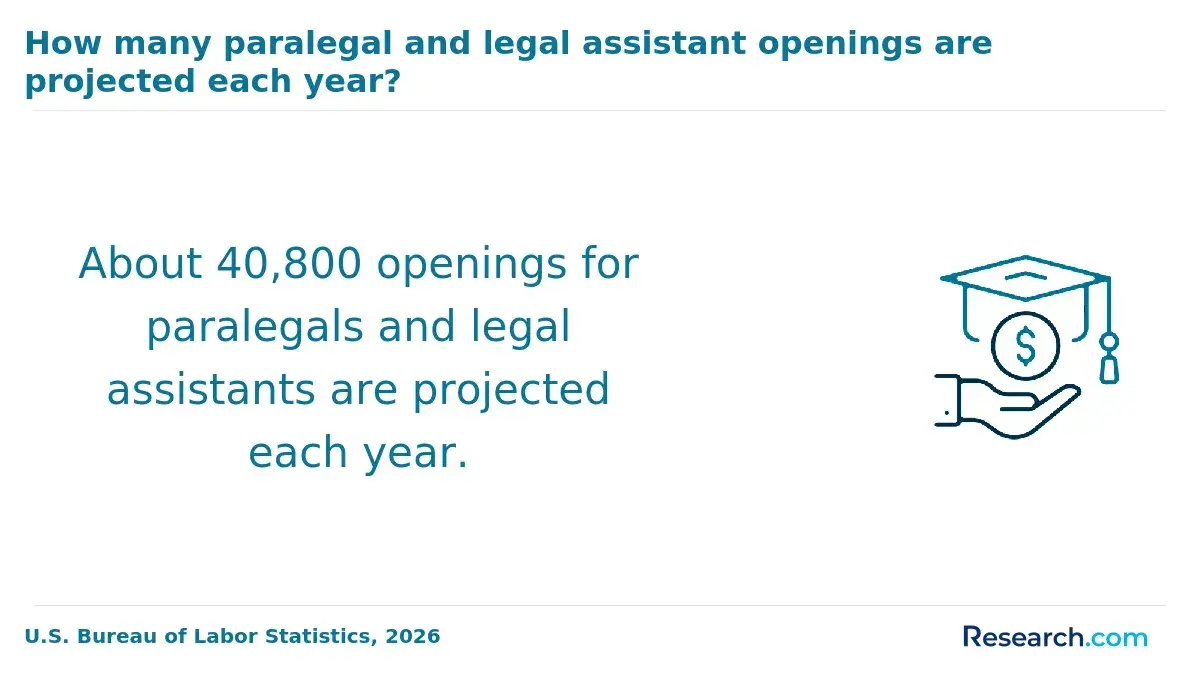
The BLS projects 0% job growth for paralegals and legal assistants from 2025 to 2035, while projecting about 40,800 openings per year, largely because workers leave or change occupations. For an applicant with no legal experience, that makes practical training and evidence of usable skills worth weighing alongside the certificate's price and speed.
Before committing, compare entry-level job postings in your intended market with the program's prerequisites and curriculum. If employers commonly ask for experience, find out whether the program offers a workable internship or another way to produce supervised work samples. Avoid paying extra for a credential on the assumption that the occupation-wide median will be your first offer.
Other Things You Should Know About Law & Paralegal
A school-awarded certificate generally records completed education rather than an ongoing professional status. Professional certifications can have separate renewal or continuing-education rules, so check with the organization that awards the credential.
Policies vary by school, internship site, employer, and jurisdiction. Ask about placement-related screening before enrolling if it could affect your ability to complete a required internship; employment decisions are separate from admission.
Do not assume it will. The organization awarding the certification determines what qualifies as experience, how it must be supervised, and what documentation applicants need.
No. Completing a paralegal program does not authorize someone to practice law. Rules about permitted legal-support work vary by jurisdiction, so follow the applicable rules and the supervising attorney's direction.
References
- How To Get Certified | North Carolina State Bar https://www.ncbar.gov/paralegal-certification/how-to-get-certified/
- Paralegal Certificate vs Certification | Let's clear up the confusion. https://paralegal.edu/blog/paralegal-certificate-vs-paralegal-certification-lets-clear-up-the-confusion/
- Online Certified Paralegal Training | The University of Memphis https://careertraining.memphis.edu/training-programs/certified-paralegal/
- Paralegal Studies Certificate (Hybrid) | Monroe University https://www.monroeu.edu/academics/undergraduate-programs/school-criminal-justice/paralegal-studies-certificate-hybrid
- How Long Does It Take to Become a Paralegal? | Pepperdine Caruso School of Law https://law.pepperdine.edu/blog/posts/how-long-to-become-paralegal.htm
- Law-related internships - SBS Pathways - UMass Amherst https://sbspathways.umass.edu/resources/pre-law-law-related-internships/
- Do You Need ABA Approval for a Paralegal Program? | Bryan University Online© https://bryanuniversity.edu/faq/aba-approval-accreditation-paralegal-programs/