2027 How to Evaluate AI Research Tool Training in Paralegal Programs

Co-Founder and Chief Data Scientist
A paralegal program may advertise AI training without giving students a chance to test an AI-generated answer against the law it cites. That difference matters if you are choosing a program to prepare for legal work, where a plausible answer can still be wrong or unsafe to use.
This guide explains what effective training looks like, which questions to ask schools, and how to weigh technology instruction alongside cost, program quality, and career goals.
Key Things You Should Know
- Prioritize assessed practice: Look for assignments requiring students to verify AI-generated citations, check whether law is current, and explain errors - not just watch a product demonstration.
- Confirm access and safeguards: Ask which tools students can use, for how long, and what rules govern confidential information and instructor review.
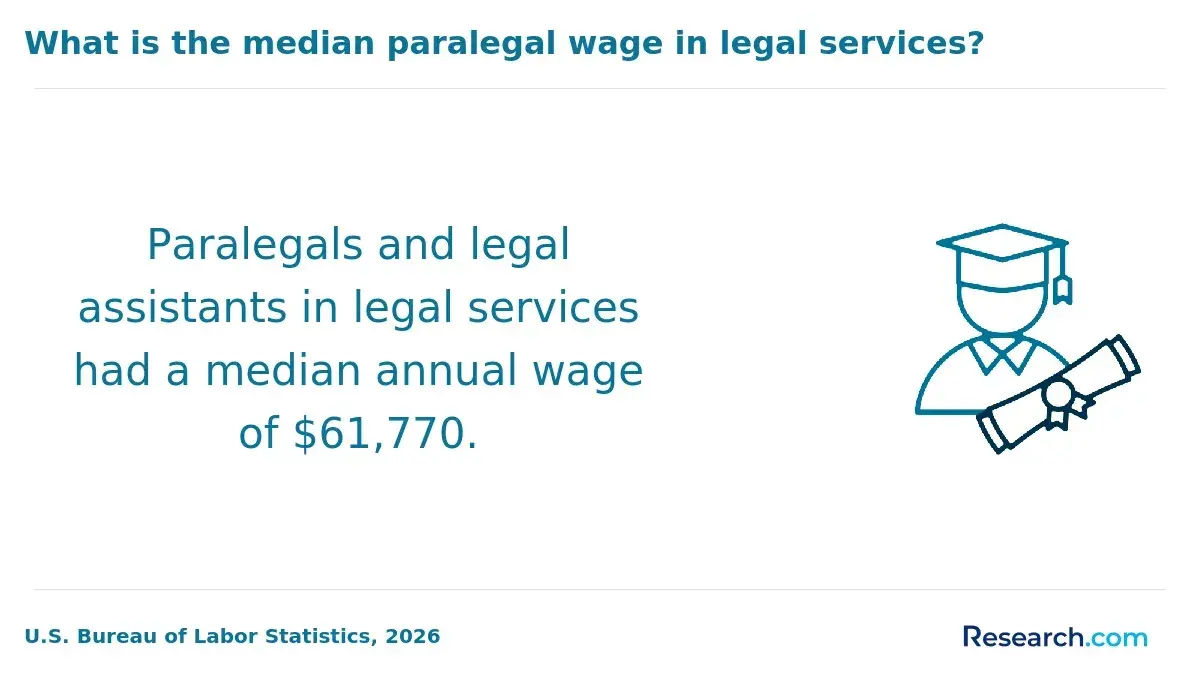
- Keep career claims in perspective: The median annual pay for paralegals and legal assistants was $62,890 in May 2025, according to the Bureau of Labor Statistics (BLS); AI coursework does not establish a separate salary or guarantee a job.
What is AI research tool training in paralegal programs?
AI research tool training teaches students to use software that generates responses to legal research questions or helps locate, summarize, and analyze legal materials. In a paralegal program, that training should sit within ordinary research instruction: finding controlling authority, reading statutes and cases, checking citations, and reporting findings to a supervising attorney.
The distinction is between seeing a tool and working responsibly with its output. A course description might mention AI; a stronger course gives students access, requires research assignments, and assesses how they identify unsupported statements. An AI-generated summary is a starting point, not legal authority or a substitute for professional review. Students comparing entry routes can consider choosing an associate degree in paralegal studies while checking the current research syllabus of each program.
Why should paralegal students learn artificial intelligence legal research tools?
Legal teams may use AI-assisted research to explore questions, locate potentially relevant sources, or organize large sets of material. Paralegals who understand those workflows can contribute while recognizing where the technology creates risk. The American Bar Association's guidance on lawyers' use of generative AI emphasizes existing professional duties, including competence, confidentiality, and accuracy; paralegals working under attorney supervision need training that supports those duties.
The value is not learning to produce answers faster at any cost. It is learning when to use a tool, when to return to the underlying authority, and when to flag uncertainty for an attorney. A program that teaches only prompts, without verification and confidentiality practices, leaves out the part most relevant to legal work.
How can you evaluate AI training quality in a paralegal program?
Request a current syllabus and an example assignment rather than relying on a webpage that says "AI included." The most useful evidence shows what students must do independently and how an instructor evaluates the result. Work through these checks before treating AI training as a reason to enroll:
- Identify the assignment: Ask whether students research a legal question with and without AI, then compare the results using primary authority.
- Inspect the grading criteria: Look for credit given to citation checks, jurisdiction and date checks, error reporting, and a clear research trail - not simply a polished answer.
- Confirm supervision and safeguards: Ask who reviews the work and whether exercises use fictional or appropriately cleared materials instead of sensitive client information.
- Check access in writing: Confirm which platform and features students can use, whether access extends beyond class demonstrations, and what happens if a vendor changes its offering.
A strong final exercise could require a student to find an AI-suggested case, confirm that it exists, read the relevant passage, check its subsequent treatment, and explain whether it supports the proposed conclusion. Be cautious if a school cannot show an assessed research task or treats fluent AI text as proof of accuracy.
What AI legal research tools should paralegal programs teach?
No single product is essential to a sound education. Schools may use AI-assisted features associated with platforms such as Lexis+ AI, Westlaw's AI-assisted research offerings, or vLex's Vincent AI. Product names, features, licenses, and educational access can change, so ask what students currently receive rather than assuming that naming a vendor means hands-on access.
The better comparison is tool capability plus transferable method. Students should be able to distinguish an answer-generating feature from a conventional search, follow a citation to its source, and repeat the research in another database. Training on a general-purpose chatbot alone is less persuasive than practice using legal sources and independently checking the results. A school should also explain any limits on entering client information into its tools.
Which legal research and technology skills should the curriculum include?
AI training is most valuable when students already know how to test its output. Look for instruction in finding statutes, regulations, and cases; distinguishing primary from secondary sources; selecting the relevant jurisdiction; checking whether authority remains valid; and writing concise research summaries with accurate citations.
Technology work should also cover secure document handling, version control, and a record of how a conclusion was reached. If the program teaches prompting, students should learn to define the jurisdiction and task, limit unsupported assumptions, and recognize when the tool lacks enough information. None of these skills authorizes a paralegal to give independent legal advice: legal work remains subject to attorney supervision and applicable state rules.
For students who already hold college credit, paralegal bachelor's programs with credit transfer options offer another route to compare. Ask the receiving school how prior credits apply and whether its upper-level coursework includes assessed research, not merely a technology elective.
How do online and campus paralegal programs deliver AI tool training?
Either format can provide substantial practice, but the delivery details affect whether you can complete it. This comparison shows common possibilities, not features guaranteed by a particular school.
| Delivery format | Potential advantage for AI training | Scheduling or access issue to verify |
| Online | Students may complete research exercises through remotely accessible databases. | Live meetings, timed assessments, and license restrictions may still apply. |
| Campus | In-person demonstrations and supervised lab work may offer immediate feedback. | Lab hours and commuting can limit practice time outside class. |
| Hybrid | Remote research may be paired with in-person review or workshops. | Required campus dates and tool access between meetings vary. |
"Online" does not necessarily mean asynchronous. Ask to see the course schedule, whether research platforms work off campus, and how instructors give feedback on errors. If speed matters, our list of accelerated online paralegal programs can help identify options to investigate; confirm that a shorter schedule still provides enough time for assessed research practice.
Does paralegal program accreditation cover AI and legal technology instruction?
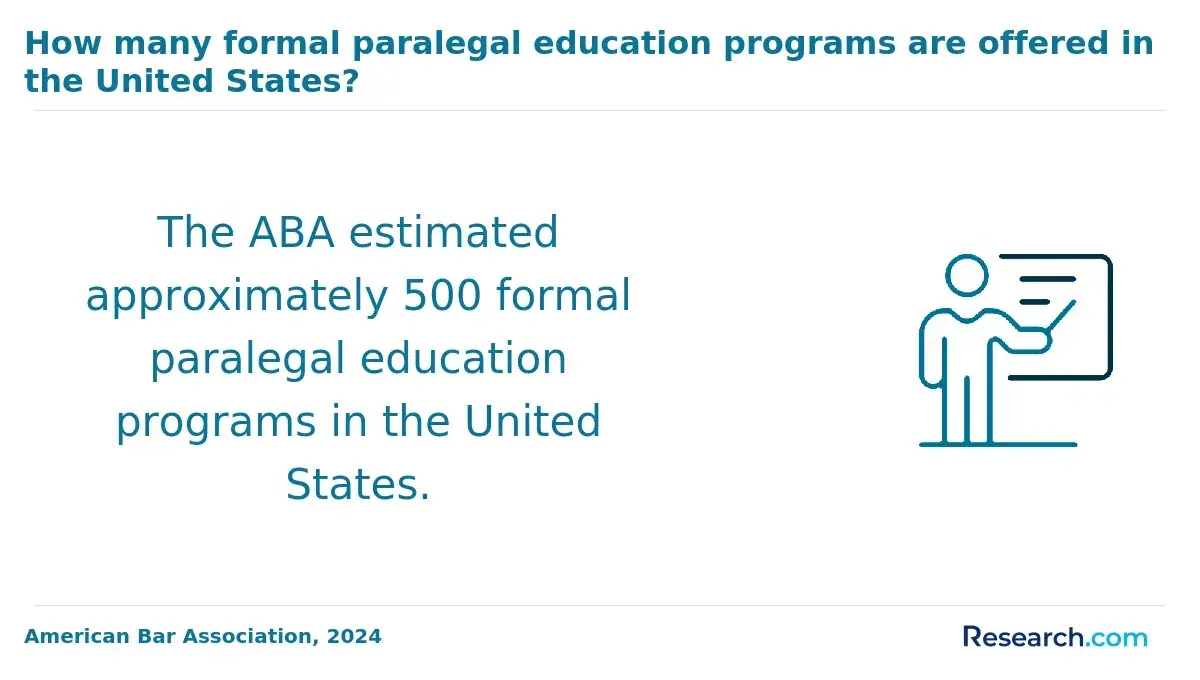
No approval or accreditation label, by itself, confirms meaningful AI instruction. Institutional accreditation concerns the institution or other accredited entity. Separately, the American Bar Association (ABA) approves qualifying paralegal education programs; ABA program approval is not institutional accreditation and does not make a graduate an "ABA-certified paralegal."
Check a school's current institutional accreditation and, if ABA approval matters to you, verify the specific program in the ABA's official directory. Then inspect its current courses and assignments separately. A program may have a legitimate approval status without teaching a particular AI product, while a program without ABA approval may still offer substantial technology coursework. Neither status should replace a review of what students actually practice.
What qualifications and costs should you compare among paralegal programs?
Start with the credential and entry requirements. A paralegal certificate is an educational award; a professional certification is a separate credential granted by a certification organization or state system under its own rules. Certificate programs may differ in whether they require a high school diploma, prior college coursework, or an existing degree. Confirm the requirements for the specific program before applying.
Compare total required cost, not tuition alone. Ask for mandatory fees, books, research-platform charges, computer requirements, travel, and any internship-related expense. Find out whether tool access is included and whether it lasts long enough to complete assignments. Federal aid eligibility depends on the institution, the specific program, and the student; do not assume every certificate qualifies. If installments would make enrollment feasible, review finding online paralegal programs with monthly payment plans, then check the school's current terms and the full amount due.
A lower-priced course may be sensible if it builds the skills you need without delaying work. A more extensive program may justify its cost if its credit value, broader curriculum, supervised practice, or schedule better serves your goal. Ask whether credits are transferable, but remember that the receiving institution decides how they apply.
What careers and salaries can AI-trained paralegals pursue?
Paralegals and legal assistants support attorneys through research, document preparation, organization, and case-related work; their exact duties depend on the employer and practice area. The BLS reports a median annual pay of $62,890 in May 2025 for the occupation as a whole. That is a national benchmark, not a wage specific to AI-trained workers or an expected starting salary.
AI research experience may be useful in litigation, corporate legal departments, or other settings that handle substantial research and documents. It does not replace legal knowledge, supervised experience, or an employer's preferred qualifications. Someone interested primarily in a compliance role should compare that role's duties and hiring requirements before paying for additional legal study. Lower-tuition master's in legal studies programs may be worth investigating for some experienced professionals, but a non-JD legal studies degree does not qualify a graduate to practice law and is not automatically necessary for compliance work.
How does AI affect the paralegal job outlook and professional certifications?
The BLS projects 0% growth for paralegals and legal assistants from 2025-2035, while projecting about 40,800 openings per year, largely as workers leave the occupation. Those figures describe the occupation overall; they do not predict how many positions will require AI skills. They do suggest that students should evaluate training for its practical usefulness rather than assume AI exposure will create a new category of jobs.
Professional certifications are distinct from school certificates. Organizations such as NALA and the National Federation of Paralegal Associations set their own credential requirements, and state-specific systems may differ. Certification is not a universal requirement to work as a paralegal. Before choosing coursework to support a credential goal, consult the credentialing body's current eligibility and exam rules. Treat claims that a class "prepares you for certification" as claims to verify, not proof that completion grants the credential.
Other Things You Should Know About Law & Paralegal
Usually not. Research training centers on asking focused questions, finding authoritative sources, and checking results. Ask a school about technical prerequisites if its course includes building or configuring tools.
Ask your instructor first. Remove confidential or restricted material, disclose AI assistance where appropriate, and ensure the sample reflects research and writing you can explain yourself.
Not necessarily. Employers choose their own subscriptions and policies. Transferable verification skills matter more than familiarity with one interface.
Check the syllabus and school policy before paying. A personal subscription may not provide the legal sources, approved data protections, or features required for class assignments.
References
- Generative Artificial Intelligence Academic Student Use Policy | Mitchell Hamline School of Law https://catalog.mitchellhamline.edu/generative-artificial-intelligence-academic-student-use-policy
- AI on Trial: Legal Models Hallucinate in 1 out of 6 (or More) Benchmarking Queries | Stanford HAI https://hai.stanford.edu/news/ai-trial-legal-models-hallucinate-1-out-6-or-more-benchmarking-queries
- Do You Need ABA Approval for a Paralegal Program? | Bryan University Online© https://bryanuniversity.edu/faq/aba-approval-accreditation-paralegal-programs/
- Westlaw's AI Legal Research Tools | usc.edu https://lawlibguides.usc.edu/c.php
- Best Practices for Using AI in Legal Research | Legal Information Services to the Public SIS https://www.aallnet.org/lispsis/resources-publications/ai-best-practices/
- Paralegal Certification | paralegals.org https://www.paralegals.org/page/paralegal-certification
- ABA Standing Committee on Paralegals | americanbar.org https://www.americanbar.org/groups/paralegals/