2027 Legal Studies Master's Programs for Employee Privacy and HR Data Governance Roles

Co-Founder and Chief Data Scientist
Employee records now span hiring platforms, payroll systems, benefits vendors, and monitoring tools. Professionals responsible for those records need to understand both how HR data moves and which legal duties govern its use. A legal studies master's can build that knowledge, but it is not the only route into privacy or HR compliance.
This guide helps HR professionals, compliance staff, and career changers compare programs with shorter credentials, assess costs and career prospects, and identify the coursework that would make graduate study worth their time.
Key Things You Should Know
- A non-JD legal studies master's can strengthen employee privacy and HR governance skills, but it is not generally required for these roles and does not qualify graduates to practice law.
- Prioritize coursework that connects employment law and privacy rules to retention, vendor oversight, access controls, and workplace data projects - not a program's concentration label alone.
- The Bureau of Labor Statistics reports $80,730 median annual pay for compliance officers in May 2025 and 4% projected growth for 2025-2035; these broad figures do not predict pay or demand for a specific HR privacy job.
What are legal studies master's programs for employee privacy and HR data governance roles?
These are graduate degrees designed to teach legal reasoning to professionals who do not plan to become attorneys. Schools may call the credential a Master of Legal Studies (MLS), Master of Studies in Law (MSL), or Master of Jurisprudence. The relevant work is employee privacy - how an organization lawfully collects, uses, shares, and protects worker information - and HR data governance - the policies, ownership, controls, and oversight applied to that information across its lifecycle.
In practice, an HR privacy professional might map data flows between an applicant-tracking system and a background-check vendor, review who can access accommodation records, or coordinate a retention policy with counsel and IT. Legal study can help that professional spot issues and ask better questions. It does not replace technical security skills, employer-specific training, or legal advice from a licensed attorney.
Programs differ substantially. A formal privacy or employment-law concentration has published requirements; a set of relevant electives is not necessarily a concentration. An embedded graduate certificate is a separately defined credential only if the school says it is. If your goal is limited to one subject or a near-term project, compare choosing the right level of graduate legal studies before committing to a full degree.
What careers can a legal studies master's prepare you for in employee privacy and HR data governance?
The degree is most useful when paired with experience in HR operations, privacy, compliance, records management, or information security. Employers set their own hiring requirements; a legal studies master's is usually a way to deepen relevant skills rather than an occupational license. The distinctions below help you match a program to the work you want to do.
| Potential role | Typical contribution | Experience that also matters |
| HR privacy or data governance specialist | Documents employee-data uses, retention practices, and access decisions. | HR systems, records workflows, and cross-functional coordination. |
| Employment compliance specialist | Supports policy reviews, training, investigations, and regulatory response. | HR operations, internal controls, and clear documentation. |
| Privacy program analyst | Helps assess vendors, data inventories, notices, and privacy risks. | Data mapping, vendor management, and security collaboration. |
| Labor relations or compensation specialist | Applies workplace rules within a defined HR specialty. | Direct labor relations or compensation experience, as applicable. |
A current HR professional may be able to apply legal coursework immediately to policies and vendor reviews. A career changer should first look for an attainable entry point - such as HR operations, compliance coordination, or privacy program support - because the degree alone may not substitute for experience with workplace systems.
Someone aiming instead for legal support work should compare the job requirements and training routes separately; this list of affordable ABA-approved paralegal programs addresses a different educational path, not an alternative license for HR privacy work.
What coursework do these master's programs typically include?
Look for a curriculum that connects legal rules to decisions an employer actually makes. Useful subjects include employment discrimination, workplace investigations, privacy and cybersecurity law, records retention, contracts and vendor oversight, legal research, and regulatory compliance. HR systems knowledge matters too: understanding where data originates, who receives it, and when it should be deleted makes the legal material more useful.
Applied assignments are a stronger signal than course titles alone. A project might require a data-flow map, a vendor-risk review, or a proposed policy for access to sensitive employee records. For readers targeting HR specifically, a guide to human resources law concentrations in legal studies can help frame the curriculum comparison. Confirm each school's current catalog: a concentration, an elective cluster, and a certificate within a degree are not interchangeable.
Ask whether courses address workplace-specific issues such as applicant data, background checks, benefits information, accommodation records, and monitoring. Rules vary by jurisdiction and context, so a good program should teach students to identify which rules apply rather than imply that one national privacy rule resolves every employee-data question. If AI-assisted hiring or productivity monitoring is covered, check whether students analyze actual governance decisions, not just discuss the technology in general terms.
Are online or campus-based legal studies master's programs better for working professionals?
Neither format is inherently better. Online study can reduce travel and make it easier to remain employed, while campus study may suit someone who benefits from scheduled discussion and local professional connections. An online label, however, says little about whether classes are asynchronous, meet live, follow a fixed cohort, or require campus visits.
For a working professional, predictable scheduling matters more than the format label. Check published course rotations, live-session times, group-project expectations, exam windows, and whether a capstone can use a workplace-relevant problem. Ask who arranges any required placement and whether current employment can satisfy an applied requirement; do not assume that it can. Compare how often the courses you need are offered, since an otherwise flexible program may be difficult to finish on your intended schedule.
What accreditation should you look for in a legal studies master's program?
Start with institutional accreditation from an accreditor recognized by the U.S. Department of Education. Confirm the institution's current status through the accreditor or federal accreditation records, and check that the specific degree appears in the school's current catalog. Accreditation is an important screening factor, but it does not establish that an HR privacy curriculum is a good fit.
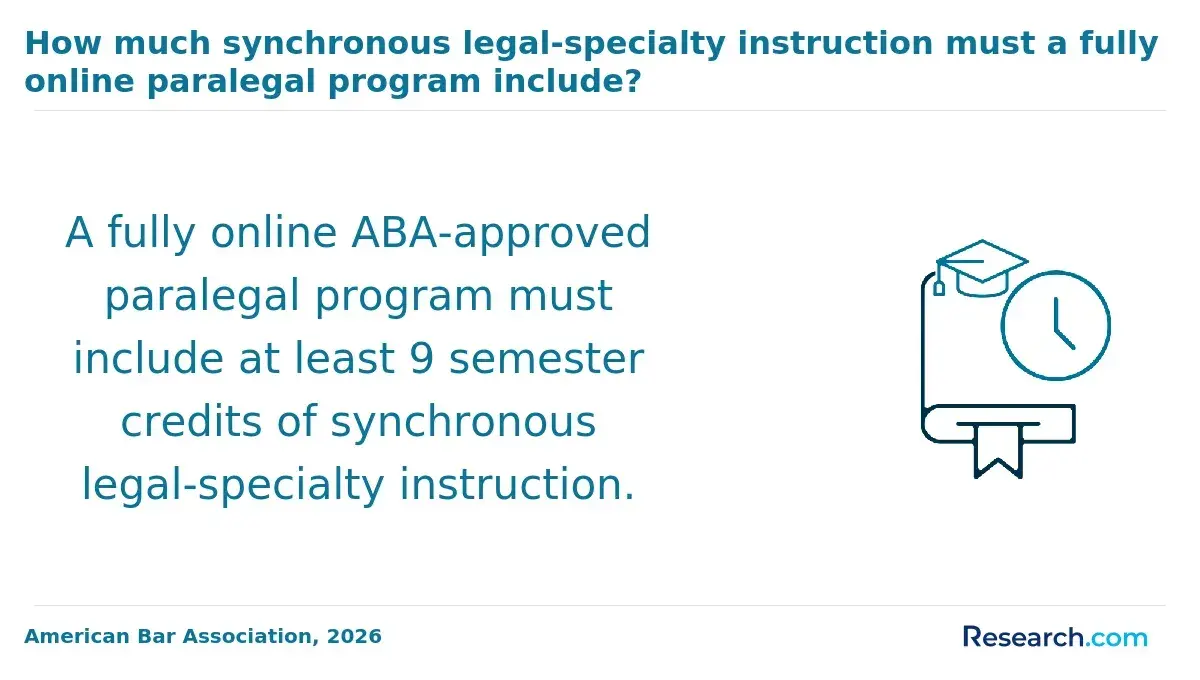
Do not confuse different kinds of recognition. American Bar Association approval of a law school's JD program does not mean its non-JD legal studies master's is ABA-approved. Likewise, ABA approval of a qualifying paralegal education program is separate from institutional accreditation and does not apply automatically to other degrees at that institution. For this decision, curriculum, delivery, total cost, and employer relevance deserve scrutiny alongside institutional status.
What are the admission requirements for employee privacy and HR data governance programs?
A bachelor's degree is generally the starting academic credential for a master's application. Schools set their own policies for transcripts, academic performance, recommendations, résumés, statements, tests, and relevant work experience. A law degree is not normally the premise of a non-JD legal studies program, but never assume that every applicant or every concentration has identical requirements.
Review the current admissions page and catalog together. Note which items are mandatory, which are optional, and whether the program expects prior HR or compliance experience. If an application essay is a practical obstacle, choosing legal studies programs by their essay requirements may narrow the search; confirm the requirement for your intended entry term before applying. Also ask the receiving school whether prior graduate coursework can count toward this particular degree. Accreditation of the earlier school does not guarantee transfer credit.
How long do these master's programs take, and how much do they cost?
Completion time depends on required credits, course availability, and whether you enroll full time or part time. Compare the published degree plan with the sequence you could actually take while working. A shorter advertised timeline may assume a heavier course load or classes that are not offered every term. If speed is your main constraint, choosing an online business law master's by duration offers another way to examine program pacing, though business law coursework should still be checked for HR privacy relevance.
For cost, request a written estimate based on your expected enrollment pattern. Include tuition, mandatory fees, books, technology or legal-research charges, and any required travel. Ask whether tuition changes with residency or course load and whether employer tuition assistance applies. The advertised per-credit price is not the total cost, and a lower-priced program is not necessarily better value if it lacks the coursework you need.
Ask the financial aid office about eligibility for the specific degree and enrollment pattern, rather than assuming graduate admission guarantees federal aid. Compare borrowing with employer support and a smaller credential. The opportunity cost includes study time and any reduction in work hours; weigh that cost against a concrete goal, such as qualifying for broader compliance responsibilities, rather than assuming the degree will produce a promotion.
Do employee privacy and HR data governance roles require a law license?
These roles do not generally require a law license when the work involves administering policies, managing data practices, coordinating compliance, and escalating legal questions. An MLS, MSL, or similar non-JD degree does not qualify its holder to practice law or independently provide legal advice. Employers may nevertheless hire licensed attorneys for positions that include legal counsel responsibilities.
The boundary depends on the duties and applicable state law, not just the job title. A nonlawyer professional can identify an issue and work with counsel; they should not present a legal conclusion on behalf of others as though licensed to practice. Read job descriptions closely: "privacy counsel" and "HR privacy program manager" can involve substantially different qualifications and authority.
What certifications complement a master's in legal studies for privacy and HR roles?
Professional certification is awarded by a credentialing organization after its requirements are met; it is not the same as a school-issued academic certificate. The International Association of Privacy Professionals' CIPP/US focuses on U.S. privacy law, while its CIPM focuses on managing a privacy program. HR-oriented credentials from SHRM or HRCI may be more relevant when the target role emphasizes broader HR practice rather than privacy operations.
Choose by the job's responsibilities, not the number of initials available. Privacy-program work may favor privacy training and evidence of vendor or data-governance projects; a generalist HR role may favor an HR credential and hands-on HR experience. Check the issuing organization's current exam, eligibility, and renewal rules before paying. Neither a certification nor a master's substitutes for the other automatically, and an employer may value demonstrated work more than either credential alone.
What salaries and job outlook can graduates expect in these fields?
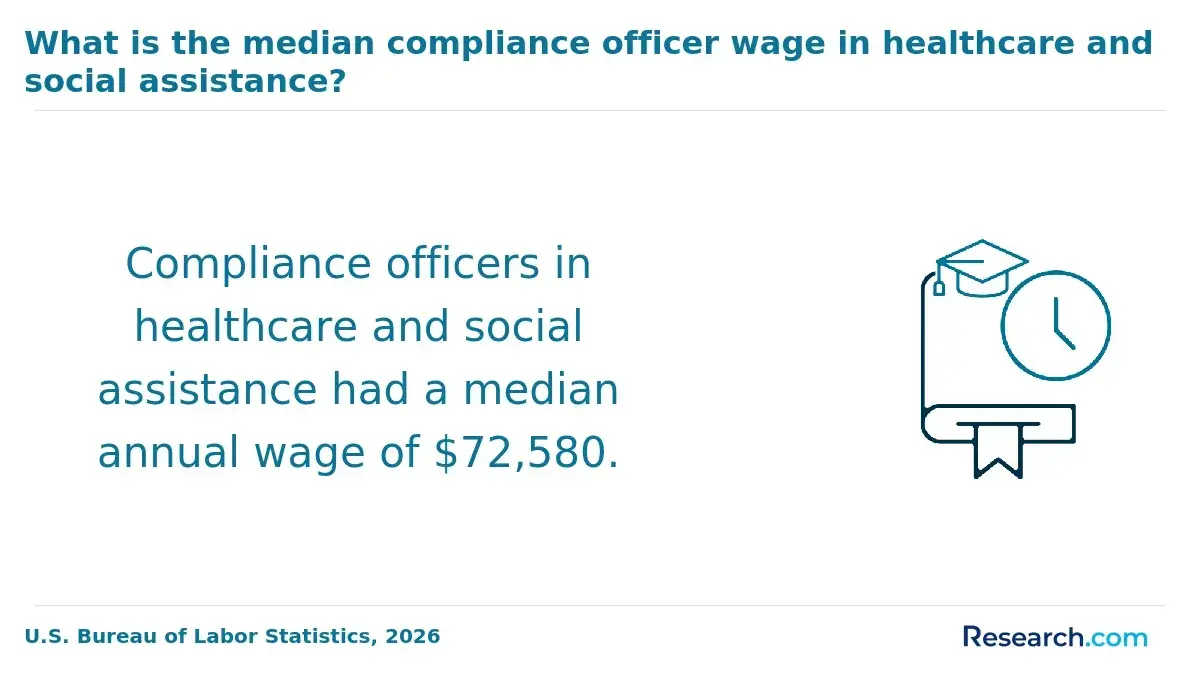
There is no single Bureau of Labor Statistics occupation for "employee privacy and HR data governance." The nearest occupational groups provide context, not a salary forecast for degree holders. For compliance officers, the BLS reports median annual pay of $80,730 in May 2025 and 4% projected growth, 2025-2035, with about 32,700 openings projected annually. Those figures cover many kinds of compliance work, so an HR privacy opening may pay differently.
Specialized HR paths also vary. BLS reports $95,420 median annual pay for labor relations specialists in May 2025, with 2% projected growth for 2025-2035. It reports $78,210 for compensation, benefits, and job analysis specialists in May 2025, with 6% projected growth for 2025-2035. Neither category isolates employee privacy work. Location, industry, seniority, technical responsibilities, and prior experience will shape an offer more directly than the degree title alone.
Before enrolling, compare actual postings for your target roles. Note whether they require a master's, prefer one, or emphasize experience with HR systems, investigations, vendor oversight, and privacy controls instead. That distinction is the most useful test of whether a full legal studies degree - or a narrower course, certification, or workplace project - is the next investment to make.
Other Things You Should Know About Law & Paralegal
Only if your employer permits it and the school's requirements allow it. An anonymized or fictional scenario is often safer; removing names alone may not adequately protect sensitive information.
Do not assume they will. A law school decides whether any prior work receives credit under its own policies and applicable requirements. Ask the specific JD program before treating an MLS or MSL as a shortcut.
Not necessarily. You should be comfortable tracing data through systems, discussing access and retention with technical colleagues, and documenting controls. Some roles demand deeper technical skills than others.
Follow updates from relevant regulators and your employer's counsel, review changes to the systems and vendors you oversee, and use continuing education tied to your duties. A degree provides a foundation, not a permanent answer to changing rules.
References
- Privacy in the Workplace | priv.gc.ca https://www.priv.gc.ca/en/privacy-topics/employers-and-employees/02_05_d_17/
- Careers in Law Without Being a Lawyer | Pepperdine Caruso School of Law https://law.pepperdine.edu/blog/posts/careers-in-law-without-being-a-lawyer.htm
- Online MS in Human Resources: Law, Leadership, and Policy | Albany Law School https://www.albanylaw.edu/graduate/online-ms-human-resources-law-leadership-and-policy
- What Can You Do With a Master of Legal Studies? | WashU Law https://online.law.washu.edu/articles/what-can-you-do-with-master-of-legal-studies/
- Employment Law and HR Risk Management | College of Law https://law.fsu.edu/academics/academic-programs/juris-master-online-program/employment-law-and-hr-risk-management
- Promoting Privacy in the Workplace: Strategies for Safeguarding Employee Information | University of Miami School of Law https://news.miami.edu/law/stories/2026/04/promoting-privacy-in-the-workplace-strategies-for-safeguarding-employee-information.html
- Typical Law School Requirements & Prerequisites | Ohio Northern University https://law.onu.edu/news/law-school-admissions-101-typical-law-school-requirements-prerequisites
- Online Master's Degree in Legal Studies (MLS) - Catalogue https://catalogue.shu.edu/graduate/seton-hall-university-school-law/masters-degree-in-legal-studies-privacy-cybersecurity/
- Master of Legal Studies & Graduate Certificates | Winston College of Law https://winston.utk.edu/admissions/degree-programs/master-of-legal-studies/
- Understanding Employment Laws: A Guide for HR Professionals | Pitt Law MSL Online Program https://online.law.pitt.edu/blog/understanding-employment-laws