2027 MLS Programs for Higher Education Compliance Officers

Co-Founder and Chief Data Scientist
Higher education compliance officers must turn changing legal requirements into workable campus policies, training, investigations, and reporting. A Master of Legal Studies (MLS) may help, but a degree with a broad compliance label is not necessarily a good match for university work. This guide explains which program features matter, how to compare higher education-focused options with shorter alternatives, and what to verify before paying tuition. It is for current campus professionals and career changers deciding whether graduate legal study will address a specific skills gap.
Key Things You Should Know
- Prioritize courses and applied work in education law, student privacy, discrimination, investigations, and institutional governance over a concentration name alone.
- An MLS is a non-JD degree; it does not qualify graduates to practice law, and higher education compliance jobs do not generally require one.
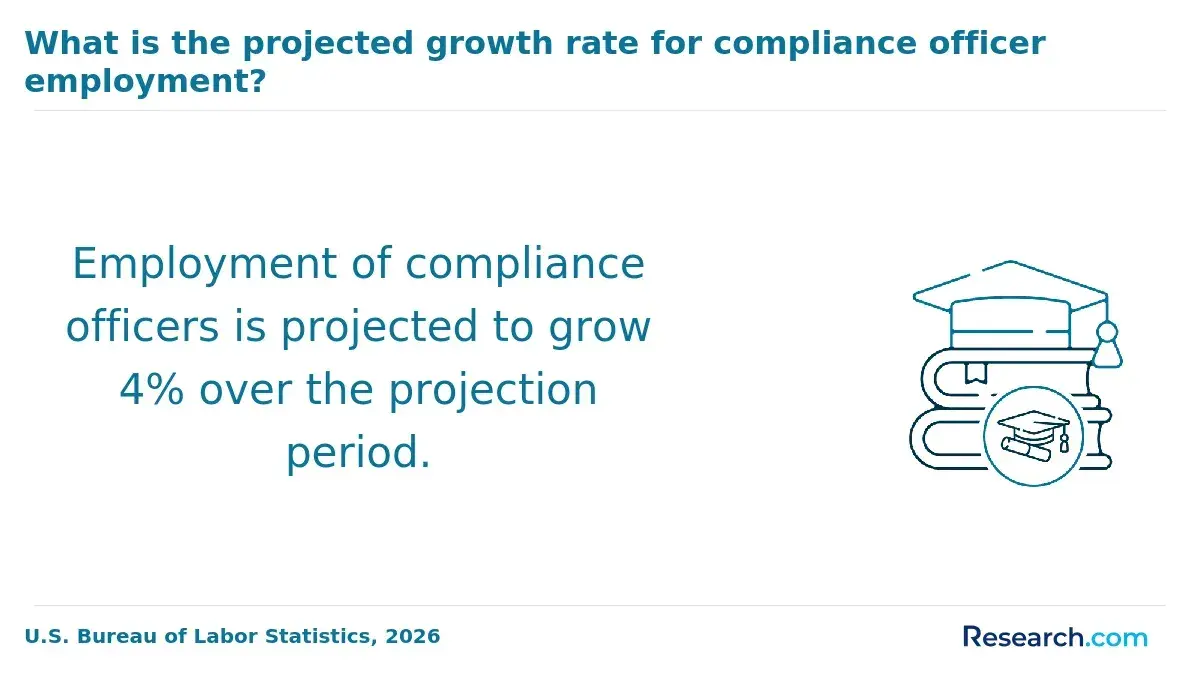
- The U.S. median pay for compliance officers was $80,730 in May 2025, with 4% projected job growth from 2025-2035; those occupation-wide figures do not predict campus salaries or an MLS return on investment.
What is an MLS degree for higher education compliance officers?
An MLS is a graduate degree designed to build legal knowledge for people who do not plan to practice law. Schools may use related names, including Master of Studies in Law (MSL) or Master of Jurisprudence. For a higher education compliance officer, its value lies in learning to read legal authorities, identify institutional obligations, assess risk, and work effectively with university counsel - not in becoming the institution's lawyer.
Campus compliance work can involve student records under the Family Educational Rights and Privacy Act (FERPA), discrimination and harassment procedures under Title IX, campus safety reporting under the Clery Act, disability access, research oversight, or financial aid rules. No single officer handles all of these areas. A useful degree should match the obligations in the reader's current or intended role.
A focused graduate certificate or employer training may be enough if the goal is to strengthen one specialty. An MLS makes more sense when a professional needs broader legal reasoning across several areas or is moving toward institution-wide responsibility. For a closer look at choosing between graduate legal studies credentials, compare the additional coursework with the duties you expect to take on.
What careers can an MLS prepare you for in higher education compliance?
An MLS can support advancement in work that combines policy interpretation, documentation, training, and coordination with counsel. Relevant roles include university compliance officer, Title IX or civil rights compliance specialist, student privacy officer, research compliance administrator, and campus policy or risk-management professional. Hiring standards vary by institution and specialty; relevant experience can matter more than the degree title.
The clearest use case is an experienced employee who already understands campus operations but needs stronger legal analysis. Someone entering from human resources, student affairs, auditing, or investigations may also bring transferable skills, while still needing to learn the specific regulations and processes governing colleges. An MLS is less direct preparation for someone whose immediate goal is an entry-level administrative role.
Readers primarily interested in legal-support work should compare a different educational route. Paralegal bachelor's programs by time and cost address training for work typically performed under attorney supervision; they are not substitutes for a campus compliance curriculum.
Which MLS programs offer higher education compliance concentrations?
Start with programs that explicitly identify higher education compliance in their curriculum, then check the current catalog rather than relying on a search result or an older program description. Drexel University's Master of Legal Studies has offered a Higher Education Compliance concentration, while Wake Forest University has offered a Higher Education Compliance track within its Master of Studies in Law. Because titles, course availability, and delivery arrangements can change, confirm each option directly with the school before treating it as an available enrollment path.
The distinction between a named track and relevant electives matters. A formal concentration usually has specified requirements; an elective-based MLS may allow similar study without recording a specialty on the transcript. Neither label, by itself, establishes stronger preparation. Compare the required courses, whether higher education classes run when you need them, and whether assignments address real campus decisions.
If neither specialized option fits your budget or schedule, a general online MLS with suitable electives may be worth comparing. Use lower-cost options for a master's in legal studies as a starting point, then verify that any less expensive program actually offers the courses your compliance role requires.
What courses do MLS programs for higher education compliance include?
A strong curriculum pairs foundational legal research and regulatory interpretation with higher education-specific applications. Course titles differ by school, so examine descriptions and required assignments, not just a list of topics.
The following areas are especially useful because they connect legal knowledge to recurring campus tasks:
- Education law and governance: Understand institutional authority, student and employee relationships, and how policies are adopted and enforced.
- Civil rights and investigations: Analyze applicable discrimination rules and practice fair, well-documented response procedures.
- Privacy and records: Apply FERPA to access, disclosure, retention, and incident-response questions.
- Regulatory compliance and risk: Build controls, training, monitoring, and escalation processes rather than merely identifying a rule.
- Specialty electives: Choose areas such as research compliance, accessibility, campus safety, or financial aid oversight according to the position you seek.
Ask to see a syllabus or sample assignment if a course description is vague. A policy-analysis project or documented compliance assessment may be more useful to a working officer than another survey course, particularly when the degree has few electives.
Are online MLS programs suitable for higher education compliance professionals?
Online study can suit a working officer, especially when assignments allow students to examine policies or regulatory problems relevant to their jobs. But "online" does not mean asynchronous or self-paced. Scheduled discussions, group projects, fixed course sequences, exams, or occasional campus activities can affect whether the program fits a full-time workload.
Before enrolling, ask whether required classes are offered in every term, which activities require live attendance, and whether a capstone can draw on your workplace without exposing confidential information. Also check the school's policies on enrollment from your state and access to research materials and advising.
Payment flexibility is a separate question from scheduling. If you are weighing a shorter legal-support route, comparing installment options for online paralegal programs may help with that alternative; it does not establish that an MLS offers the same billing terms or professional preparation.
What are the admission requirements for an MLS program?
MLS and MSL programs generally expect a completed bachelor's degree and an application that explains the applicant's professional goals. Schools set their own rules for transcripts, recommendations, résumés, statements, test scores, and international credentials. A law degree or prior campus compliance job is not inherently required, though relevant experience can help an applicant explain why the program is a fit.
If you hold an associate degree but not a bachelor's, confirm the graduate school's eligibility rule before planning an application. Legal studies transfer planning for associate graduates can help map the earlier step, but the receiving undergraduate institution decides how credits apply.
Applicants already employed by a university should also ask whether the school offers employee tuition benefits and whether those benefits apply to this particular law-school degree. Admission eligibility and employee-benefit eligibility are separate decisions.
How long do MLS programs take, and how much do they cost?
Completion time depends on required credits, course availability, and whether you enroll full time or part time. Do not assume an advertised accelerated timeline will work alongside a full-time campus job: a required course offered infrequently can determine your actual graduation date.
For cost, compare the same unit across schools. Multiply the published tuition rate by required credits only when both figures are current and the rate applies to your enrollment status; treat the result as an estimate, not a final bill. Add mandatory university and program fees, books, technology, any required travel, and the cost of extending enrollment. Request a written cost breakdown for your intended start term.
Graduate students may be able to use federal student loans if both the institution and their enrollment meet applicable aid rules, but eligibility is not automatic. Ask the financial aid office about the specific degree, available employer benefits, and the borrowing terms that would apply. A lower-priced certificate may be the sounder investment when it covers the exact rules you need without requiring a full degree.
Is an MLS degree accredited, and does it qualify graduates for legal practice?
Check that the university holds institutional accreditation from an accreditor recognized by the U.S. Department of Education. That is different from accreditation or approval of a particular degree. Ask the school what, if any, separate program recognition it claims and what that recognition covers.
An MLS or MSL is a non-JD degree. It does not, by itself, make a graduate eligible to practice law, represent the university as an attorney, or provide legal advice reserved to licensed lawyers. State bar admission rules govern legal practice. Likewise, American Bar Association approval of certain paralegal education programs is not an MLS accreditation requirement and should not be confused with institutional accreditation.
For compliance work, the practical test is whether the program teaches you to recognize when to escalate an issue to counsel. Legal literacy strengthens collaboration with attorneys; it does not replace them.
What salaries and job outlook can MLS graduates expect in compliance?
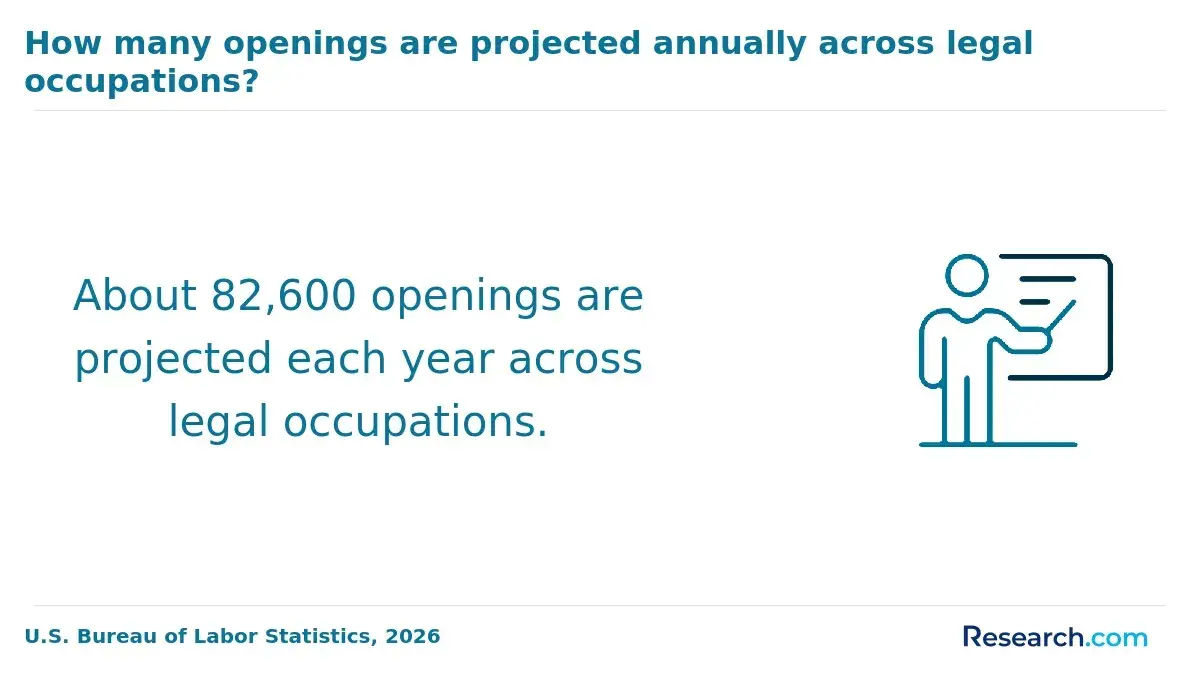
The U.S. Bureau of Labor Statistics reports median annual pay of $80,730 in May 2025 for compliance officers and projects 4% job growth from 2025-2035, with about 32,700 openings per year. These figures cover compliance officers across industries, not higher education compliance officers or MLS graduates specifically. They are a labor-market benchmark, not an expected salary after graduation.
Pay and advancement in colleges can vary with institution type, location, responsibility, and prior experience. A candidate who can show sound investigations, policy implementation, audit work, or training outcomes may have a stronger case for a role than one relying on the degree alone. Before borrowing for an MLS, compare its full cost with actual postings for the jobs you want and note which qualifications employers require versus prefer.
How should you choose a reputable MLS program for compliance careers?
Begin with a target role and two or three legal or operational skills you cannot yet demonstrate. Then compare programs against those gaps using current catalogs, schedules, and written answers from admissions or program staff. This sequence prevents an appealing concentration label from driving an expensive decision.
Before committing, complete these checks:
- Confirm the university's institutional accreditation and the degree's current name, requirements, and available concentration or track.
- Map required courses to the campus regulations and responsibilities relevant to your target role; identify any missing specialty training.
- Verify live-session requirements, course rotation, applied projects, and the time needed to finish while working.
- Request a comparable estimate of tuition and mandatory costs, then compare it with a focused certificate or employer-provided training.
- Review relevant job postings and ask whether the degree addresses a hiring requirement, a preferred qualification, or chiefly your own skills gap.
A warning sign is a program that emphasizes legal expertise but offers no clear higher education coursework - or suggests that a non-JD degree will confer attorney privileges. The strongest choice is the one whose documented curriculum, total cost, and realistic schedule support the work you intend to do.
Other Things You Should Know About Law & Paralegal
Possibly. Employee tuition benefits differ by institution and may exclude certain law-school programs, impose service requirements, or have tax consequences. Obtain the policy and written confirmation for the specific degree before enrolling.
Do not assume they will. A law school decides whether it accepts any prior graduate coursework toward its JD under its own policies and applicable standards. Ask the prospective JD program directly before using transfer credit to justify an MLS purchase.
No. Depending on who maintains the record and why, FERPA rather than the Health Insurance Portability and Accountability Act (HIPAA) may apply. Campus health and privacy staff should determine the applicable rule for the particular record and disclosure.
There is no single nationwide certification required for all higher education compliance officers. An employer may prefer training or a credential for a particular specialty. Check job postings and the credential provider's eligibility rules before paying for an exam or preparation course.
References
- Types of Financial Aid: Grants, Work-Study, and Loans | studentaid.gov https://studentaid.gov/understand-aid/types
- Title IX and Sex Discrimination | ed.gov http://www.ed.gov/laws-and-policy/civil-rights-laws/title-ix-and-sex-discrimination
- Employer-offered educational assistance programs can help pay for college | Internal Revenue Service https://www.irs.gov/newsroom/employer-offered-educational-assistance-programs-can-help-pay-for-college
- FERPA | Protecting Student Privacy - Department of Education https://studentprivacy.ed.gov/ferpa
- Compliance Framework and Programs | usc.edu https://oec.usc.edu/ethics-at-usc/compliance-framework-and-programs/
- MLS vs. JD: Which Legal Path Is Right for Non-Lawyers? | Goodwin College of Professional Studies https://drexel.edu/law/news/legal-studies-blog/mls-vs-jd-which-legal-path-is-right-for-non-lawyers/
- Essential Elements of an Effective Compliance Program | southalabama.edu https://www.southalabama.edu/departments/compliance/elements.html
- MLS vs J.D.: Which Legal Degree Fits Your Career Goals? | UC Law San Francisco MLS https://mls.uclawsf.edu/articles/mls-vs-jd/