2027 Legal Studies Master's Programs for Third-Party Due Diligence Teams

Co-Founder and Chief Data Scientist
Third-party due diligence teams must turn vendor records, ownership information, and potential legal risks into decisions their organizations can defend. A legal studies master's may strengthen that work, but it can also be a costly way to learn skills available through targeted training.
This guide is for compliance analysts, procurement professionals, and legal-support staff considering graduate study. It explains which courses and program features matter, what the degree cannot do, and how to compare it with shorter routes before committing.
Key Things You Should Know
- Choose a program for its applied coverage of contracts, anti-corruption, sanctions, privacy, and documented risk assessment, not simply for a "compliance" label.
- A legal studies master's is a non-JD degree, not a requirement for due diligence work or a qualification to practice law; a graduate certificate or employer training may be sufficient.
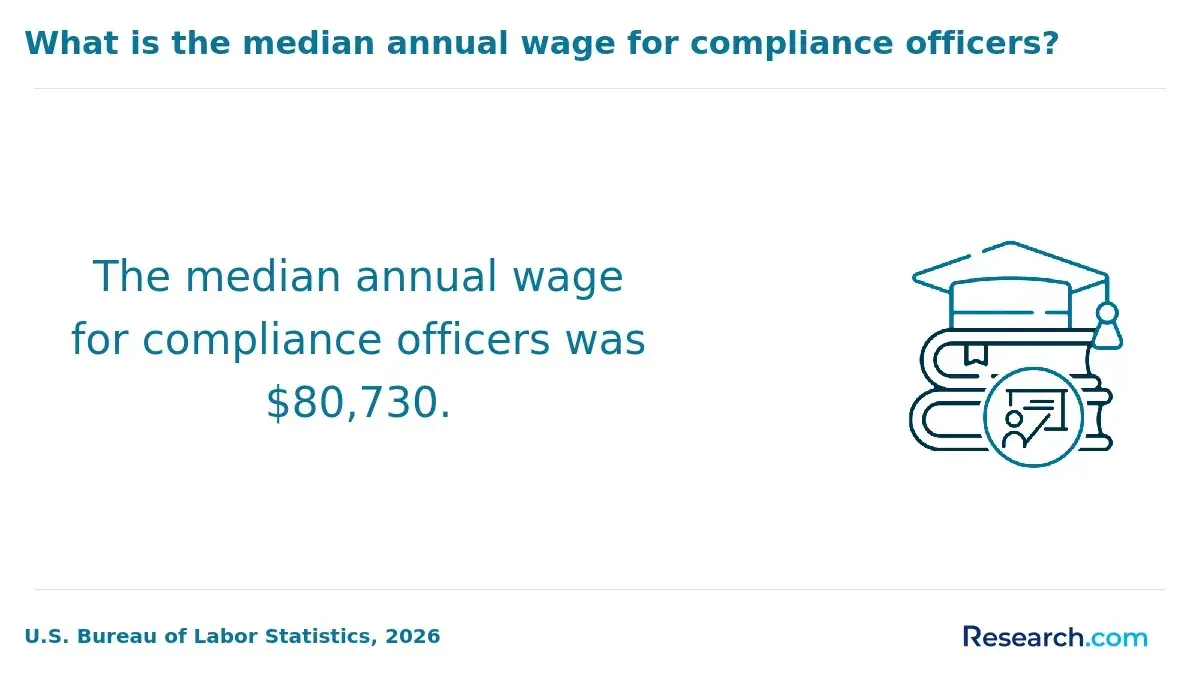
- Compliance officers' median annual pay was $80,730 in May 2025, with 4% projected job growth for 2025-2035; those broad occupational figures do not predict a due diligence graduate's pay.
What is a legal studies master's program for third-party due diligence teams?
Third-party due diligence is the process of assessing risks associated with vendors, agents, distributors, and other business partners before and during a relationship. Teams may review ownership and screening results, investigate warning signs, document findings, and recommend whether to approve, monitor, or escalate a relationship. Counsel determines legal interpretations and provides legal advice when needed.
A Master of Legal Studies (MLS), Master of Studies in Law (MSL), Master of Jurisprudence, or similarly named degree teaches legal concepts to professionals who generally do not intend to become attorneys. "For due diligence" describes a career use, not a standardized degree type: one school may offer a formal compliance concentration, another a set of relevant electives, and another only a few related courses. Check the actual degree requirements and available course sequence.
The degree can be reasonable for someone seeking sustained legal and regulatory study alongside a compliance career. If the immediate goal is to close one knowledge gap, compare master's-level legal studies versus certificate study before paying for a full degree. An academic certificate is coursework; it is not the same as a professional certification awarded by a credentialing organization. Neither a non-JD master's nor a certificate alone qualifies a graduate to practice law.
What careers can a legal studies master's support in due diligence?
The closest roles include third-party risk analyst, compliance analyst or officer, vendor risk specialist, procurement compliance specialist, and investigations support professional. Duties differ by employer: a financial institution may emphasize screening and recordkeeping, while a company using sales intermediaries may focus on anti-corruption concerns and contract controls. Some legal operations teams also coordinate outside counsel and maintain investigation records.
Hiring requirements are employer-specific, and an MLS or MSL is not a standard entry requirement for these jobs. Procurement, audit, banking, paralegal, and operations experience can provide a starting point; graduates still need to show that they can evaluate evidence and write clear recommendations. Professionals whose work centers on commercial transactions rather than screening may also consider business law programs for adults balancing work and education.
Before enrolling, review postings for the roles you want and note which ask for a degree, a particular regulation, data skills, or direct investigation experience. If the missing qualification is hands-on screening experience, a graduate degree alone may not resolve it.
What accreditation should legal studies master's programs have?
Verify that the university holds institutional accreditation from an accreditor recognized by the U.S. Department of Education. This is the relevant starting check for a graduate legal studies degree. Then examine the program itself: accreditation does not establish that its courses teach third-party risk assessment or that employers prefer its graduates.
Do not confuse institutional accreditation with American Bar Association (ABA) approval. The ABA approves qualifying paralegal education programs; that approval is not institutional accreditation and is not the usual approval standard for a non-JD legal studies master's. An MLS is also not an ABA-approved JD and does not create eligibility to practice law.
If a school advertises a separate paralegal credential alongside the master's, verify each credential's status independently. Ask which institution awards the degree and whether any advertised certificate is part of the degree or a separate program.
Which courses prepare students for third-party due diligence work?
Look beyond course titles to assignments. The strongest fit is coursework that asks students to assess records, explain uncertainty, and document an escalation decision, not just memorize legal rules. This table connects useful subject areas to realistic team outputs.
| Course area | Application to due diligence |
| Anti-corruption, sanctions, and compliance | Recognizing potential red flags and knowing when to refer a matter to specialists |
| Business organizations and contracts | Understanding ownership structures, counterparty obligations, and contractual risk controls |
| Privacy, cybersecurity, and records governance | Handling sensitive screening information and documenting retention decisions |
| Legal research, investigations, and writing | Evaluating sources and producing a traceable, concise risk memorandum |
Check whether a capstone or practicum permits a simulated vendor review with feedback on source quality, false positives, and escalation. A course that mentions screening software is not necessarily hands-on training: confirm access, required assignments, and whether instruction covers the tools your target employers use. Laws, screening lists, and company policies can change, so a durable research method matters more than familiarity with one interface.
Are online or campus-based legal studies programs better for due diligence?
Neither format is inherently better. Online study may let an employed analyst apply course concepts at work; campus study may make scheduled discussion and local networking easier. The deciding factor is whether the actual schedule and assignments support serious practice while fitting your job.
"Online" does not necessarily mean asynchronous or self-paced. Ask about live class meetings, group projects, exam windows, campus visits, course rotation, and any practicum. For either format, request an example of how students receive feedback on written risk assessments. If your goal is faster training for legal-support work rather than a graduate degree, compare accelerated online paralegal study options - but check that their curriculum actually addresses the compliance tasks you want to perform.
What are the admission requirements for legal studies master's programs?
A bachelor's degree is the usual starting credential for graduate admission. Schools set their own rules for transcripts, minimum academic performance, statements of purpose, recommendations, résumés, and any testing or work-experience expectations. A law degree is generally not the point of a non-JD program, but applicants should verify each school's eligibility rules rather than assume an exemption or prerequisite.
Explain in your application which due diligence responsibilities you have handled and which legal questions you need to understand better. If you hold an associate degree but not a bachelor's, investigate comparing legal studies continuation routes for associate graduates before planning graduate admission. The receiving institution decides whether earlier credits transfer and how they apply.
How long do legal studies master's programs take and cost?
Completion time depends on required credits, course availability, and whether you attend part time. Compare each school's published course sequence - not just its advertised shortest completion time - especially if required compliance courses are offered infrequently or a capstone has prerequisites.
For cost, request a written estimate covering tuition for the credits you expect to take, mandatory fees, books, technology, travel, and any required campus attendance. Ask how a slower pace or tuition changes could affect the amount you ultimately pay. Graduate financial aid eligibility depends on the institution, program, and student; confirm the specific program's status with its financial aid office rather than assuming every related certificate qualifies.
Opportunity cost matters too. If you would reduce work hours to enroll, compare that sacrifice with the expected value of broader legal study. Someone seeking paralegal training for a different role can use comparing costs of ABA-approved online paralegal programs as a separate comparison - not as evidence that paralegal education substitutes for graduate-level third-party risk training.
What skills do due diligence teams seek from legal studies graduates?
Teams need people who can identify the right entity, assess the reliability of a source, distinguish a meaningful warning sign from a false positive, and explain what remains unknown. Clear writing, careful recordkeeping, and knowing when to escalate are as important as recognizing a legal issue. Analysts must also handle personal and commercially sensitive information according to applicable law and employer policy.
Legal study can improve issue spotting and research, but it should be paired with practical work: ownership analysis, screening workflows, spreadsheets or other data tools, and communication with procurement, compliance, and counsel. If a program promotes artificial intelligence or automated screening, ask how it teaches verification, documentation, confidentiality, and human review. Tool exposure alone does not establish proficiency.
What salaries and job outlook can due diligence professionals expect?
The Bureau of Labor Statistics reports median annual pay of $80,730 in May 2025 for compliance officers and 4% projected growth for 2025-2035. This is a useful broad benchmark for compliance-oriented roles, not a salary estimate for third-party risk specialists or people with an MLS. Pay depends on duties, industry, location, and experience; the figures do not measure a degree's return on investment.
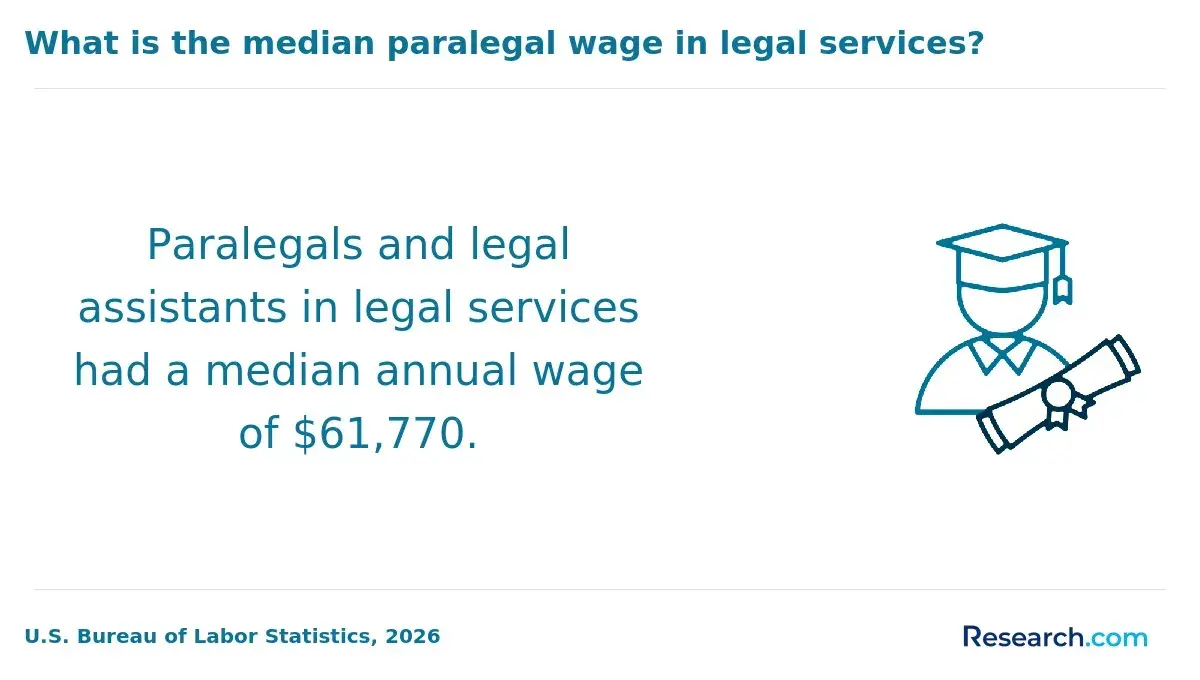
Some graduates work in legal-support roles instead. For paralegals and legal assistants, the BLS reports median annual pay of $62,890 in May 2025 and 0% projected growth for 2025-2035. These are different occupational groups, so compare job duties and hiring requirements before using either benchmark to evaluate a program.
Which certifications complement a legal studies master's in due diligence?
Optional professional credentials can demonstrate a more specific focus than a broad legal studies degree. The Society of Corporate Compliance and Ethics awards the Certified Compliance & Ethics Professional (CCEP) credential, while ISACA awards Certified in Risk and Information Systems Control (CRISC) for professionals whose work centers on technology and risk controls. The Association of Certified Fraud Examiners awards the Certified Fraud Examiner (CFE) credential, which may be relevant to investigations-focused work.
These credentials address different jobs; none is a universal requirement for third-party due diligence. Check each awarding organization's current eligibility, examination, fees, and continuing-education rules before enrolling in a degree partly to pursue certification. If you already have substantial compliance experience, a targeted credential or employer training may address your next career step with less time away from work.
Other Things You Should Know About Law & Paralegal
Not without appropriate employer authorization and compliance with applicable confidentiality rules. Ask whether the program accepts fictionalized or publicly available cases before sharing work materials.
State the exact degree name and relevant coursework or projects. Describe legal research and risk-assessment skills without implying that you are an attorney or hold a professional certification you have not earned.
It can provide a foundation for identifying issues, but cross-border reviews may involve additional laws, languages, and local facts. The degree does not replace jurisdiction-specific advice or employer procedures.
Follow your organization's verification and escalation procedures. Record why the match appears unreliable rather than silently deleting it or treating an unverified result as proof of misconduct.
References
- Types of Financial Aid: Grants, Work-Study, and Loans | studentaid.gov https://studentaid.gov/understand-aid/types
- A Framework for OFAC Compliance Commitments | U.S. Department of the Treasury https://ofac.treasury.gov/media/16331/download
- Guidance on Managing Risks Related to Third-Party Service Providers | Department of Financial Services https://www.dfs.ny.gov/industry-guidance/industry-letters/il20251021-guidance-managing-risks-third-party
- Cost of Attendance (Budget) | 2025-2026 Federal Student Aid Handbook https://fsapartners.ed.gov/knowledge-center/fsa-handbook/2025-2026/vol3/ch2-cost-attendance-budget
- Legal Risk Management, Contracting, and Compliance | fsu.edu https://law.fsu.edu/academics/academic-programs/juris-master-online-program/legal-risk-management-contracting-and-compliance
- MLS vs. JD vs. LLM: Which Law Degree Is Right for You? | DePaul University Online Master of Legal Studies https://onlinemls.depaul.edu/articles/mls-vs-jd-vs-llm/
- 10 Experiential Learning Examples for Graduate Students | Northeastern University Graduate Programs https://graduate.northeastern.edu/knowledge-hub/experiential-learning-examples/
- 12 Common Business Compliance Roles: Key Jobs, Responsibilities, and Career Paths | UC News https://www.online.uc.edu/blog/common-business-compliance-roles.html
- MLS vs. JD: Which Legal Path Is Right for Non-Lawyers? | Goodwin College of Professional Studies https://drexel.edu/law/news/legal-studies-blog/mls-vs-jd-which-legal-path-is-right-for-non-lawyers/
- A Guide To Experiential Learning, Internships, Capstones, and Practicums - UOnline - The University of Utah https://online.utah.edu/blog/posts/learning-experiences.php