2027 MLS Programs for Financial Risk Analysts: Legal Risk vs. Quantitative Risk Training

Co-Founder and Chief Data Scientist
Financial risk analysts may need to interpret lending rules, evaluate a model, or explain how both affect a business decision. A Master of Legal Studies (MLS) can strengthen regulatory judgment, but it usually cannot replace the statistics and programming needed for quantitative risk work. This guide is for analysts and career changers deciding whether to pursue an MLS, technical training, or a combination. It compares the work each route prepares you to do and shows what to verify before paying for a program.
Key Things You Should Know
- Choose an MLS for regulation-heavy work such as compliance, policy, and legal-risk assessment; choose quantitative training for modeling, forecasting, and measuring financial exposure.
- An MLS is not required to become a financial risk analyst and does not qualify its holder to practice law. Compare its coursework with the duties in the jobs you want.
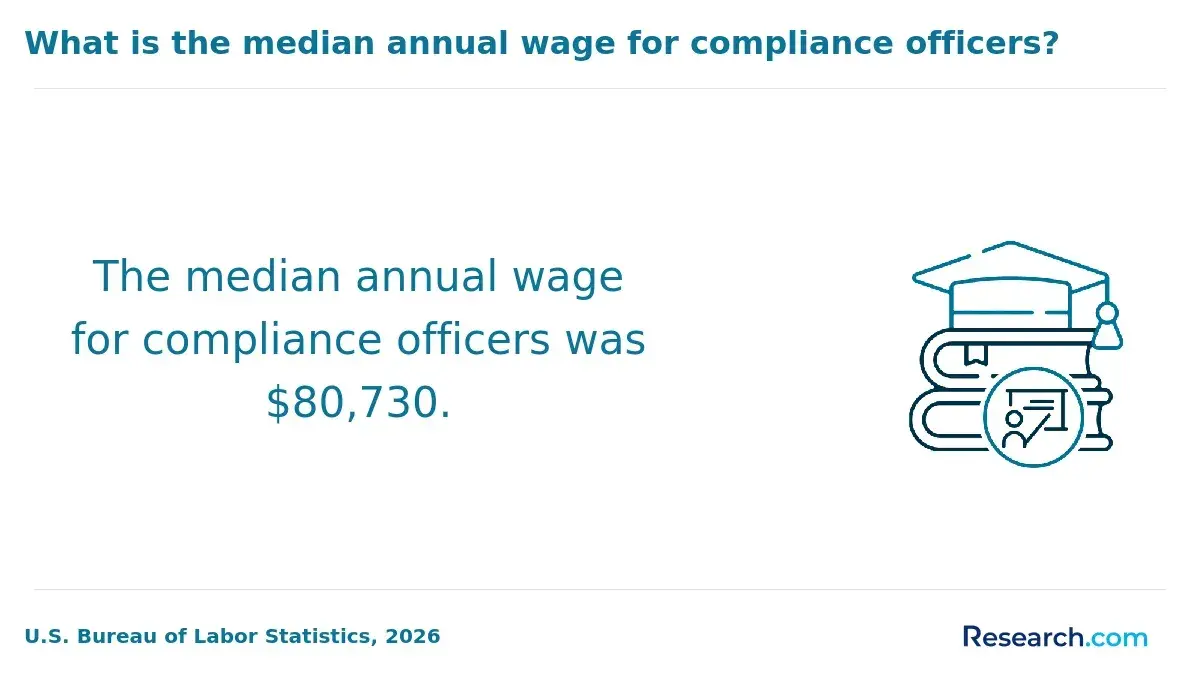
- The Bureau of Labor Statistics reports $80,730 in May 2025 median pay and 4% projected growth, 2025-2035, for compliance officers - a useful benchmark for compliance-oriented roles, not a salary prediction for MLS graduates.
What Is an MLS Degree for Financial Risk Analysts?
An MLS is a graduate degree designed to help nonlawyers understand legal rules and apply them in professional settings. Schools may use names such as Master of Legal Studies, Master of Studies in Law (MSL), or Master of Jurisprudence; the curriculum matters more than the label. These are non-JD degrees: they do not, by themselves, qualify graduates to practice law.
A financial risk analyst identifies potential losses, assesses controls, and communicates exposure to decision-makers. Legal training can help when that work involves interpreting regulatory obligations, documenting compliance decisions, reviewing contracts, or coordinating with counsel. It is less directly useful when the central task is building a credit-loss model or estimating market risk.
A program advertised as focused on financial regulation might offer a formal concentration, a set of electives, or only a few relevant courses. Check the catalog for the credential awarded, required courses, and whether the finance-related courses are offered often enough to complete your intended sequence.
How Does Legal Risk Training Compare With Quantitative Risk Training?
The two routes address different parts of the same problem. Legal risk training asks what an organization must do and how to document defensible decisions; quantitative training estimates what could happen and how large the financial effect might be. The comparison below connects each route to work an employer may actually assign.
| Decision factor | Legal risk training, including an MLS | Quantitative risk training |
| Core questions | Which rules, contracts, and governance duties apply? | How likely is a loss, and how should it be measured? |
| Typical skills | Legal research, regulatory interpretation, policy drafting, and escalation | Statistics, programming, data analysis, forecasting, and model validation |
| Closer fit | Compliance, regulatory change, controls, and legal-risk coordination | Credit, market, liquidity, and model-risk analysis |
| Main limitation | May provide little practice with data or models | May provide little training in interpreting legal obligations |
Choose by the work you want to own. If a job description emphasizes regulatory interpretation and written policy, legal study may close a meaningful gap. If it emphasizes SQL, Python, statistical models, or stress testing, prioritize demonstrable technical skills. Roles that connect models to regulatory expectations can benefit from both, but that does not mean you need two graduate degrees.
Can an MLS Degree Prepare You for Financial Risk Analysis?
Yes, for some parts of the occupation. An MLS may prepare an analyst to research applicable rules, identify legal issues in a risk assessment, and communicate with compliance teams and attorneys. It is unlikely to provide sufficient preparation on its own for a role that requires substantial modeling or programming. Employers set their own hiring criteria, and an MLS is not a standard requirement for financial risk analysis.
Start with several current postings for the role you want and separate their required skills from preferred credentials. If your main gap is regulatory knowledge, weighing a graduate certificate against a legal studies master's may prevent you from paying for a broader degree than the work requires. If your gap is quantitative, compare statistics coursework, technical projects, employer training, and risk-focused graduate programs instead.
A useful test is whether the program requires you to produce work resembling the job: for example, a regulatory analysis or controls assessment. A course title alone does not establish practical preparation, and neither a degree nor a project guarantees a hiring outcome.
What Courses Do MLS Financial Regulation Programs Include?
Requirements vary by school. Relevant MLS coursework may cover administrative law, financial regulation, banking law, securities regulation, contracts, corporate governance, privacy, compliance, and legal research. These subjects can help an analyst understand the source of an obligation and explain how it affects a risk-control decision.
Read course descriptions rather than relying on a concentration name. A class on financial regulation may focus on interpreting statutes and agency rules, while a class called risk management may address governance rather than probability or modeling. Ask for a current syllabus and the recent course schedule, especially if electives are central to your decision.
For a hybrid legal-and-quantitative role, look for assignments that connect a regulatory requirement to data, model documentation, or control testing. If the MLS lacks that connection, plan to build technical skills separately through coursework or supervised work. Do not assume that access to a research database or mention of an analytics tool means the program provides hands-on proficiency.
Are Online or Campus MLS Programs Better for Risk Professionals?
Neither format is inherently better. An online MLS may make it easier to remain employed while studying, but "online" does not mean asynchronous: scheduled discussions, examinations, group projects, or campus visits may still be required. A campus program may offer more face-to-face interaction, but commuting and fixed class times can carry substantial opportunity costs.
Compare the actual timetable, course rotation, access to instructors, and availability of finance-related electives - not just the delivery label. Ask whether the classes you need can be completed remotely and whether any required session conflicts with your work schedule. Readers also comparing accelerated paralegal program formats should treat those as a separate, legal-support career route rather than a faster equivalent to an MLS for financial risk work.
What Are the Admission Requirements for MLS Risk Management Programs?
MLS programs generally target applicants who already hold a bachelor's degree, but each institution sets its own rules for transcripts, work experience, statements, recommendations, and any test policy. A background in finance may help you apply the material; it does not necessarily replace an admissions requirement or guarantee admission.
If you have not completed a bachelor's degree, check that prerequisite before planning around graduate study. Someone comparing transfer opportunities in paralegal bachelor's programs should confirm with the receiving school how prior credits apply - and consider whether a finance-related undergraduate path better supports the intended risk role. Transfer credit is never automatic simply because institutions are accredited.
Before applying, request the current admissions criteria and ask whether you need prior law, accounting, or quantitative coursework for the electives you want. Distinguish an admission requirement from a course prerequisite or a recommendation for success.
How Long Do MLS Programs Take and What Do They Cost?
Completion time depends on required credits, course sequencing, and whether you study full time or alongside a job. Published tuition is only one part of the decision: mandatory fees, books, technology, travel for any campus sessions, and income lost to reduced work hours can change the total. Without a particular school's current credit requirements and 2026-27 charges, a reliable program-price comparison is not possible.
Request a written, program-specific cost estimate and a course sequence for your intended pace. Confirm which charges are mandatory and which electives will actually be available. Ask the financial aid office about eligibility for the specific degree and your circumstances rather than assuming that graduate enrollment - or an alternative certificate - automatically qualifies for particular aid. If payment timing is the immediate obstacle, resources on spreading tuition payments for a paralegal degree address a different credential; verify any MLS payment arrangement directly with its institution.
The central cost question is whether the degree develops skills your target role rewards enough to justify its full cost and study time. A narrower course, certificate, or employer-supported training may be a better first investment when the skill gap is specific.
What Careers Can You Pursue With Legal Risk and Quantitative Training?
Legal training may be useful in regulatory compliance, risk governance, policy, controls, and roles coordinating with counsel. Quantitative training is more central to credit-risk analysis, market-risk analysis, and model development or validation. A professional who can interpret regulatory expectations and assess technical evidence may also contribute to model governance, though employers may require substantial experience for those positions.
These paths should not be confused with paralegal work. A paralegal supports attorneys with legal tasks under applicable supervision; an MLS does not authorize independent legal practice, and paralegal education is not a substitute for quantitative risk training. If legal support - not financial risk - is the goal, compare costs of accredited online paralegal degrees as a distinct education decision. Institutional accreditation and American Bar Association approval of a qualifying paralegal program are different statuses.
For a career transition, make an inventory of evidence you can show an employer. Finance experience may transfer into regulatory analysis; legal or compliance experience may transfer into controls work. Neither substitutes automatically for demonstrated statistical, coding, or financial-modeling ability when a posting requires it.
What Salaries and Job Outlook Can Financial Risk Analysts Expect?
There is no single salary figure that accurately describes every job called "financial risk analyst." Titles can span quantitatively intensive financial analysis and compliance-oriented work, with pay affected by responsibilities, location, experience, and employer. Broad occupational data should therefore be treated as context, not as a forecast for someone earning an MLS.
For the compliance side of this decision, the Bureau of Labor Statistics reports median annual pay of $80,730 in May 2025 for compliance officers and 4% projected growth, 2025-2035. That category covers many industries and is not specific to financial-risk analysts or MLS holders. For a quantitative target role, compare current postings that describe its technical duties and compensation rather than applying the compliance figure to it.
When assessing return on investment, distinguish a job you could pursue with your existing experience from one that requires skills you have not yet built. An occupational median cannot show whether an added degree will increase an individual applicant's pay.
Which Accreditation and Certifications Matter for Financial Risk Analysts?
Check that an MLS institution holds recognized institutional accreditation and that the credential and curriculum match your intended work. Institutional accreditation addresses the institution; it is not a claim that a particular MLS prepares students for a professional examination. ABA approval, where applicable, concerns qualifying paralegal education programs, not an MLS or an individual's certification.
For quantitative risk work, the Financial Risk Manager (FRM) credential from the Global Association of Risk Professionals and the Professional Risk Manager (PRM) credential from the Professional Risk Managers' International Association may be relevant. For certain compliance or anti-money-laundering paths, employers may value credentials tied to those specialties. Each issuer sets its own examination, experience, fee, and continuing-education rules; check current requirements with the issuer before enrolling in preparation courses.
Make the credential decision after the job decision. If postings prioritize modeling and a risk designation, an MLS may be a costly detour. If they prioritize interpreting rules and designing controls, legal study may be more directly relevant. A certification demonstrates that its issuer's requirements have been met; a school certificate is an educational award, and neither guarantees employment.
Other Things You Should Know About Law & Paralegal
An MLS alone does not authorize someone to practice law. A graduate can use legal knowledge in a nonlawyer role but should refer questions requiring legal advice or representation to qualified counsel, subject to the employer's policies and applicable state rules.
Yes, if the coursework addresses a documented need in your role. Ask about tuition assistance, reimbursement conditions, approved programs, and any required period of continued employment before committing.
It may support nonlawyer compliance, contracts, or legal-operations work, depending on the position. It does not meet requirements for attorney positions; read the posting carefully to distinguish legal-support duties from work reserved for licensed lawyers.
Request sample syllabi, the current course schedule, a complete cost estimate, and information about assessed projects. Compare those materials with actual job postings and ask the school how it substantiates any reported career outcomes.
References
- The Fed - All Regulations https://www.federalreserve.gov/supervisionreg/reglisting.htm
- Financial Institution Analysis School | FDIC.gov https://www.fdic.gov/examiner-training-programs/risk-management-training-program-financial-institution-analysis-school
- Bank Secrecy Act (BSA) | OCC.gov https://www.occ.gov/topics/supervision-and-examination/bsa/index-bsa.html
- Understanding the Legal Side of Financial Compliance with an M.L.S. | University of Miami School of Law https://news.miami.edu/law/stories/2025/08/understanding-the-legal-side-of-financial-compliance-with-an-mls.html
- Online Master of Legal Studies (MLS) | William & Mary Law School https://online.law.wm.edu/master-of-legal-studies
- Tuition and Financing - College of Pharmacy https://www.pharmacy.umn.edu/medical-laboratory-sciences/degrees-and-programs/tuition-and-financing
- MLS - Corporate Compliance - Seton Hall Law School https://law.shu.edu/academics/mls-corporate-compliance-online.html
- What to Look For in an Online MLS Program | stevenson.edu https://www.stevenson.edu/online/about-us/news/what-to-look-for-in-an-online-mls-program/
- Master of Science (MS) in Medical Laboratory Sciences | Virginia Commonwealth University https://mls.chp.vcu.edu/programs/masters/
- Is an MLS Worth It? ROI and Career Outcomes for Non-Lawyers | Drexel University Kline School of Law https://drexel.edu/law/news/legal-studies-blog/is-an-mls-worth-it-roi-and-career-outcomes-for-non-lawyers/