
2027 Can Financial Aid Cover a Noncredit Paralegal Certificate? Questions to Ask Each School

Co-Founder and Chief Data Scientist
A college may advertise financial aid while offering its paralegal certificate through a separate noncredit division. That distinction can determine whether you can use a federal grant or loan - and whether another funding source is worth pursuing. If you are comparing paralegal programs, this guide explains the eligibility rules, the alternatives to federal aid, and the questions to put to each school. You will be able to compare the full cost of your options before paying a deposit.
Key Things You Should Know
- Noncredit does not automatically mean ineligible: Federal aid depends on the specific program's approval for Title IV aid, not just the college's accreditation or its general financial aid offerings.
- Workforce funding is a separate decision: New Workforce Pell provisions beginning in 2026 concern qualifying programs of 150-599 clock hours, but no paralegal course qualifies solely because it falls within that range.
- Get a program-specific answer in writing: Ask which grants, loans, workforce awards, scholarships, or payment plans apply to your exact certificate and what remains to pay.
Can financial aid cover a noncredit paralegal certificate?
Yes, sometimes - but many noncredit paralegal certificates are not eligible for federal student aid. "Noncredit" means the coursework does not award academic credits. It does not, by itself, settle aid eligibility: an approved career-training program measured in clock hours can potentially qualify. The school must participate in the relevant federal aid program, the specific certificate must meet its eligibility rules, and the student must qualify.
Ask the financial aid office whether students in the exact certificate you intend to enroll in can receive a Pell Grant, federal student loans, or other Title IV aid. Title IV refers to the federal student aid programs governed by the Higher Education Act. A college's general instruction to "complete the FAFSA" is not confirmation that this certificate qualifies. If federal aid is unavailable, check workforce grants, employer benefits, scholarships, and payment options before deciding the program is unaffordable.
Why are noncredit paralegal certificates often ineligible for federal aid?
Many are offered as continuing education rather than as approved, aid-eligible programs. A course may be too short, lack a required program approval, or sit outside the institution's Title IV offerings. The reason matters: a different certificate at the same college might have a different aid status.
Do not assume that academic quality and aid eligibility are the same test. A useful course can be ineligible for federal aid, while an aid-eligible course still needs scrutiny for cost and career fit. If a school says its certificate is ineligible, ask whether that applies to all federal aid or only a particular grant or loan, and whether there is a credit-bearing alternative.
Which noncredit paralegal programs qualify for workforce funding?
Eligibility varies by funding source and location. Under the Workforce Innovation and Opportunity Act (WIOA), a state's eligible training provider list can identify programs that may be considered for certain workforce training funds. Listing alone does not promise an award: the applicant must meet local eligibility rules, and funding and approval must be available. A local American Job Center or workforce board can explain its process.
Workforce Pell is a separate federal pathway beginning in 2026 for approved short-term training programs. Its 150-599-clock-hour range is only one condition; state and federal program approvals and other requirements also matter. Do not treat a school's advertised duration as proof of eligibility, particularly while implementation and program approvals are developing.
Ask the school for the certificate's exact program name and any workforce-program identifier. Then confirm with the funding agency that that program is approved, that you personally qualify, and which charges the award covers. Get approval before enrolling if reimbursement is not guaranteed.
What should you ask a school about Title IV eligibility?
Send these questions to the financial aid office, not only the continuing education sales or admissions team. Their answers should identify the precise certificate, because similar program names can mask different aid rules.
- Is this specific noncredit paralegal certificate an approved Title IV-eligible program at your institution? What is its official program name?
- Which forms of federal aid, if any, can an eligible student use for it, and must I complete the FAFSA?
- Does the program have enrollment, clock-hour, attendance, or satisfactory academic progress requirements that affect payment or continued aid?
- What is the full required cost, what charges will the aid cover, and when would I have to pay any remaining balance?
- If I withdraw, how are refunds and any federal aid repayment obligations determined?
If the answer is "our college accepts financial aid," ask again about the program. Keep the written response with the school's current cost and refund disclosures before committing.
Does institutional accreditation matter for paralegal certificate funding?
Yes, but it is not sufficient on its own. For federal student aid, a school generally needs recognized institutional accreditation and other required approvals and participation. The individual certificate must also qualify. An accredited college can therefore offer both aid-eligible degrees and an ineligible noncredit paralegal course.
Keep another distinction clear: the American Bar Association (ABA) approves qualifying paralegal education programs; it does not institutionally accredit colleges or certify individual graduates. ABA program approval may matter to your educational or employment goals, but it does not automatically make a certificate eligible for federal aid. Verify accreditation, any claimed ABA approval, and aid eligibility as three separate facts.
Are scholarships or payment plans available for noncredit certificates?
They may be. Ask the school whether its continuing education students can apply for institutional scholarships, foundation awards, or need-based assistance; some awards are restricted to credit-seeking students. An employer may also reimburse approved training, but its rules can depend on your role, grades, and continued employment.
A payment plan spreads a bill; it does not reduce the price. Check enrollment fees, due dates, late charges, and what happens if you withdraw. Compare any scholarship-adjusted noncredit price with a credit program's net cost after confirmed aid, not with its sticker tuition alone. For a credit-bearing alternative, comparing tuition for online paralegal degrees can help frame that broader cost check.
How do noncredit paralegal certificates compare with credit programs?
The central trade-off is often speed and simplicity versus access to academic credit and potentially more aid options. Neither format automatically provides stronger training. This comparison shows what to verify before paying for either route.
| Decision factor | Noncredit certificate | Credit-bearing certificate or degree |
| Academic credit | Does not award college credit; later credit is not assured | Awards credit, though another school decides whether to accept it |
| Federal aid | Possible only if the specific program qualifies; many do not | Possible only if the institution, program, and student qualify |
| Coursework | May emphasize focused job training | May include broader legal and general education study |
| Best potential fit | Someone with the education an employer already expects who needs targeted skills | Someone seeking a degree, transferable coursework, or an employer-requested academic credential |
A certificate documents completion of a school program; it is not the same as professional certification awarded by a credentialing organization. If you already hold a bachelor's degree and want legal knowledge for a non-paralegal role, choosing the right level of graduate legal studies may be a more relevant comparison. Neither a paralegal certificate nor a non-JD legal studies credential qualifies someone to practice law as an attorney.
What program costs and career benefits should you compare?
Request an itemized total covering tuition, mandatory fees, books, legal research access, software or technology requirements, and any travel or internship expenses. Ask whether optional charges are truly optional. Then compare completion schedules: a lower price may be less useful if required class meetings or an unpaid placement interfere with work. If time away from work is a major cost, consider paralegal education on an accelerated schedule, while checking whether its pace is realistic for you.
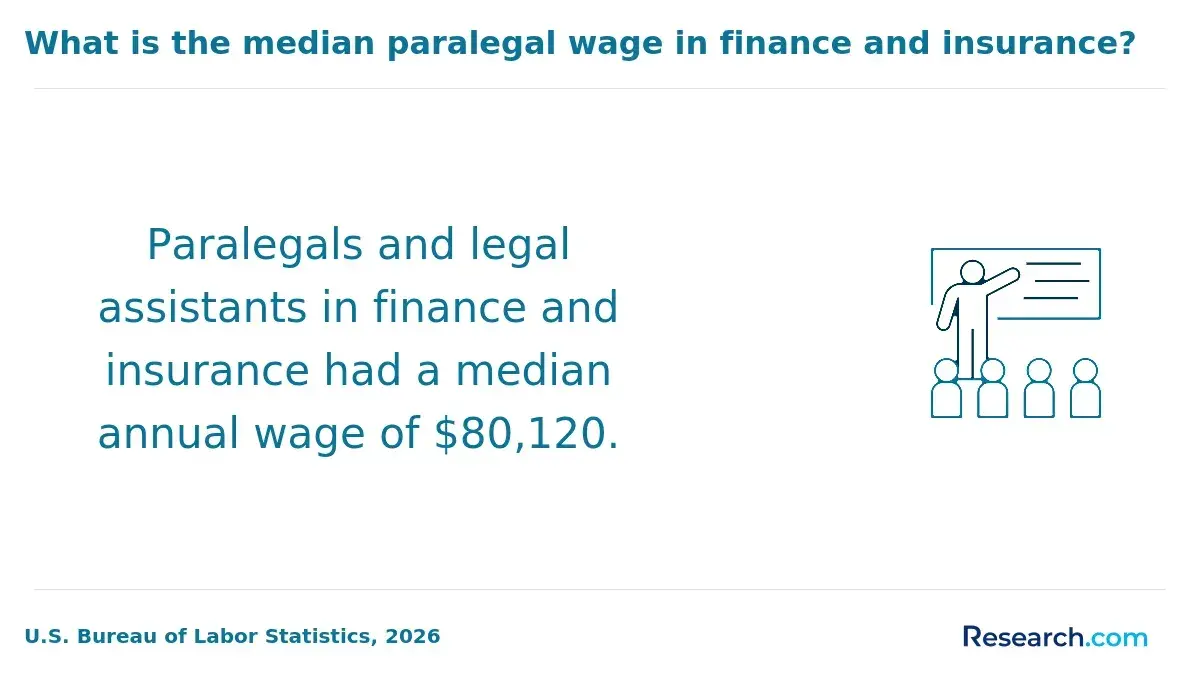
The Bureau of Labor Statistics reports median annual pay of $62,890 in May 2025 for paralegals and legal assistants, with 0% projected growth, 2025-2035. That occupational median is not an expected starting salary or a certificate payoff. Use local job postings to judge whether employers want a certificate, a degree, prior experience, or particular research and drafting skills before taking on debt.
Does a paralegal certificate meet employer or state requirements?
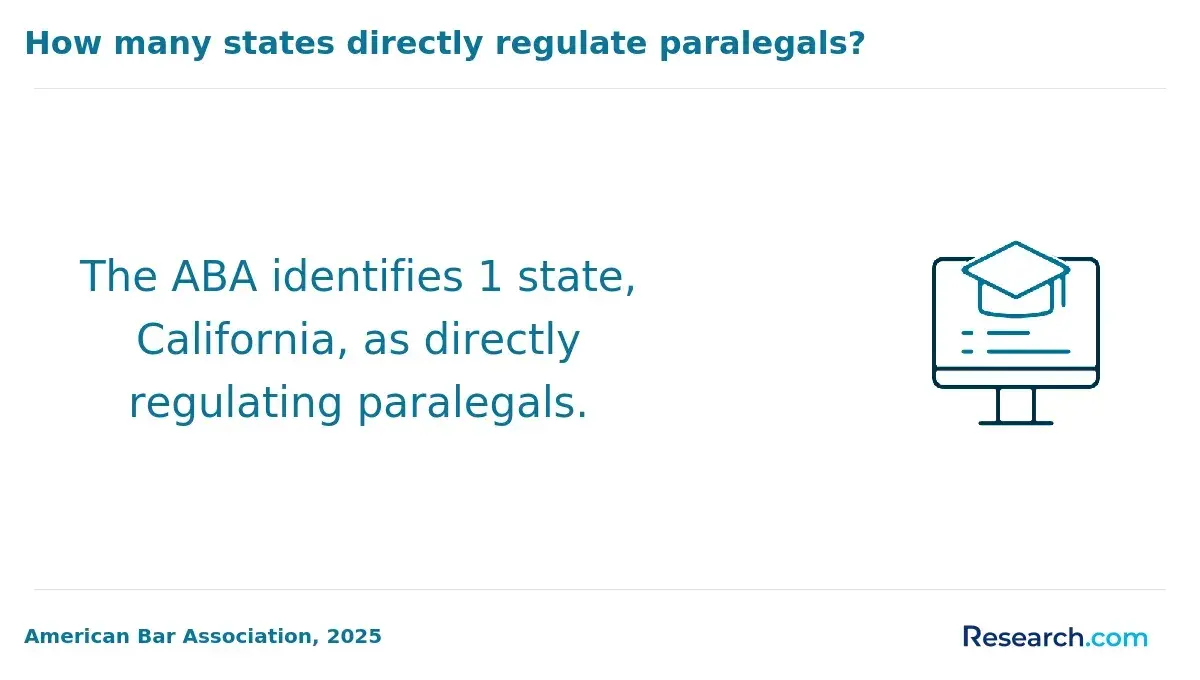
It depends on the job and jurisdiction. Employers may specify a degree, a paralegal education program, work experience, or a combination. Some states have additional rules for particular titles or legal-service activities. Read current postings for the roles you want and check the relevant state authority's rules rather than assuming a certificate meets every requirement.
Paralegals ordinarily perform work under attorney supervision and cannot independently practice law simply because they completed training. If the jobs you want routinely request an associate degree, associate pathways into legal studies may warrant comparison with a noncredit course. If an employer specifies professional certification, identify the issuing organization and its separate eligibility requirements; school completion does not automatically award that credential.
How can you choose a reputable paralegal certificate program?
Start with the outcome you need, then verify the claims most likely to change your decision. Confirm the institution's accreditation and any claimed ABA program approval; examine the current curriculum for legal research, writing, procedure, ethics, and supervised practical work. Ask who teaches the courses, whether online classes have fixed meeting times, and who arranges any required placement. Request documented outcomes and ask how the school measures them rather than relying on employment promises.
Before paying, compare written aid eligibility, the full price, refund terms, employer requirements, and whether the coursework can count toward your next goal. A noncredit course can be a sensible focused purchase if you can pay for it and its skills match the jobs you seek. If you expect to continue studying, compare it with paralegal bachelor's degree completion using transfer credits - but obtain the receiving school's decision before assuming any prior work will apply.
Other Things You Should Know About Law & Paralegal
Possibly. VA benefit eligibility depends on approval of the specific program and your individual benefits. Ask the school's veterans certifying official to verify both before enrolling.
Not automatically. In-school deferment generally depends on qualifying enrollment reported by an eligible school. Ask your loan servicer and the school whether this noncredit program meets the applicable requirements.
Do not assume it will. Ask the school's tax or student accounts office how it treats this program. A form's availability does not, by itself, determine whether you qualify for a tax benefit.
Usually not. Continuing education admission may be separate from admission to a degree program. If you might pursue a degree later, ask what application and admission steps would still be required.
References
- Eligibility for Participation in Title IV Student Financial Aid Programs | Congress.gov | Library of Congress https://www.congress.gov/crs-product/R43159
- Federal Pell Grants | studentaid.gov https://studentaid.gov/understand-aid/types/grants/pell
- Eligible Training Provider Guidelines Definitions | NC Commerce https://www.commerce.nc.gov/media/7041/open
- Cost of Attendance (Budget) | 2025-2026 Federal Student Aid Handbook https://fsapartners.ed.gov/knowledge-center/fsa-handbook/2025-2026/vol3/ch2-cost-attendance-budget
- Eligible Training Providers - Texas Workforce Commission https://www.twc.texas.gov/agency/workforce-development-boards/eligible-training-providers
- About GI Bill Education Benefits | militaryonesource.mil https://www.militaryonesource.mil/benefits/gi-bill-education-benefits/
- Qualified Ed expenses | Internal Revenue Service https://www.irs.gov/credits-deductions/individuals/qualified-ed-expenses
- How To Apply For The GI Bill And Related Benefits | Veterans Affairs https://www.va.gov/education/how-to-apply/
- Workforce Innovation and Opportunity Act - Apprenticeship.gov https://www.apprenticeship.gov/investments-tax-credits-and-tuition-support/workforce-innovation-and-opportunity-act
- How to Ask Your Employer to Pay for Education | Northeastern Online https://online.northeastern.edu/resources/how-to-ask-employer-tuition-reimbursement/


