2027 Legal Studies Master's Programs for Corporate Ethics and Investigations Teams

Co-Founder and Chief Data Scientist
Corporate investigations require more than knowing a rule: teams must assess allegations, preserve evidence, interview fairly, and explain findings without overstepping their authority. A legal studies master's can strengthen that work, but it is a substantial investment and is rarely a hiring requirement. This guide is for compliance, HR, audit, and investigations professionals deciding whether to pursue one. It explains what to look for in a program, how it compares with shorter training, and which costs and career limitations to check before enrolling.
Key Things You Should Know
- Choose a non-JD legal studies master's for applied legal and regulatory knowledge - not as a route to an attorney license or a guaranteed investigations job.
- Prioritize courses and assessed work in employment investigations, evidence handling, privacy, compliance systems, and report writing over a concentration title alone.
- The U.S. median pay for compliance officers was $80,730 in May 2025, with 4% projected growth, 2025-2035; those occupation-wide figures do not measure the payoff from a master's.
What are master's in legal studies programs for corporate ethics and investigations teams?
Corporate ethics and investigations teams receive misconduct reports, determine what needs review, protect relevant records, interview witnesses, and recommend responses. A Master of Legal Studies (MLS), Master of Studies in Law (MSL), or similarly named non-JD degree can help a professional understand the laws and organizational processes surrounding those tasks. It does not authorize its holder to practice law.
Programs differ substantially. One may offer a formal compliance concentration with required courses; another may offer only related electives. An embedded graduate certificate is different again. Check the catalog for the credential awarded, required courses, and whether investigation-focused work is available when you need to take it.
If your immediate gap is narrow - such as learning to conduct interviews or interpret employment regulations - a short course, employer training, or graduate certificate may be more efficient. This guide to compare a legal studies master's with a graduate certificate can help frame that choice before you commit to a full degree.
What careers can a legal studies master's support in corporate ethics and investigations?
The degree is most relevant when a role combines fact-finding with decisions about legal risk, policy, or escalation. It can complement prior experience in HR, internal audit, security, legal operations, or compliance; it does not replace the judgment developed by handling cases under supervision.
The roles below share skills but differ in authority and day-to-day emphasis. Job titles are not standardized across employers.
| Role | Typical investigations responsibility | Especially useful preparation |
| Ethics or compliance specialist | Triages reports and tracks corrective actions | Regulatory interpretation and compliance-program design |
| Employee relations investigator | Interviews employees and documents workplace findings | Employment law, interviewing, and impartial report writing |
| Internal investigations manager | Plans complex reviews and coordinates with counsel and other teams | Evidence preservation, privacy, and escalation decisions |
| Legal operations or litigation-support professional | Organizes records and supports counsel's review | Document management and legal process |
For an entry-level applicant, relevant work experience or targeted training may matter more than a graduate degree. For an experienced investigator seeking broader compliance leadership, a master's may fill a clearer knowledge gap.
What accreditation should you look for in a legal studies master's program?
Start with the university's institutional accreditation by an accreditor recognized by the U.S. Department of Education. Confirm the current status in official institutional and accreditor records, then check whether the degree appears in the university's academic catalog. Accreditation is a baseline quality and eligibility check, not proof that a particular curriculum teaches investigations well.
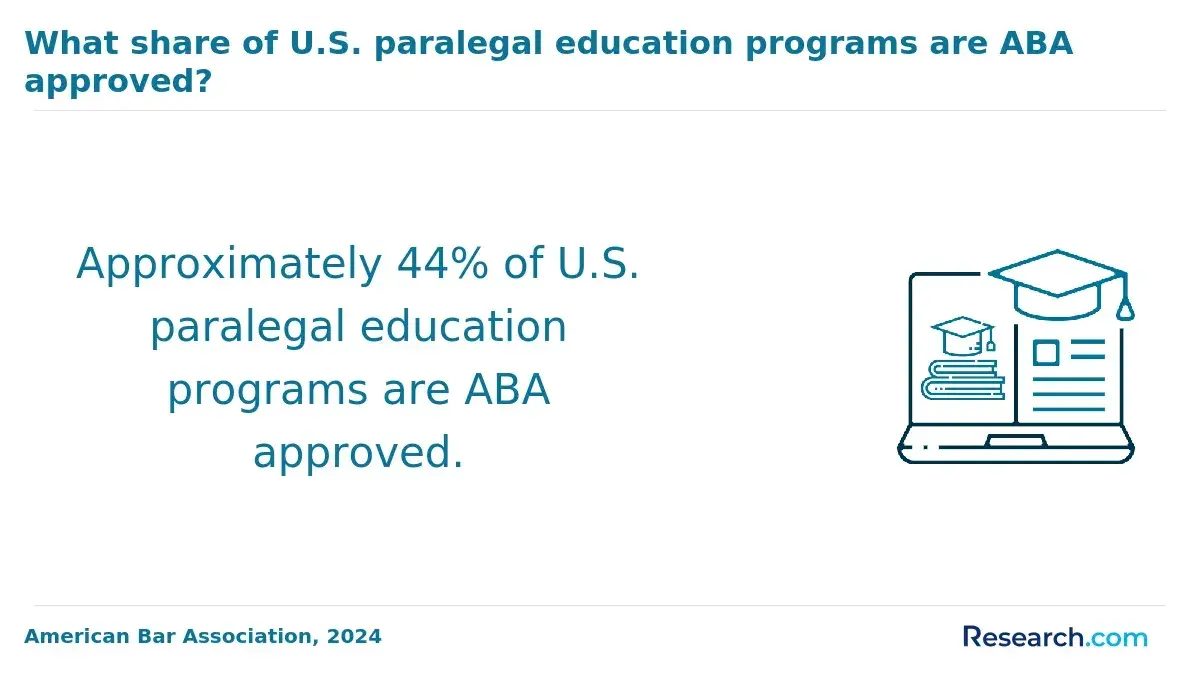
Do not confuse this with American Bar Association (ABA) approval. The ABA approves qualifying paralegal education programs; ABA approval is not institutional accreditation and is not the standard for an MLS or MSL. If your actual goal is paralegal work rather than corporate investigations, ABA-approved paralegal programs by affordability address a different educational route. Completing one also does not make someone an "ABA-certified paralegal."
What do corporate ethics and investigations master's programs teach?
A useful curriculum connects legal rules to the steps an investigator takes. Review required coursework, not just elective titles or marketing descriptions, and look for graded projects that let you practice applying the material.
This comparison shows how common subjects relate to the work, making it easier to spot a program that is broad in name but thin on investigative practice.
| Subject | Application to an investigations team |
| Employment and anti-retaliation law | Recognizing issues that need careful handling or counsel's review |
| Corporate compliance and ethics | Designing reporting, escalation, and remediation processes |
| Evidence, privacy, and records | Preserving information while controlling access and retention |
| Interviewing and report writing | Separating allegations, evidence, credibility assessments, and findings |
| Capstone or simulation | Applying several skills to a realistic, assessable case |
Technology matters when teams review messages, files, or AI-assisted summaries, but a course that mentions e-discovery or AI is not necessarily hands-on training. Check whether students receive tool access, complete supervised assignments, and learn to verify outputs and protect confidential information.
How do online and campus-based legal studies programs compare?
Online study may let a working investigator remain employed, but online does not mean self-paced. A program may require live evening classes, group interviews, timed assessments, campus visits, or courses offered only in certain terms. Campus study may make in-person discussion and networking easier, while adding commuting or relocation costs.
Ask for the current course rotation and a sample weekly schedule. For any practicum, confirm who arranges the placement, whether your current job can qualify, and whether confidential employer cases must be excluded from class work. The better format is the one whose actual deadlines and attendance rules fit your case load - not simply the one advertised as flexible.
What are the admission requirements for a legal studies master's program?
Expect to verify each program's published requirements rather than assume all legal studies degrees admit the same applicants. A bachelor's degree and transcripts are common starting points; schools may also request a résumé, recommendations, an essay, or evidence of relevant experience. A JD is generally not the intended prerequisite for a non-JD legal studies degree, but individual rules control.
If assembling an essay is a barrier, you can compare legal studies programs with no admissions essay. Check the current application instructions before relying on any listing: an essay waiver, an optional statement, and no essay requirement are different policies. Also ask whether admission to the university grants access to your preferred concentration or whether it has separate conditions.
How long do corporate compliance legal studies master's programs take?
Completion time depends on required credits, course sequencing, enrollment intensity, and whether a capstone is offered every term. A full-time schedule may finish sooner, but it can reduce the time available for work and make tuition harder to pay from current income. Part-time study may be more sustainable for investigators whose schedules change when urgent allegations arise.
When comparing fast-track legal studies graduate options, distinguish an advertised minimum from the time your own course load permits. Ask the school to map every required course and capstone onto your intended start term, including any prerequisites or fixed cohort sequence. A shorter timeline has little value if it excludes the electives most relevant to investigations.
How much do legal studies master's programs cost?
There is no reliable single price for this category: tuition and required credits vary by institution, and advertised per-credit rates may leave out mandatory fees. Build a total-cost comparison using the current tuition schedule, required credits, technology and graduation fees, books or research resources, and any travel or practicum expenses. Add the income or work opportunities you would forgo if you reduce your hours.
Ask the financial aid office about the specific degree's eligibility and your individual aid options; institutional accreditation alone does not establish what you will receive. Employer tuition assistance can change the calculation, but confirm reimbursement caps, grade rules, and repayment obligations before enrolling.
If you are also considering a different, lower-level credential, finding online paralegal programs with monthly payment plans may clarify the difference between spreading payments and lowering total cost. Such plans should not be assumed to apply to a master's. A less expensive program is not automatically the better value if it lacks the coursework your role requires.
What salaries and job outlook can graduates expect in compliance careers?
The U.S. Bureau of Labor Statistics reports $80,730 in May 2025 as the median annual pay for compliance officers, with 4% projected growth, 2025-2035 and about 32,700 openings per year. This broad occupation is a useful benchmark, not a salary forecast for corporate investigators or MLS graduates specifically. It includes workers with different responsibilities, education, industries, and experience.
Before treating the degree as a financial investment, compare actual vacancies you would pursue. Note whether they require a master's, merely prefer one, or emphasize investigations experience and knowledge of a particular regulatory area instead. An internal promotion path or an employer-funded degree may make the investment easier to justify than borrowing for a credential that target jobs do not request.
Do corporate investigations professionals need a law license or certification?
An attorney license is not a general requirement for corporate ethics or internal investigations roles. An MLS or MSL does not qualify its holder to practice law, give independent legal advice, or represent an employer as an attorney. Investigators should know when to involve licensed counsel, particularly where legal interpretation, privilege, or potential litigation is at issue.
Professional certifications may demonstrate compliance, fraud-examination, HR, or investigative knowledge, but no single certification is universally required for these teams. Eligibility and renewal rules depend on the issuing organization; employers and states may impose additional requirements for particular positions or activities. Compare a certification's exam, experience requirement, and ongoing obligations with the skills in your target job postings before paying for either a credential or a degree.
Other Things You Should Know About Law & Paralegal
No. A degree does not create attorney-client privilege. Whether communications are protected depends on the circumstances and applicable law; involve organizational counsel when privilege may matter.
Usually, an investigator should not promise more confidentiality than the organization can maintain. A fair review may require sharing information with people who need it to investigate or respond.
Do not assume so. Check your employer's confidentiality rules and the school's assignment requirements first; a fictional or properly approved, de-identified case may be safer.
A hotline report is an intake channel for a concern. An investigation is the subsequent process of defining the allegation, gathering and assessing evidence, and documenting findings when review is warranted.
References
- Chapter 3 - Courses and Enrollment, Full Course of Study, and Reduced Course Load | USCIS https://www.uscis.gov/policy-manual/volume-2-part-f-chapter-3
- How Financial Aid Is Calculated | studentaid.gov https://studentaid.gov/complete-aid-process/how-calculated
- Soft Skills: The Competitive Edge | dol.gov https://www.dol.gov/agencies/odep/publications/fact-sheets/soft-skills-the-competitive-edge
- Cost of Attendance (Budget) | 2025-2026 Federal Student Aid Handbook https://fsapartners.ed.gov/knowledge-center/fsa-handbook/2025-2026/vol3/ch2-cost-attendance-budget
- Research Your Options: U.S. Online Learning | EducationUSA https://educationusa.state.gov/your-5-steps-us-study/research-your-options/online-learning
- Application Process | Columbia Law School https://www.law.columbia.edu/admissions/graduate-admissions/llm/application-process
- Compliance and Risk Management | William & Mary Law School https://online.law.wm.edu/master-of-legal-studies/concentrations/compliance-risk-management
- Master of Legal Studies (MLS) vs. JD: Which Is Right for You? | Wake Forest MLS https://mls.law.wfu.edu/articles/mls-vs-jd-which-is-right-for-you/
- Master of Legal Studies (MLS) vs. JD: What's the Difference? | SMU Online Master of Legal Studies https://onlinemasterlegalstudies.smu.edu/articles/mls-vs-jd/
- Online Master of Legal Studies | AU-LAW https://onlinelaw.wcl.american.edu/legal-studies/