2027 Legal Studies Master's Programs for Data Governance Leaders

Co-Founder and Chief Data Scientist
Data governance leaders often need to turn privacy requirements, retention rules, and contract terms into policies that teams can follow. A master's in legal studies may strengthen that work, but it is a substantial investment - and not every program teaches the same skills.
This guide is for professionals weighing a non-JD legal degree against shorter training or certification. It explains what to look for in the curriculum, what the degree can and cannot do for your career, and which costs and scheduling details to verify before enrolling.
Key Things You Should Know
- A Master of Legal Studies (MLS) or similar non-JD degree can help data governance leaders interpret legal requirements and work with counsel; it does not qualify graduates to practice law.
- Prioritize applied privacy, cybersecurity, contracts, records, and organizational governance coursework over a specialization label alone.
- The Bureau of Labor Statistics reports $80,730 in May 2025 median pay for compliance officers and 4% projected growth, 2025-2035; those occupation-wide figures do not predict an MLS graduate's earnings.
What are legal studies master's programs for data governance leaders?
These are graduate degrees in law-related subjects designed primarily for professionals who are not seeking attorney licensure. Schools may call the credential a Master of Legal Studies (MLS), Master of Studies in Law (MSL), or Master of Jurisprudence (MJ). For a data governance leader, the relevant work includes setting rules for how an organization collects, uses, retains, shares, and disposes of data - and coordinating with lawyers, security teams, and business owners when those rules have legal consequences.
A school may offer a formal privacy or compliance concentration, a broader degree with relevant electives, or an embedded graduate certificate. Those are different academic structures, so check the catalog rather than relying on the program title. If you are still choosing a focus, compare legal studies master's degree specializations against the responsibilities you already hold or want next.
Why pursue a master's in legal studies for data governance?
The strongest reason is a recurring need to understand how legal obligations become operational decisions. Graduate legal study can help a governance manager read statutes and contracts more carefully, identify issues for counsel, document defensible policies, and explain requirements to technical colleagues. It is particularly relevant when the job spans privacy, security, records, procurement, and compliance rather than one narrow tool or framework.
The opportunity cost matters. If your immediate gap is implementing a data catalog, writing access controls, or managing a specific privacy workflow, employer training, a technical course, or a focused certification may be more direct. An MLS makes more sense when sustained legal analysis and cross-functional leadership are central to the role - not simply because a graduate degree looks stronger on a résumé.
What careers can a legal studies master's prepare you for?
Potential paths include data governance manager, privacy program manager, information governance lead, and compliance officer. In these roles, the degree can support tasks such as mapping obligations to policies, coordinating incident-response decisions with counsel, reviewing vendor terms, and overseeing retention practices. Employers set their own education and experience requirements; the degree is not a standard prerequisite for these job titles.
The Bureau of Labor Statistics reports median annual pay of $80,730 in May 2025 for compliance officers, with 4% projected growth, 2025-2035. This broad occupation includes work outside data governance, so its pay and outlook are context for career planning, not a forecast for a particular privacy or governance position. Professionals moving from employee-data governance may also benefit from comparing human resources law study options in legal studies.
What do data governance legal studies programs teach?
Useful coursework connects legal interpretation to decisions a governance team must make. Look for privacy and data protection, cybersecurity law, contracts and vendor relationships, records retention, regulatory compliance, and legal research. Courses on organizational risk or emerging technology can add value when assignments require students to analyze realistic policies, incidents, or agreements.
Read course descriptions and assessment methods closely. A course that discusses artificial intelligence is not necessarily training in AI governance; a reference to e-discovery software does not mean students receive access or complete hands-on work. Ask whether projects produce artifacts you could use in a professional portfolio, such as a policy analysis or vendor-risk assessment, while respecting workplace confidentiality.
Are online legal studies master's programs effective for working professionals?
They can be, especially when the program pairs accessible faculty and substantive feedback with case-based assignments that resemble workplace decisions. Online delivery alone says little about flexibility or rigor: courses may be asynchronous, require live meetings, follow a fixed cohort schedule, or include campus visits. Confirm the requirements for the specific program and courses you would take.
Working professionals should also check when courses are offered and whether prerequisites create a fixed sequence. A manageable weekly schedule is less useful if a required privacy course is unavailable when you need it. Before enrolling, ask how group projects, exams, office hours, and any practicum fit your work hours and time zone.

What are the admission requirements for legal studies master's programs?
Applicants generally need a bachelor's degree, while policies on minimum grades, professional experience, statements, recommendations, and standardized tests vary by school. A law degree or technical background is not necessarily required. Check the current admissions page for requirements, then ask whether your intended privacy or technology courses have separate prerequisites.
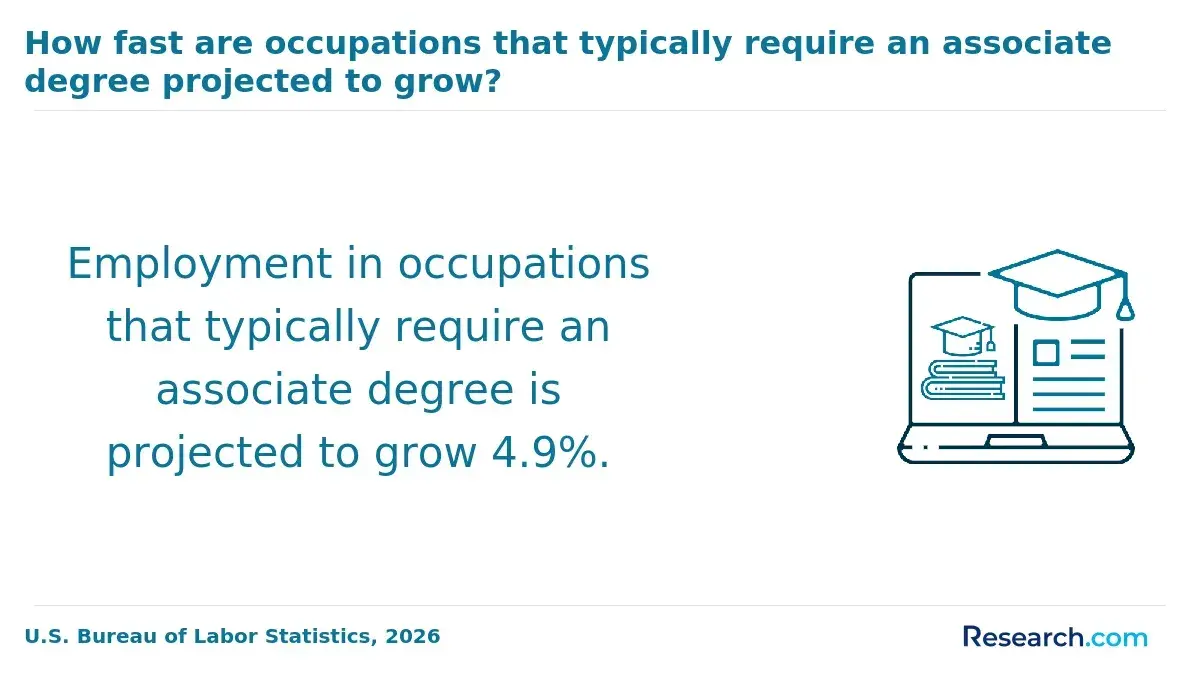
If you hold an associate degree, the first academic step is typically completing a bachelor's degree; bachelor's pathways after an associate degree in a related field can help frame that decision. Do not assume prior credits will apply automatically: the receiving institution decides how accepted credit counts toward its degree.
How long do legal studies master's programs take and cost?
Completion time depends on required credits, course frequency, and whether you study full time or alongside work. Published tuition may be charged per credit or by term, making headline prices difficult to compare. For a defensible comparison, request each school's current total required credits, 2026-27 tuition schedule, mandatory fees, and an expected course sequence for your intended pace.
Budget beyond tuition for books, technology, possible campus travel, and time away from paid work. Ask the financial aid office about eligibility for the specific degree and your circumstances rather than assuming all online offerings have identical aid options. If speed is your main constraint, examine shorter routes to a master's in legal studies, but confirm that the faster schedule still includes the governance coursework you need.
Does a legal studies master's qualify graduates to practice law?
No. An MLS, MSL, or MJ is a non-JD degree and does not, by itself, make a graduate eligible to practice law or provide independent legal advice. Attorney admission rules vary by jurisdiction and involve a qualifying legal education and other licensing requirements. A governance professional with an MLS can identify and escalate legal questions, but counsel remains responsible for legal advice.
Paralegal education is a different route for people seeking legal-support work, not attorney licensure or a substitute for a governance-focused graduate degree. If that is your actual career goal, investigate cost-conscious options for ABA-approved paralegal training. ABA approval of a paralegal program is distinct from a school's institutional accreditation, and completing a program does not automatically confer professional paralegal certification.
Which certifications complement a data governance legal studies degree?
A certification can demonstrate focused knowledge that a broad legal degree may not assess. Depending on the work, relevant options may include privacy credentials from the International Association of Privacy Professionals, information governance credentials from ARMA International, or security and risk credentials from their respective issuing organizations. Each organization sets its own eligibility, examination, experience, renewal, and fee rules; verify current terms with the issuer before applying.
Choose the sequence based on your gap. If you need targeted evidence of privacy knowledge for an existing role, a certification may be a lower-commitment first step. If your responsibilities repeatedly require legal research, policy analysis, and communication across several regulated functions, the degree may add broader value. A university certificate is an academic award, whereas a professional certification is granted under an issuer's credentialing rules.
How can you choose an accredited legal studies master's program?
First, confirm that the institution holds recognized institutional accreditation using the school's current disclosures and the accreditor's information. Then judge the specific degree on curriculum, faculty, format, and price; institutional accreditation does not establish that a privacy concentration is strong. ABA approval of paralegal programs should not be treated as accreditation of an MLS or MSL.
Make a short list of programs whose current catalogs show the courses you need. Compare required courses with electives, confirm that relevant courses will run during your enrollment, and request written answers about live sessions, campus visits, credit policies, and the full expected cost. A warning sign is a prominent "privacy" or "AI" label without clearly identified coursework or applied assignments. Select the program only after you can explain what it teaches that a shorter credential or employer training would not.
Other Things You Should Know About Law & Paralegal
Usually not for a legal studies degree, but technology-focused courses may expect familiarity with data systems. Check course prerequisites and sample syllabi rather than assuming a program requires - or teaches - coding.
Possibly, if the instructor permits it and your employer approves. Remove confidential, personal, and privileged information unless you have explicit authorization to use it.
Only if the school has a published policy allowing it. Admissions credit for experience, transfer credit, and permission to waive a prerequisite are separate decisions.
That depends on its education-benefits policy. Ask about reimbursement caps, grade requirements, approved programs, and any obligation to remain employed after receiving payment.
References
- Distance Education Resources | Texas Higher Education Coordinating Board https://www.highered.texas.gov/new-program-development/distance-education-resources/
- Program Eligibility, Written Arrangements, and Distance Education | 2024-2025 Federal Student Aid Handbook https://fsapartners.ed.gov/knowledge-center/fsa-handbook/2024-2025/vol2/ch2-program-eligibility-written-arrangements-and-distance-education
- Online LL.M. in Cybersecurity & Data Privacy | Albany Law School https://www.albanylaw.edu/graduate/online-llm-cybersecurity-and-data-privacy
- Online Master of Legal Studies | AU-LAW https://onlinelaw.wcl.american.edu/legal-studies/
- Online Master's Degree in Legal Studies (MLS) - Catalogue https://catalogue.shu.edu/graduate/seton-hall-university-school-law/masters-degree-in-legal-studies-privacy-cybersecurity/
- Data Science: Policy, Governance & Society (Online) | Brown University https://graduateprograms.brown.edu/graduate-program/data-science-policy-governance-society-online-scm
- MLS vs. JD vs. LLM: Which Law Degree Is Right for You? | DePaul University Online Master of Legal Studies https://onlinemls.depaul.edu/articles/mls-vs-jd-vs-llm/
- Law and Emerging Technologies | William & Mary Law School https://online.law.wm.edu/master-of-legal-studies/concentrations/law-emerging-technologies
- Data Privacy, MS | Dakota State University https://dsu.edu/programs/MSDP/
- Master of Business, Law, and Technology | collegesoflaw.edu https://www.collegesoflaw.edu/academics/business-law-technology-programs/master/