
2027 Legal Studies Master's Programs for Cybersecurity Policy Managers

Co-Founder and Chief Data Scientist
Cybersecurity policy managers translate legal obligations, technical risks, and business priorities into workable rules. A legal studies master's degree can strengthen that work, but it may be less useful than technical training or experience if your main gap is security operations.
This guide helps current and aspiring managers compare non-JD legal degrees with other graduate pathways, assess online and campus programs, and weigh costs against career goals. You'll leave with specific criteria for deciding whether a program is worth pursuing and what to verify before enrolling.
Key Things You Should Know
- A Master of Legal Studies (MLS), Master of Studies in Law (MSL), or similar non-JD degree can build regulatory and legal-analysis skills, it is not required for cybersecurity policy management and does not qualify graduates to practice law.
- Favor programs that pair privacy and cybersecurity law with governance, risk assessment, incident response, and practical policy-writing work - not courses with relevant-sounding titles alone.
- The Bureau of Labor Statistics reports $80,730 median annual pay for compliance officers in May 2025 and 4% projected growth for 2025-2035; these broad occupational figures are not a salary forecast for cybersecurity policy managers.
What are legal studies master's programs for cybersecurity policy managers?
Cybersecurity policy managers develop and maintain rules for protecting information, assigning security responsibilities, responding to incidents, and documenting compliance. They work with security teams, lawyers, privacy staff, auditors, and business leaders. Legal knowledge is valuable when a policy must reflect a contract, a sector-specific rule, or a state privacy or breach-notification requirement.
An MLS, MSL, Master of Jurisprudence, or similarly named degree generally teaches law to professionals who do not intend to become attorneys. Relevant programs may offer a formal cybersecurity or privacy concentration, a related graduate certificate within the degree, or simply electives. Those arrangements are not interchangeable: check which courses are guaranteed to be offered and what appears on the transcript.
The strongest fit is often an experienced security, privacy, risk, or compliance professional who needs to interpret legal requirements and collaborate more effectively with counsel. Someone seeking a technical security role may get more immediate value from technical training. An online paralegal certificate education route serves a different goal: preparing for legal-support work, not graduate-level cybersecurity policy leadership. Neither credential permits its holder to practice law.
What education and accreditation requirements apply to cybersecurity policy managers?
There is no universal U.S. degree, license, or professional certification required to use the job title cybersecurity policy manager. Hiring standards vary by employer and industry. Positions commonly call for relevant experience in security governance, privacy, compliance, risk, or policy development; some employers prefer a bachelor's or graduate degree.
For a prospective master's student, the central accreditation check is the institution's recognized accreditation status. Confirm it through the school's disclosures and a recognized accreditor or U.S. Department of Education resource. Then assess the degree separately: institutional accreditation does not establish that its cybersecurity curriculum meets your employer's needs.
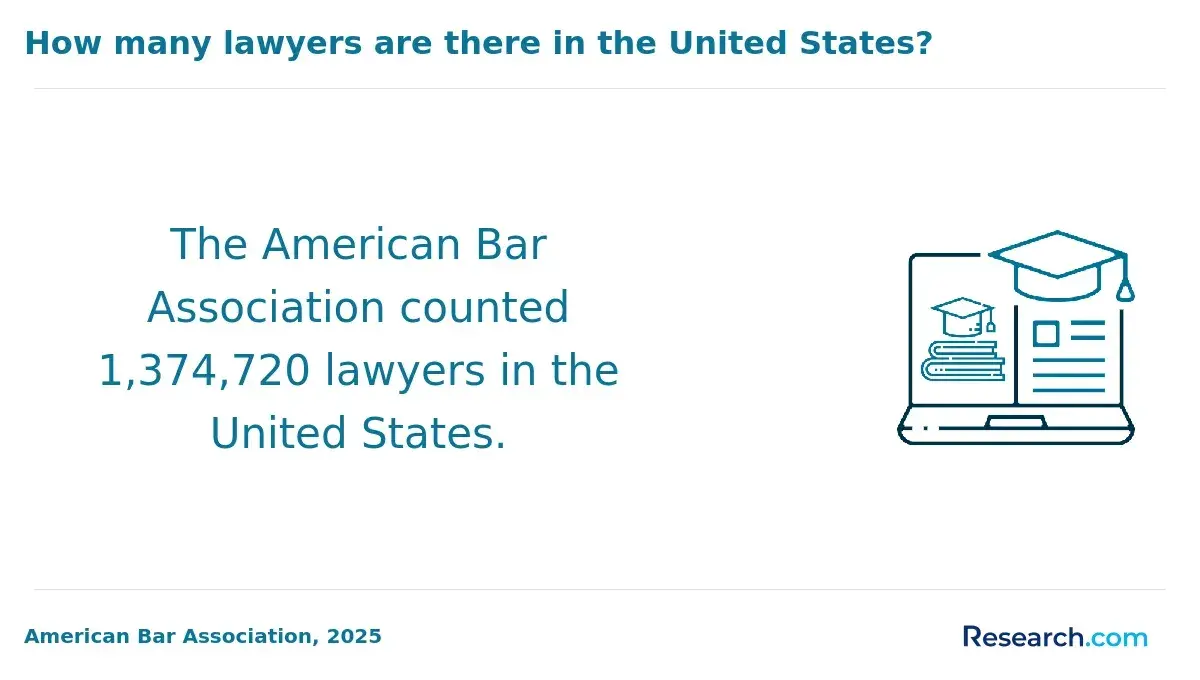
Do not confuse this check with American Bar Association approval. ABA approval concerns qualifying paralegal education programs; it is not institutional accreditation or a standard requirement for an MLS or MSL. A legal studies master's degree also does not replace a Juris Doctor, bar admission, or the legal authority needed to advise clients as an attorney.
Which master's degree pathways prepare professionals for cybersecurity policy management?
The right degree depends on the work you want to do after graduation. This comparison separates legal interpretation from technical security and organizational leadership, so you can identify the skill gap a program must close.
| Pathway | Strongest preparation | Potential gap to address |
| MLS, MSL, or Master of Jurisprudence with relevant coursework | Interpreting legal obligations, working with counsel, and translating requirements into policy | Hands-on security engineering or technical risk assessment |
| Cybersecurity or information assurance master's | Security architecture, threats, controls, and technical risk | Legal analysis, privacy law, and regulatory interpretation |
| Public policy or public administration master's | Policy design, public-sector governance, and stakeholder coordination | Detailed cybersecurity controls or industry-specific legal rules |
An MLS may be the better choice when you already understand security operations but regularly need to interpret regulations or negotiate policy language with legal teams. A cybersecurity master's may be stronger if you need technical credibility first. A targeted graduate certificate, employer training, or relevant work assignment may close a narrower gap with less time away from work.
Most master's programs require a bachelor's degree for admission. If you have not completed one, resolve that prerequisite before comparing graduate tuition; information on paralegal bachelor's completion speed and career considerations may help if legal-support education also matches your goals. A paralegal-focused bachelor's is not itself a substitute for cybersecurity experience.
How do online and campus-based legal studies programs compare?
Delivery format affects more than commute time. The comparison below highlights commitments that can change whether a working policy professional can participate consistently.
| Factor | Online program | Campus-based program |
| Class schedule | May use recorded lessons, scheduled live sessions, or both | Usually requires attendance at set times and locations |
| Collaboration | Often relies on virtual discussion and group projects | Offers regular in-person discussion and local networking |
| Additional logistics | May require reliable technology, live participation, or campus visits | May require commuting, relocation, or time away from work |
"Online" does not mean self-paced. Before applying, ask for the current course schedule, time-zone expectations, exam rules, any residency requirement, and whether needed electives run online during your enrollment period. For a policy-focused capstone, also ask whether you can analyze a problem from your current workplace without exposing confidential information.
Delivery flexibility and payment flexibility are separate decisions. If you need to spread tuition payments while working, consider guidance on choosing an online paralegal program by its payment options as a budgeting comparison, but confirm the legal studies master's own payment deadlines and fees directly with its bursar.
What courses do cybersecurity law and policy master's programs include?
Useful curricula connect legal rules to decisions a manager actually makes. Look for privacy and data-protection law, cybersecurity regulation, contracts and vendor risk, governance, incident response, administrative law, and legal research and writing. Coverage should reflect the industries you intend to work in: healthcare, financial services, government contracting, and other sectors present different obligations.
Course titles alone are weak evidence of practical preparation. Review syllabi or ask for examples of assessed work, such as drafting an incident-escalation policy, evaluating a vendor's contractual security terms, or writing a briefing that separates legal requirements from recommended controls. Ask who teaches the technical material and whether students work with security frameworks as well as legal sources. Exposure to a framework or software tool is not the same as hands-on proficiency.
If artificial intelligence governance is a career goal, check the current catalog for specific coursework and assignments rather than assuming a program has added them. Rules and course offerings can change; a dependable program should teach you how to locate, interpret, and update requirements, not just memorize today's examples.
What are the admission requirements for a legal studies master's degree?
Requirements differ by school, but applicants generally need a completed bachelor's degree and must submit academic records. Programs may also request a résumé, recommendations, a statement of purpose, or evidence of relevant work. Do not assume a law degree, cybersecurity certification, or years of management experience are required unless the particular program says so.
Review the current admissions page for minimum academic standards, application deadlines, prerequisite coursework, and whether professional experience can strengthen an application. If preparing an essay is a barrier, information on legal studies application options without a personal statement can help you identify a different application process; verify the requirements for the exact master's program before relying on it.
Ask separately about transfer credit or prior graduate study. The receiving university decides whether previous coursework applies to the degree, and an admissions offer does not automatically settle that question.
How long do these master's programs take, and how much do they cost?
Full-time legal studies master's study often takes about one to two academic years; part-time enrollment can take longer. The useful comparison is the published credit requirement plus the actual course rotation: a missed required course or infrequently offered cybersecurity elective could extend your timeline.
Do not compare programs using advertised tuition alone. Request an itemized estimate covering required credits, mandatory fees, books, technology, possible campus visits, and any cost of reducing work hours. Ask whether the quoted rate applies throughout enrollment and whether employer tuition assistance requires a minimum grade or continued employment.
Graduate students should confirm financial-aid eligibility for the specific program with its financial aid office rather than assuming every certificate or course qualifies. A degree can be a costly way to learn a single regulation; compare a graduate certificate or employer-sponsored training if your skill gap is narrow. For a separate legal-support education route, the guide to cost and financial aid for online paralegal degrees illustrates why price, credential level, and aid eligibility must be evaluated together, not treated as equivalent to master's pricing.
What careers can a cybersecurity policy manager pursue after graduation?
Relevant roles include cybersecurity governance manager, privacy program manager, technology risk manager, security compliance manager, and third-party risk manager. Titles overlap, so read the responsibilities rather than assuming they describe the same job. One employer may expect policy drafting and audit coordination; another may require deep technical control testing or direct staff supervision.
For a move into management, experience usually matters alongside education. A practical entry route is to take responsibility for a policy review, control assessment, vendor-risk process, or incident-response exercise in your current organization and document the decisions you made. A master's degree may help you interpret obligations and communicate with counsel, but it will not replace evidence that you can put policy into practice.
What salary can cybersecurity policy managers and related professionals earn?
The Bureau of Labor Statistics reports median annual pay of $80,730 in May 2025 for compliance officers, with 4% projected job growth, 2025-2035. Compliance officer is a broad occupation, not a precise match for cybersecurity policy manager. Its figures provide context for compliance-oriented work, not a prediction of pay or openings in a particular security role.
Compensation for a policy management position can depend on industry, location, technical responsibility, supervisory scope, and prior experience. When judging a degree's potential return, compare actual job postings you could qualify for now with those you could plausibly pursue after graduation. Do not attribute an entire pay difference to the degree when the higher-level job also requires experience or certifications.
Which certifications complement a cybersecurity policy management master's degree?
Choose a professional certification for the capability an employer expects you to demonstrate. ISACA's Certified Information Security Manager (CISM) is oriented toward security management and governance; ISC2's Certified Information Systems Security Professional (CISSP) covers a broader set of security domains; and the International Association of Privacy Professionals' Certified Information Privacy Professional/United States (CIPP/US) focuses on U.S. privacy knowledge.
These are certifications granted by professional organizations, not academic certificates awarded for completing coursework. Exam rules, experience requirements, fees, and continuing-education obligations differ and can change. Check each organization's current eligibility rules before paying for preparation or assuming that a master's degree satisfies an experience requirement.
If your target role emphasizes security governance, a management-oriented certification plus documented project experience may be more useful initially than another degree. If the recurring challenge is interpreting law and writing defensible policy, graduate legal study may address a gap that an exam-focused credential does not.
Other Things You Should Know About Law & Paralegal
A nonlawyer manager can help identify requirements, draft internal policies, and raise legal questions. They should refer requests for legal opinions or privileged advice to authorized counsel; the boundary depends on the task and applicable state rules.
Not without permission. Ask your employer and instructor about confidentiality rules, then use approved, anonymized, or hypothetical materials where necessary. A useful project does not require disclosing sensitive systems or incidents.
Check the syllabus for the jurisdictions, statutes, and assignments it addresses. A course labeled "global privacy" may be valuable but may not provide the depth in U.S. state or sector-specific rules that your job requires.
Yes, particularly if your work involves privacy, contracts, investigations, or regulatory research. You would still need to build security-governance knowledge and demonstrate that you can apply it in an organization; legal-support experience alone does not establish technical expertise.
References
- Cost of Attendance (Budget) | 2026-2027 Federal Student Aid Handbook https://fsapartners.ed.gov/knowledge-center/fsa-handbook/2026-2027/vol3/ch2-cost-attendance-budget
- Cybersecurity and privacy | NIST https://www.nist.gov/cybersecurity-and-privacy
- Cyber Career Pathways Tool - NICCS - CISA https://niccs.cisa.gov/tools/cyber-career-pathways-tool
- Types of Financial Aid: Grants, Work-Study, and Loans | studentaid.gov https://studentaid.gov/understand-aid/types
- Cybersecurity Specialization Curriculum | AU-LAW https://onlinelaw.wcl.american.edu/legal-studies/curriculum/cybersecurity-specialization/
- MLS Online | Cybersecurity Law & Policy https://www.law.tamu.edu/degrees-programs/mls-degree/cybersecurity.html
- Master of Legal Studies (MLS) vs. JD: What's the Difference? | SMU Online Master of Legal Studies https://onlinemasterlegalstudies.smu.edu/articles/mls-vs-jd/
- Online LL.M. in Cybersecurity & Data Privacy | Albany Law School https://www.albanylaw.edu/graduate/online-llm-cybersecurity-and-data-privacy
- Master of Legal Studies (MLS) vs. JD: Which Is Right for You? | Wake Forest MLS https://mls.law.wfu.edu/articles/mls-vs-jd-which-is-right-for-you/
- MLS - Privacy Law and Cyber Security - Seton Hall Law School https://law.shu.edu/academics/mls-privacy-law-cyber-security-online.html


