2027 MLS Programs With Legal Research Database Access: Resources and Training to Compare

Co-Founder and Chief Data Scientist
A law school may advertise extensive legal databases, but that does not necessarily mean its Master of Legal Studies students can use them - or use them from home. If you are comparing MLS programs for compliance, contracts, policy, or another nonlawyer role, that distinction matters as much as the course list.
This guide explains what database access to verify, how to judge research training, and when the cost of a graduate degree makes sense compared with a shorter route.
Key Things You Should Know
- Do not assume an MLS includes Westlaw or Lexis access: confirm your student license, covered products, remote access, and permitted uses in writing.
- Prioritize programs that require students to find, update, and apply legal authorities in graded assignments; a database demonstration alone is not practical training.
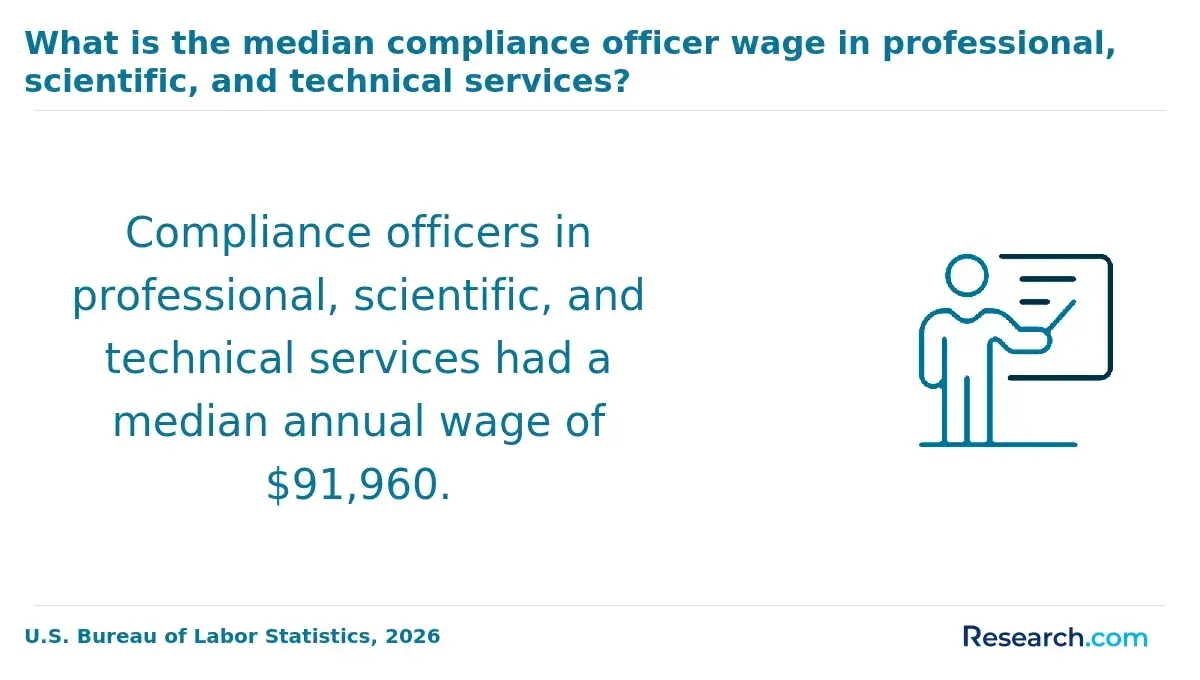
- An MLS does not qualify you to practice law. For perspective, the Bureau of Labor Statistics reports $80,730 in May 2025 as median pay for compliance officers, not as an MLS graduate salary.
What Is an MLS Degree and Why Does Legal Database Access Matter?
A Master of Legal Studies (MLS) is a graduate degree designed primarily for people who want to work with legal or regulatory issues without becoming attorneys. Schools may use related names, including Master of Studies in Law (MSL). The degree is not a Juris Doctor (JD) and does not, by itself, qualify a graduate for bar admission or independent legal practice.
Legal research databases help users locate cases, statutes, regulations, and secondary sources such as practice guides. Their value depends on the work you expect to do. Someone learning to track regulatory changes may need strong instruction in agency materials and current-law verification; someone handling contracts may benefit more from research and writing assignments tied to business disputes. Free government sources can be excellent for primary law, but they do not always provide the same editorial tools, citators, or instructional features as commercial platforms.
Which MLS Programs Provide Access to Westlaw, LexisNexis, and Other Databases?
There is no dependable, program-wide rule that an MLS student receives Westlaw, Lexis, or Bloomberg Law merely because the affiliated law school subscribes. An institution may distinguish between JD and non-JD students, limit particular products, or restrict use to coursework. Academic licenses also may not permit research for an employer. Do not treat a law library's database list as confirmation of MLS eligibility.
Arizona State University's Master of Legal Studies, USC Gould's Master of Studies in Law, and Washington University in St. Louis's Master of Legal Studies are named programs to investigate - not confirmed examples of any particular database entitlement. Apply the same test to each: ask its law library or program office whether students in your exact degree and delivery format receive individual Westlaw, Lexis, and Bloomberg Law accounts; which features are included; whether access works remotely; and when access ends. Seek a current, program-specific answer before using database access to break a tie.
The resources below serve different purposes. Comparing them helps you ask for the tools your intended work actually requires, rather than the longest subscription list.
| Resource | Potential learning value | Access question |
| Westlaw or Lexis | Search, case-law analysis, citators, and secondary sources | Does the MLS license include the relevant products and hands-on coursework? |
| Bloomberg Law | Additional legal, regulatory, and business research tools | Is it available to MLS students or only to other law-school groups? |
| Government and court websites | Primary statutes, regulations, opinions, and agency guidance | Will instructors teach source reliability and current-law checks? |
How Do MLS Programs Train Students in Legal Research and Writing?
The strongest evidence is a required syllabus or assignment description, not a promise that students will "learn Westlaw." Look for practice identifying the controlling jurisdiction, distinguishing binding from persuasive authority, checking whether a case or rule remains valid, and writing a concise explanation for a nonlawyer audience. A graded research memo, regulatory analysis, or contract-risk assessment shows more about the training than a platform orientation does.
Ask whether research and writing are required for every student or only offered as electives, and whether faculty give feedback on both source selection and reasoning. If your immediate goal is an entry-level legal-support role rather than graduate-level legal analysis, compare the time and scope of an MLS with shorter online paralegal education pathways. Paralegal training and an MLS serve different purposes; neither permits a nonlawyer to practice law independently.
Are Online MLS Programs as Effective as Campus-Based Programs?
Online delivery can support rigorous research training if students receive the same relevant database entitlements, remote library help, substantial assignments, and meaningful feedback. Campus study may make in-person library instruction and faculty consultation easier, but location alone does not establish stronger training.
Compare the practical schedule, not just the "online" label. Confirm whether classes meet live, whether research workshops are mandatory, whether exams have fixed times, and whether any campus visits are required. Also check that your access and library support work in your time zone and that assignments use the databases available to online students. An asynchronous lecture is of limited value if the tools or help needed for the assignment are difficult to reach.
What Courses Do MLS Programs Typically Include?
MLS curricula commonly introduce legal institutions, research and writing, contracts, and the interpretation of statutes or regulations. Electives may address compliance, employment, healthcare, privacy, or business law. Course titles are only a starting point: "legal research" might mean guided database exercises in one program and largely conceptual instruction in another.
Match required work to the documents and decisions in your target role. A contracts professional might value drafting and negotiation exercises; a compliance professional might prioritize regulatory research and written risk assessments. If business law is central to your job, compare business law degree options for balancing study and work alongside MLS electives. Check whether a school's advertised specialty is a formal concentration, a certificate with separate requirements, or simply a selection of available courses.
What Are the Admission Requirements for an MLS Program?
MLS programs generally require a bachelor's degree, but GPA expectations, recommendations, résumés, essays, and test policies vary by school and application route. A law background is not necessarily required. Verify the current admissions page for the precise degree you want; requirements for a school's JD or paralegal certificate are not interchangeable with its MLS requirements.
If application preparation is a barrier, review applying to legal studies programs with no admissions essay, then confirm the current policy with the program. An easier application should not outweigh weak research training or an unclear database policy.
How Long Do MLS Programs Take and How Much Do They Cost?
Completion time depends on required credits, course sequencing, and whether you study full time or part time. Published tuition may be quoted per credit, term, or program, so compare programs using the same unit and your intended pace. Without current, comparable program-specific prices, a dollar figure would be more misleading than useful.
Request a written estimate covering tuition, mandatory fees, textbooks, technology, and any required travel. Ask whether database access carries a separate charge and whether it continues during breaks. Compare that estimate with online legal studies master's costs and completion times, while checking each school's current figures directly. Also ask its financial aid office whether your specific program is eligible for federal aid; institutional eligibility alone does not answer that question. Time spent studying instead of working, and a shorter credential that might meet your goal, belong in the cost decision too.
Is an MLS Degree Accredited and Does It Qualify Graduates for the Bar?
Check the university's current institutional accreditation through its accreditor and official disclosures. Institutional accreditation concerns the institution; it does not mean an MLS is an attorney-qualifying degree. An MLS or MSL alone does not qualify a graduate to sit for the bar or practice as a lawyer. Bar-eligibility rules are set by individual jurisdictions and concern qualifying legal education, generally a JD route, rather than non-JD legal studies.
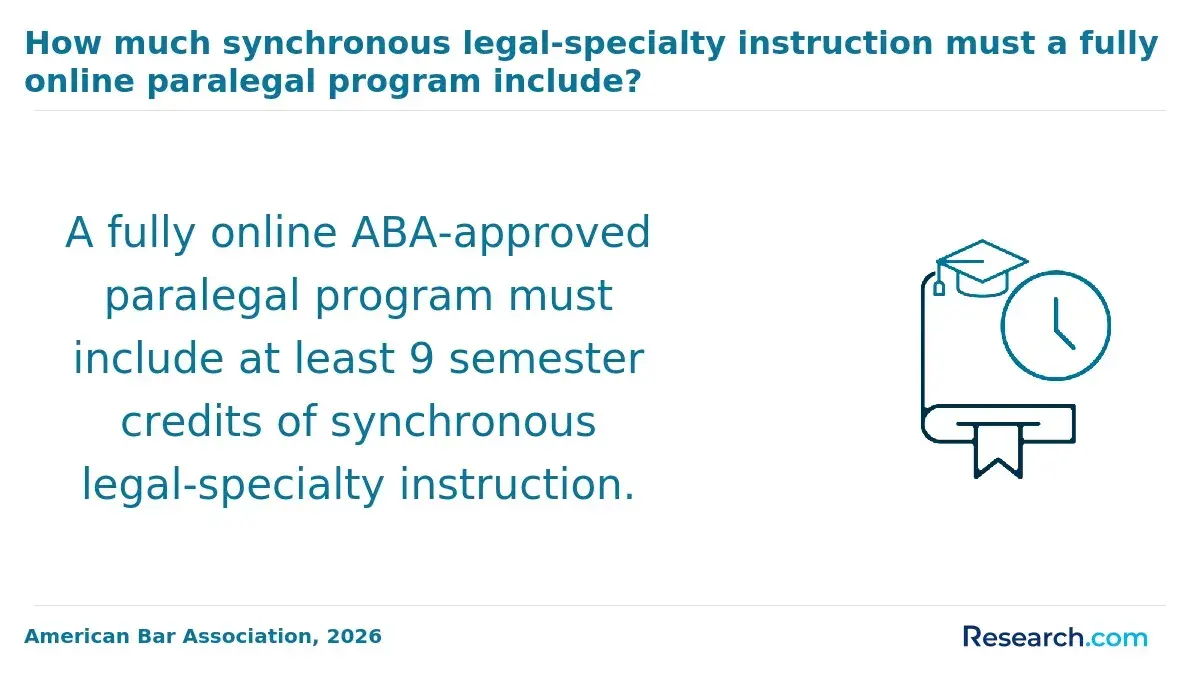
Do not confuse this with American Bar Association approval of certain paralegal education programs. ABA paralegal program approval is separate from institutional accreditation and is not a status to assume for an MLS. The ABA does not certify individual paralegals.
What Careers, Salaries, and Job Outlook Can MLS Graduates Expect?
An MLS may add useful legal research and regulatory knowledge to existing experience in compliance, human resources, contracting, or policy. It is rarely a substitute for the job-specific experience an employer requests. The Bureau of Labor Statistics reports median annual pay of $80,730 in May 2025 for compliance officers and 4% projected growth, 2025-2035. Those occupation-wide figures include people with many educational backgrounds; they are not outcomes attributable to an MLS.
For readers considering legal support work, the BLS reports median annual pay of $62,890 in May 2025 for paralegals and legal assistants and 0% projected growth, 2025-2035, with about 40,800 openings per year projected. That occupation is distinct from a general compliance role, and an MLS may be more education than a particular paralegal position calls for. Compare actual job postings with your current qualifications before investing in a graduate degree.
How Can You Compare Reputable MLS Programs and Database Resources?
Start with the work you want to perform, then compare programs on identical evidence: required research assignments, MLS-specific database entitlements, delivery requirements, total cost, and institutional accreditation. A program that names more platforms is not necessarily the better choice if students do not use them to complete assessed work.
These steps turn marketing claims into answers you can compare before paying a deposit:
- Ask the program and law library for current written confirmation of access for your exact credential and online or campus format, including remote use, product limits, permitted uses, and expiration.
- Request a recent required-course syllabus or assignment description showing how students research, update, cite, and apply legal authorities.
- Confirm live-session and campus obligations, obtain a complete cost estimate, and check institutional accreditation and aid eligibility through official channels.
- Compare those answers with job requirements; choose a shorter route if it develops the needed skills without unnecessary graduate study.
If your target is specifically paralegal employment, compare certificate programs for paralegal education as an alternative - not as an equivalent credential. A school's unwillingness to clarify who actually receives database access is a meaningful red flag for an article focused on research resources.
Other Things You Should Know About Law & Paralegal
Do not assume so. Student licenses commonly end or change when enrollment ends. Ask the library about the expiration date and any separate alumni resources before relying on continued access.
Not necessarily. Academic licenses may restrict commercial or workplace use. Check the provider's license and your school's policy; your employer may need its own subscription.
Publication rules depend on the assignment, confidentiality obligations, and your employer's policies. Remove protected information and obtain any required permissions before sharing a writing sample or project publicly.
Usually, wait until the program confirms its access and course requirements. If a required tool is not provided, ask the instructor whether a free primary-law source or another available resource will meet the assignment's requirements before paying for access.
References
- Help - PubMed - NIH https://pubmed.ncbi.nlm.nih.gov/help/
- Remote and In-Person Learning: Utility Versus Social... - PMC https://pmc.ncbi.nlm.nih.gov/articles/PMC9769479/
- Student Access to Digital Learning Resources Outside of the Classroom-Executive Summary | ed.gov https://nces.ed.gov/pubs2017/2017098/index.asp
- Research Strategies - Guides - Texas State Law Library https://guides.sll.texas.gov/case-law-research/research-strategies
- Legal research databases: Summer 2026 and new grad access policies - Harvard Law School | Harvard Law School https://hls.harvard.edu/amicus-libris/legal-research-databases-summer-2026-and-new-grad-access-policies/
- Online? Which Database to Use? | Cooley Law School https://cooley.edu/blog/online-which-database-to-use
- Developing Essential Research Skills for Law Practice | tandfonline.com https://www.tandfonline.com/doi/full/10.1080/0270319X.2022.2089809
- Conditions of use and licensing restrictions for electronic resources | UC Berkeley Library https://www.lib.berkeley.edu/about/conditions-of-use-for-electronic-resources
- Four-Step Legal Research Process: Step 4: Case Law | ttu.edu https://libguides.law.ttu.edu/c.php
- LibGuides: Legal Methods: Introduction to Legal Research | LibGuides at Widener Law Library https://libguides.law.widener.edu/legalmethodsbasiclegalresearch/introduction