2027 Best Marriage and Family Therapy (MFT) Programs in Oregon: Online & Campus

Co-Founder and Chief Data Scientist
Choosing an MFT program in Oregon is not just a school decision. It affects whether you can qualify for licensure, complete the right supervised training, manage graduate school costs, and enter a mental health workforce where demand is rising. Oregon projects a 22% increase in MFT workforce needs by 2030, making program choice especially important for students who want a clear path into clinical practice.
This guide explains how Oregon marriage and family therapy programs work, what applicants should compare before enrolling, how online and campus-based formats differ, what clinical and exam requirements to expect, and how to think about cost, financial aid, salary, and career fit.
Quick answer: How do you choose an MFT program in Oregon?
The best MFT program in Oregon is one that aligns with Oregon LMFT licensure requirements, offers supervised clinical placements you can realistically complete, fits your schedule and budget, and provides strong preparation for the National MFT Clinical Exam and the Oregon Jurisprudence Exam. Most students should prioritize accreditation alignment, practicum support, total cost, faculty supervision access, and whether the program’s format works with their job and family responsibilities.
Key Benefits of MFT Programs in Oregon
- Licensure-focused training: Oregon MFT programs commonly build coursework around clinical theory, ethics, diagnosis, assessment, systems-based treatment, and supervised practice expectations connected to Commission on Accreditation for Marriage and Family Therapy Education (COAMFTE) standards.
- Flexible study formats: Students can compare online and campus-based options, which is useful for working adults, career changers, and students who need access to practicum sites outside major metro areas.
- Clinical exposure in a growing field: Oregon’s mental health workforce is expected to grow by 12% by 2028, and MFT students can gain experience in settings such as community agencies, schools, healthcare organizations, and counseling centers.
- Career preparation beyond coursework: Strong programs help students understand licensure paperwork, supervision expectations, exam preparation, documentation, ethics, and job placement—not just classroom theory.
- What MFT degree programs are offered in Oregon?
- What prerequisites do you need for an MFT program in Oregon?
- How many clinical hours do MFT students need to graduate in Oregon?
- What research or capstone requirements are included in MFT programs in Oregon?
- How long does it take to complete an MFT degree in Oregon?
- What exams do licensed MFT candidates need to pass in Oregon?
- How much does an MFT program cost in Oregon?
- What financial aid options are available for MFT students in Oregon?
- What jobs can you get with an MFT degree in Oregon?
- What is the average licensed MFT salary in Oregon?
What MFT degree programs are offered in Oregon?
Oregon students generally pursue marriage and family therapy through graduate-level programs designed to prepare them for Licensed Marriage and Family Therapist (LMFT) requirements. The most common route is a master’s degree, although some students enter the field through related counseling, psychology, or clinical mental health pathways that include family systems training.
Demand is part of the reason these programs matter. Mental health counselor roles in Oregon have increased by approximately 14% over the past decade, and relationship, family, and behavioral health services continue to be important parts of the state’s care network.
| Program option | Best for | What to verify before enrolling |
| Master’s degree in marriage and family therapy | Students seeking the standard graduate path toward LMFT preparation in Oregon | Coursework alignment, clinical placement support, supervision structure, exam preparation, and licensure eligibility |
| Bridge or certificate program | Licensed clinicians or mental health professionals who want additional family therapy training | Whether the certificate satisfies any missing coursework or only provides professional development |
| Doctoral study in counseling psychology or clinical psychology with family therapy emphasis | Students interested in advanced clinical work, research, teaching, supervision, or leadership | Whether the program’s licensure route matches the student’s intended professional license |
| Specialized MFT track | Students interested in trauma-focused therapy, child and adolescent therapy, or systemic family therapy | Whether specialization courses are supported by practicum opportunities with relevant client populations |
A good MFT program should teach more than counseling techniques. It should help students understand family systems, relational assessment, diagnosis, ethics, cultural context, trauma, crisis response, teletherapy, and documentation. Students comparing Oregon marriage and family therapy programs should also ask whether clinical placements are assigned, student-arranged, or supported through a formal placement office.
Online vs. campus-based MFT programs in Oregon
Online and campus-based MFT programs can both work, but they create different student experiences. Online formats often appeal to working adults or students outside Portland, Eugene, Salem, and other population centers. Campus programs may provide easier access to university clinics, in-person faculty support, and cohort-based learning.
| Factor | Online MFT program | Campus-based MFT program |
| Schedule | Often more flexible, especially for employed students | Usually follows a more fixed academic calendar |
| Clinical placements | May require students to secure approved local sites | May offer easier access to university-affiliated clinics or local partners |
| Peer interaction | Usually through video meetings, forums, and virtual supervision | More frequent in-person discussion, role play, and group supervision |
| Best fit | Self-directed learners who need location flexibility | Students who prefer structured routines and face-to-face support |
Students weighing counseling-related careers may also find it useful to compare the MFT route with the broader counseling psychology career outlook before choosing a program type.
What prerequisites do you need for an MFT program in Oregon?
Most Oregon MFT programs expect applicants to show academic readiness, emotional maturity, communication ability, and some understanding of human services or mental health work. Admissions teams are not only checking transcripts; they are evaluating whether applicants appear prepared for graduate-level clinical training.
Common Oregon MFT program admission requirements include the following:
- Bachelor’s degree from an accredited college: Many applicants come from psychology, social work, human services, counseling, sociology, or related fields. Some programs consider other majors if the student has completed relevant prerequisite coursework.
- Minimum GPA: A cumulative GPA of at least 3. 0 on a 4. 0 scale is widely expected, although individual programs may review applicants holistically.
- Psychology or behavioral science coursework: Programs often look for prior study in abnormal psychology, developmental psychology, statistics, research methods, or related subjects.
- Letters of recommendation: Two to three letters are commonly requested from faculty members, supervisors, clinicians, or professional contacts who can speak to the applicant’s readiness for clinical graduate education.
- Relevant experience: Volunteer work, internships, peer support, crisis line work, case management, school-based support, or other human services experience can strengthen an application.
- Personal statement or interview: Applicants may need to explain why they want to become an MFT, how they understand relational therapy, and how they handle feedback, ethical issues, and difficult conversations.
Students researching the path to becoming a mental health counselor should know that MFT admissions can overlap with counseling admissions, but the professional focus is different. MFT programs emphasize relationships, couples, families, and systems, while other counseling programs may focus more broadly on individual mental health, career counseling, school counseling, or clinical mental health counseling.
How to strengthen your MFT application
- Complete missing prerequisite courses before applying, especially psychology, development, statistics, or research-focused classes.
- Gain direct exposure to helping professions through volunteer or paid experience.
- Ask recommenders who can describe your interpersonal skills, not just your grades.
- Use your statement to show realistic understanding of therapy work, including supervision, documentation, and ethical responsibility.
- Confirm whether the program requires an interview and prepare to discuss your motivation, boundaries, cultural humility, and resilience.
How many clinical hours do MFT students need to graduate in Oregon?
Clinical training is the part of an MFT program where students move from classroom learning into supervised therapy practice. It is also one of the most important factors to compare because weak placement support can delay graduation or make licensure planning more difficult.
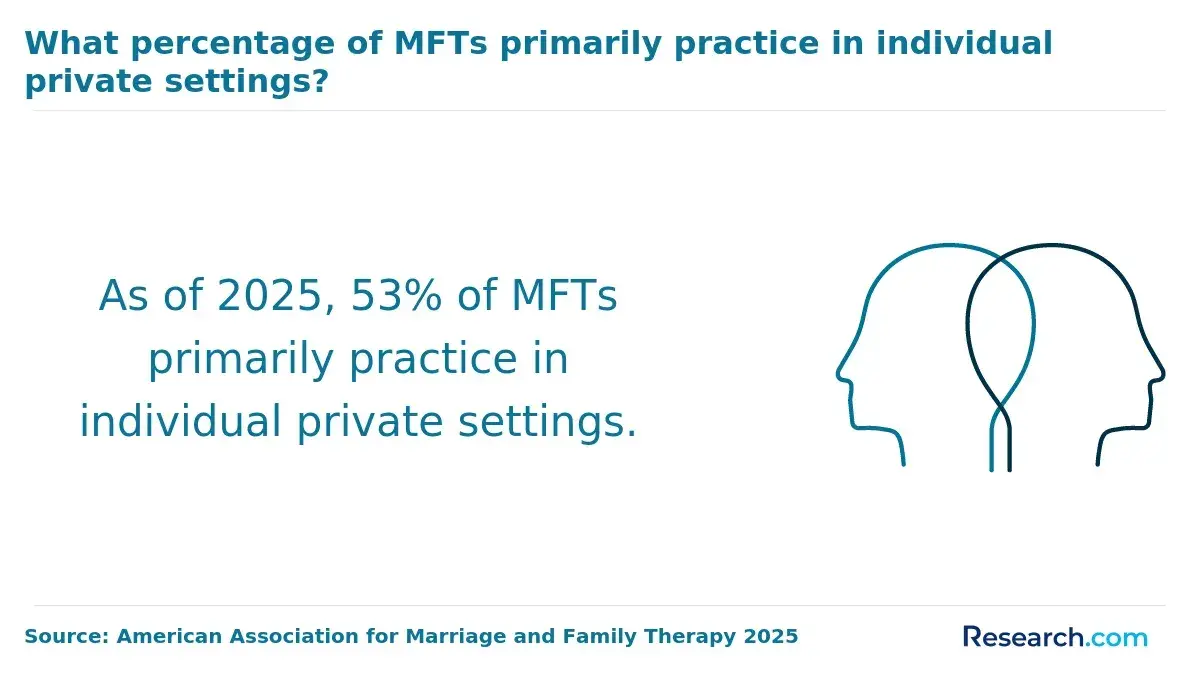
The American Association for Marriage and Family Therapy (AAMFT) recommends a minimum of 1,000 direct client contact hours as a benchmark for accredited MFT programs nationwide. In Oregon, MFT students in both online and campus-based programs are generally expected to complete at least 1,000 clinical hours before graduation and licensure eligibility. These hours may include practicum, internship, supervised client contact, case documentation, treatment planning, and other approved clinical learning experiences.
Online students usually complete clinical hours through approved sites near where they live, sometimes with teletherapy components when permitted by the program and site. Campus students may have more direct access to university clinics or established local partnerships, but they still need to satisfy the same overall training expectations.
Oregon regulations emphasize regular supervision, typically requiring at least one hour of supervision for every five hours of direct client contact. Supervision is where students review cases, receive feedback, discuss ethics, improve documentation, and learn how to handle complex family and relational dynamics.
| Clinical component | What it usually involves | Why it matters |
| Practicum | Early supervised counseling experience, observation, role play, and introductory client work | Builds basic clinical confidence before heavier caseloads |
| Internship | More sustained client contact in a school, agency, clinic, hospital, or private practice setting | Helps students demonstrate readiness for post-graduate supervised work |
| Direct client contact | Therapy with individuals, couples, families, or groups | Develops the core skills required for MFT practice |
| Supervision | Case review and professional feedback from approved supervisors | Protects clients and helps students improve clinical judgment |
Questions to ask about clinical placements
- Does the program place students, or must students find their own practicum and internship sites?
- Are rural students supported in finding approved supervisors?
- Can teletherapy count toward clinical experience when allowed by the site and program?
- What happens if a placement falls through or does not provide enough client hours?
- Does the program help students track hours in the format required for Oregon licensure?
What research or capstone requirements are included in MFT programs in Oregon?
Oregon MFT programs often include a final academic or clinical project that asks students to show they can connect research, theory, ethics, and supervised practice. The exact requirement varies by institution, but the goal is usually the same: demonstrate readiness for professional clinical work.
- Thesis or research project: Students may complete a structured study involving literature review, research design, data analysis, and discussion of topics such as family dynamics, systemic therapy, trauma, relationship distress, or culturally responsive care.
- Capstone case study: Some programs require students to present a detailed clinical case, including assessment, diagnosis, treatment goals, intervention choices, ethical considerations, and outcome reflection.
- Professional portfolio: A portfolio may include case reflections, supervision feedback, treatment plans, self-assessments, and evidence of competency growth.
- Practicum-based evaluation: Programs may evaluate students through live supervision, recorded sessions, simulated cases, faculty review, and supervisor ratings.
- Online format adaptations: Online students may complete presentations, peer consultation, supervision meetings, and portfolio reviews through secure video platforms and learning systems.
These requirements can feel demanding because they combine academic writing with personal reflection and clinical accountability. Students who work full time should ask how capstones are scheduled, whether group work is required, and how much time should be reserved during the final terms of the program.
- : "A strong capstone does more than close out a degree. It helps students explain their clinical model, defend treatment decisions, and prepare for supervision after graduation."
How long does it take to complete an MFT degree in Oregon?
Most students complete an MFT master’s program in Oregon in about two to three years if they attend full time. Part-time students may need longer, especially if they are balancing work, caregiving, commuting, or clinical placement schedules. Across the U.S., MFT programs commonly require around 60 to 65 credit hours of graduate coursework, which reflects national expectations for clinical preparation.
| Enrollment path | Typical timeline | Best for |
| Full-time master’s program | Two to three years | Students who can prioritize school and clinical training |
| Accelerated option | Shorter than the standard schedule when offered | Students with strong time availability and fewer outside obligations |
| Part-time option | Longer than the standard schedule | Working adults, caregivers, and students who need a reduced course load |
| Online program | Varies more widely depending on pacing and placement timing | Students who need geographic or scheduling flexibility |
Timeline is not determined by coursework alone. Practicum and internship availability can affect completion speed, and students without a related undergraduate background may need additional prerequisite coursework. Oregon licensure planning may also include at least 2,000 supervised clinical hours required for Oregon licensure, which can extend the total time from enrollment to full independent practice.
What can delay graduation?
- Starting without required prerequisite courses
- Difficulty securing an approved practicum or internship site
- Insufficient client volume at a clinical placement
- Switching from full-time to part-time enrollment
- Needing to repeat a clinical skills course or remediate supervision concerns
- Taking a leave of absence because of work or family obligations
What exams do licensed MFT candidates need to pass in Oregon?
Oregon MFT licensure requires candidates to demonstrate both clinical competence and knowledge of state rules. The exam process is meant to protect clients by ensuring that new therapists understand assessment, diagnosis, treatment planning, ethics, documentation, and Oregon-specific legal responsibilities.
National pass rates for MFT licensing exams typically range between 50% and 60%, so students should treat exam preparation as a serious part of the licensure pathway rather than a final administrative step.
| Requirement | What it covers | How to prepare |
| National MFT Clinical Exam | The Association of Marital & Family Therapy Regulatory Boards (AMFTRB) exam includes 150 multiple-choice questions on assessment, diagnosis, treatment planning, ethics, and clinical decision-making. | Use practice exams, review systemic therapy models, study diagnosis and ethics, and build test stamina. |
| Oregon Jurisprudence Exam | This open-book exam focuses on Oregon laws, rules, and professional standards for MFT practice. | Study Oregon rules carefully and understand how state requirements apply to real clinical scenarios. |
| Supervised Clinical Experience Evaluation | Oregon also requires documentation of supervised clinical practice and professional competency. | Track hours consistently, maintain supervision records, and address feedback early. |
The National MFT Clinical Exam can be challenging because it tests how candidates think through cases, not just whether they can recall definitions. The Oregon Jurisprudence Exam is open book, but candidates should not underestimate it; knowing where rules are located is different from understanding how they apply in practice.
Practical exam preparation tips
- Begin studying before your application deadline instead of waiting until all supervised hours are complete.
- Use practice questions to identify weak areas in diagnosis, ethics, and treatment planning.
- Review Oregon rules in the context of confidentiality, mandated reporting, supervision, teletherapy, and scope of practice.
- Keep documentation organized throughout supervised experience so licensure paperwork does not become a last-minute barrier.
- Ask recent graduates which study tools helped them prepare and which were less useful.
How much does an MFT program cost in Oregon?
The cost of an MFT program in Oregon depends on the school, delivery format, credit requirements, student fees, clinical expenses, and how long a student takes to finish. Nationwide, the average total tuition for master’s-level MFT programs is approximately $25,000, but actual Oregon program costs can be lower or higher depending on institution and format.
Students comparing cost should also think about career direction. For example, someone researching high-demand counseling career paths may choose an MFT specialization differently than someone planning to work mainly with couples in private practice.
| Cost category | Typical range or issue | Why it matters |
| On-campus tuition | In Oregon, on-campus MFT programs generally range from $20,000 to $35,000 in total tuition and fees. | Campus programs may include facility costs, student fees, commuting, and in-person schedule demands. |
| Online tuition | Online MFT programs in Oregon tend to cost between $15,000 and $30,000. | Online students may save on commuting but still need to budget for technology and local placement logistics. |
| Books and materials | Costs vary by course and program. | Clinical texts, assessment tools, and online resources can add up over multiple terms. |
| Clinical training expenses | May include liability insurance, background checks, placement fees, transportation, and professional attire. | These costs are easy to overlook when comparing tuition only. |
| Licensure-related costs | Includes exam fees, application fees, supervision fees, and continuing education after graduation. | The full cost of becoming an LMFT continues beyond tuition. |
How to compare program affordability
- Calculate total tuition, not just per-credit cost.
- Ask whether fees are different for online and campus students.
- Estimate transportation, childcare, technology, books, and clinical placement expenses.
- Find out whether part-time enrollment changes financial aid eligibility.
- Ask how many students finish on time, because extra terms increase total cost.
- Compare the likely debt burden with realistic early-career wages, not only long-term salary potential.
What financial aid options are available for MFT students in Oregon?
Financial aid can make an MFT degree more manageable, but graduate students should be careful about debt. The average U.S. graduate student borrows over $66,000 in student loans, so students should compare aid packages, repayment obligations, and expected earnings before committing.
Financial aid for marriage and family therapy students in Oregon may include the following:
- Federal Direct Unsubsidized Loans: Graduate students commonly use these loans because they are widely available to eligible students and allow deferred repayment while enrolled.
- Scholarships: Professional associations, foundations, state agencies, private donors, and school-based funds may support students in counseling and therapy fields.
- Graduate assistantships: Some campus programs offer teaching, research, or administrative assistantships that may include tuition support or stipends. These are usually competitive and may be less available in fully online formats.
- Employer tuition reimbursement: Students already working in healthcare, social services, education, or behavioral health may be able to use employer benefits to reduce out-of-pocket costs.
- Payment plans: Some schools allow students to spread tuition payments across a term, which can help with cash flow but does not reduce total cost.
Online students are often eligible for federal loans and many scholarships, but they should confirm aid eligibility directly with the school’s financial aid office. Oregon demand for MFT professionals is expected to grow approximately 15% through 2031, but students should still borrow conservatively because employment and salary outcomes are never guaranteed.
Students who want to compare flexible graduate options can review Research.com’s guide to the best online master’s programs in marriage and family counseling as part of a broader affordability and fit comparison.
Questions to ask financial aid offices
- What is the total estimated cost from enrollment through graduation?
- Are scholarships renewable, or are they one-time awards?
- Does part-time enrollment affect loan eligibility?
- Are assistantships available to MFT students specifically?
- What fees are not included in advertised tuition?
- Does the program provide emergency aid, travel support, or placement-related assistance?
What jobs can you get with an MFT degree in Oregon?
An MFT degree can lead to clinical and behavioral health roles in community agencies, schools, nonprofit organizations, hospitals, residential programs, employee assistance programs, and private practice settings. Nationwide, the projected job growth for marriage and family therapy professionals is 16% from 2021 to 2031, reflecting continued need for relationship-based and family-centered mental health services.
| Role | Typical responsibilities | Licensure impact |
| Marriage and Family Therapist | Provides therapy for individuals, couples, and families; assesses relational patterns; creates treatment plans; addresses issues such as anxiety, trauma, conflict, and life transitions. | Full LMFT licensure can expand autonomy, private practice options, and insurance participation. |
| Licensed Professional Counselor | Works with clients on behavioral health, emotional, and mental health concerns in agencies, schools, hospitals, or community programs. | Licensure requirements may differ from the LMFT path and should be verified before choosing coursework. |
| Behavioral Health Specialist | Supports assessment, care coordination, crisis response, treatment planning, and client services, often under supervision. | May be appropriate for graduates completing post-degree supervised hours. |
| Clinical Therapist | Delivers therapy services in nonprofit, outpatient, residential, or community mental health environments. | Scope of practice and independence depend on license status and employer requirements. |
Licensure matters. Graduates who are still completing post-degree supervised experience may work in associate, trainee, therapist, or behavioral health roles with limits on autonomy. Fully licensed professionals have more flexibility to build a private practice, supervise others when qualified, and participate more fully in insurance-based care.
Students who want an affordable counseling-related route can also compare Oregon options with Research.com’s guide to the most affordable CACREP-accredited online counseling programs, while remembering that CACREP accreditation and MFT licensure preparation are not automatically the same thing.
Current trends affecting MFT careers in Oregon
- Higher mental health demand: Oregon’s projected MFT workforce needs and mental health workforce growth point to continued demand for trained clinicians.
- Teletherapy expectations: Many clients now expect virtual care options, so students should learn ethical, legal, and clinical standards for telehealth practice.
- Integrated care settings: MFTs may work alongside physicians, social workers, addiction counselors, school teams, and community health professionals.
- Greater focus on trauma and family systems: Programs with strong training in trauma-focused therapy, child and adolescent therapy, and systemic family therapy may be especially relevant for students planning to serve high-need populations.
- Documentation and compliance pressure: Therapists increasingly need strong records, treatment plans, outcome measures, and insurance documentation skills.
What is the average licensed MFT salary in Oregon?
The average licensed marriage and family therapist salary in Oregon is approximately $62,000. Earnings vary by employer, location, license status, years of experience, specialty, and whether the therapist works in an agency, hospital, school-related setting, community clinic, or private practice.
| Salary factor | How it may affect earnings |
| Experience level | Entry-level therapists often start near $45,000 annually, while experienced professionals with a decade or more of experience and specialized credentials can earn between $80,000 and $90,000. |
| Location | Urban areas such as Portland and Eugene often offer higher pay than rural communities because of demand, employer mix, and cost of living. |
| Work setting | Hospitals, community agencies, schools, private clinics, and private practices may have different compensation models. |
| License status | Therapists still completing supervised hours usually earn less than fully licensed LMFTs. |
| Education and specialization | Advanced training and degree type may influence long-term opportunities; students comparing options can review Research.com’s MS vs. MA in counseling comparison. |
Salary should be part of the decision, but not the only factor. A lower-cost program with strong placement support may offer better practical value than a more expensive program with limited clinical assistance. Students should compare projected debt, supervision costs, local job opportunities, and personal fit before deciding whether an MFT degree is financially realistic.
What Graduates of MFT Programs in Oregon Say About Their Degree
- My on-campus MFT training in Oregon gave me the supervised practice and classroom foundation I needed to support students in a school setting. In my work at Lincoln Elementary School in Salem, I use both theory and hands-on counseling skills to help children manage emotional challenges that show up in the classroom. The program’s connection to community resources helped me understand how therapy, schools, and families can work together. Madelaine
- The online MFT program gave me the flexibility to keep working while building stronger clinical and research skills. The coursework helped me understand Oregon’s diverse communities more deeply, and that perspective supported my move into an academic leadership role. I did not expect the degree to expand my professional path as much as it did. Aileen
- My Oregon MFT program pushed me to grow as both a clinician and a person. Working in a rural school district has shown me how important resilience, creativity, and community connection are for families with limited local resources. The training helped me think beyond the therapy room and focus on practical support for isolated communities. Luna
Common mistakes to avoid when choosing an MFT program in Oregon
| Mistake | Why it can hurt you | Better approach |
| Choosing a program without checking licensure alignment | You may graduate without all coursework or clinical requirements needed for your intended license. | Ask the program to explain how its curriculum maps to Oregon LMFT requirements. |
| Looking only at tuition | Fees, books, travel, clinical expenses, supervision, and exam costs can change the real price. | Compare total cost through licensure, not just advertised tuition. |
| Assuming online programs automatically provide placements | Some online students must locate approved sites themselves, which can delay clinical hours. | Ask for written placement policies and examples of approved Oregon sites. |
| Ignoring supervision quality | Weak supervision can affect skill development, documentation, and exam readiness. | Ask how supervisors are selected, trained, and evaluated. |
| Assuming salary outcomes are guaranteed | Pay depends on license status, location, employer, caseload, and experience. | Compare local job postings and talk with recent graduates before borrowing heavily. |
| Relying only on rankings | A highly ranked program may not fit your schedule, budget, location, or clinical goals. | Use rankings as a starting point, then evaluate fit, cost, licensure, and placement support. |
How to choose the right Oregon MFT program: Step-by-step checklist
- Confirm your career goal. Decide whether you want LMFT licensure, another counseling license, school-based work, agency work, private practice, research, or doctoral study.
- Check licensure alignment. Ask the program how its coursework, practicum, supervision, and exam preparation support Oregon requirements.
- Compare accreditation and professional standards. Review whether the curriculum aligns with recognized MFT education expectations, including COAMFTE-related standards when relevant.
- Evaluate clinical placement support. Find out who secures placements, how rural students are supported, and what happens if a site cannot provide enough hours.
- Calculate total cost. Include tuition, fees, books, commuting, technology, liability insurance, background checks, exam fees, and supervision-related expenses.
- Ask about outcomes. Request information on graduation timelines, licensure exam support, placement success, and job support.
- Match the format to your life. Choose online if you need flexibility and can manage self-directed learning; choose campus if you want more structured in-person support.
- Talk to current students or alumni. Ask about faculty access, workload, clinical placements, supervision quality, and whether the advertised flexibility is realistic.
Key Insights
- Oregon projects a 22% increase in MFT workforce needs by 2030, making strong clinical preparation and licensure planning especially important.
- The standard path into the field is usually a master’s-level MFT program, but students should verify that any program they choose supports Oregon LMFT eligibility.
- Clinical placement support is one of the most important differences between programs, especially for online and rural students.
- Program cost should be evaluated beyond tuition. Books, clinical fees, insurance, supervision, exam costs, and extra terms can significantly affect affordability.
- Oregon MFT candidates should prepare for the National MFT Clinical Exam, the Oregon Jurisprudence Exam, and supervised clinical experience documentation.
- The average licensed marriage and family therapist salary in Oregon is approximately $62,000, but earnings vary by experience, setting, geography, and license status.
- The best program is not automatically the cheapest, fastest, or most flexible. The strongest choice is the one that fits your licensure goal, budget, learning style, clinical placement needs, and long-term career plan.
Related Articles for Nearby States
- 2027 Best Marriage and Family Therapy (MFT) Programs in Washington: Online & Campus
- 2027 Best Marriage and Family Therapy (MFT) Programs in California: Online & Campus
- 2027 Best Marriage and Family Therapy (MFT) Programs in Idaho: Online & Campus
- 2027 Best Marriage and Family Therapy (MFT) Programs in Nevada: Online & Campus
- 2027 Best Marriage and Family Therapy (MFT) Programs in Montana: Online & Campus
- 2027 Best Marriage and Family Therapy (MFT) Programs in Utah: Online & Campus
- 2027 Best Marriage and Family Therapy (MFT) Programs in Wyoming: Online & Campus
- 2027 Best Marriage and Family Therapy (MFT) Programs in Arizona: Online & Campus
- 2027 Best Marriage and Family Therapy (MFT) Programs in Colorado: Online & Campus
- 2027 Best Marriage and Family Therapy (MFT) Programs in New Mexico: Online & Campus
References:
- Academic Catalog https://oit.catalog.acalog.com/preview_program.php
- Home | Oregon Student Aid https://oregonstudentaid.gov/
- OAR 833-040-0041 – Examination Requirement for Licensure as a Marriage and Family Therapist https://oregon.public.law/rules/oar_833-040-0041
- Oregon LMFT License Requirements & Salary 2025 https://careersinpsychology.org/becoming-a-licensed-marriage-family-therapist-in-oregon/
- Marriage & Family Therapist Salaries in Oregon and the U.S. https://www.georgefox.edu/counseling-programs/programs/marriage-family/salary.html
- Marriage, Couple & Family Therapy https://graduate.lclark.edu/departments/marriage-couple-and-family-therapy/
- How to Find the Best Oregon-Based Mental Health and Counseling Internships, Practicums, and Clinical Supervision: Landing the Top Field Placement Sites https://www.mojozy.org/blog/how-to-find-the-best-oregon-based-mental-health-and-counseling-internships-practicums-and-clinical-supervision-landing-the-top-field-placement-sites
- 30+ MFT Scholarships & Resources to Help You Graduate with Less Debt https://www.onlinemastersdegrees.org/student-resources/marriage-and-family-therapy-mft/
- Best MFT Programs in Oregon 2026: Online, Fast, & Affordable Options https://www.counselingpsychology.org/counseling/degrees/mft/oregon/
- How To Start A Mental Health Practice In Oregon | Belongly https://www.belongly.com/state/how-to-start-a-mental-health-practice-in-oregon/
Other Things You Should Know About the Best Marriage and Family Therapy (MFT) Programs in Oregon
When considering MFT programs in Oregon, look for accreditation by the Commission on Accreditation for Marriage and Family Therapy Education (COAMFTE). This ensures the program meets high educational and professional standards essential for licensure and practice.
Oregon MFT programs typically include at least 300 supervised practicum hours before graduation, and many also build in additional internship or fieldwork hours. For licensure, Oregon’s Board of Licensed Professional Counselors and Therapists requires postdegree supervised experience, so practicum training is only the first step.