
2027 Best Online Graduate Certificates in Marriage and Family Therapy (MFT)

Co-Founder and Chief Data Scientist
Choosing an online graduate certificate in marriage and family therapy is usually not a first step into counseling. It is more often a career decision for professionals who already have graduate training and want deeper preparation in couples, family systems, relational conflict, child and adolescent concerns, or clinical work with families. The decision matters because mental health needs remain significant in the United States: between 2021 and 2022, almost 60 million American adults experienced a mental illness (Mental Health America, 2024). This guide explains what online graduate MFT certificates cover, who they are best suited for, how they compare with degree programs, what they may cost, how licensure affects your options, and how to choose a program without relying only on rankings or tuition.
Quick answer: Is an online graduate certificate in marriage and family therapy worth considering?
An online graduate certificate in marriage and family therapy can be useful if you already hold a relevant graduate degree and want focused training in family systems, couples counseling, relational assessment, and ethical clinical practice. It may strengthen your qualifications, support continuing education goals, or help you complete education requirements for licensure in some states. However, a certificate alone does not automatically make you a licensed marriage and family therapist. You must verify state licensing rules, supervised clinical hour requirements, accreditation, and whether the certificate fits your existing degree and career plan.
Why professionals pursue marriage and family therapy training
- Specialized clinical preparation: MFT certificates build on prior graduate study by focusing on relationships, family systems, communication patterns, conflict, and treatment planning for couples and families.
- Flexible study format: Online programs can make it easier for working counselors, social workers, ministers, educators, and other helping professionals to continue employment while completing coursework.
- Potential career value: In 2023, the median annual wage of marriage and family therapists in the US was $58,510 [US Bureau of Labor Statistics (BLS), 2024], but actual earnings vary by state, setting, licensure status, experience, and client base.
What to expect from an online marriage and family therapy certificate
A graduate certificate in marriage and family therapy is a focused credential, not a full replacement for a master’s degree. Programs typically examine how family structure, culture, trauma, communication, and relationship history influence client concerns. Coursework may include family therapy theories, couples counseling, child and adolescent assessment, clinical diagnosis, ethics, and intervention planning. Many programs use case studies, role-play, online discussions, and supervised or practice-based learning activities to connect theory with clinical decision-making.
The most important question is not simply whether the program is online. It is whether the curriculum, faculty qualifications, supervision model, accreditation, and state authorization match your professional goal. If your goal is licensure, you should ask your state board whether the certificate satisfies any required coursework before you enroll.
Where MFT certificate training can be used
Professionals with graduate-level MFT training may apply these skills in private practices, community mental health agencies, hospitals, schools, nonprofit organizations, faith-based counseling settings, social service agencies, and family support programs. The certificate may be especially useful for professionals who already work with couples, parents, children, blended families, divorce, grief, conflict, domestic stressors, or co-occurring behavioral health issues.
Some graduates use the credential to strengthen current roles in counseling, social work, pastoral care, human services, case management, or employee support. Others use it as part of a longer path toward marriage and family therapist licensure. The certificate’s value depends heavily on your existing degree, licensure status, state rules, and employer expectations.
How much can professionals earn after MFT certificate training?
Salary should be evaluated carefully because a certificate does not guarantee a specific role or income level. In 2023, the median annual wage for marriage and family therapists in the US was $58,510 (US BLS, 2024). Earnings may differ based on licensure, geographic location, clinical setting, years of experience, specialty area, caseload, reimbursement model, and whether the therapist works in an agency, hospital, school, group practice, or private practice.
- Featured online graduate marriage and family therapy certificate programs for 2027
- How do you become a marriage and family therapist?
- How long does an MFT certificate take?
- Online vs. on-campus MFT certificates
- How much does an online MFT certificate cost?
- Financial aid and payment options
- Admission requirements
- Common MFT certificate courses
- How to choose the right online MFT certificate
- Alternative education paths for aspiring MFT professionals
- Accreditation and licensing requirements
- Career options after an MFT certificate
- Job outlook for MFT-related careers
- Continuing education pathways for MFT professionals
- Long-term ROI of an MFT certificate
- Technology and online tools in MFT practice
- Complementary certifications for therapists
- Integrative and spiritual approaches
- Faith-informed MFT practice
- Forensic psychology and MFT
- MFT and ABA/BCBA career comparison
- Clinical supervision in online programs
- Emerging trends in online MFT education
- Doctoral training for MFT practitioners
- Credibility of online MFT certificates
- Legal and ethical issues in online MFT practice
- Accelerated psychology study and MFT practice
- Substance abuse counseling and MFT dual training
- Licensing differences among mental health professions
- Career strategies for higher therapist income
- Professional associations and networking
Featured online graduate marriage and family therapy certificate programs for 2027
How the programs were selected
The programs below represent certificate options for professionals exploring graduate-level marriage and family therapy training. Research.com’s team reviewed available institutional and education data using the site’s established research methodology, including information from the IPEDS database, Peterson's database, the College Scorecard database, and the National Center for Education Statistics. Use this list as a starting point, then confirm current tuition, state authorization, admissions rules, and licensure alignment directly with each school and your state board.
| School | Format and focus | Program length | Credits | Cost per credit | Accreditation |
| Richmont Graduate University | Online and in-person certificate with systems theory and Christian theology integration; designed to help students meet educational requirements for MFT licensure in many states. | 1 year | 14 credits | Contact the academic institution for information. | Southern Association of Colleges and Schools Commission on Colleges (SACSCOC) |
| Regent University | Online and on-campus Certificate of Graduate Studies in Marriage, Couple, and Family Counseling; also connected to continuing education and state credentialing preparation. | 1 year | 12 credits | $730 | SACSCOC |
| Grand Canyon University | Post-MS Marriage and Family Therapy Certificate offered online and in evening format through the College of Humanities and Social Sciences; topics include premarital counseling, domestic violence, and divorce. | 1 year | 15 credits | $590 | Higher Learning Commission (HLC) |
| Wheaton College | Marriage and Family Therapy Certificate taught from a Christian perspective for Central and Eastern European citizens living and working in Eastern and Central Europe. | 3 years | 14 credits | $810 to $840 | HLC |
| National University | Fully online certificate with coursework in advanced MFT theories, family interaction dynamics, and child and adolescent assessment and diagnosis. | 1 year | 18 credits | Contact the academic institution for information. | Western Association of Schools and Colleges (WASC) |
Important findings for prospective MFT certificate students
- Graduate MFT certificate programs can support advanced training for the more than 71,200 marriage and family therapists in the country (US BLS, 2024), but they should be evaluated against state licensure rules.
- Among the featured institutions, Grand Canyon University lists $590 per credit, Regent University lists $730 per credit, and Wheaton College lists $810 to $840 per credit.
- 529 plans may be used for qualified education expenses at eligible institutions. By 2023, more than 16 million American families had set up 529 plans, with a total of $450.5 billion in contributions (Hanson, 2024).
- In 2023, the median annual wage of marriage and family therapists in the US was $58,510 (US BLS, 2024).
- Employment for marriage and family therapists is expected to grow by 15% between 2022 and 2032, a rate significantly faster than the average job growth for all occupations in the US (US BLS, 2024).
How do you become a marriage and family therapist?
The path to becoming a licensed marriage and family therapist varies by state, but it generally includes graduate education, supervised clinical experience, an examination, and state licensure. A certificate may help fill coursework gaps or deepen specialization, but it is only one possible part of the licensing pathway.
- Earn the required graduate degree. Most states require a master’s or doctoral degree in marriage and family therapy or a closely related mental health field. Some students begin with undergraduate preparation through options such as affordable online psychology degree programs or related faith-based study such as online Christian counseling degree programs. Graduate coursework should address family systems, ethics, assessment, human development, counseling methods, and supervised practice.
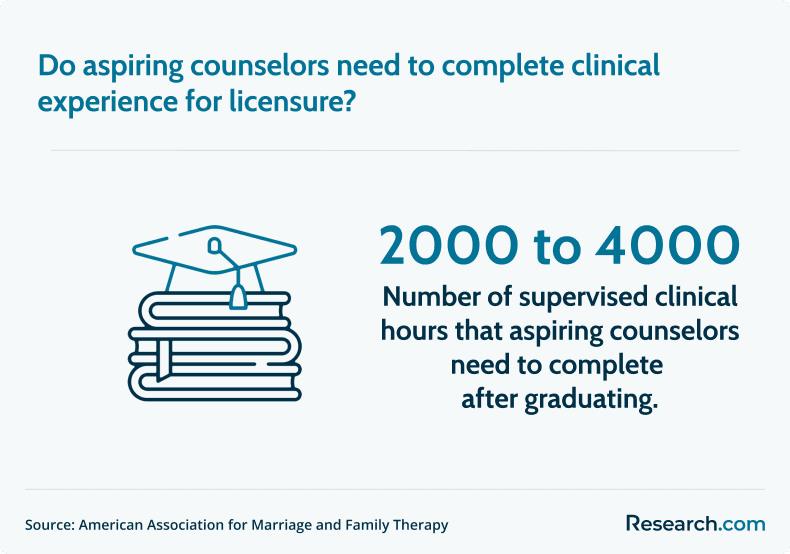
- Complete supervised clinical experience. After graduate study, candidates usually complete supervised clinical hours, commonly ranging from 2,000 to 4,000 hours, depending on state requirements. These hours typically involve direct client work under a licensed supervisor.
- Pass the required licensing exam. Many states use the Examination in Marital and Family Therapy, administered by the Association of Marriage and Family Therapy Regulatory Boards (AMFTRB). Additional requirements may include background checks, jurisprudence exams, application fees, and continuing education.
How long does an online marriage and family therapy certificate take?
Online graduate MFT certificates usually take between 6 months to 2 years, depending on credit requirements, course sequencing, enrollment status, and whether the program includes supervised clinical components. Many certificate programs are designed for part-time students who are already employed in counseling, social services, ministry, education, or healthcare.
Students comparing timelines should look beyond advertised completion speed. The marriage and family therapist education requirements in your state may include coursework or supervised experience that extends your total pathway. Accelerated options may appeal to students looking for the fastest way to become a licensed therapist, but speed should not come at the expense of licensure compatibility, supervision quality, or accreditation.
Online vs. on-campus MFT certificates: which format fits you?
Online and on-campus MFT certificates can cover similar academic content, but the learning experience differs. Online programs are often better for students who need geographic flexibility, asynchronous coursework, or the ability to maintain full-time employment. Campus programs may be better for students who want regular in-person interaction, local networking, physical campus resources, and a highly structured schedule.
| Factor | Online certificate | On-campus certificate |
| Best fit | Working professionals, out-of-area students, caregivers, and learners who need scheduling flexibility. | Students who prefer face-to-face learning, live discussion, and regular campus access. |
| Clinical practice and supervision | May use virtual supervision, local placements, simulated sessions, and synchronous case discussions. | May offer easier access to campus-based clinics, local supervisors, and in-person skills labs. |
| Networking | Often built through discussion boards, webinars, virtual cohorts, and professional online events. | Often stronger for students who want local peer relationships and faculty contact. |
| Cost considerations | May reduce commuting, relocation, and campus-related expenses, but online fees can still apply. | May involve transportation, housing, parking, or schedule-related costs. |
| Licensure caution | Must confirm state authorization, placement support, and whether online coursework is accepted by your licensing board. | Must still confirm curriculum and clinical hours meet state requirements. |
How much does an online marriage and family therapy certificate cost?
Costs vary by school, credit load, residency policy, fees, and whether the program charges technology, clinical placement, or graduation fees. Published tuition is only one part of the total cost, so students should request a full cost breakdown before enrolling.
Among the featured programs, Grand Canyon University lists $590 per credit, Regent University lists $730 per credit, and Wheaton College lists $810 to $840 per credit. Richmont Graduate University and National University direct students to contact the academic institution for current cost information.
The chart below visualizes cost-per-credit information for featured online graduate programs in marriage and family therapy certificates based on the tuition data available in this guide.
Financial aid and payment options for online MFT certificate students
Graduate certificate students should not assume that financial aid works the same way it does for full degree programs. Eligibility can depend on the school, certificate classification, enrollment intensity, employer policies, and federal aid rules. Before applying, ask the financial aid office whether the certificate is aid-eligible and whether credits can later apply toward a degree.
- Scholarships and grants: Schools, professional associations, religious organizations, and community foundations may provide awards for counseling, mental health, ministry, or human services students. These funds generally do not require repayment.
- Employer tuition assistance: Professionals already working in schools, healthcare, counseling agencies, nonprofits, or social service organizations should ask whether their employer reimburses graduate certificate coursework related to their current role.
- 529 Plans: Professionals may use 529 plans for MFT certificates and related qualified costs if the institution and expenses meet the rules. These accounts are tax-advantaged educational savings accounts that can support eligible education expenses. By 2023, more than 16 million American families had set up 529 plans, with a total of $450.5 billion in contributions (Hanson, 2024).
Admission requirements for online graduate MFT certificates
Admission standards differ by institution, but most online MFT certificate programs are built for graduate-level learners rather than first-time college students. Review admissions requirements early because missing prerequisites can delay enrollment.
- Graduate degree: Many programs require a master’s degree from an accredited institution. Relevant preparation may include counseling, psychology, social work, ministry, or human services. Students researching related options may compare online graduate programs in counseling.
- Academic record: A minimum GPA of 3.0 in prior graduate coursework is commonly expected, although some programs review applicants with lower GPAs if they have strong professional experience.
- Relevant professional background: Some programs prefer applicants with experience in counseling, social services, pastoral care, education, or clinical settings. Graduates of CACREP online counseling programs may already have a foundation in counseling theory and ethics.
- Recommendations: Schools may request two to three letters from supervisors, professors, or licensed professionals who can evaluate your readiness for graduate-level clinical study.
- Personal statement: Many programs ask applicants to explain career goals, interest in family systems work, professional experience, and how the certificate supports their next step.
Common courses in an online MFT certificate
MFT certificate curricula differ, but most programs emphasize systemic thinking, evidence-informed intervention, ethical practice, and applied assessment. Common course areas include:
- Family therapy foundations: Introduces major theories and models used to understand relationships, family roles, generational patterns, and systemic change.
- Couples counseling: Covers clinical approaches for communication problems, conflict cycles, intimacy concerns, trust repair, and relationship stressors.
- Human development across the lifespan: Examines emotional, cognitive, social, and relational development from childhood through adulthood.
- Ethics and professional practice: Reviews confidentiality, informed consent, boundaries, mandated reporting, scope of practice, cultural humility, and legal responsibilities.
- Clinical assessment and diagnosis: Teaches students to evaluate client concerns, use diagnostic frameworks responsibly, and develop treatment plans within a family context.
How to choose the best online marriage and family therapy certificate program
The best program is not always the cheapest, fastest, or highest ranked. It is the one that fits your prior education, state requirements, professional goals, schedule, and budget. Use the questions below before you apply.
| Decision point | What to verify | Why it matters |
| Accreditation | Confirm institutional accreditation and whether the program has MFT-specific recognition where relevant. | Accreditation affects transferability, employer confidence, aid eligibility, and licensing review. |
| Licensure alignment | Ask your state board whether the certificate satisfies required coursework or supervised training expectations. | A strong academic program may still fail to meet your state’s licensing rules. |
| Clinical support | Find out whether the school helps locate supervisors or placements and how online supervision is delivered. | Clinical logistics can become a major obstacle for distance learners. |
| Curriculum fit | Compare course titles, syllabi, electives, and whether the program covers couples, families, ethics, diagnosis, and specialty areas. | The certificate should strengthen the exact skills you need for your client population. |
| Total cost | Request tuition, fees, books, technology fees, clinical fees, and payment deadlines. | Low tuition does not always mean low total cost. |
| Credit transfer | Ask whether certificate credits can apply to a master’s, doctoral, or additional credential later. | Transfer policies affect long-term value if you plan further study. |
Alternative education paths for aspiring marriage and family therapists
If you do not already hold the right graduate degree for MFT licensure, a certificate may not be enough. In that case, compare full graduate programs first. Some students start by researching accredited online counseling degrees to understand broader counseling pathways, while others pursue MFT-specific master’s programs. The right route depends on whether you want to become an LMFT, LPC, LCSW, school counselor, pastoral counselor, or another type of helping professional.
Why accreditation and licensing requirements are critical
Accreditation and licensing are not administrative details; they can determine whether your education is accepted by employers, doctoral programs, and licensing boards. Before enrolling, confirm institutional accreditation, MFT-related accreditation where applicable, state authorization for online students, required coursework, supervised hour rules, and whether the program’s clinical experiences are accepted in your state.
Students who are trying to shorten their timeline may compare options such as the fastest online MFT program, but a shorter pathway should still meet academic, ethical, and licensing expectations.
Career paths after an online marriage and family therapy certificate
An MFT certificate can support several roles, but licensure and degree requirements vary. Some positions require a specific state license, while others may accept related graduate preparation plus experience.
- Marriage and family therapist: With the required degree, supervised clinical experience, examination, and state licensure, professionals can work with couples and families in private practice, agencies, healthcare settings, or community programs. In 2023, the median annual wage of marriage and family therapists in the US was $58,510 (US BLS, 2024).
- School counselor: Professionals with appropriate school counseling credentials may support students facing family stress, social concerns, academic challenges, or transition issues. In 2023, the median annual wage of school and career counselors and advisors in the US was $61,710 (US BLS, 2024).
- Social worker: Social workers may use family systems knowledge in hospitals, child welfare, community agencies, and nonprofit settings while helping clients access support, advocacy, and services. In 2023, the median annual wage of social workers in the US was $58,380 (US BLS, 2024).
The chart below compares median annual wages for selected careers related to marriage and family therapy using US BLS data cited in this guide.
Job outlook for professionals with MFT training
The labor market for licensed marriage and family therapists is projected to grow. Employment for marriage and family therapists is expected to grow by 15% between 2022 and 2032, which the US BLS describes as significantly faster than the average job growth for all occupations in the US (US BLS, 2024). Demand is connected to continued need for mental health services and treatment approaches that address families, couples, and relationship systems.
Still, job prospects depend on licensure, state demand, insurance participation, experience, specialty training, and willingness to work in high-need settings. Certificate graduates should view the credential as part of a broader career strategy rather than a guaranteed job placement tool.
Continuing education pathways for MFT professionals
Marriage and family therapy is a continuing-learning profession. Licensed professionals must keep up with ethics, telehealth regulations, trauma-informed care, cultural responsiveness, documentation standards, supervision rules, and evidence-informed interventions. Continuing education can also help therapists move into specialty practice, supervision, leadership, teaching, or doctoral study.
Professionals who need a full graduate credential may compare a master’s degree in family counseling online with certificate-only options. Workshops and certificates in trauma, child and adolescent therapy, teletherapy, addiction, or couples work may also help therapists serve specific client populations more effectively.
Is an MFT certificate worth the long-term ROI?
An MFT certificate can be worthwhile when it fills a clear gap: required coursework for licensure, advanced family systems training, a new clinical specialty, or continuing education that improves your current practice. It may be less valuable if you need a full master’s degree, if your state board will not accept the credits, or if the cost is high relative to your expected career benefit.
Prospective students should compare tuition, fees, time away from work, potential supervision costs, and whether credits can stack into another credential. If affordability is your main concern, compare lower-cost options such as the most affordable online counseling degrees while still checking accreditation and licensing fit.
Technology and online tools in marriage and family therapy practice
Technology now affects both MFT education and professional practice. Online students may use learning platforms, secure video conferencing, simulated client scenarios, digital assessment tools, and virtual case consultation. Practicing therapists may also use teletherapy platforms, client portals, scheduling tools, outcome tracking, and digital resources that support communication between sessions.
Technology can improve access and workflow, but it also adds responsibilities. Therapists must understand privacy rules, informed consent for telehealth, emergency protocols, cross-state practice limitations, secure documentation, and ethical boundaries. Professionals who want broader preparation in human behavior and digital mental health tools may explore a behavioral science degree online.
Complementary certifications that can broaden therapeutic expertise
Additional credentials can help therapists work with specialized populations, but they should be chosen strategically. A certificate in MFT may pair well with training in trauma, addiction, behavioral intervention, child development, forensic assessment, pastoral counseling, or telehealth. The best complementary credential is one that matches your clients’ needs and your legal scope of practice.
For example, professionals interested in behavioral assessment and intervention may compare options such as masters in BCBA online. This path is different from MFT, so students should review licensure, certification, supervision, and scope-of-practice rules before combining credentials.
Integrative and spiritual practices in MFT work
Some therapists integrate mindfulness, culturally responsive spirituality, meditation, or holistic wellness practices into therapy. These approaches should be used ethically, with client consent, cultural sensitivity, and attention to evidence-based care. They should support—not replace—appropriate clinical assessment, diagnosis, treatment planning, and referral when needed.
Professionals interested in this area can review guidance on how to become a holistic counselor to better understand training pathways and boundaries.
Can a faith-informed approach enhance MFT practice?
Faith-informed MFT practice can be valuable when clients want therapy that respects their spiritual beliefs, religious community, or moral framework. Therapists must avoid imposing beliefs, obtain informed consent, and remain within ethical and clinical standards. For professionals who want deeper preparation in this area, an online master's in Christian counseling may offer additional training in the relationship between spirituality, counseling, and family dynamics.
Can forensic psychology strengthen MFT practice?
Forensic psychology knowledge can help MFT professionals better understand cases involving legal systems, custody concerns, family violence, mandated treatment, risk assessment, or court-related documentation. This does not automatically qualify a therapist to perform forensic evaluations, but it can improve awareness of ethical boundaries and referral needs. Professionals interested in that specialty may compare online forensic psychology masters programs.
How do MFT and ABA/BCBA career opportunities compare?
MFT and ABA/BCBA pathways serve different professional goals. MFT focuses on relationships, couples, families, emotional patterns, and systemic therapy. Applied behavior analysis focuses on behavior assessment, intervention planning, data-based treatment, and behavior change methods. Compensation, certification, supervision, and practice settings differ by role and state. Students comparing these routes can review regional information in the ABA salary report.
How online MFT certificate programs support clinical supervision
Online MFT certificate programs may use synchronous supervision sessions, case presentations, simulated counseling scenarios, role-play, secure video platforms, and reflective assignments to support clinical learning. Students should ask whether supervision is included, whether supervisors are licensed, whether local placement assistance is available, and whether hours count toward state requirements.
Some professionals also strengthen their clinical perspective through addiction-focused study. A degree in substance abuse counseling can be relevant for therapists who frequently work with families affected by substance use, relapse, recovery, or co-occurring concerns.
Emerging trends in online MFT education
Online MFT education increasingly uses digital simulations, interactive case analysis, virtual supervision, modular coursework, and skills-based assessments. These tools can make distance learning more practical, but students should still evaluate faculty access, supervision quality, technology requirements, and state authorization. Candidates comparing full graduate pathways can review MFT masters online options.
Is doctoral training useful for MFT practitioners?
Doctoral study may benefit MFT professionals who want advanced clinical leadership, research training, teaching roles, supervision credentials, or specialized practice. It is not necessary for every therapist. Before enrolling, compare the cost, time commitment, licensure impact, and career outcome you want. Some professionals explore options such as fully online PsyD programs when they want broader doctoral-level psychology training.
How to judge the credibility of an online MFT certificate
A credible online certificate should be transparent about accreditation, faculty credentials, curriculum, clinical requirements, student support, state authorization, tuition, and whether credits apply to licensure or further study. Be cautious of programs that promise fast licensure, guaranteed employment, or unclear clinical supervision. Students can also review what makes an online psychology degree legitimate to understand broader quality markers for online mental health education.
Legal and ethical considerations for online MFT practice
Online therapy requires careful attention to state licensure rules, telehealth consent, emergency planning, client privacy, documentation, secure communication, and cross-jurisdiction practice. Therapists must know where the client is physically located during sessions and whether they are legally permitted to provide services in that jurisdiction. Additional graduate or doctoral training, including options discussed in cheapest online PsyD programs, may strengthen ethical and clinical decision-making, but practitioners remain responsible for meeting their own licensing board’s rules.
How accelerated psychology study can complement MFT practice
Accelerated psychology coursework may help professionals quickly build knowledge in human development, assessment, research methods, abnormal psychology, or evidence-informed intervention. This can be useful for MFT practitioners who want broader psychological context, but it should not be confused with MFT licensure preparation unless the program meets specific state requirements. Students comparing fast academic options can review an accelerated online psychology degree.
Can substance abuse counseling and MFT dual training improve practice?
Dual preparation in MFT and substance abuse counseling can be valuable for clinicians working with families affected by addiction, recovery, relapse, codependency, trauma, or co-occurring mental health concerns. The two areas complement each other because substance use often affects the entire family system. However, certification and licensure rules differ, so professionals should verify requirements before enrolling. For more detail, review the substance abuse counselor degree requirements.
Licensing differences among mental health professions
MFT, LPC, LCSW, school counseling, psychology, and substance abuse counseling credentials differ in education requirements, supervised hours, exams, scope of practice, diagnosis authority, reimbursement, and settings. Choosing the wrong pathway can lead to extra coursework or delayed licensure. If you are comparing counseling and social work routes, review the difference between LPC and LCSW before committing to a certificate.
Career strategies for higher therapist income
Higher therapist income usually depends on a mix of licensure, specialization, experience, location, referral networks, payer mix, business skills, and service model. MFT professionals may increase earning potential by building expertise in couples work, trauma, high-conflict families, private practice operations, supervision, group programs, or consulting. Income is never guaranteed, so use salary resources such as what therapists make the most money as benchmarks rather than promises.
Professional associations and networking for MFT graduates
Networking helps MFT students and professionals find supervision, referrals, continuing education, mentorship, and job leads. It is especially important for online students who may not have regular campus-based contact with peers and faculty.
- American Association for Marriage and Family Therapy (AAMFT): A major professional organization for MFT practitioners that offers resources, events, webinars, workshops, and opportunities to connect with others in the field.
- National Council for Behavioral Health: A behavioral health organization that helps professionals follow policy issues, best practices, and developments affecting mental health care.
- State-specific MFT associations: State organizations can be useful for understanding local licensing issues, supervision expectations, conferences, and employment networks.
- Online professional communities: LinkedIn groups, specialty forums, alumni networks, and virtual communities can help students discuss clinical interests, learn from practicing therapists, and identify continuing education opportunities.
If cost is a major factor in your next step, compare cheapest online MFT programs while still checking accreditation, state authorization, and licensure alignment.
Common mistakes to avoid when choosing an online MFT certificate
- Assuming a certificate equals licensure: Most states require a qualifying graduate degree, supervised hours, and an exam in addition to coursework.
- Checking only tuition: Ask about fees, books, technology charges, supervision costs, travel requirements, and whether credits transfer.
- Ignoring state rules: Online programs may not meet requirements in every state. Contact your licensing board before enrolling.
- Choosing based only on speed: A short program is only useful if it provides the coursework and clinical preparation you need.
- Overlooking supervision logistics: Distance learners should clarify who finds placements, who approves supervisors, and whether hours count.
- Relying only on rankings: Rankings can help you start a search, but your decision should be based on fit, accreditation, licensure, cost, curriculum, and support.
References
- Hanson, M. (2024, June 30). College Savings Statistics. Education Data Initiative. https://educationdata.org/college-savings-statistics
- Mental Health America. (2024). The State of Mental Health in America. https://mhanational.org/issues/state-mental-health-america
- US Bureau of Labor Statistics. (2024, April 17). Marriage and Family Therapists. Occupational Outlook Handbook. https://www.bls.gov/ooh/community-and-social-service/marriage-and-family-therapists.htm
- US Bureau of Labor Statistics. (2024, April 17). School and Career Counselors and Advisors. Occupational Outlook Handbook. https://www.bls.gov/ooh/community-and-social-service/school-and-career-counselors.htm
- US Bureau of Labor Statistics. (2024, April 17). Social Workers. Occupational Outlook Handbook. https://www.bls.gov/ooh/community-and-social-service/social-workers.htm
Key Insights
- An online graduate certificate in marriage and family therapy is best for professionals who already have graduate training and need focused preparation in family systems, couples work, and relational treatment.
- A certificate can support licensure preparation in some cases, but it does not automatically qualify you to practice as an MFT. Always confirm requirements with your state licensing board.
- Featured program costs vary, with listed tuition including $590 per credit at Grand Canyon University, $730 per credit at Regent University, and $810 to $840 per credit at Wheaton College.
- Online programs can be convenient for working professionals, but students must evaluate clinical supervision, placement support, accreditation, and state authorization before enrolling.
- The MFT job outlook is strong, with employment expected to grow by 15% between 2022 and 2032, but career outcomes depend on licensure, location, experience, specialty, and work setting.
- The smartest program choice is the one that matches your licensure plan, budget, schedule, clinical interests, and long-term career strategy—not simply the fastest or cheapest option.
Other Things You Should Know about Marriage and Family Therapy Certificates
To determine the best online graduate certificate programs in Marriage and Family Therapy for 2027, evaluate accreditation, faculty expertise, curriculum, and flexibility. Reviews from current students and alumni provide insights into program quality and career outcomes. Comparing costs and available financial aid options is also crucial.
Prerequisites typically include a bachelor's degree, preferably in psychology or a related field, and relevant professional experience. Some programs may require specific undergraduate coursework or letters of recommendation. Always check individual program requirements for precise details.





