2027 MLS Programs With Skills-Based Digital Portfolios: What to Ask Admissions

Co-Founder and Chief Data Scientist
A Master of Legal Studies (MLS) program may promise practical skills, but a digital portfolio is useful only if students produce work they can show and explain. For professionals considering legal or compliance roles, the difference between a graded research memo and a collection of course certificates matters. This guide explains what strong portfolio assignments look like, how to verify a program's claims with admissions, and how to weigh the degree's cost and career value against other routes.
Key Things You Should Know
- Ask for a recent, anonymized portfolio assignment and its grading rubric; a platform or capstone requirement alone does not establish that students produce employer-relevant work.
- Confirm who owns the work, what may be shared, and whether access continues after graduation before treating a digital portfolio as a career benefit.
- An MLS does not qualify graduates to practice law. Compare its full cost with shorter training options; the Bureau of Labor Statistics reports $80,730 in May 2025 as the median pay for compliance officers, not for MLS graduates specifically.
What Is a Master of Legal Studies Degree?
An MLS is a graduate degree that teaches legal concepts and methods to people who generally do not intend to become attorneys. Schools may use names such as Master of Studies in Law (MSL) or Master of Jurisprudence for related non-JD degrees; compare the actual curriculum rather than assuming the names signal identical training.
A skills-based digital portfolio is a curated set of work products - such as research memos, policy analyses, or compliance plans - that shows how a student applied those methods. It should include the task, the student's contribution, feedback, and a revised or final product.
A list of completed courses is not the same thing. Ask whether the portfolio is required, assessed, and exportable, or simply an optional place to upload files. An MLS is not a Juris Doctor (JD) and does not, by itself, qualify someone to practice law, advise clients as an attorney, or sit for a bar examination.
Who Should Consider an MLS Program Instead of Law School?
Consider an MLS when your job calls for understanding legal rules and working with counsel, not representing clients. Compliance staff, human resources professionals, contract managers, and people in regulated industries may use legal knowledge to identify issues, document decisions, and know when to escalate a matter to an attorney.
Choose a JD route if your goal is to qualify for attorney licensure; admission to practice also depends on jurisdiction-specific requirements. If your goal is an entry-level paralegal position, an MLS may be a costly detour. Compare employer expectations with paralegal associate degree study options and other focused training before committing to graduate study.
For an established professional, the decision is whether the MLS adds usable skills beyond work experience, employer training, or a narrower graduate certificate. Ask admissions to identify assignments tied to your intended role - not just courses that cover a relevant area of law.
What Skills Should an MLS Digital Portfolio Demonstrate?
A useful portfolio shows reasoning and execution, not merely familiarity with legal vocabulary. Its contents should match the work you hope to do, and each item should make clear which parts you completed yourself. Before applying, request examples of the following assignment types and ask how instructors evaluate them:
- Legal research: A memo that states a question, identifies controlling authority, explains uncertainty, and cites sources so another reader can check the analysis.
- Regulatory analysis: A comparison of a rule or policy with a business process, followed by a proportionate recommendation and an escalation point for counsel.
- Professional communication: A plain-language briefing tailored to a nonlawyer audience, with limits on what the writer can conclude.
- Revision: An initial draft, substantive feedback, and a revised version that demonstrates improvement.
Ask whether assignments use realistic fact patterns, individual work, or group projects, and whether a faculty member or qualified practitioner provides feedback.
If a program advertises legal technology or AI research, distinguish a classroom demonstration from hands-on, graded use. Tool access can change and does not establish proficiency; verify the current course requirements and what students may retain for their portfolios.
How Do You Verify MLS Program Accreditation and Institutional Quality?
Check the institution's current accreditation through its recognized accreditor and the U.S. Department of Education's accreditation resources, then confirm that the MLS appears in the institution's current catalog. Institutional accreditation does not tell you whether a particular portfolio assignment is rigorous, so request a syllabus, assessment rubric, faculty information, and the school's policy on student work.
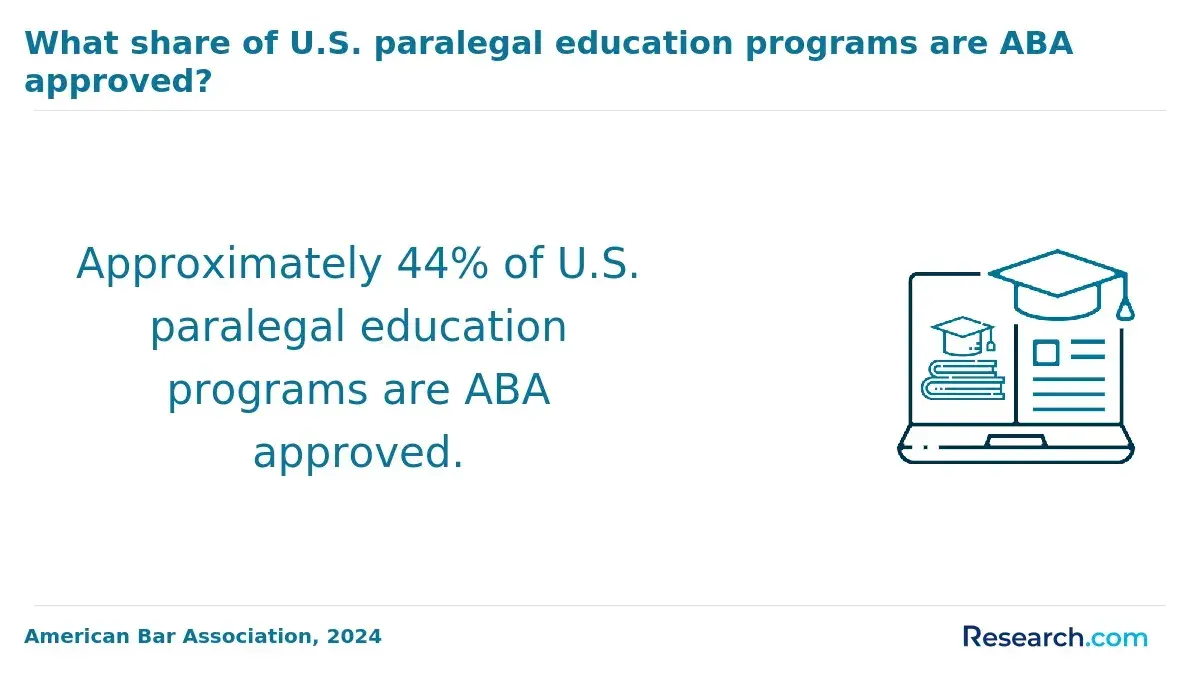
Do not confuse institutional accreditation with American Bar Association (ABA) approval of qualifying paralegal education programs. ABA approval is not an MLS credential or a substitute for checking the university's accreditation.
If you are also considering paralegal education, use the ABA's program directory to check approval claims before comparing ABA-approved paralegal programs by affordability.
A quality red flag is a promise of a career-ready portfolio without a required assignment, documented feedback, or a clear answer about what graduates may share. Ask admissions to direct you to the academic department when a claim depends on course-level practices.
What Do MLS Programs Teach About Legal Research and Compliance?
MLS curricula commonly introduce how to locate and interpret legal authority, read statutes and regulations, and communicate legal risk to decision-makers. Compliance-oriented study may connect those methods to policies, internal controls, investigations, or industry-specific obligations. The useful question is how often students apply those methods in assessed work.
Ask for the required research course's latest syllabus and a representative assignment: Does it require students to distinguish binding from persuasive authority, check whether a source remains current, and explain the limits of a conclusion? For compliance work, ask whether students map a rule to a process and document a recommendation, or only take an exam on terminology.
If your target role is in human resources, compare a broad MLS with legal studies programs with an HR law focus. Confirm whether the advertised focus is a formal concentration, a set of electives, or simply several relevant courses. None of these formats should be mistaken for authorization to provide legal advice.
What Are the Admission Requirements for MLS Programs?
MLS programs generally recruit applicants who already hold a bachelor's degree, but prerequisites, work-experience expectations, tests, recommendations, and writing samples depend on the school.
Use the current admissions page for requirements and ask staff to distinguish a preferred qualification from a condition of admission. Also ask whether applicants must select a concentration at entry and whether changing it could affect portfolio course availability.
Prior college credit does not automatically reduce graduate degree requirements. The receiving institution decides whether credit transfers and how it applies. If you are comparing undergraduate paralegal study first, compare transfer policies for online paralegal bachelor's degrees separately; those policies do not establish what an MLS will accept.
If the portfolio is central to your decision, request written confirmation that every admitted student can enroll in the courses that produce its key artifacts. An elective-only portfolio path may be less dependable than a required, assessed sequence.
How Do Online MLS Programs Compare With Campus-Based Programs?
Online delivery can remove a commute, but it does not necessarily mean self-paced study. Campus delivery can make in-person collaboration easier, but it does not automatically produce better portfolio work. The relevant differences are when you must participate, how feedback is delivered, and whether you can complete the required projects on your schedule.
For either format, ask admissions or the program director whether portfolio courses have live meetings, group deadlines, timed assessments, campus visits, or a fixed sequence. Find out how students consult instructors, receive comments on drafts, and present final work.
If a practicum contributes to the portfolio, confirm who arranges any placement and whether current employment or remote work can satisfy the requirement. Get these terms from the current program materials rather than relying on the label "online."
How Long Do MLS Programs Take and What Do They Cost?
Completion time depends on required credits, course rotation, enrollment pace, and whether a capstone or portfolio course is offered every term. Ask for a term-by-term plan based on the number of courses you can actually take while working. When comparing online master's in business law program lengths, check whether an advertised minimum assumes full-time study or a particular starting term.
Compare the full expected cost, not tuition alone: mandatory fees, books, research-platform or technology charges, travel, and any portfolio hosting costs can change the decision. Request the current tuition schedule and a written estimate for your intended enrollment pace.
Also ask whether financial aid applies to this specific degree and how a slower pace could affect eligibility; do not assume that aid offered by the university covers every program or student.
The opportunity cost includes time spent on graduate coursework instead of gaining role-specific experience or taking shorter training. A portfolio may justify more intensive study when its assignments fill a documented skills gap, but its value is harder to establish if you already produce comparable work on the job.
What Careers and Salaries Can MLS Graduates Expect?
An MLS may support a move within compliance, contracts, human resources, or other roles involving legal and regulatory issues. Hiring still depends on relevant experience, industry knowledge, and the employer's requirements. A portfolio can help you discuss your work in an interview; it cannot demonstrate that graduates receive a particular job or salary.
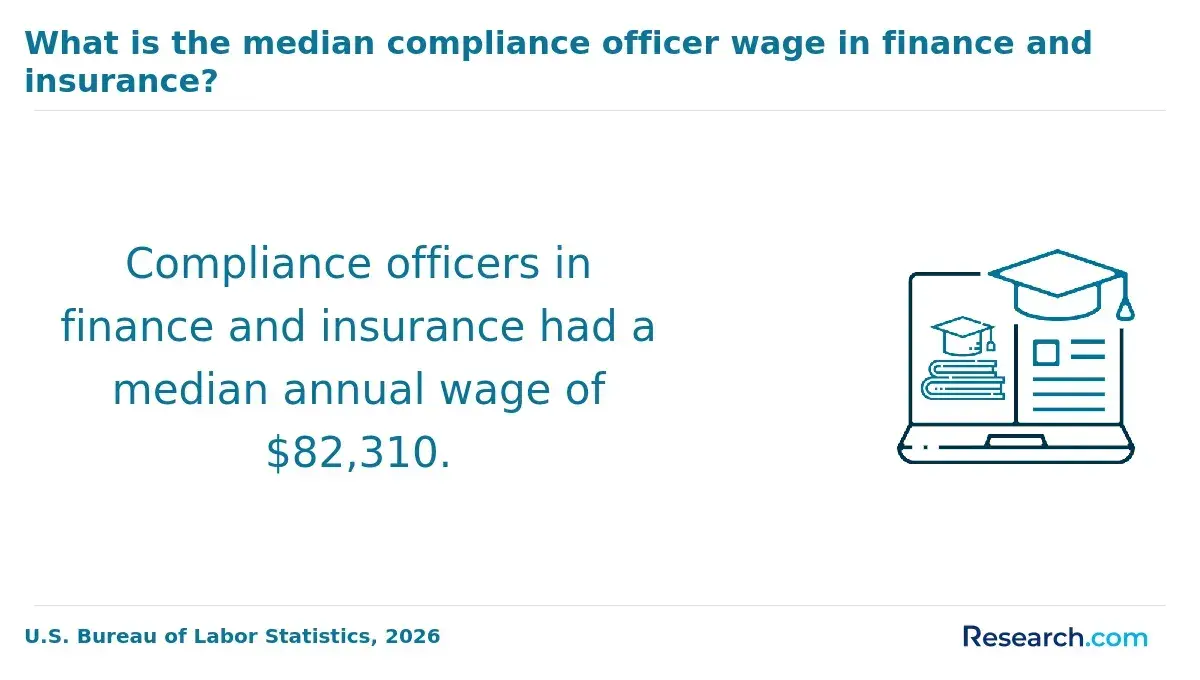
For context, the Bureau of Labor Statistics reports median annual pay of $80,730 in May 2025 for compliance officers and 4% projected growth, 2025-2035. Those figures describe the occupation as a whole, not MLS holders. They are most useful when judging whether the degree's cost makes sense for a role you can realistically pursue.
Ask the program for its graduate-outcomes methodology: which graduates responded, which roles were counted, and whether reported outcomes separate career changers from professionals already employed in the field. Then compare those roles with job postings you would qualify for today. If postings consistently demand experience you lack, plan how to gain it alongside - or instead of - the degree.
Does an MLS Degree Require a License or Professional Certification?
The MLS itself is an academic degree, not a professional license or certification, and completing it does not require an attorney license. It also does not grant one. Requirements for particular jobs or activities vary by state and employer; an MLS graduate must not present non-JD study as authority to practice law.
A professional certification is a separate credential awarded under an issuing organization's rules, which may include experience, an examination, or continuing education.
If a program says its coursework prepares students for one, ask for the credential's exact name and verify current eligibility directly with its issuing body. Preparation is not the same as certification, just as a paralegal certificate is not automatically professional paralegal certification.
Other Things You Should Know About Law & Paralegal
Not necessarily. Programs may use simulated client or regulatory scenarios. Ask whether applicants without legal experience can complete the same assessed portfolio assignments as experienced students.
Only if your employer permits it and you can comply with confidentiality and intellectual-property obligations. A fictionalized assignment may be safer than altering a real document without permission.
They can, but identify your own contribution clearly. Ask whether instructors assess individual work within group projects so you can substantiate the skills you claim.
A dated assignment description, grading criteria, and permitted instructor feedback can provide context. Ask the school what verification it offers and whether you may share that material without disclosing another student's work.
References
- FERPA | Protecting Student Privacy - Department of Education https://studentprivacy.ed.gov/ferpa
- Integrating Competencies and Learning Outcomes in Core Courses for the MPH - PMC https://pmc.ncbi.nlm.nih.gov/articles/PMC4037465/
- Using Portfolios in Program Assessment | Assessment and Curriculum Support Center https://manoa.hawaii.edu/assessment/resources/using-portfolios-in-program-assessment/
- INFO 289 e-Portfolio Software - SJSU - School of Information https://ischool.sjsu.edu/info-289-e-portfolio-software
- ePortfolios in the Curriculum: Incorporating Reflection into Your Course | Teaching and Learning Resource Center https://teaching.resources.osu.edu/teaching-topics/eportfolios-curriculum
- Prior Learning Assessment Portfolio - Pittsburgh | Point Park University https://www.pointpark.edu/about/admindepts/registrarsoffice/priorlearningassessment/pla-portfolio
- Helping Students Build Job Portfolios for Employment | sagepub.com https://journals.sagepub.com/doi/10.1177/23294906231165565
- Showcase Your Experience with a Career Portfolio | txst.edu https://www.careerservices.txst.edu/students-alumni/resources-services/career-guides/portfolio-guide.html
- FERPA - University Communications and Marketing | Western Washington University https://marcom.wwu.edu/ferpa
- A Guide To Experiential Learning, Internships, Capstones, and Practicums - UOnline - The University of Utah https://online.utah.edu/blog/posts/learning-experiences.php