2027 MLS Programs for Paralegals Seeking Corporate Compliance Responsibilities

Co-Founder and Chief Data Scientist
Moving from paralegal work into corporate compliance can mean taking responsibility for policies, investigations, training, and regulatory processes - not just supporting a legal team. A Master of Legal Studies (MLS) may help build the legal and organizational knowledge for that shift, but it is a substantial investment and rarely a job requirement. This guide helps working paralegals assess what to study, what an online program must accommodate, how to compare costs, and when experience or a shorter credential may be the better next step.
Key Things You Should Know
- An MLS can strengthen a paralegal's compliance qualifications, but relevant work experience matters, and the degree does not qualify graduates to practice law.
- Compliance officers' median annual pay was $80,730 in May 2025, with 4% projected job growth from 2025-2035; those occupation-wide figures are not MLS graduate outcomes.
- Prioritize institutional accreditation, applied compliance coursework, a workable schedule, and total cost over a program's concentration label alone.
What Is an MLS Degree for Paralegals in Corporate Compliance?
An MLS is a graduate degree in law-related subjects designed chiefly for people who do not plan to become attorneys. Schools may instead use names such as Master of Studies in Law (MSL) or Master of Jurisprudence. For a corporate paralegal, the appeal is learning to connect legal requirements with business processes: identifying obligations, helping maintain policies, documenting controls, and escalating potential violations.
Corporate compliance work goes beyond knowing what a rule says. It involves determining which activities it affects, who owns the response, how employees will be trained, and what records demonstrate that the organization followed its procedures. An MLS can support that work when its courses address both legal analysis and implementation. It is not a Juris Doctor (JD) and, by itself, does not qualify a graduate to practice law.
Program labels require a close look. A formal compliance concentration may have prescribed courses, while another MLS offers only relevant electives. An embedded graduate certificate is different again. Our guide to types of legal studies master's degrees can help clarify those distinctions before you compare curricula.
Can an MLS Degree Qualify Paralegals for Corporate Compliance Careers?
Yes, an MLS can make a paralegal a stronger candidate for some compliance roles, particularly when paired with experience handling contracts, investigations, employment matters, corporate records, or regulated transactions. It is generally not a required credential. Employers may value direct experience with audits, policy administration, regulatory reporting, or a particular industry more than an additional degree.
The most practical transition is often an internal one: seek assignments involving policy updates, due-diligence files, training records, or responses to audit requests, then use graduate study to fill identifiable knowledge gaps. Someone who already has that experience might benefit more from targeted training or a professional certification than from a full master's program.
If the immediate obstacle is a bachelor's degree requirement rather than graduate-level knowledge, an MLS is not the next step. Paralegals finishing undergraduate study can examine online paralegal bachelor's degrees with shorter study timelines before considering graduate school.
What Do MLS Programs Teach About Corporate Compliance and Risk Management?
Useful programs teach students to interpret legal obligations and turn them into workable procedures. Course titles differ, so compare assignments and learning outcomes - not just a catalog's use of "compliance" or "risk." The following connections show what applied coursework could help a paralegal do on the job.
| Area of study | Potential compliance application | Useful evidence of practical learning |
| Regulatory law and legal research | Track rules affecting a business activity and identify issues for counsel | A documented regulatory analysis or obligation map |
| Corporate governance and ethics | Support policies, reporting channels, and escalation procedures | A policy or governance-process project |
| Investigations and employment law | Help preserve records and coordinate a response under appropriate supervision | An investigation plan or records-handling exercise |
| Risk management and privacy | Connect identified risks with controls, training, and monitoring | A risk assessment or control-testing exercise |
An industry focus matters. A healthcare employer, financial institution, and technology company can face different obligations, so relevant electives may be more valuable than a broad concentration. Check whether a capstone uses realistic workplace problems and whether legal research or compliance software is used in hands-on assignments; a course description that merely mentions a tool does not establish proficiency.
Are Online MLS Programs Effective for Working Paralegals?
They can be, if the schedule allows sustained participation and the assignments develop skills the student can use at work. "Online" does not necessarily mean self-paced: courses may include live meetings, group projects, fixed deadlines, timed exams, or a required campus visit. A working paralegal should ask for the upcoming course schedule, not rely solely on a program-wide flexibility claim.
Check whether required compliance courses are offered often enough to support your intended graduation date. Also ask how group projects work across time zones, whether a capstone can address a workplace issue, and what happens if a required course is unavailable during a busy work period. If the program includes an internship, confirm who arranges it and whether current employment can satisfy the requirement; do not assume either is permitted.
An online format removes commuting, not the time needed for reading, research, and writing. If predictable hours are your chief constraint, a shorter course or certificate may be a safer way to test graduate study before committing to a degree.
What Accreditation Should You Look for in an MLS Program?
Verify that the university holds recognized institutional accreditation, and confirm that the specific MLS is a degree offered by that institution. Institutional accreditation is distinct from a program's curriculum or a professional certification. You can check an institution's stated accreditor against U.S. Department of Education recognition information before applying.
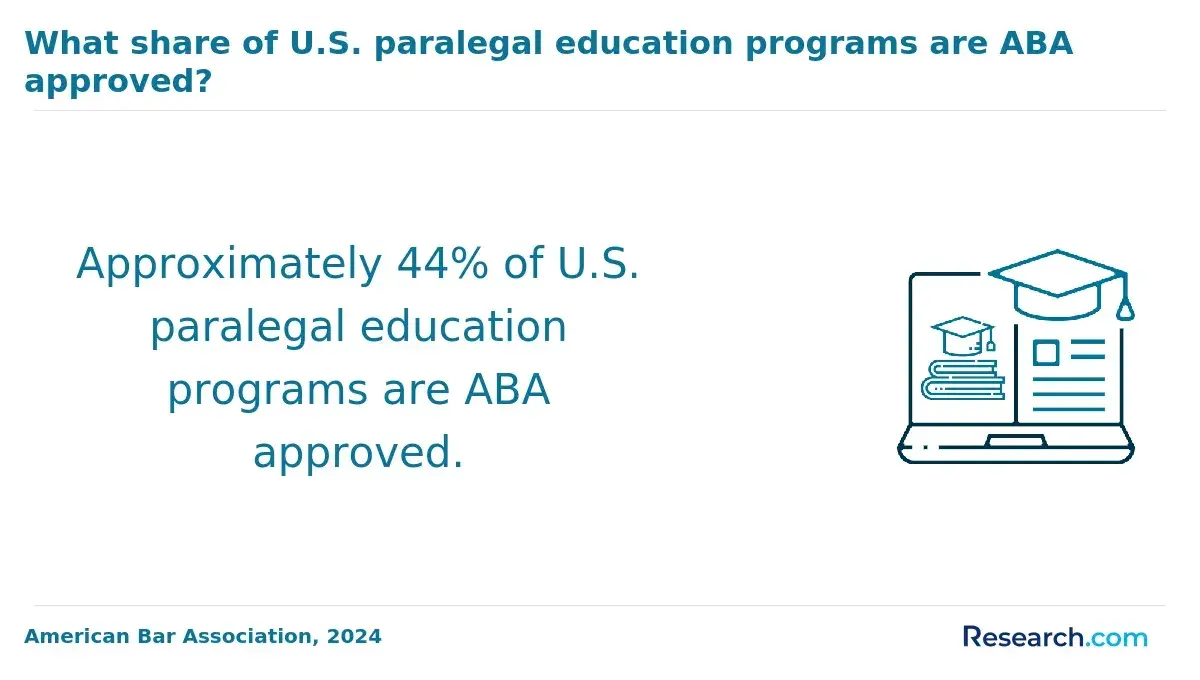
Do not confuse this with American Bar Association (ABA) approval. The ABA approves qualifying paralegal education programs; that approval is not institutional accreditation and is not a standard designation to seek for an MLS. The ABA also does not certify individual paralegals. If you are comparing graduate study with a paralegal education route, budget-friendly ABA-approved paralegal programs address a different educational goal.
Accreditation is a necessary check, not proof that a compliance curriculum fits your goals. Review the current catalog, required courses, faculty expertise, and published student-support arrangements as separate decision factors.
What Are the Admission Requirements for MLS Programs?
MLS programs generally expect applicants to hold a bachelor's degree, but each school sets its own rules for academic records, statements, recommendations, professional experience, and any standardized tests. A paralegal certificate or associate degree alone should not be assumed to meet a bachelor's prerequisite. Some schools welcome applicants from many undergraduate majors, so a prior legal studies degree is not necessarily required.
If you have college coursework but have not completed a bachelor's degree, establish that route first. Information about prior college credits and business law degree study may be useful, but the receiving institution decides which credits apply and toward which requirements.
Before paying an application fee, confirm the program's current admissions criteria and ask whether your education and work history meet them. Distinguish requirements from preferences: a school's interest in professional experience does not automatically make it mandatory.
How Long Do MLS Programs Take and What Do They Cost?
Completion time depends on required credits, course sequencing, and whether you enroll full-time or part-time. A published minimum timeline may assume a course load that is difficult alongside full-time paralegal work. Ask for a term-by-term plan that includes when required compliance electives and any capstone are actually offered.
For cost, compare the full amount you would need to pay, not only advertised tuition per credit. Request a current estimate covering mandatory fees, books or digital materials, technology requirements, and any required travel. Ask whether tuition varies by enrollment status and whether your employer's reimbursement policy covers the degree; reimbursement may depend on grades, continued employment, or other conditions.
Federal aid eligibility depends on both the institution and the specific program, as well as the student's circumstances. Confirm eligibility with the school's financial aid office rather than assuming every graduate credential qualifies. A shorter graduate certificate may cost less and address a narrow skills gap, but compare its credit value and whether those credits would count toward a later MLS before choosing it.
What Corporate Compliance Jobs Can MLS Graduates Pursue?
Potential targets include compliance analyst or officer, ethics and compliance specialist, regulatory affairs specialist, and compliance-focused legal operations roles. Day-to-day work can include maintaining policies, documenting controls, coordinating training, gathering audit evidence, reviewing reports, and escalating concerns to counsel or management. Titles vary widely by employer; a "compliance officer" posting may call for industry experience that a degree alone cannot replace.
Paralegals with corporate or regulatory exposure can look for a bridge role that combines familiar document and research work with ownership of a compliance process. Compare job postings for your target industry and note which requirements recur: technical knowledge, investigation experience, data skills, or familiarity with a particular regulation. Use those gaps to judge whether an MLS curriculum is appropriately focused.
If you are earlier in your education and seeking an entry route into legal support rather than graduate-level advancement, compare associate-level legal studies education instead of assuming an MLS is the relevant credential. Whatever the role, nonlawyers must work within applicable limits on giving legal advice and refer legal judgments to qualified counsel.
What Salaries and Job Outlook Can MLS Graduates Expect?
The Bureau of Labor Statistics reports median annual pay of $80,730 in May 2025 for compliance officers and projects 4% job growth from 2025-2035, with about 32,700 openings per year. These figures cover the occupation broadly, not corporate compliance specialists or MLS graduates specifically. They provide a market benchmark, not a forecast of what an individual degree holder will earn.
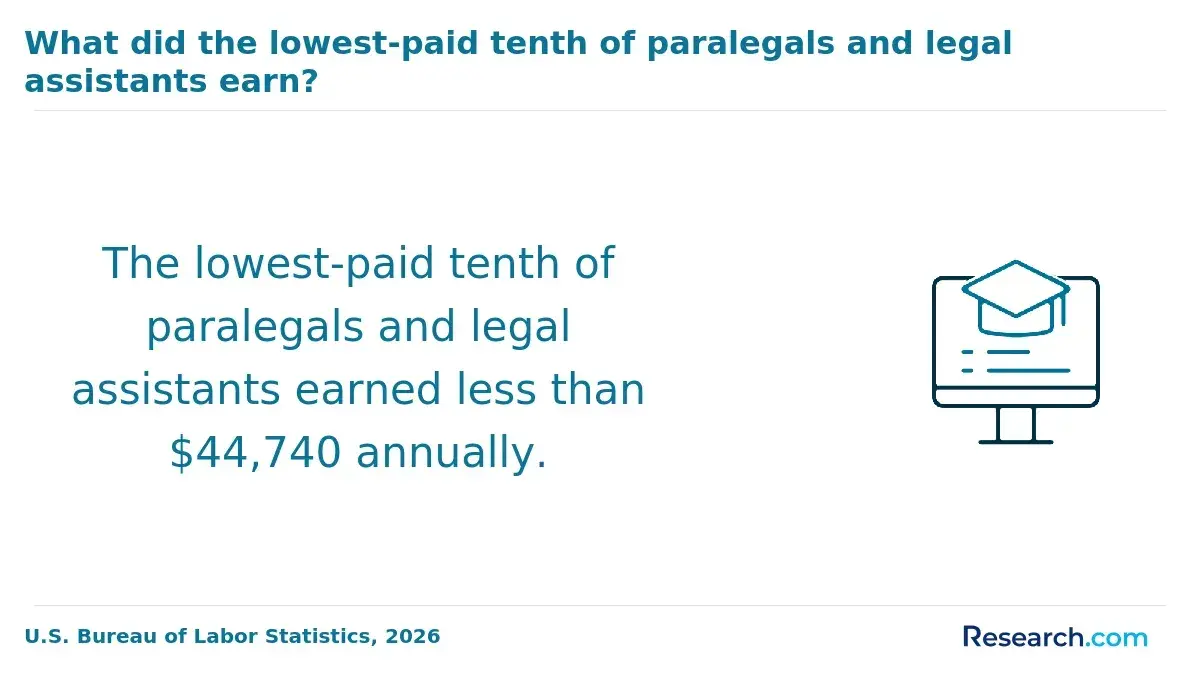
For context, paralegals and legal assistants had median annual pay of $62,890 in May 2025, with 0% projected growth from 2025-2035 and about 40,800 openings per year. The difference between occupational medians is not an expected raise from completing an MLS: pay varies with industry, location, responsibilities, and experience, and the occupations contain different mixes of workers.
For a personal return-on-investment decision, compare actual compliance postings you could qualify for now with those you could credibly pursue after gaining targeted experience or completing the degree. Then weigh the likely career benefit against tuition and the time you would otherwise spend building experience.
Which Certifications Complement an MLS Degree in Corporate Compliance?
Professional certification can document knowledge in a particular compliance field, while an MLS provides broader graduate study. Relevant credentials may include the Certified Compliance & Ethics Professional (CCEP), awarded by the Compliance Certification Board, and the Certified in Healthcare Compliance (CHC) for eligible healthcare-focused professionals. Privacy specialists may consider credentials from the International Association of Privacy Professionals, depending on their work.
These are certifications awarded by professional organizations, not academic certificates issued by universities. Eligibility, exams, continuing-education obligations, and fees vary by credential and can change. Check the issuing organization's current rules before assuming an MLS satisfies an experience requirement or prepares you for its exam.
If your target postings consistently name a particular certification and you already meet its eligibility rules, that credential may be a more direct next step. An MLS may make more sense when you need sustained instruction across legal research, governance, risk, and regulation - and can identify roles where that breadth adds value.
Other Things You Should Know About Law & Paralegal
Do not count on it. A JD program decides whether it accepts prior graduate credits and how they apply, if at all. Ask the specific law school before enrolling in an MLS for that purpose.
Possibly, if the program permits it and your employer authorizes the project. Confirm confidentiality, data access, and approval requirements with both parties before proposing a workplace-based assignment.
An MLS does not license you to practice law. Consulting work must stay within applicable state rules on unauthorized practice, and matters requiring legal advice should go to a licensed attorney.
It can be useful if you want reimbursement, flexible scheduling, or compliance-related assignments. First review workplace policies and be clear about the time commitment and the skills you hope to apply.
References
- How To Become a Compliance Officer - UMKC https://onlinemls.law.umkc.edu/articles/how-to-become-a-compliance-officer/
- What Admissions Committees Look for in MLS Applicants | Goodwin College of Professional Studies https://drexel.edu/law/news/legal-studies-blog/what-admissions-committees-look-for-in-mls-applicants/
- Legal Ethics for Paralegals: Essential Principles and Real-World Dilemmas | Rasmussen University https://www.rasmussen.edu/degrees/justice-studies/blog/legal-ethics-for-paralegals/
- Compliance and Legal Risk Management Emphasis | Law https://law.arizona.edu/compliance-and-legal-risk-management-concentration
- 12 Common Business Compliance Roles: Key Jobs, Responsibilities, and Career Paths | UC News https://www.online.uc.edu/blog/common-business-compliance-roles.html
- MLS - Corporate Compliance - Seton Hall Law School https://law.shu.edu/academics/mls-corporate-compliance-online.html
- Master of Legal Studies in Healthcare Compliance | wsulaw.edu https://www.wsulaw.edu/academics/master-of-legal-studies/
- Best Healthcare Compliance Jobs After Earning Your MLS | Seattle U School of Law https://onlinelaw.seattleu.edu/blog/best-healthcare-compliance-jobs/
- Compliance (Law) (CPGL) | Fordham University https://bulletin.fordham.edu/courses/cpgl/
- Compliance Law - SMU Online Master of Legal Studies https://onlinemasterlegalstudies.smu.edu/curriculum/compliance-law/