2027 MLS Programs for Consumer Finance Complaint and Escalation Teams

Co-Founder and Chief Data Scientist
A complex consumer complaint can move quickly from customer service to regulatory review or litigation. For escalation teams, understanding the rules behind a dispute matters as much as resolving it promptly.
A Master of Legal Studies (MLS) may build that knowledge, but it is a substantial investment - and not every legal studies curriculum addresses consumer finance. This guide explains what to look for in a program, when a shorter alternative may be enough, and how to weigh cost, scheduling, and career goals before enrolling.
Key Things You Should Know
- Prioritize documented coursework in consumer financial protection, banking or lending regulation, privacy, and legal research - not the MLS title alone. There is no standard consumer-complaint MLS concentration.
- An MLS is a non-Juris Doctor degree for professionals who do not plan to practice law. It is not required for most complaint roles and does not authorize graduates to act as attorneys.
- Compare the full educational cost with targeted training first. The Bureau of Labor Statistics reports $80,730 in May 2025 median pay for the broader compliance officer occupation, not specifically for complaint escalation staff.
What Is an MLS Program for Consumer Finance Complaint Teams?
An MLS is a graduate degree designed to help nonlawyers understand legal systems, regulation, and legal reasoning. Schools may use other names, including Master of Studies in Law (MSL) or Master of Jurisprudence. For a consumer finance complaint professional, the useful version combines legal foundations with coursework applicable to lending, payments, credit reporting, debt collection, privacy, or regulatory compliance.
Complaint teams receive and investigate disputes, coordinate with operations and compliance, document findings, and prepare responses through the appropriate review process. An MLS can help a team member recognize when a complaint raises a legal issue; it cannot replace employer procedures or legal counsel. A graduate certificate may cover a narrower set of topics with less time and tuition commitment. If that is your main trade-off, compare the scope of legal studies graduate credentials before choosing a full degree.
How Can an MLS Degree Prepare You for Consumer Complaint Escalations?
Its value is in helping professionals investigate and communicate more precisely. Legal research and statutory interpretation can help an analyst identify which rule may apply; administrative law can clarify how regulators supervise and enforce requirements; and writing assignments can strengthen concise, evidence-based case summaries.
Consider a disputed electronic transfer. A prepared escalation specialist would preserve the customer's account, identify the transaction and relevant records, recognize that electronic fund transfer rules may matter, and route the issue for review under the employer's procedures. The specialist should not make an unsupported legal conclusion or treat a classroom exercise as a substitute for the institution's investigation requirements.
The degree is most compelling for someone moving toward policy, regulatory change management, or oversight across multiple products. For a specialist who needs to master one complaint workflow, supervised experience and focused employer training may yield more immediate value.
What Are the Best MLS Programs for Consumer Financial Protection?
There is no reliable universal ranking of MLS programs for consumer finance complaint work. Schools vary in what they call a concentration, how often relevant electives run, and whether working students can complete them remotely. The strongest choice is the program whose current catalog and course schedule support your specific role, at a cost and pace you can sustain.
These curriculum profiles make the trade-offs easier to see; they are selection categories, not claims that every school offers a named consumer finance track.
| Program profile | Potential advantage | Limitation to examine |
| MLS with a documented financial-services or regulatory focus | Relevant rules may be integrated across several courses | A concentration title does not establish coverage of complaint investigations |
| General MLS with applicable electives | Room to combine consumer law, privacy, and legal research | Elective availability and sequencing may constrain the plan |
| Business-law or compliance-focused MLS | Useful preparation for broader governance work | Curriculum may emphasize contracts or corporate issues over consumer disputes |
Before applying, ask the program for a current degree map and recent course schedules. Confirm that the courses you need count toward the degree, are available in your delivery format, and cover the products your team handles. Treat an elective listed in a catalog but not regularly scheduled as a risk, not a firm plan.
Which Accreditation Should You Look for in an MLS Program?
Check the university's institutional accreditation through its accreditor or an authoritative U.S. Department of Education listing. Then review the graduate program's published curriculum and policies. Institutional accreditation is an important baseline, but it does not show that an MLS teaches consumer financial protection well.
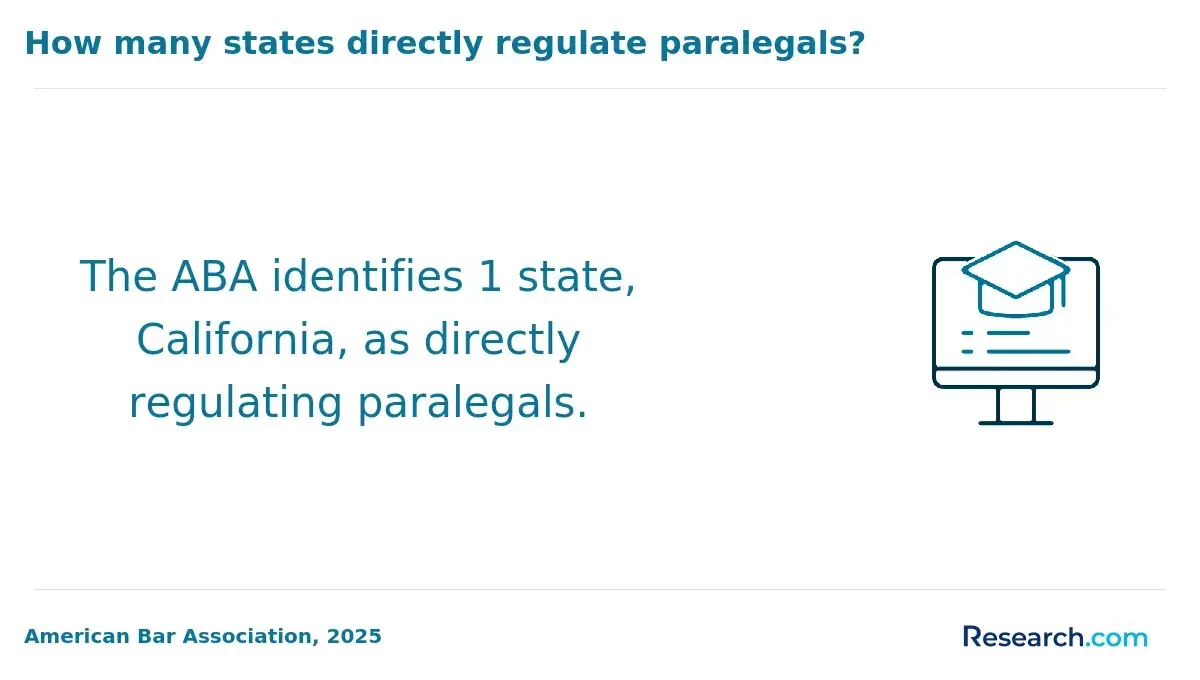
Do not confuse this check with American Bar Association (ABA) approval. ABA approval of a law school's Juris Doctor program is not approval of its MLS; the ABA also approves qualifying paralegal education programs under a separate process. An MLS is neither an ABA-approved paralegal credential merely because a law school offers it nor a route to an attorney license.
What Courses Do Consumer Finance MLS Programs Typically Include?
Many MLS curricula begin with legal research, legal writing, and the structure of U.S. law. For escalation work, look beyond those foundations for courses in consumer protection, banking or financial-services regulation, administrative law, privacy, and compliance. Product-specific coverage matters: electronic transfers, credit reporting, lending disclosures, and debt collection raise different issues, and the rules that apply depend on the facts and the organization.
Ask for syllabi rather than assuming that a course called "business law" covers your work. Assignments involving issue spotting, investigation records, and written analysis may be more useful than broad survey courses alone. Teams handling employment-related complaints as well as customer issues can separately explore legal studies programs with an HR law focus; that focus is not a substitute for consumer finance coursework.
Can You Earn an MLS Degree Online or on Campus?
MLS study may be available online, on campus, or in a hybrid format, depending on the school. Online does not necessarily mean self-paced: classes may have live meetings, fixed deadlines, group projects, or required campus visits. Those details matter to teams whose escalation schedules can change without warning.
Compare the actual timetable for required courses and relevant electives, not just the program's advertised format. If time away from work is the main obstacle, shorter online master's degrees in business law offer another comparison point - but check whether their faster schedules still leave room for the consumer-protection courses you need.
What Are the Admission Requirements for an MLS Program?
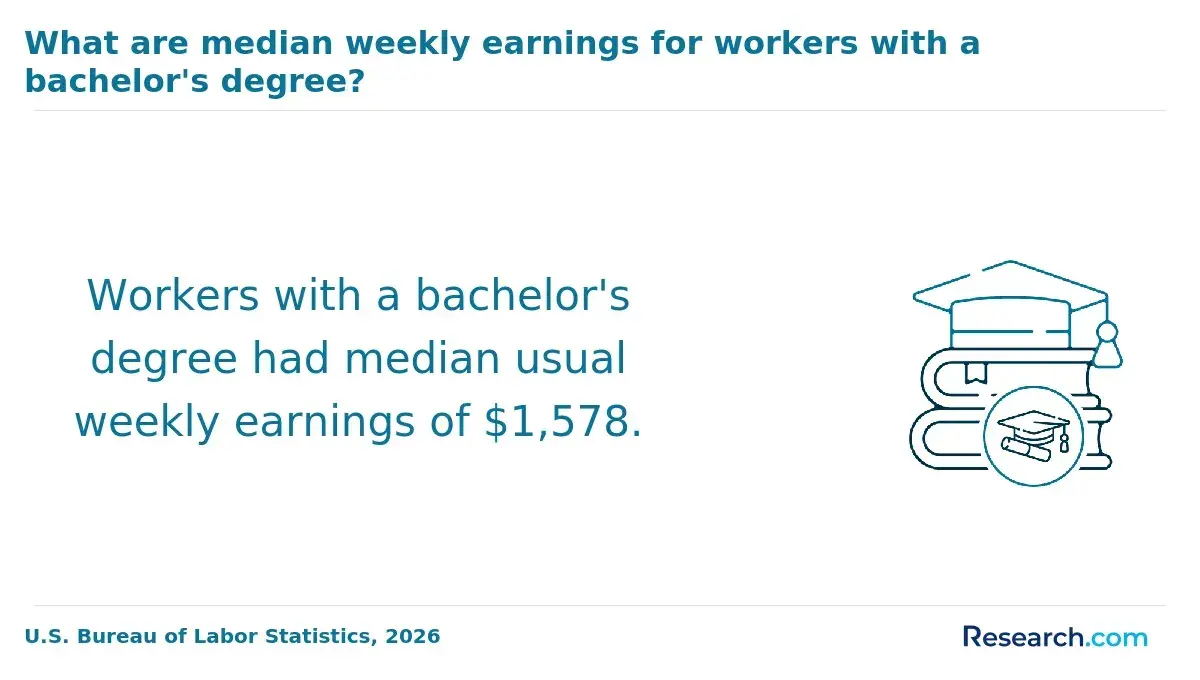
Applicants generally need a bachelor's degree, while GPA standards, transcripts, recommendations, statements, and testing policies vary by institution. Many non-JD programs are intended for professionals without prior legal education, but applicants should follow each school's current requirements rather than assume that workplace experience replaces a prerequisite.
If you have prior graduate coursework, request a written evaluation of how it would apply before relying on it to shorten the degree. The receiving school controls transfer decisions, including limits on credits, grades, course age, and applicability to required classes. Readers with relevant previous study can use business law degree programs that accept transfer credits as a starting point for questions, not as assurance that a particular MLS will accept their courses.
How Long Do MLS Programs Take and What Do They Cost?
Completion time depends on required credits, course rotation, and whether you study full-time or part-time. Advertised tuition alone does not capture mandatory university fees, books, technology or research-platform costs, and any travel required for in-person sessions. Because schools publish prices in different units and update them, request a written estimate for your intended enrollment period rather than comparing a per-credit rate with another school's program total.
Ask whether your employer offers tuition assistance and what service commitment, if any, accompanies it. Federal aid eligibility depends on the institution, the specific program, and the student's circumstances; do not assume a short certificate has the same eligibility as a graduate degree. A sensible return-on-investment test is whether the curriculum fills a documented skills gap that your employer training, a focused course, or supervised complaint work cannot fill at lower cost.
What Careers and Salaries Can MLS Graduates Pursue in Consumer Finance?
Relevant paths include complaint escalation specialist, complaint program manager, compliance analyst, regulatory affairs specialist, and roles reviewing policies or recurring complaint themes. Experience with the institution's products, investigation systems, and written responses remains important. An MLS may strengthen an application for broader oversight work, but employers set their own hiring criteria and the degree does not guarantee advancement.
The Bureau of Labor Statistics reports median annual pay of $80,730 in May 2025 for compliance officers, with 4% projected growth, 2025-2035 and about 32,700 openings per year. This is a broad occupational category, not a salary or hiring forecast for consumer complaint specialists or MLS graduates. Use it as career context while checking actual job postings for required experience, product knowledge, and education.
Do Consumer Finance Complaint Teams Need Licenses or Certifications?
There is no single nationwide license or certification for consumer finance complaint staff. Requirements can differ by job, employer, activity, and state. A firm may require internal training or prefer a professional compliance credential, but neither an optional certification nor an MLS gives a nonlawyer authority to practice law. Refer legal advice and disputed legal interpretations through the organization's designated counsel.
If your goal is legal-support work rather than complaint program leadership, a paralegal education route may be more directly relevant. Compare the duties first, then consider ABA-approved paralegal education on a budget. ABA program approval is distinct from institutional accreditation, and completing a paralegal program does not automatically confer individual professional certification.
Other Things You Should Know About Law & Paralegal
Do not assume so. A law school decides whether it will recognize prior graduate work, and an MLS does not replace the admission or graduation requirements for a Juris Doctor. Ask a prospective JD program directly before enrolling in an MLS for that purpose.
Only if your employer permits it and the school's requirements can be met without exposing protected information. Obtain approval before using workplace records; a fictional or properly de-identified scenario may be a safer option.
No. An MLS is not an attorney credential. Privilege depends on the circumstances and applicable law, not on a team member's legal studies degree; follow your organization's counsel-directed communication procedures.
No. Applicable obligations depend on the product, activity, entity, and jurisdiction. A fintech working through a bank partner should clarify which organization owns each investigation, response, and escalation step rather than assume that one workflow covers every complaint.
References
- What laws limit what debt collectors can say or do? | consumerfinance.gov https://www.consumerfinance.gov/ask-cfpb/what-laws-limit-what-debt-collectors-can-say-or-do-en-329/
- Cost of Attendance (Budget) | 2023-2024 Federal Student Aid Handbook https://fsapartners.ed.gov/knowledge-center/fsa-handbook/2023-2024/vol3/ch2-cost-attendance-budget
- Fair Credit Reporting Act (Regulation V) | NCUA https://ncua.gov/regulation-supervision/manuals-guides/federal-consumer-financial-protection-guide/compliance-management/lending-regulations/fair-credit-reporting-act-regulation-v
- Types of Financial Aid: Grants, Work-Study, and Loans | studentaid.gov https://studentaid.gov/understand-aid/types
- Health Care Compliance and Administration, MLS - ASU degree https://degrees.asu.edu/masters-phd/major/ASU00/LWHCCMLS/health-care-compliance-and-administration-mls
- Mastering Financial Regulatory Compliance as an M.L.S. Graduate | miami.edu https://news.miami.edu/law/stories/2024/07/mastering-financial-regulatory-compliance-as-an-mls-graduate.html
- MLS vs Graduate Certificate: What's the Better Career Investment? | wsulaw.edu https://www.wsulaw.edu/news/why-choose-a-master-of-legal-studies-over-a-graduate-certificate/
- Master of Legal Studies (MLS) vs. JD: Which Is Right for You? | Wake Forest MLS https://mls.law.wfu.edu/articles/mls-vs-jd-which-is-right-for-you/
- Graduate Certificate in Financial Regulatory Compliance | Drexel University Online https://www.online.drexel.edu/online-degrees/law-degrees/cert-financial-comp/index.aspx
- Consumer Finance | Columbia Law School https://www.law.columbia.edu/academics/courses/38185