2027 Arizona State vs. Purdue Global: Comparing Online Legal Studies Master's Programs

Co-Founder and Chief Data Scientist
Arizona State University and Purdue Global offer different routes to graduate-level legal knowledge, but neither route qualifies a graduate to practice law. If you work in compliance, human resources, contracts, or legal support, the useful comparison is not name recognition alone: it is the coursework you need, the schedule you can manage, and the full price you would pay. This guide compares those decision points, explains what to confirm in each school's current catalog, and helps you decide whether either master's degree is a better investment than a shorter credential.
Key Things You Should Know
- Arizona State's Master of Legal Studies (MLS) requires 30 semester credits; compare that requirement with Purdue Global's Master of Science in Legal Studies (MS) using each school's current catalog, not credit counts with different units.
- Both are non-Juris Doctor (non-JD) degrees: neither, by itself, qualifies a graduate to become an attorney.
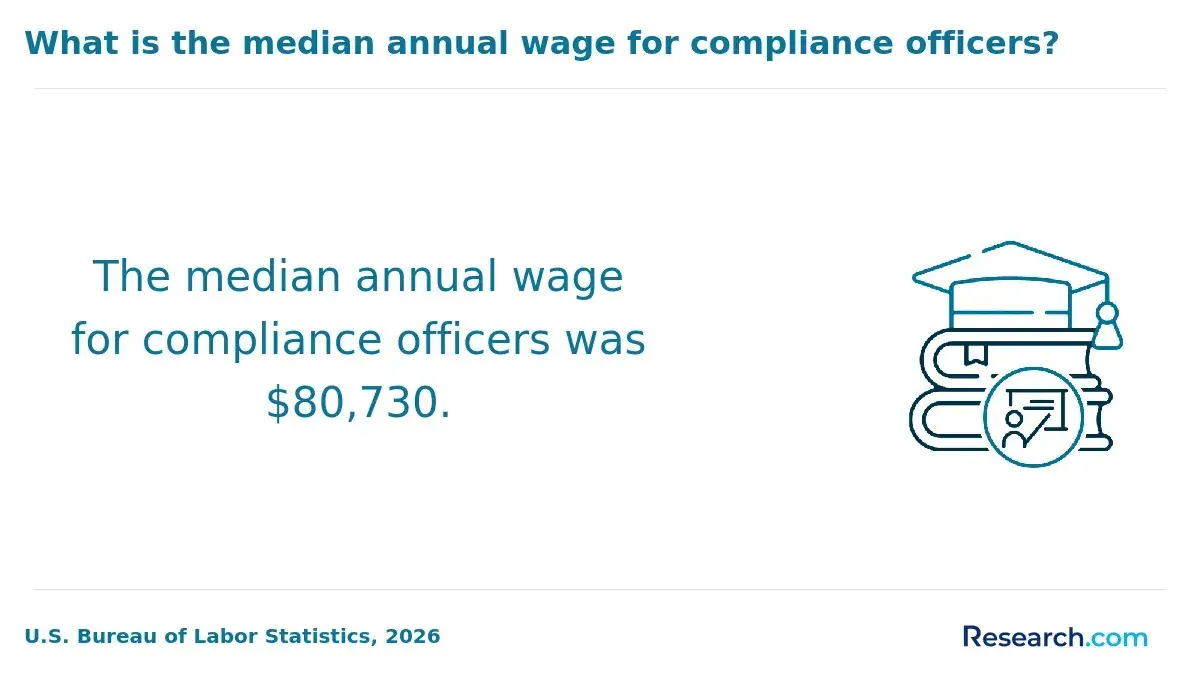
- For career context, the U.S. median pay for compliance officers was $80,730 in May 2025, with 4% projected growth for 2025-2035; that occupational figure is not a forecast of either program's graduates' earnings.
What are the key differences between ASU and Purdue Global legal studies master's programs?
ASU's Master of Legal Studies and Purdue Global's Master of Science in Legal Studies serve professionals seeking legal knowledge without pursuing a JD. Their different degree names do not establish that one is more advanced or more useful. The comparison below focuses on distinctions a prospective student can test against a career goal.
| Decision criterion | Arizona State University | Purdue Global |
| Credential | Master of Legal Studies (MLS) | Master of Science in Legal Studies (MS) |
| Academic setting | Offered through ASU's Sandra Day O'Connor College of Law | Offered by Purdue Global as an online legal studies graduate program |
| Credit comparison | 30 semester credits | Check the current catalog's quarter-credit requirement; quarter credits and semester credits are not interchangeable |
| Most useful fit test | Whether available legal topics and electives match the student's work | Whether the published course sequence and term schedule accommodate the student's work |
Neither institution's name settles the choice. Compare required courses first, then calculate a full-program cost from the applicable tuition rate, credit requirement, and mandatory fees. Confirm details against the catalog for the term in which you would enroll, since course offerings and prices can change.
Is a master's degree in legal studies equivalent to a law degree?
No. An MLS or MS in Legal Studies is a graduate degree for learning about law and its application in nonlawyer work. A Juris Doctor (JD) is the professional law degree ordinarily used on the path to attorney licensure; admission to the bar also depends on jurisdiction-specific requirements. Completing either legal studies master's program does not, by itself, permit someone to represent clients or give legal advice as an attorney.
That distinction matters when weighing the cost of graduate study. If your goal is a focused update in privacy, contracts, or another subject rather than a broad master's curriculum, compare a full legal studies master's versus a graduate certificate. A certificate documents completion of an educational program; it is not automatically a professional certification awarded by an independent credentialing body.
How do ASU and Purdue Global compare on accreditation and academic quality?
Both ASU and Purdue Global hold institutional accreditation from the Higher Learning Commission. Institutional accreditation addresses the institution; it does not mean that every program has separate professional approval. ASU's law school and its MLS should not be treated as the same credential for accreditation or bar-eligibility purposes.
The American Bar Association's approval of qualifying paralegal education programs is also distinct from institutional accreditation. Do not assume that either master's degree is an ABA-approved paralegal program or that graduating makes someone an "ABA-certified paralegal." For academic quality, look beyond accreditation: compare assigned legal research and writing work, instructor feedback, electives, and whether coursework produces skills relevant to your job. Ask each school for a current syllabus or course description when a subject is central to your decision.
What do students learn in each online legal studies master's curriculum?
Both programs are intended to develop legal understanding rather than train students to practice law. The useful question is how each current curriculum connects legal concepts to the decisions you make at work. Compare required legal research, writing, and analysis courses before judging programs by their elective titles.
For example, a compliance professional may value coursework that strengthens interpretation of rules and internal policies; someone handling contracts may prioritize drafting, negotiation, and risk assessment. An elective's availability can depend on the term, so a listed topic is not necessarily a course you can take on your preferred schedule. Ask whether a desired course is required, regularly offered as an elective, or part of a formally designated concentration. Those are different commitments.
What are the admission requirements for ASU and Purdue Global?
Applicants to either master's program should expect to document a completed bachelor's degree and satisfy the institution's graduate admission rules. A JD or prior legal employment is not the defining prerequisite for a non-JD legal studies master's. Before applying, check each program's current rules for minimum academic standing, transcripts, application materials, and any requirements specific to your prior education or location; do not treat a preferred background as a mandatory prerequisite unless the school says it is.
If you have not completed a bachelor's degree, resolve that requirement before comparing graduate offers. For a legal-support route, information on prior college credits and online paralegal bachelor's study may help you evaluate a next step. The receiving institution decides whether earlier credits transfer and how they apply to its degree.
How long do the programs take and how much do they cost?
ASU's MLS requires 30 semester credits. For Purdue Global, use the current catalog's quarter-credit requirement and course sequence when estimating time; a quarter credit is not the same unit as a semester credit. Neither credit count alone establishes a completion date. Course availability, enrollment pace, and any scheduling restrictions matter as much as the published minimum.
Do not compare a per-semester-credit ASU quote directly with a per-quarter-credit Purdue Global quote. Request a written estimate for each entire program covering applicable tuition, mandatory fees, books or materials, and any technology or travel costs. Current rates can vary by enrollment term and student circumstances, so an unsupported single total would be less useful than two comparable, personalized estimates. When screening additional options, online legal studies master's programs by affordability can broaden the shortlist, but advertised tuition is not the full cost of attendance.
Ask each financial aid office what aid is available for your specific degree and enrollment load, and compare borrowing with any employer tuition assistance. The opportunity cost includes study time you could otherwise spend gaining experience or completing a narrower credential.
How do online and campus-based legal studies formats compare?
Online study can remove a regular commute, but "online" does not necessarily mean self-paced. At either school, verify whether your planned courses have live meetings, fixed assignment deadlines, proctored exams, or a required order. A campus-based option may make in-person discussion or networking easier, while online delivery may be more practical for a working professional whose schedule or location rules out regular travel.
The most revealing schedule check is a sample term: compare when classes meet, how many hours of work they require, and whether a course needed for graduation runs when you intend to take it. If a particular experience or campus visit would be difficult for you, obtain written confirmation of the applicable requirement before enrolling.
What careers can graduates pursue with a legal studies master's degree?
Legal studies can complement existing experience in compliance, contracts, human resources, policy, and legal operations. It may also help a legal-support professional take on more complex work under appropriate supervision. The degree does not replace job-specific experience, confer attorney authority, or make every graduate eligible for the same roles. Employers set hiring criteria, and rules governing legal work vary by state.
For someone primarily seeking a first paralegal position, a graduate degree may be more education than the role requires. Compare local job postings and consider the cost and career outlook for shorter paralegal bachelor's programs before committing to master's-level tuition. Existing professionals should instead identify a specific responsibility - such as regulatory review or contract administration - that additional legal study could help them perform.
What salaries and job outlook can legal studies graduates expect?
There is no reliable single salary for "legal studies master's graduate." The U.S. Bureau of Labor Statistics reports a median annual pay of $80,730 for compliance officers in May 2025 and projects 4% growth for that occupation over 2025-2035. This is a useful benchmark if compliance is your target, but it covers workers with varied education and experience - not graduates of either named program.
For paralegals and legal assistants, median annual pay was $62,890 in May 2025, with 0% projected growth over 2025-2035 and about 40,800 openings projected each year. Openings can arise from workers leaving occupations even when net employment changes little. Neither figure demonstrates that paying for a master's will raise an individual's pay; compare the degree's cost with the qualifications employers request for the specific jobs you want.
Which legal studies master's program should prospective students choose?
Favor ASU if its 30-semester-credit MLS, law-school setting, and available subjects match a defined professional goal - and its written total-cost estimate fits your budget. Favor Purdue Global if its current MS curriculum, course sequence, and online schedule are a better match after you confirm the quarter-credit requirement and full price. Neither choice is inherently a stronger return on investment.
Before accepting an offer, compare current catalogs side by side, request complete cost estimates, confirm the next offerings of essential courses, and check whether the job postings you care about ask for a master's at all. If you are still building undergraduate qualifications, online legal studies associate program comparisons may provide a more relevant starting point. The costly mistake is buying a graduate credential before establishing that it addresses a specific skills gap or hiring requirement.
Other Things You Should Know About Law & Paralegal
Possibly. Ask whether your employer offers tuition assistance, which courses qualify, and whether you must remain employed for a period after reimbursement. Get the policy in writing before relying on it.
Do not assume they will. A law school decides whether it accepts prior graduate coursework, and admission to a JD program is a separate process. Ask the prospective JD program directly before treating master's credits as a shortcut.
Not necessarily. State authorization and institutional policies can affect where students may enroll or participate. Confirm eligibility with the school if you expect to study from another state or move during the program.
A legal studies master's does not automatically award professional paralegal certification. Certification rules depend on the credentialing organization or applicable state system, while employer preferences vary. Check the requirements for the specific credential or position you are considering.
References
- General Schedule Qualification Policies | U.S. Office of Personnel Management https://www.opm.gov/policy-data-oversight/classification-qualifications/general-schedule-qualification-policies/
- Programmatic Accrediting Agencies | U.S. Department of Education http://www.ed.gov/laws-and-policy/higher-education-laws-and-policy/college-accreditation/programmatic-accrediting-agencies
- Requirements | The State Bar of California - CA.gov https://www.calbar.ca.gov/admissions/requirements
- In-Person vs. Online Learning: An Educator's Guide | American College of Education https://ace.edu/blog/examining-in-person-instruction-from-a-virtual-mindset-what-can-we-improve/
- Course Delivery Methods - Ways to Learn | Riverland https://www.riverland.edu/academics/course-delivery-methods-ways-to-learn/
- What's the Difference Between Asynchronous and Synchronous Learning? | Ohio State Online https://online.osu.edu/content-hub/blogs/whats-the-difference-between-asynchronous-and-synchronous-learning/
- Purdue Global Law School Course Descriptions https://catalog.purdueglobal.edu/purdue-global-law-school/course-descriptions/