2027 Master of Legal Studies vs. a Master's in Public Policy

Co-Founder and Chief Data Scientist
A Master of Legal Studies (MLS) and a Master of Public Policy (MPP) can both help you work on complex rules, but they prepare you to approach those rules differently. An MLS emphasizes understanding and applying law without becoming an attorney; an MPP emphasizes analyzing public problems and designing or evaluating policy responses. If you work in compliance, government, advocacy, or a regulated industry, that distinction can affect your coursework, costs, and job prospects. This guide compares the degrees against career goals and shows what to check before enrolling.
Key Things You Should Know
- Choose an MLS when your work centers on interpreting legal requirements, contracts, or regulations; choose an MPP when it centers on policy analysis, program evaluation, or public decisions.
- Neither degree qualifies you to practice law. For context, the U.S. Bureau of Labor Statistics reports median pay of $80,730 in May 2025 for compliance officers, an occupation where legal knowledge can be useful - not a guaranteed MLS salary.
- Compare required courses and total cost before applying: an MPP's quantitative methods may be essential for policy roles, while an MLS's legal coursework may be more relevant to regulatory work.
What is the difference between a Master of Legal Studies and a Master's in Public Policy?
An MLS is a graduate legal-knowledge degree generally designed for people who do not plan to become lawyers. Some schools use names such as Master of Studies in Law (MSL) or Master of Jurisprudence for related non-JD degrees. An MPP is a graduate degree focused on how public policies are developed, analyzed, implemented, and evaluated. A Juris Doctor (JD), by contrast, is the usual U.S. law degree pursued by prospective attorneys.
The comparison below shows the practical difference: which problems each degree trains you to solve and where its limits lie.
| Decision factor | MLS | MPP |
| Central question | What does the law require, and how does it affect this organization? | What public problem should be addressed, and which response is likely to work? |
| Typical methods | Reading legal authorities, identifying obligations, and applying legal concepts | Using economics, statistics, research, and evaluation to compare policy options |
| Common setting | Compliance, regulated businesses, legal operations, or work alongside counsel | Government, nonprofits, advocacy organizations, or policy research |
| Important limit | Does not independently authorize legal practice | Does not independently authorize legal practice or confer a professional license |
An organization may need both kinds of expertise. A policy team might recommend a new rule, while a compliance team determines how an existing rule applies. The better degree depends on which task you want to own.
Which degree is better for your career goals: MLS or MPP?
Choose an MLS if you already work near legal or regulatory decisions and want to interpret requirements more confidently, communicate with counsel, or manage compliance processes. Choose an MPP if you want to compare policy alternatives, work with data, evaluate programs, or advise public decision-makers. Neither is automatically the stronger credential for a government job: the position's duties matter more than its employer's name.
For example, a human resources professional dealing with workplace rules may find legal studies programs combining legal knowledge and HR law more relevant than a broad policy curriculum. Someone aiming to evaluate a state workforce initiative may benefit more from an MPP's statistics and program-evaluation courses.
Before paying for either degree, examine several job postings you would realistically pursue. Note whether they request legal interpretation, quantitative analysis, industry experience, or a specific credential. If a short course, employer training, or a graduate certificate addresses the missing skill, a full master's may have a weaker return for your particular goal.
What careers can you pursue with an MLS or MPP degree?
An MLS can complement experience in compliance, contracts, risk, legal operations, human resources, or government administration. An MPP can complement experience in legislative affairs, policy research, program evaluation, budgeting, or advocacy. Employers set their own hiring requirements; neither degree is universally required for these roles, and graduates may need relevant work experience or technical skills.
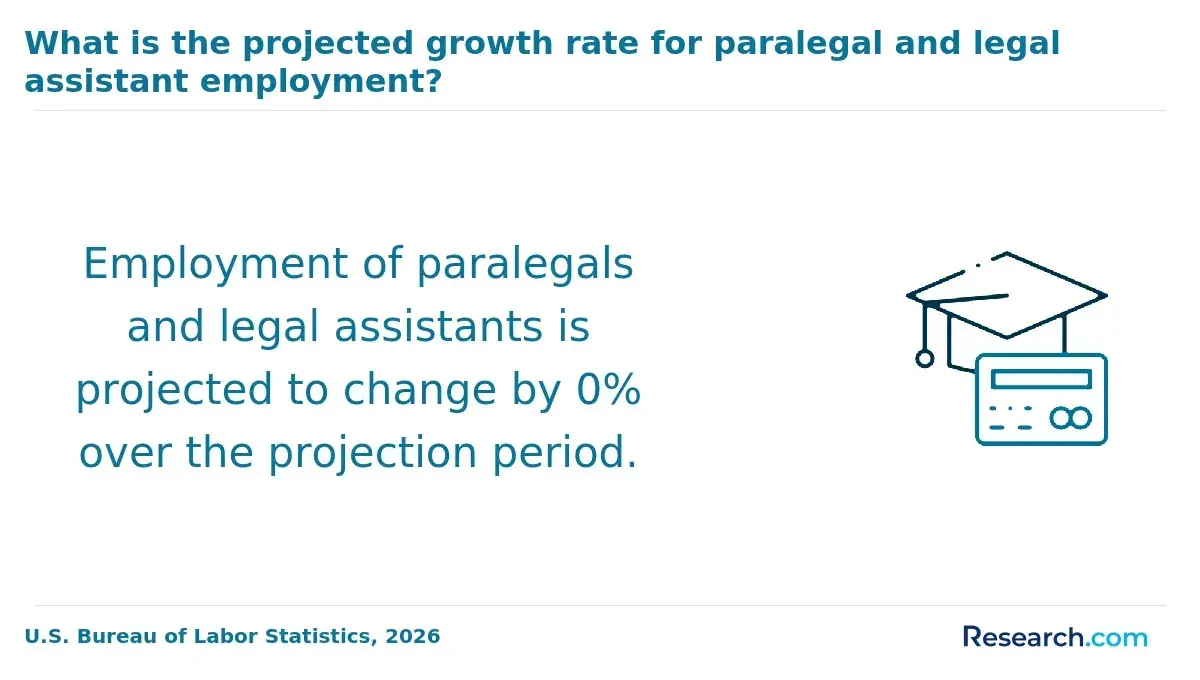
A paralegal role is a different decision. Paralegals support lawyers with tasks such as research and document preparation, but an MLS is not a substitute for hands-on paralegal training where an employer wants it. Readers seeking an entry route into legal support may find associate pathways into paralegal education more directly relevant than either graduate degree. Paralegals do not independently provide legal services that would constitute unauthorized practice of law.
The Bureau of Labor Statistics projects 4% growth for compliance officers, 2025-2035. That occupation is one plausible MLS-related path, but the projection covers compliance officers with varied educational backgrounds; it does not measure demand for MLS graduates. Likewise, an MPP can support policy work without making every policy job available to a new graduate.
How do MLS and MPP curricula and coursework compare?
MLS coursework commonly introduces legal research, the U.S. legal system, and subjects such as contracts, administrative law, employment law, or privacy. MPP coursework commonly emphasizes economics, statistics, research design, policy analysis, and program evaluation. Actual requirements vary substantially, so inspect the required-course list rather than relying on a concentration name.
If you dislike quantitative work, check an MPP's statistics prerequisites and required methods sequence before applying; those courses may be central rather than optional. If you want to draft policy recommendations backed by evidence, check whether an MLS offers enough analytical training. Conversely, a policy-law elective in an MPP may not provide the depth needed for a regulatory role.
Look for a capstone, practicum, clinic, or employer project that matches the work you want to do. Confirm what students actually produce - such as a policy evaluation or compliance assessment - and whether participation requires scheduled meetings or a placement. Relevant assignments are more informative than a list of interesting electives.
Do MLS or MPP graduates need licenses or certifications?
Neither degree carries a general professional license, and neither qualifies a graduate to practice law. Becoming an attorney generally involves a JD and meeting the applicable jurisdiction's bar-admission requirements. An MLS graduate may work with attorneys, but must not mistake legal knowledge for authority to represent clients or give legal advice.
Optional credentials may matter for a particular job. Compliance, privacy, or policy-related employers may value relevant certifications, but each issuing organization sets its own eligibility and renewal rules. A university certificate records completion of an educational program; professional certification is awarded by a certifying body under its own standards. Check the target employer's requirements before paying for either.
What are the admission requirements for MLS and MPP programs?
Both routes generally seek applicants with a bachelor's degree, but schools differ on minimum grades, recommendations, essays, test scores, work experience, and prerequisite courses. An MPP may expect preparation for statistics or economics; an MLS may welcome applicants from many undergraduate majors. Do not treat a recommended background as a formal prerequisite without checking the current admissions rules.
If an essay is a barrier, online legal studies programs without an admissions essay can be a useful starting point. Verify each program's current checklist directly: a waived essay does not mean admission is automatic or that other application materials are waived.
Applicants changing fields should also ask whether introductory courses are built into the degree or must be completed beforehand. A prerequisite taken outside the program can change both your start date and your total cost.
How long do MLS and MPP programs take, and what do they cost?
Full-time study can often be completed in roughly one to two academic years, while part-time enrollment may take longer. Program length depends on required credits, course availability, capstones, and whether you can study during the summer. Fast-track graduate programs in legal studies may reduce elapsed time, but a faster calendar does not necessarily reduce tuition or weekly workload.
There is no reliable universal price advantage for either degree. Compare each school's current per-credit or total-program tuition using the same basis, then add mandatory fees, books, technology, travel, and any prerequisite or practicum costs. Ask whether tuition changes during enrollment and whether scholarships or employer assistance apply to your specific program.
Federal aid eligibility depends on the institution, the program, and the student; institutional accreditation alone does not settle every aid question. Confirm current eligibility and borrowing terms with the financial aid office rather than assuming a graduate degree or certificate is covered. A lower-priced program may still be a poor value if it lacks the courses or schedule you need.
Are online or campus-based MLS and MPP programs better?
Online study can make it easier to keep working, but "online" does not mean self-paced. Classes may meet live, follow a cohort sequence, require proctored exams, or include campus visits. Campus study may offer easier access to local employers and in-person projects, but commuting or relocating can increase costs.
Delivery format matters especially for an MPP with a team capstone or an MLS with applied legal assignments. Before choosing, ask for the current course schedule, attendance rules, technology requirements, and capstone or internship policies. If a placement is required, confirm who finds it, whether your existing job can qualify, and whether remote participation is allowed. Those details determine practical flexibility more than the online label does.
How much can graduates with an MLS or MPP earn?
There is no single dependable "MLS salary" or "MPP salary": pay depends on the occupation, employer, location, experience, and responsibilities. The Bureau of Labor Statistics reports median annual pay of $80,730 in May 2025 for compliance officers. This is an occupational benchmark, not an estimate of what a new MLS graduate - or everyone in compliance - will earn.
For comparison, paralegals and legal assistants had median annual pay of $62,890 in May 2025, according to the Bureau of Labor Statistics. That figure describes a different occupation, not a lower-paying version of an MLS career. MPP graduates likewise enter varied roles, so a broad occupational median may not represent the specific policy job you want.
To assess potential return, compare pay ranges in relevant local job postings with your likely total program cost and any income you would give up while studying. Then check whether the jobs require the degree, merely prefer it, or prioritize experience you could gain without enrolling.
How can you choose an accredited MLS or MPP program?
Start by checking the institution's recognized institutional accreditation and the exact degree listed in its current catalog. Then check program-level claims separately. The American Bar Association's approval of a paralegal education program is not institutional accreditation, and it should not be confused with an MLS endorsement. Public-service graduate programs may seek specialized accreditation through the Network of Schools of Public Policy, Affairs, and Administration; verify the status of the particular program rather than assuming every MPP has it.
For each finalist, compare required courses, faculty expertise, completion requirements, schedule, total cost, and evidence of support for the jobs you want. If your actual goal is paralegal work rather than a master's-level role, compare those degrees with lower-cost ABA-approved paralegal education - and verify any program's current ABA approval in the ABA directory. A school's accreditation does not make all its credits automatically transferable; the receiving institution decides whether and how prior credit applies.
The final test is concrete: identify the work you want to perform, find programs whose required coursework develops those skills, and ask employers or admissions staff about any unresolved requirements. Be wary of promises that a degree alone leads to attorney licensure, a particular salary, or a job.
Other Things You Should Know About Law & Paralegal
Do not assume they will. A law school decides whether it accepts prior coursework toward its JD under its own rules. Get a written answer from the prospective JD program before treating an MLS as a step toward law school.
Possibly. Some programs allow electives outside the home department, interdisciplinary projects, or a graduate certificate. Confirm that those courses are available to you and count toward your degree before enrolling.
It can build useful policy-analysis skills, but an MPP is not a requirement for elected office. Eligibility for a particular office is governed by applicable election rules, not possession of a graduate degree.
Some employers offer tuition assistance, but eligibility, reimbursement limits, grade requirements, and repayment obligations vary. Ask for the written policy and confirm that the specific program qualifies before accepting an offer of admission.
References
- Cost of Attendance (Budget) | 2025-2026 Federal Student Aid Handbook https://fsapartners.ed.gov/knowledge-center/fsa-handbook/2025-2026/vol3/ch2-cost-attendance-budget
- Estimate your college cost | usa.gov https://www.usa.gov/estimate-college-cost
- Admissions Eligibility | Colorado Department of Higher Education Home https://cdhe.colorado.gov/admissions-eligibility
- MPA, MBA, or MPP: Which Graduate Degree is Right for You? | Cornell Brooks Public Policy https://publicpolicy.cornell.edu/masters-blog/mpa-mba-or-mpp-which-graduate-degree-is-right-for-you/
- What Can You Do With a Master of Legal Studies? | WashU Law https://online.law.washu.edu/articles/what-can-you-do-with-master-of-legal-studies/
- Different Types of Law Degrees - Pepperdine Caruso Law Blog https://law.pepperdine.edu/blog/posts/types-of-law-degrees.htm
- MPP vs. JD: Which degree is right for you? | SMU Moody https://publicadministrationdegrees.smu.edu/articles/mpp-vs-jd/
- Estimate Costs and Aid | WVU Hub | West Virginia University https://hub.wvu.edu/planning-and-resources/estimate-costs-and-aid
- Difference Between M.L.S. and LL.M.: How to Choose the Right Program for You | miami.edu https://news.miami.edu/law/stories/2024/06/difference-between-mls-and-llm.html
- Master of Legal Studies (MLS) vs. JD: What's the Difference? | SMU Online Master of Legal Studies https://onlinemasterlegalstudies.smu.edu/articles/mls-vs-jd/