2027 Paralegal Training for Library Assistants Interested in Legal Research

Co-Founder and Chief Data Scientist
Library assistants often know how to find, organize, and verify information, but legal research jobs require additional skills: interpreting legal sources, checking whether authorities remain valid, and writing for a legal audience. This guide helps library assistants decide whether paralegal training is worth pursuing and which education route fits their existing credentials. It compares programs, costs, delivery formats, and career prospects so readers can identify the legal skills they need without paying for a credential that exceeds their goal.
Key Things You Should Know
- A paralegal certificate can be a focused route for a library assistant who already has substantial college education; an associate or bachelor's program may make more sense when the applicant also needs a degree.
- Prior research experience transfers, but legal citation, authority checking, court procedures, confidentiality, and work under attorney supervision require specific training. A program certificate is not professional certification.
- The Bureau of Labor Statistics reports median pay of $62,890 in May 2025 for paralegals and legal assistants, with 0% projected employment growth for 2025-2035. Evaluate local openings and program cost rather than assuming training will produce a pay increase.
What paralegal training options are available for library assistants interested in legal research?
The main options are a paralegal certificate, an associate degree, and a bachelor's degree with paralegal coursework. Some schools also offer individual legal research courses or continuing education. A program certificate documents completion of coursework; it is not the same as a professional credential earned through a separate certification process.
A library assistant who already holds a degree may prefer a post-degree certificate with substantial legal research and writing. Someone seeking their first college degree may get more value from an associate program that combines general education with paralegal courses. A bachelor's program can suit a student who wants broader undergraduate study, but its additional time and expense should serve a clear career or educational goal.
For readers who can study intensively, paralegal programs designed for accelerated completion are worth comparing. Check the actual course sequence and weekly workload: a short advertised completion time may assume full-time enrollment or prior college credit.
Can library assistants become paralegals without earning a law degree?
Yes. A Juris Doctor (JD) is an attorney-education degree, not the standard preparation for paralegal work. Employers may hire candidates with paralegal education, another college degree plus relevant training, or substantial qualifying experience; their preferences vary by position. Library work can demonstrate source evaluation and careful recordkeeping, but it does not by itself establish proficiency with statutes, cases, procedural rules, or legal writing.
Paralegals typically perform substantive legal work under attorney supervision. They do not become lawyers by completing paralegal training and generally cannot independently give legal advice or represent clients. A Master of Legal Studies (MLS) or similar non-JD degree also does not qualify its holder to practice law. For someone considering graduate study instead, the legal studies master's degree and certificate trade-offs matter most if the goal is broader legal or regulatory knowledge rather than an entry-level paralegal position.
Which paralegal education pathway best fits a library assistant's experience?
Start with your completed education, not your job title. The comparison below shows when each route is most likely to add something your library experience does not already provide.
| Pathway | Likely fit | Main trade-off |
| Individual legal research course | You want to test your interest or add a defined skill to your current role. | One course may not cover the procedures, writing, and ethics expected in paralegal hiring. |
| Paralegal certificate | You already meet the program's education prerequisites and want focused occupational training. | Credit value, prerequisites, and financial aid eligibility differ by program. |
| Associate degree | You need a college degree alongside paralegal coursework. | General education adds time and cost, though it may support later study. |
| Bachelor's degree with paralegal coursework | You want a bachelor's credential as well as legal-support training. | It may be more education than a particular legal research job requires. |
If you already hold a bachelor's degree, compare the certificate's research assignments and employer connections with those of a second degree before enrolling. If you have college credit but no degree, ask how much applies to an associate or bachelor's program. A graduate legal studies degree is generally a different decision: it may support broader compliance or policy work, but it is not automatically a stronger paralegal credential.
What do paralegal programs teach about legal research and writing?
Useful training moves beyond finding a relevant document. Students may learn the hierarchy of legal authority, how to distinguish binding from persuasive sources, how to research statutes and regulations alongside court opinions, and how to check whether a case or rule remains good authority. Legal writing assignments may include research memoranda, case summaries, citations, and drafts prepared for attorney review.
For a library assistant, the biggest shift is from answering an information request to supporting a legal matter. Strong programs connect research exercises to facts, jurisdiction, deadlines, and the question an attorney needs answered. They also teach confidentiality, professional responsibility, and the boundary between providing information and giving legal advice.
Review course descriptions and sample assignments, not just software logos. A program that mentions Westlaw, Lexis, or an AI research tool has not necessarily promised student access or hands-on instruction. Ask whether students complete supervised research assignments, receive writing feedback, and learn to verify citations and tool-generated answers against authoritative sources.
Are online or campus-based paralegal programs better for library assistants?
Neither format is inherently better. Online study may let a working library assistant avoid commuting; campus classes may offer easier access to instructors, classmates, and local legal employers. What matters is whether the schedule and practical training are workable while you remain employed.
"Online" does not necessarily mean self-paced. Ask whether classes meet live, exams require scheduled attendance, courses run in a fixed sequence, or any campus visits are required. If the program includes an internship, confirm who secures the placement and whether your current job could qualify; do not assume library employment will satisfy a legal-work requirement.
Compare the format of research instruction as well. Remote access to legal databases, instructor feedback on written work, and opportunities to discuss research errors can matter more than whether lectures are viewed at home or on campus.
What admission requirements apply to paralegal certificate and degree programs?
Requirements depend on the credential and school. An associate program may admit applicants with a high school diploma or equivalent, while a post-baccalaureate certificate may require a completed bachelor's degree. Other certificates require particular college coursework or general education credits. Read the admission requirements for the specific certificate, not just the college's general admissions page.
Request a written review of prior coursework before treating an advertised completion timeline as yours. The receiving school decides which credits transfer and whether they satisfy general education, electives, or paralegal requirements. If a degree is the goal, finding paralegal bachelor's programs that consider transfer credits can help narrow the search, but only an individual credit evaluation establishes what will apply.
Library experience can strengthen an application or a hiring résumé, but it should not be assumed to waive a published academic prerequisite. Ask admissions staff separately about entry eligibility, transfer credit, and any credit for prior learning.
How long do paralegal programs take, and how much do they cost?
A certificate may take several months or longer than a year, depending on prerequisites, course sequencing, and study load. An associate degree generally takes longer because it includes general education; a bachelor's degree adds further undergraduate requirements. Published timelines often assume full-time study, so a working library assistant should request a part-time course plan showing when required classes are actually offered.
There is no reliable single price for "paralegal training." Compare the full cost of completing each specific program: tuition, mandatory fees, books, technology, legal research access if billed separately, prerequisite classes, and any travel or internship expenses. Check whether a quoted price is per course, per credit, or for the entire program. Payment installments can help with cash flow but do not necessarily lower the price; readers considering them can compare tuition payment plans for online paralegal programs.
Ask the school's financial aid office whether the specific program is eligible for federal student aid, particularly if it is a noncredit certificate. Avoid assuming that institutional accreditation alone makes every course or certificate aid-eligible. A less expensive program is worthwhile only if its coursework, credit value, schedule, and practical opportunities meet your goal.
How can library assistants evaluate accredited and reputable paralegal programs?
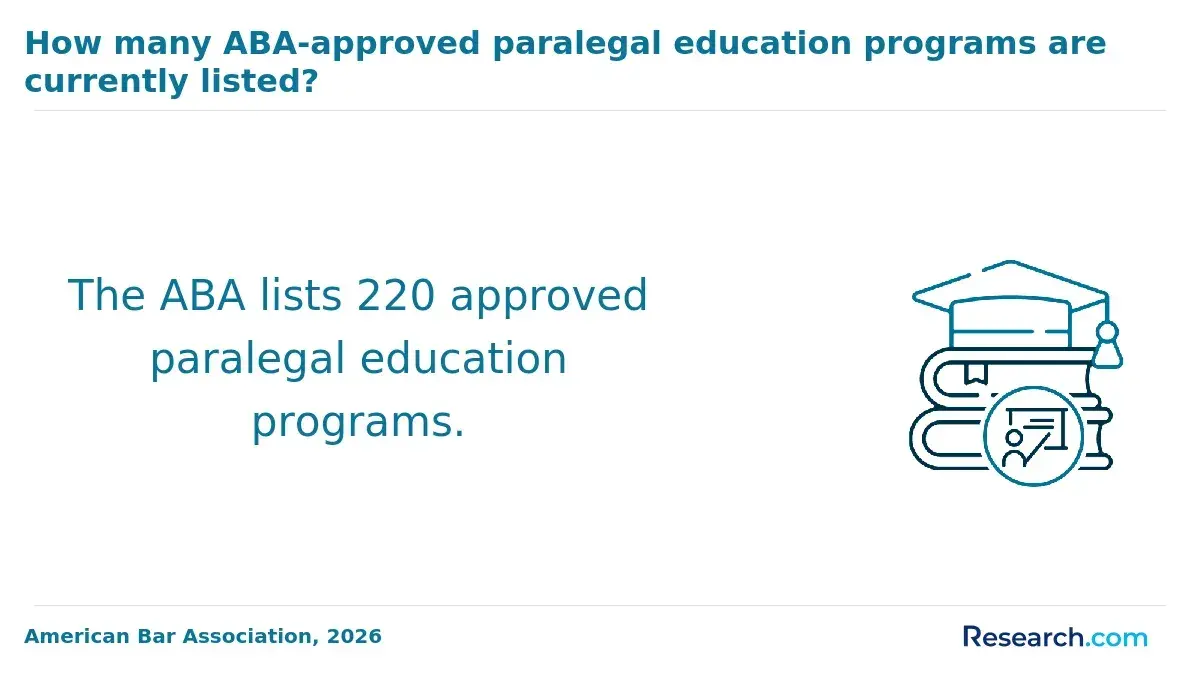
Check two different statuses. Institutional accreditation concerns the college or university; confirm its current status through a recognized accreditor or U.S. Department of Education resources. American Bar Association (ABA) approval applies to qualifying paralegal education programs, not to the institution as a whole. Verify a claimed approval in the ABA's current paralegal program directory rather than relying on an old advertisement.
ABA approval can be a useful screening factor, but lack of approval does not automatically make a program unsuitable. Employers' preferences and state rules vary. For a legal research goal, examine required research and writing courses, instructor qualifications, assignment feedback, internship arrangements, and whether graduates receive a transcript showing college credit.
Before paying a deposit, request the current catalog and ask for an itemized cost, a course-by-course completion plan, and written clarification of any advertised approval or accreditation. Treat promises of automatic certification, guaranteed employment, or transferable credit at another school as red flags.
Is paralegal certification or state licensing required for legal research jobs?
There is no single national license that every U.S. paralegal must hold. Rules governing paralegal titles and work differ by state, and employers may set education or experience requirements beyond any legal minimum. Check the rules where you intend to work, particularly if a position uses a regulated title or involves direct contact with the public.
Professional certification is separate from completing a school certificate. For example, NALA awards the Certified Paralegal credential, and the National Federation of Paralegal Associations administers the Paralegal Advanced Competency Exam. Each organization sets its own current eligibility and examination rules. The ABA approves qualifying education programs; it does not certify individual paralegals.
For most applicants, the practical sequence is to inspect local job postings first, identify the education and experience employers request, and then decide whether an optional certification would add value. Neither certification nor a school credential permits a paralegal to practice law independently.
What salaries and job opportunities can trained paralegals expect?
The Bureau of Labor Statistics reports median annual pay of $62,890 in May 2025 for the combined occupation of paralegals and legal assistants. That figure is not an entry-level offer or a salary estimate specifically for legal researchers transitioning from libraries; pay varies with location, employer, experience, and duties.
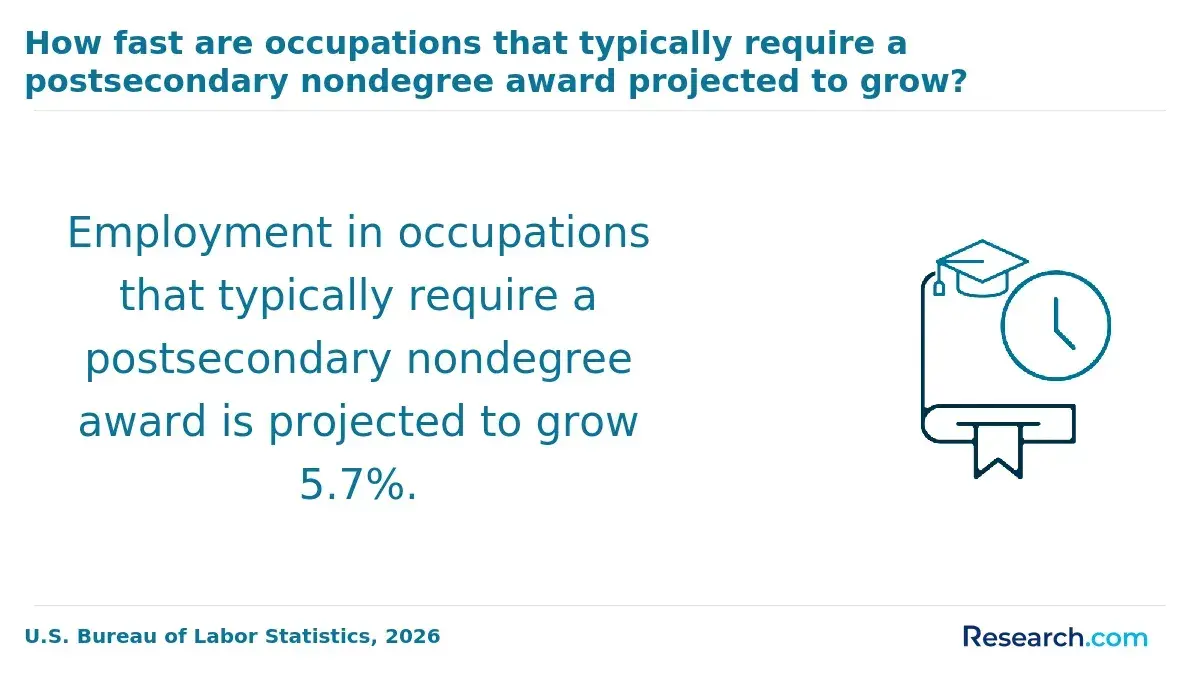
BLS projects 0% employment growth for 2025-2035 but about 40,800 openings per year, largely reflecting workers leaving or changing occupations. For a career changer, that makes local hiring evidence more useful than a national growth rate alone. Search for paralegal and legal assistant roles that emphasize research and writing, then compare their requirements with the coursework you are considering.
Law firms, corporate legal departments, government offices, and other employers may need legal-support research. A library assistant's source-management skills can help, but applicants should demonstrate jurisdiction-specific research, accurate citations, clear written analysis, and respect for attorney supervision. If your preferred work is instead broad policy or compliance research, investigate those job requirements before paying for paralegal training. Finding a low-cost online master's in legal studies may be relevant to that different goal, but a graduate degree should not be assumed necessary for it.
Other Things You Should Know About Law & Paralegal
Generally, library staff can help patrons locate publicly available legal sources, subject to workplace policy. Selecting a legal strategy, interpreting a rule for someone's particular dispute, or telling a patron what to file may cross into legal advice. Follow your library's guidance and refer patrons to appropriate legal help when needed.
Consider a short, original research memorandum or annotated source list based on a hypothetical question. Show the jurisdiction, sources searched, citation checks, and limits of the analysis. Never include confidential patron information or an employer's legal documents without permission.
It may count as relevant research experience, but an employer may distinguish it from substantive legal work. Describe the databases, source verification, writing, and confidentiality practices you actually used; do not relabel general library duties as paralegal work.
Not necessarily. Law librarian positions can have different education expectations, often involving graduate library education and, for some roles, legal education. Review postings for the particular type of law library that interests you before choosing a paralegal program.
References
- Legal Research Guides | wilawlibrary.gov https://wilawlibrary.gov/learn/legalresearch.html
- Guidelines on the Use of Paralegals | North Carolina State Bar https://www.ncbar.gov/paralegal-certification/guidelines-on-the-use-of-paralegals/
- Post-Baccalaureate Certificate in Paralegal Studies | Roosevelt University https://www.roosevelt.edu/programs/post-baccalaureate-certificate-paralegal-studies
- How to Become a Paralegal in 5 Steps - Vanderbilt Law School https://law.vanderbilt.edu/master-legal-studies/articles/how-to-become-a-paralegal/
- LSU Paralegal Studies Certificate | ABA-Approved Online Program | https://ce.lsu.edu/paralegal-studies/
- What Does a Paralegal Do? What Are the Paralegal Job Duties? | Online Paralegal Studies Certificate Program https://paralegalonline.bu.edu/articles/duties-of-a-paralegal/
- Paralegal Certificate Program | American National University https://an.edu/programs/skill-credentials-and-certificates-diplomas/paralegal-studies-certificate/
- Law and Paralegal: Legal Research | madisoncollege.edu https://libguides.madisoncollege.edu/c.php
- Paralegal Studies Certificate Program | FIU College of Law https://law.fiu.edu/programs/paralegal-studies/
- Law & Paralegal Studies | ccp.edu https://www.ccp.edu/college-catalog/degree-programs/associate-applied-science-aas/law-paralegal-studies