
2027 Master of Legal Studies Programs for International Business Professionals

Co-Founder and Chief Data Scientist
Cross-border contracts, trade rules, privacy obligations, and corporate compliance can put legal questions on an international business professional's desk. A Master of Legal Studies (MLS) may help you recognize those issues and work more effectively with counsel, but it is a substantial investment - not a license to practice law. This guide explains what to look for in an MLS program, when a shorter alternative may suffice, and how to compare formats, costs, and career possibilities before applying.
Key Things You Should Know
- An MLS builds legal knowledge for nonlawyers; it does not, by itself, qualify graduates to practice law or take a U.S. bar exam.
- For international business work, prioritize relevant courses in contracts, trade, compliance, and cross-border transactions over a program's general "global" branding.
- The Bureau of Labor Statistics reports $80,730 in median annual pay for compliance officers in May 2025, but that occupation-wide figure is not an MLS graduate salary or a promised return on tuition.
What Is a Master of Legal Studies for International Business Professionals?
An MLS is a graduate legal-knowledge degree generally designed for people who need to understand and apply legal concepts in nonlawyer roles. Schools may use names such as Master of Studies in Law (MSL) or Master of Jurisprudence for related non-JD programs. The relevant distinction is the curriculum and credential a school actually awards, not the initials alone.
For an international business professional, the value lies in understanding how legal requirements affect transactions and operations across borders. A procurement manager might learn to identify contract terms that warrant counsel's review; a compliance professional might improve how a company documents and escalates trade-related risks. Neither task is the same as independently giving legal advice.
Check whether "international business law" is a formal concentration recorded by the school, an optional set of electives, or simply a description of several available courses. Those arrangements can offer different levels of access to the subjects you want, especially if electives rotate.
Can a Master of Legal Studies Help International Business Professionals Advance Their Careers?
It can help when a role already requires frequent coordination with legal teams or interpretation of regulatory requirements. The degree may strengthen your ability to spot issues, ask precise questions, manage outside counsel, and turn legal guidance into business processes. Employers may still place greater weight on industry experience, language skills, or a record of managing transactions and controls.
The right investment depends on the gap between your current skills and your target role. These routes solve different problems:
| Route | Best fit | Main limitation |
| MLS or related non-JD master's | Professionals who need broad, structured legal study across business functions | Greater tuition and time commitment; no attorney qualification |
| Graduate certificate or focused coursework | Professionals with a defined gap, such as contract drafting or trade compliance | Narrower coverage; credits may not apply to a later degree |
| Employer training, experience, or role-specific credentials | Professionals whose next role depends primarily on demonstrated operational skill | May provide less systematic grounding in legal concepts |
If you already manage cross-border matters, compare an MLS with a shorter course and a stretch assignment at work. The relevant question is which route supplies skills you cannot readily gain on the job without taking on unnecessary cost or time away from work.
Does an MLS Qualify Graduates to Practice Law or Take the Bar Exam?
No. An MLS, MSL, or similar non-JD legal studies degree does not by itself qualify someone to practice law or take a U.S. bar exam. Attorney admission rules are set by individual jurisdictions. If your goal is to advise clients as a lawyer, research that jurisdiction's attorney-licensing pathway rather than treating an MLS as a substitute for a qualifying law degree.
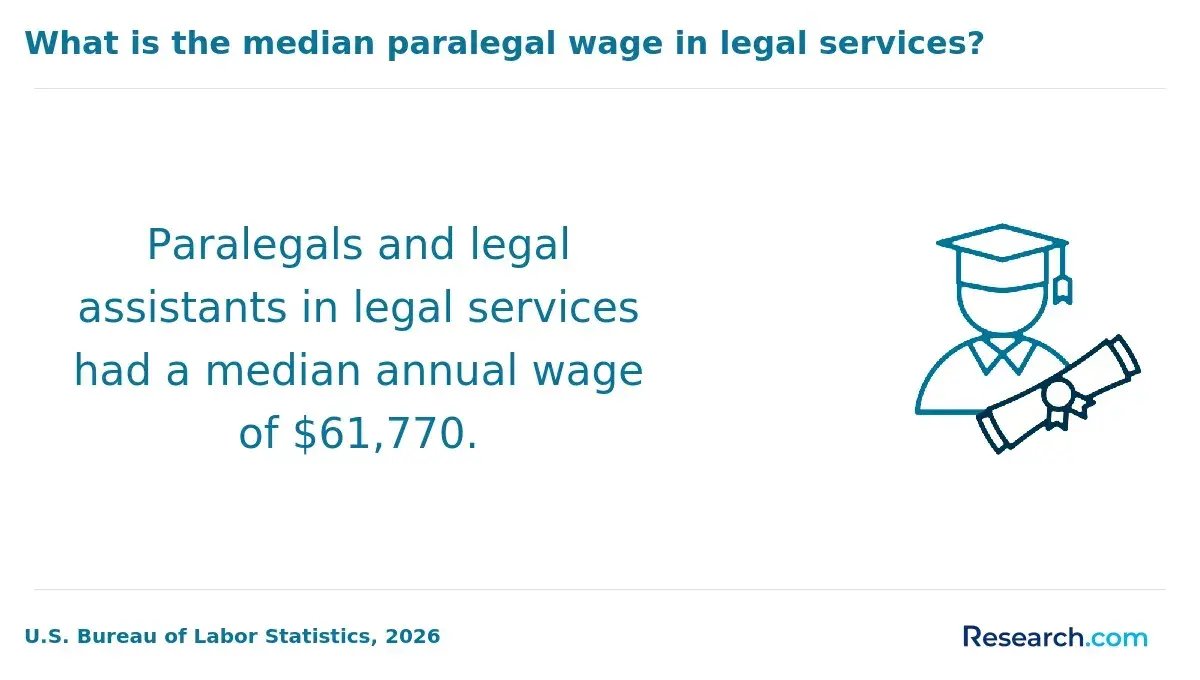
An MLS also is not a paralegal credential. If your goal is legal-support work - such as preparing documents and conducting research under attorney supervision - compare paralegal education instead. The American Bar Association (ABA) approves qualifying paralegal education programs; that approval is separate from a college's institutional accreditation and does not make graduates "ABA-certified." For that route, low-cost ABA-approved online paralegal programs provide a more directly relevant comparison than MLS tuition.
What Do International Business Professionals Learn in an MLS Program?
Most useful programs combine a foundation in legal reasoning with courses tied to the transactions or regulations you encounter. Depending on the school, relevant subjects may include contract law, business organizations, international transactions, trade controls, anti-corruption compliance, dispute resolution, employment issues, intellectual property, and data privacy. A course title alone does not establish how deeply it covers a topic.
Start with the work you expect to do. A contracts manager should look for assignments involving negotiation, drafting, and risk allocation; a trade-compliance professional should look for applied work on controls, documentation, and escalation. Ask for current syllabi or course descriptions and confirm which classes will be offered during your expected enrollment. For a broader view of how schools organize these subjects, compare legal studies master's concentrations to explore.
Pay particular attention to the program's legal frame. A U.S.-focused contracts course can be valuable for a cross-border role, but it is not necessarily instruction in the laws of every country where your company operates. Counsel qualified in the relevant jurisdiction remains essential for legal advice.
Should You Choose an Online or Campus-Based MLS Program?
Choose based on actual scheduling requirements and the kind of interaction your work requires, not the delivery label. "Online" may mean recorded lessons, live classes at fixed times, or both; a campus program may offer evening courses that suit a local working professional.
The comparison below highlights practical differences to verify with each school:
| Format | Potential advantage | Commitment to check |
| Online | Study without routine travel to campus | Live meeting times, exams, group work, required visits, and time-zone compatibility |
| Campus-based | In-person discussion and access to local professional networks | Commute, course meeting times, and whether required classes fit your work schedule |
| Hybrid | Combination of remote study and in-person contact | Frequency, location, and cost of mandatory visits |
Before committing, request the schedule for required courses - not just an example elective. If your job involves travel across time zones, confirm whether live attendance and group meetings can realistically fit around it.
What Are the Admission Requirements for an MLS Program?
MLS programs generally expect applicants to hold a bachelor's degree, but each school sets its own rules for prior coursework, academic records, recommendations, and English-language proficiency. Some programs welcome applicants from any major; others target professionals with substantial work experience. Read the current admissions requirements rather than assuming that legal or business experience is mandatory.
If you completed a degree outside the United States, ask whether the school requires a credential evaluation or translated transcripts and which evaluations it accepts. If you have existing college credits, distinguish undergraduate admission or transfer policies from graduate-degree rules. Resources on business law study for students with existing college credits may help you explore another route, but they do not establish that those credits will transfer into an MLS. The receiving institution decides whether prior work applies.
How Long Do MLS Programs Take and What Do They Cost?
Completion time depends on required credits, course sequencing, and whether you study full time or part time. An accelerated option may reduce calendar time without reducing the workload. Compare schools' published plans against your actual availability, including any capstone, residency, or courses offered only in particular terms. Online business law master's timeline comparisons can help you identify scheduling questions, but confirm the current MLS plan directly with each school.
Compare total educational cost, not advertised tuition alone. Request the current tuition rate, required fees, books or digital materials, technology costs, and any travel expenses. Ask how charges change if you study part time or take longer than planned. Published tuition should not be treated as a guaranteed final bill.
If financing matters, ask the financial aid office whether the specific degree and your enrollment pattern qualify for federal aid; institutional eligibility does not establish every student's eligibility. Compare the likely debt and time commitment with employer tuition assistance or a shorter course before enrolling. Without reliable program-specific prices and your own aid information, a meaningful return-on-investment calculation is not possible.
What Careers Can You Pursue With an MLS in International Business?
An MLS may complement existing experience in compliance, contracts, procurement, risk, or international operations. These are potential directions, not jobs reserved for MLS graduates:
| Role direction | Where legal knowledge can help | Experience employers may also seek |
| Compliance officer or manager | Interpreting requirements, maintaining controls, and escalating concerns | Industry regulations, audits, and operational risk |
| Contracts manager | Reviewing terms, tracking obligations, and coordinating counsel's input | Negotiation, procurement, and contract systems |
| Trade or international operations specialist | Recognizing regulatory issues in transactions and documentation | Supply chains, trade processes, and relevant markets |
| Corporate legal-operations professional | Organizing workflows between business teams and lawyers | Process design, project management, and technology |
If you are new to legal-support work, an MLS may be a costly first step. Legal studies associate programs to explore offer a different educational level and potential entry route; compare their curriculum with the requirements of jobs you actually intend to pursue.
How Much Can MLS Graduates Earn in Compliance and Contracts?
The Bureau of Labor Statistics (BLS) reports that compliance officers had median annual pay of $80,730 in May 2025, with 4% projected job growth, 2025-2035. That is a U.S. occupation-wide benchmark - not a salary for MLS graduates, international business specialists, or a particular seniority level. It cannot show how much, if anything, the degree adds to an individual's earnings.
"Contracts manager" is not a single comparable BLS occupation with one reliable MLS-specific wage figure. Pay varies with industry, location, scope of responsibility, and prior experience. For a useful personal comparison, review postings for your target roles: note the stated pay range, required experience, and whether a graduate legal degree is required, preferred, or not mentioned.
How Can You Choose an Accredited MLS Program for International Business?
Verify the university's institutional accreditation through its recognized accreditor or U.S. Department of Education information. Do not confuse that status with ABA approval of paralegal programs or with attorney-qualifying law-school accreditation. Accreditation is an essential check, but it does not establish that a particular MLS has the international business courses or schedule you need.
Use the same short checklist for every program you are considering. It turns broad claims into facts you can compare before paying an application fee:
- Confirm the exact degree awarded and whether international business is a formal concentration, an elective pathway, or neither.
- Match required and regularly offered courses to the legal issues in your target job; request current descriptions and a course schedule.
- Verify institutional accreditation, delivery requirements, expected completion plan, and the full cost under your intended enrollment pattern.
- Ask employers in your field whether they value the MLS over a focused credential, relevant experience, or employer-supported training.
A warning sign is a program that markets a concentration without making clear when its essential electives run. Another is a comparison that uses a low per-credit price for one school and an all-in estimate for another. Resolve both questions in writing before deciding.
Other Things You Should Know About Law & Paralegal
Possibly. Schools set enrollment and location policies, and access to classes or assessments may vary by country. Confirm eligibility with the program; do not assume online enrollment provides a U.S. visa or immigration benefit.
That depends on the employer's policy. Ask whether the degree and school qualify, whether reimbursement requires a minimum grade, and whether leaving the company triggers repayment.
Do not assume it does. Continuing legal education rules and course-approval requirements vary by jurisdiction and professional body. Ask the relevant provider before relying on degree courses for credit.
Only if their employer permits it and confidentiality obligations are protected. Ask the instructor whether a fictional or appropriately anonymized document can meet the assignment requirements.
References
- Program Eligibility, Written Arrangements, and Distance Education | 2024-2025 Federal Student Aid Handbook https://fsapartners.ed.gov/knowledge-center/fsa-handbook/2024-2025/vol2/ch2-program-eligibility-written-arrangements-and-distance-education
- Types of Financial Aid: Grants, Work-Study, and Loans | studentaid.gov https://studentaid.gov/understand-aid/types
- MLS vs. LLM - Degree Comparison - Online LLM | Online Master of Laws (LLM) at Northeastern https://llmonline.northeastern.edu/articles/mls-vs-llm/
- MLS vs. JD vs. LLM: Which Law Degree Is Right for You? | DePaul University Online Master of Legal Studies https://onlinemls.depaul.edu/articles/mls-vs-jd-vs-llm/
- Difference Between M.L.S. and LL.M.: How to Choose the Right Program for You | miami.edu https://news.miami.edu/law/stories/2024/06/difference-between-mls-and-llm.html
- MLS vs. JD: Which Legal Path Is Right for Non-Lawyers? | Goodwin College of Professional Studies https://drexel.edu/law/news/legal-studies-blog/mls-vs-jd-which-legal-path-is-right-for-non-lawyers/
- Online MLS in Business Law - Northeastern University https://legalstudiesmastersonline.northeastern.edu/curriculum/mls-business-law/
- MLS - Corporate Compliance - Seton Hall Law School https://law.shu.edu/academics/mls-corporate-compliance-online.html
- Master of Legal Studies (MLS) vs. JD: What's the Difference? | SMU Online Master of Legal Studies https://onlinemasterlegalstudies.smu.edu/articles/mls-vs-jd/
- Corporate compliance concentration - Master of Studies in Law https://law.wayne.edu/msl/program/concentrations/corporate-compliance


