2027 Employment Law MLS Programs: Comparing Negotiation, Mediation, and Investigation Training

Co-Founder and Chief Data Scientist
An employment law master's program can teach you to resolve workplace disputes, but negotiation, mediation, and investigation lead to different kinds of work. That distinction matters if you are choosing courses while working in human resources, compliance, labor relations, or legal support. This guide compares what each skill involves, where it is useful, and what to check in a program's assignments and costs. You can use it to decide whether a Master of Legal Studies (MLS) is the right investment - and which training deserves priority.
Key Things You Should Know
- Choose negotiation to represent an organization's interests in discussions, mediation to facilitate discussions as a neutral, or investigation to establish facts and document findings.
- Course titles are not enough: compare supervised simulations, feedback, writing assignments, and any stated requirements for live-case experience.
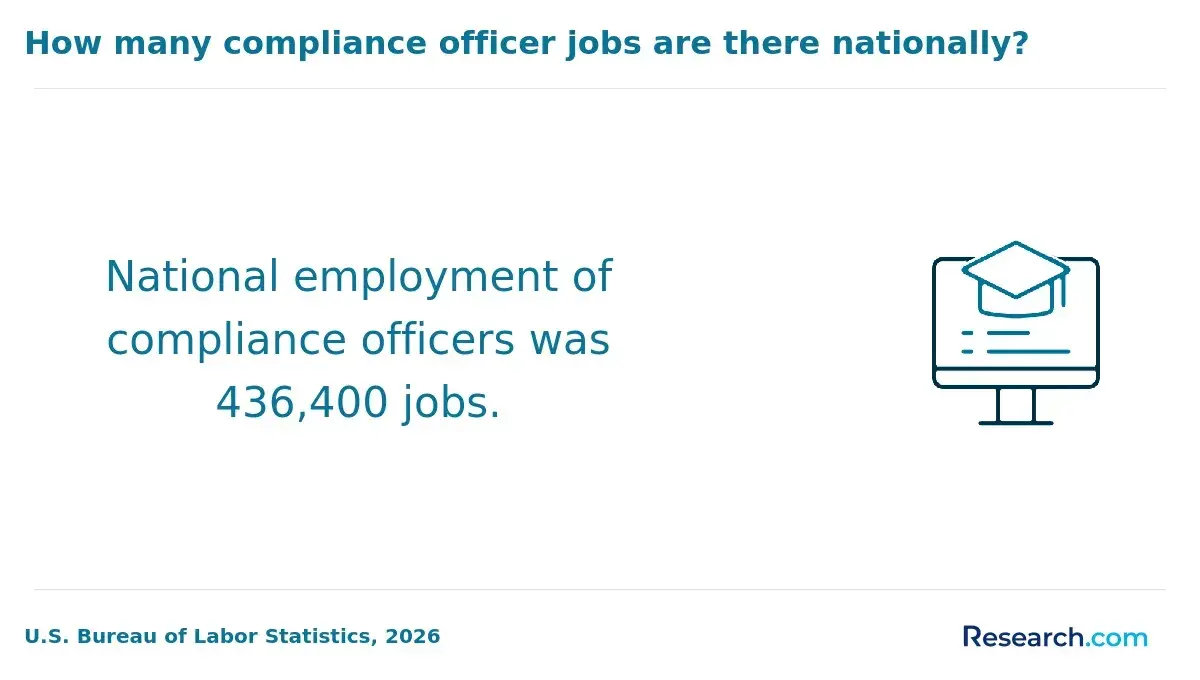
- An MLS is not required for most related jobs. As a broad career benchmark, compliance officers had median pay of $80,730 in May 2025, with 4% projected job growth from 2025-2035; neither figure predicts an MLS graduate's outcome.
What is an employment law MLS program, and who should pursue one?
An employment law MLS is a non-Juris Doctor graduate degree that applies legal study to workplace issues such as discrimination, leave, wages, labor relations, and dispute resolution. Schools may call a similar degree a Master of Studies in Law (MSL) or Master of Jurisprudence. "Employment law" might be a formal concentration, an optional course cluster, or simply a few electives; confirm which description the school actually uses. For a broader comparison, see legal studies graduate degree options explained.
The degree is most relevant to professionals who must recognize legal issues and work effectively with counsel without becoming attorneys. An HR manager handling complaints may value investigation training; a labor-relations professional may need negotiation practice. If you need only a specific workplace skill, employer training or a focused graduate certificate may cost less time and money. An MLS does not qualify its holder to practice law or give legal advice independently.
How do negotiation, mediation, and investigation training differ in employment law MLS programs?
The distinction is your role in a dispute: advocating for an outcome, facilitating a resolution, or finding out what happened. The table connects each training focus to a realistic work product so you can assess course descriptions.
| Training focus | Role and typical practice | Best fit - and limitation |
| Negotiation | Represent an employer's or other party's interests; prepare proposals, assess alternatives, and practice bargaining. | Useful in labor relations, policy discussions, and settlement preparation. A course does not authorize a nonlawyer to represent clients in legal matters. |
| Mediation | Facilitate communication between parties without deciding the outcome; practice neutrality, listening, and managing impasses. | Useful for conflict-resolution roles. Employer-run processes and independent neutral work are different, and a course alone does not establish eligibility for a court roster. |
| Investigation | Plan interviews, assess records, evaluate competing accounts, and write findings under an employer's procedures. | Useful in HR and compliance. Simulation cannot substitute for judgment, confidentiality safeguards, or legal review in a live case. |
If your job combines these functions, seek separate practice in each rather than assuming a general "dispute resolution" course covers them equally. In particular, an investigator's fact-finding role and a mediator's neutrality call for different boundaries.
What careers can an employment law MLS prepare you for?
Potential paths include HR employee-relations work, workplace compliance, labor relations, internal investigations, and dispute-resolution administration. These jobs usually draw on prior professional experience as well as education: an MLS can deepen legal literacy, but it is not a standard entry requirement for every role. Someone moving from HR may bring interviewing and policy skills yet still need practice analyzing employment-law issues and documenting defensible decisions.
If your goal is chiefly to support attorneys with legal research and documents, paralegal education may be more direct than an employment law MLS. When comparing that route, monthly tuition payment options for online paralegal degrees can affect cash flow, though installments do not reduce total cost. Paralegals work under attorney supervision and do not independently practice law.
What courses are included in an employment law MLS curriculum?
Look for a foundation in legal research and analysis, employment discrimination, wage and hour law, workplace leave, labor law, and compliance. Relevant electives may address negotiations, alternative dispute resolution, interviewing, evidence assessment, privacy, or organizational policy. An employment-law course and a practical-skills course serve different purposes: knowing the legal standard does not by itself prepare someone to conduct a sensitive interview.
Compare the required curriculum with the electives you can realistically take. Ask for recent syllabi or assignment descriptions: a negotiation simulation with individualized feedback, a mediated role-play, and an investigation report offer more direct practice than readings alone. Check whether each course runs often enough to fit your graduation plan.
Are employment law MLS programs available online and on campus?
Both formats exist, but delivery varies by school and course. "Online" can mean recorded lessons, scheduled live discussions, or a mix; it does not necessarily mean self-paced. Negotiation and mediation exercises may require classmates to meet at set times, while an investigation course may require coordinated interviews. Ask about time zones, campus visits, attendance rules, and whether workplace experience can be used for a project before treating a program as compatible with your schedule.
If finishing quickly is a priority, compare actual course sequencing rather than the shortest advertised timeline. Resources on comparing accelerated business law master's options can provide a useful scheduling comparison, but a faster business-law curriculum may not provide the employment-dispute practice you want.
What are the admission requirements for employment law MLS programs?
Applicants generally need a bachelor's degree, but schools set their own rules for academic records, recommendations, résumés, essays, tests, and professional experience. Check the current admissions page for the specific MLS - not the school's JD requirements. Relevant HR or compliance experience may strengthen an application without necessarily being required.
If assembling an essay is an obstacle, legal studies admissions without a personal statement offers alternatives to investigate. Confirm the current requirements directly with each school before ruling a program in or out, and ask whether applicants without legal coursework need any preparation before employment-law electives.
How long do employment law MLS programs take, and what do they cost?
Completion time depends on required credits, course availability, and whether you study full time or alongside work. Costs depend on the same choices. No single duration or price represents employment law MLS programs, so compare each school's current tuition schedule against its required credits and likely enrollment pace. For possible alternatives, review lower-cost options for a master's in legal studies, then verify prices with the institution.
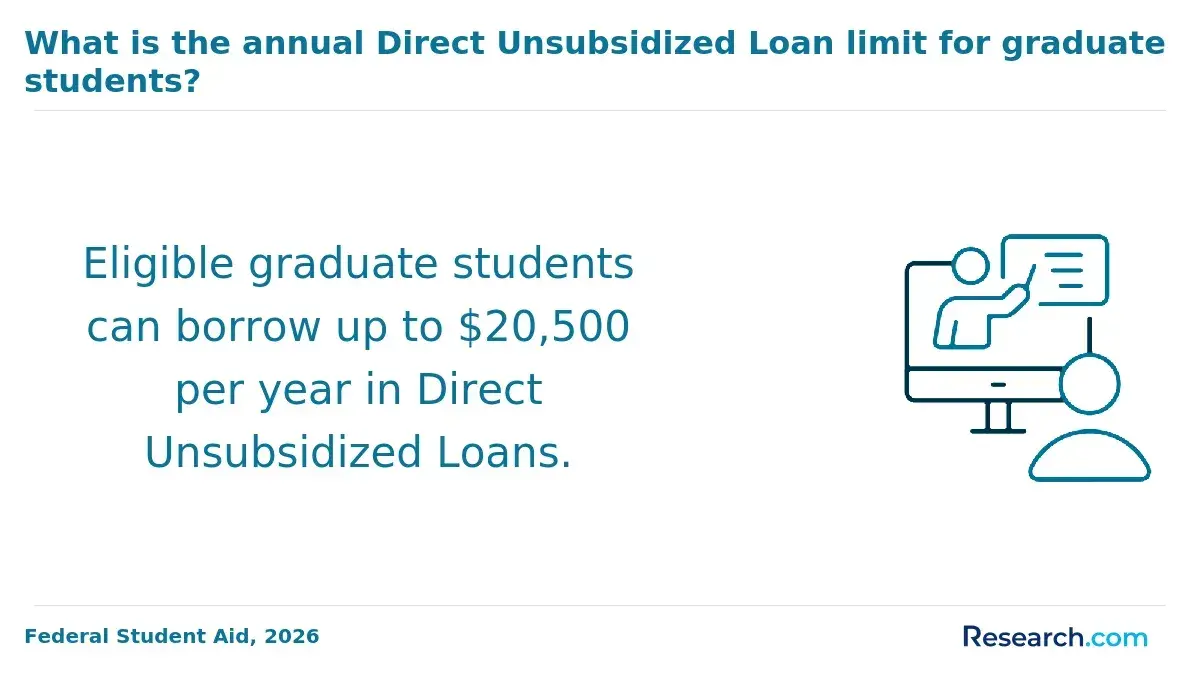
Request a program-specific estimate that includes mandatory fees, books, technology, and any travel for required in-person work. Ask whether delaying an elective could add another term of charges. Graduate financial aid may be available if the institution and program meet applicable eligibility rules, but eligibility and borrowing limits are individual matters; compare the full cost with any employer tuition assistance before taking on debt.
How can you verify an employment law MLS program's accreditation and quality?
Check the institution's current accreditation with its recognized accreditor and, if needed, the U.S. Department of Education's accreditation records. Then evaluate the MLS separately: institutional accreditation does not tell you how much employment-law practice the degree includes. American Bar Association approval of certain paralegal education programs is a different designation and should not be assumed to apply to an MLS.
Before enrolling, request the current catalog and confirm the degree title, whether the employment-law focus is formally recorded, which skills courses are required, and how students receive feedback. A warning sign is a program advertised for workplace investigations whose published curriculum offers no investigation-specific assignment or dependable path into that elective.
Do employment law MLS graduates need a license or certification?
There is no general MLS graduate license for HR, compliance, or internal employee-relations work. An MLS degree is also not a law license. Requirements for particular mediator rosters, professional credentials, or regulated activities depend on the organization and jurisdiction; completing a mediation class is not the same as meeting those separate requirements.
Likewise, a school certificate documents completion of a course or program, while professional certification is awarded under a credentialing body's rules. If a job posting names a credential, check that body's current eligibility requirements rather than assuming MLS coursework qualifies you.
What salary and job outlook can employment law MLS graduates expect?
There is no single salary for employment law MLS graduates. The Bureau of Labor Statistics (BLS) reports pay and projections by occupation, not by MLS concentration. These related occupations offer context for choosing a direction; their medians include workers with varied education and experience.
| Occupation | Median annual pay | Projected growth, 2025-2035 |
| Compliance officers | $80,730 in May 2025 | 4% |
| Labor relations specialists | $95,420 in May 2025 | 2% |
| Arbitrators, mediators, and conciliators | $75,530 in May 2025 | 5% |
The mediator category is especially important to interpret carefully: BLS projects about 300 openings per year, so its growth rate alone should not be read as evidence of abundant entry-level mediation jobs. Use postings for your target role and location to see whether employers seek an MLS, prior case experience, a different credential, or some combination.
Other Things You Should Know About Law & Paralegal
Start with the law most relevant to your work. Federal rules provide a foundation, but state and local rules can change an employer's obligations; a course focused only on federal law may leave gaps for a multistate role.
Collective bargaining and grievance procedures make labor-law knowledge and negotiation practice particularly relevant. Check whether coursework addresses those processes rather than treating all workplace disputes as individual employee complaints.
Do not assume so. Employer policies, privacy obligations, and the school's project rules may restrict sharing records or identifying details. Obtain required approvals or use a fictionalized exercise.
A permitted, anonymized investigation plan, policy analysis, or negotiation brief can show how you organize facts and explain decisions. Follow confidentiality rules and describe your own contribution accurately.
References
- Types of Financial Aid: Grants, Work-Study, and Loans | studentaid.gov https://studentaid.gov/understand-aid/types
- Mediation Skills | Federal Mediation and Conciliation Service https://www.fmcs.gov/fmcs-institute/mediation-skills/
- Cost of Attendance (Budget) | 2025-2026 Federal Student Aid Handbook https://fsapartners.ed.gov/knowledge-center/fsa-handbook/2025-2026/vol3/ch2-cost-attendance-budget
- Enforcement Guidance on Retaliation and Related Issues | U.S. Equal Employment Opportunity Commission https://www.eeoc.gov/laws/guidance/enforcement-guidance-retaliation-and-related-issues
- Mediation & Dispute Resolution | Organizational Behavior, Coaching, and Consulting https://obcc.utdallas.edu/mediation-dispute-resolution/
- Career Paths with a Master of Legal Studies (MLS) | Pepperdine Caruso School of Law https://law.pepperdine.edu/online-master-of-legal-studies/career-paths/
- The Fundamentals of HR Employment Law for Compliance | Tulane University https://online.law.tulane.edu/blog/employment-law-and-hr-understanding-the-basics-and-staying-compliant
- Managing Workplace Disputes: Mediation Strategies with an M.L.S. | miami.edu https://news.miami.edu/law/stories/2024/10/managing-workplace-disputes-mediation-strategies-with-an-mls.html
- Master of Legal Studies (MLS) vs. JD: What's the Difference? | SMU Online Master of Legal Studies https://onlinemasterlegalstudies.smu.edu/articles/mls-vs-jd/
- Master of Legal Studies & Graduate Certificates | Winston College of Law https://winston.utk.edu/admissions/degree-programs/master-of-legal-studies/