2027 Legal Studies Master's Programs for Small-Business Owners

Co-Founder and Chief Data Scientist
A small-business owner may handle contracts, hiring, customer data, and regulatory obligations without having a lawyer on staff. A master's in legal studies can build the knowledge to recognize issues earlier and work more effectively with counsel, but it also demands time and tuition that might be better spent on targeted training.
This guide explains what these degrees teach, what they cannot authorize you to do, and how to compare programs against your business's actual legal and compliance needs.
Key Things You Should Know
- A Master of Legal Studies or similar non-JD degree can help owners manage legal risk, but it does not qualify graduates to practice law or replace an attorney.
- Choose coursework around your business's exposure - such as employment, contracts, privacy, or regulation - rather than the breadth of a program's course catalog.
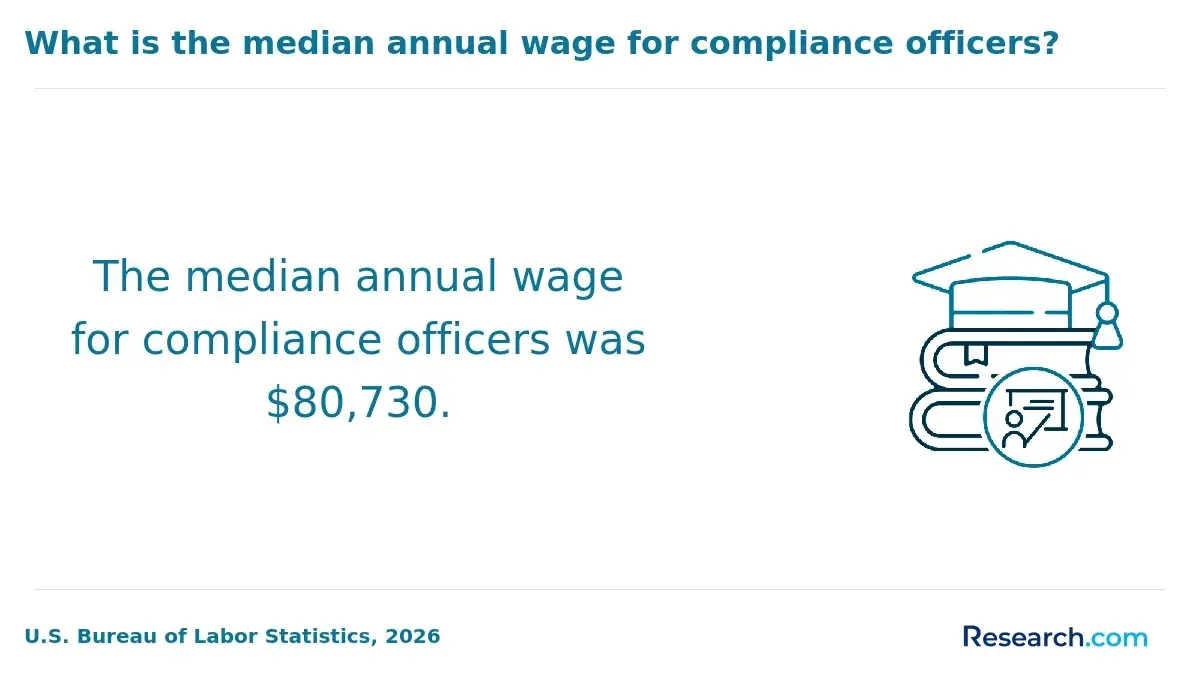
- Evaluate tuition against a realistic use case: the Bureau of Labor Statistics reports $80,730 in May 2025 as median pay for compliance officers, not as an expected salary or return for legal studies graduates.
What Is a Master's in Legal Studies for Small-Business Owners?
A Master of Legal Studies (MLS), Master of Studies in Law (MSL), or similarly named Master of Jurisprudence is generally a graduate degree designed to teach law to people who do not plan to become attorneys. Names and curricula vary by school. For an owner, the relevant question is whether the program teaches how to identify legal issues, interpret requirements, and decide when qualified counsel should step in.
These degrees differ from a Juris Doctor (JD), the usual U.S. law degree associated with the attorney licensing path. They also differ from paralegal education, which typically prepares people to support legal work under appropriate supervision. Owners primarily seeking business-focused coursework can compare business law degree options for working adults before committing to a broader legal studies curriculum.
How Can Legal Studies Master's Programs Help Small-Business Owners?
The strongest case for graduate legal study is repeated exposure to consequential issues, not the hope of eliminating legal bills. An owner who regularly negotiates vendor terms, manages employees, or oversees regulated data may benefit from recognizing a problem sooner, documenting decisions more carefully, and giving an attorney better information. Coursework may also support a move into an internal compliance or operations role.
Consider the alternatives alongside the degree. The comparison below focuses on the scope of learning and the business problem each route is most likely to address.
| Route | Most useful when | Main limitation |
| Legal studies master's | Several recurring legal or regulatory issues justify sustained, broad study | Substantial time and tuition; no authority to practice law |
| Graduate certificate or focused course | A defined issue, such as employment compliance, needs deeper attention | Less breadth; credits may not apply to a later degree |
| Attorney advice and employer training | A specific decision requires legal advice or staff need a repeatable procedure | Does not provide the owner with a structured graduate education |
A degree makes less sense if the immediate problem is a disputed contract, lawsuit, or state-specific licensing question. Those situations call for timely professional advice, not a future course.

Do Legal Studies Master's Graduates Need a Law License?
No law license is needed merely to study legal subjects or use that knowledge while running your own business. But an MLS, MSL, or related non-JD degree does not itself make a graduate an attorney or authorize the practice of law. Attorney admission requirements are set by jurisdictions and require a separate licensing path.
Owners can use what they learn to improve internal processes and prepare questions for counsel. They should not assume the degree allows them to represent other people, offer legal services, or personally handle a matter for which applicable law requires an attorney. Rules about representing a business in court and unauthorized practice vary by jurisdiction and setting.
What Courses Do Master's Programs in Legal Studies Include?
Programs commonly begin with legal research, legal reasoning, and an introduction to the U.S. legal system, then offer subjects such as contracts, employment law, business organizations, privacy, intellectual property, or compliance. Course titles alone do not reveal how much practice an owner will get: a survey of employment law is different from assignments involving policies, investigations, or workplace scenarios.
Match courses to decisions you actually make. A company with staff may prioritize employment and benefits issues; an online retailer may need privacy, consumer protection, and contract instruction. When comparing legal studies graduate specializations and salary outlook, check whether a specialization is a formal degree designation, an embedded certificate, or simply a suggested set of electives. None of those labels guarantees proficiency in a regulated field.
Are Online Legal Studies Master's Programs as Valuable as Campus Programs?
An online degree can be a sound choice if the institution is appropriately accredited and the courses provide the instruction and interaction you need. Delivery format alone does not establish quality. For an owner, the more important distinction is whether classes fit around operating hours: "online" can still mean live meetings, fixed deadlines, group projects, or required campus visits.
Ask for a sample term schedule and confirm whether required courses are available when you plan to take them. Also check how students access faculty, legal research resources, and practical assignments. If your business faces state-specific rules, determine whether the curriculum addresses your jurisdiction or whether you will need separate local guidance.
What Are the Admission Requirements for a Legal Studies Master's?
Applicants generally need a bachelor's degree, but each school sets its own rules for prior coursework, academic record, application materials, and professional experience. A law degree is not normally the point of these non-JD programs. Do not mistake a preferred background in business or compliance for a formal prerequisite; read the current admissions policy.
If you have earlier graduate coursework, ask the receiving school whether it accepts transfer credit and whether that credit replaces required courses or only electives. Admission and transfer decisions are separate. An owner without a bachelor's degree should first compare undergraduate routes rather than assume business experience substitutes for the published degree requirement.
How Long Do Legal Studies Master's Programs Take and Cost?
Completion time depends on required credits, course availability, and how many classes you can take while running your business. Published timelines may assume continuous enrollment or a particular course load. Compare the sequence of required courses - not just the shortest advertised completion time - and examine legal studies master's programs with shorter timelines only after checking what that pace demands each week.
For cost, request a program-specific estimate that includes tuition, mandatory fees, books or research resources, technology requirements, and any travel. Ask whether tuition changes with enrollment pace and whether the program is eligible for the financial aid you intend to use. Compare that total with the cost of a focused course or certificate and with the work time you would give up. A lower advertised tuition rate does not necessarily mean a lower total cost.
What Careers Can Small-Business Owners Pursue With Legal Studies Training?
Owners may apply the training within their companies or use it when pursuing roles in compliance, risk management, contract administration, or operations. Those jobs differ: compliance work may involve monitoring requirements and documenting controls, while contract administration may focus on terms, renewals, and coordination with counsel. Hiring requirements depend on the employer and industry; an MLS is not a universal entry requirement.
Experience in hiring, procurement, recordkeeping, or regulated operations may transfer, but candidates still need role-specific knowledge and evidence of their work. Someone primarily seeking a paralegal position should compare paralegal training instead of assuming a legal studies master's is the preferred credential. If finishing an undergraduate degree is part of that route, compare transfer policies for online paralegal bachelor's degrees; the receiving institution decides which credits count.
How Much Can Legal Studies Graduates Earn?
There is no single salary for legal studies graduates: the degree is used across jobs with different responsibilities, experience requirements, and pay. These Bureau of Labor Statistics occupation-wide benchmarks offer context, not earnings predictions for MLS holders or small-business owners.
| Occupation | Median annual pay | Projected net employment growth |
| Compliance officers | $80,730 in May 2025 | 4%, 2025-2035 |
| Paralegals and legal assistants | $62,890 in May 2025 | 0%, 2025-2035 |
| Labor relations specialists | $95,420 in May 2025 | 2%, 2025-2035 |
The paralegal benchmark is included for comparison, not because an MLS is required or sufficient for every paralegal opening. For an owner staying in business, a more useful return-on-investment test may be whether the coursework improves decisions enough to justify its full cost and the time away from work. That benefit is difficult to predict and should not be treated as a promised salary increase.
How Can You Choose an Accredited Legal Studies Master's Program?
Start by verifying that the university holds institutional accreditation from an accreditor recognized by the U.S. Department of Education or the Council for Higher Education Accreditation. Then evaluate the specific degree. Institutional accreditation is not a claim that an individual MLS program has separate approval, and American Bar Association approval of qualifying paralegal education programs is a different matter.
Before applying, use the same questions for every school. They expose differences that a program name or promotional timeline may hide:
- Which required courses address the legal issues my business encounters, and what practical assignments do students complete?
- What are the live-class, campus-visit, course-sequencing, and weekly workload requirements at my intended pace?
- What will tuition and required expenses total at that pace, and which forms of aid are available for this specific program?
- Who decides whether previous credits transfer, and how would accepted credits apply to degree requirements?
If your goal is supervised legal-support work rather than business management, compare accredited online paralegal programs by cost as a separate educational route. Do not confuse an institution's accreditation with ABA paralegal-program approval, and do not assume either credential authorizes independent legal practice. For an owner, the best reason to enroll is a clear match between recurring business responsibilities and coursework that a narrower, less costly option would not cover.
Other Things You Should Know About Law & Paralegal
Do not assume they will. A law school decides whether it accepts prior coursework and how any accepted credits apply. Ask the specific JD program before enrolling in an MLS for that purpose.
A business may be able to pay or reimburse education expenses, but the tax and employee-benefit treatment depends on its circumstances and applicable rules. Review the arrangement with a qualified tax adviser.
Not necessarily. Check the syllabus and ask whether state-specific materials are included. Even a relevant course is not a substitute for current local legal advice on a live matter.
Access depends on the school's licenses and alumni policies. If a database matters to your business, verify both student access and post-graduation terms before enrolling.
References
- Cost of Attendance (Budget) | 2025-2026 Federal Student Aid Handbook https://fsapartners.ed.gov/knowledge-center/fsa-handbook/2025-2026/vol3/ch2-cost-attendance-budget
- Accreditation in the U.S. | ed.gov http://www.ed.gov/laws-and-policy/higher-education-laws-and-policy/college-accreditation/accreditation-in-the-us
- Rules for Admission to the Practice of Law | courtswv.gov https://www.courtswv.gov/legal-community/rules-for-admission
- Research Your Options: U.S. Online Learning | EducationUSA https://educationusa.state.gov/your-5-steps-us-study/research-your-options/online-learning
- Master of Legal Studies (MLS) vs. JD: What's the Difference? | SMU Online Master of Legal Studies https://onlinemasterlegalstudies.smu.edu/articles/mls-vs-jd/
- Online Master of Legal Studies (MLS) | William & Mary Law School https://online.law.wm.edu/master-of-legal-studies
- MLS vs. JD: Which Legal Path Is Right for Non-Lawyers? | Goodwin College of Professional Studies https://drexel.edu/law/news/legal-studies-blog/mls-vs-jd-which-legal-path-is-right-for-non-lawyers/
- What is Business Law - And Why is it Important? | American Public University https://www.apu.apus.edu/area-of-study/security-and-global-studies/resources/what-is-business-law/
- UMass Global MyPath: Self-Paced Programs https://www.umassglobal.edu/why-umassglobal/flexible-ways-to-learn/self-paced
- Contract Management and Business Law | Winston College of Law https://winston.utk.edu/master-of-legal-studies-business-law/