2027 MLS Programs for Workplace Investigators: Interviewing, Evidence, and Employment Law Coursework

Co-Founder and Chief Data Scientist
Workplace investigators need to interview people fairly, evaluate conflicting evidence, and recognize when an allegation raises an employment law issue. A Master of Legal Studies (MLS) may strengthen those skills, but its value depends on the curriculum - not the degree name alone. This guide is for HR professionals, compliance staff, and career changers deciding whether graduate legal study is worth the time and cost. It explains which courses to look for, how to compare formats and expenses, and when focused training or experience may be the better next step.
Key Things You Should Know
- Prioritize an MLS with employment law, evidence analysis, interviewing or fact-finding practice, and substantial written assignments; a relevant concentration name alone is not enough.
- An MLS is not required for most workplace investigation roles and does not qualify its holder to practice law; supervised experience or targeted training may offer a shorter route.
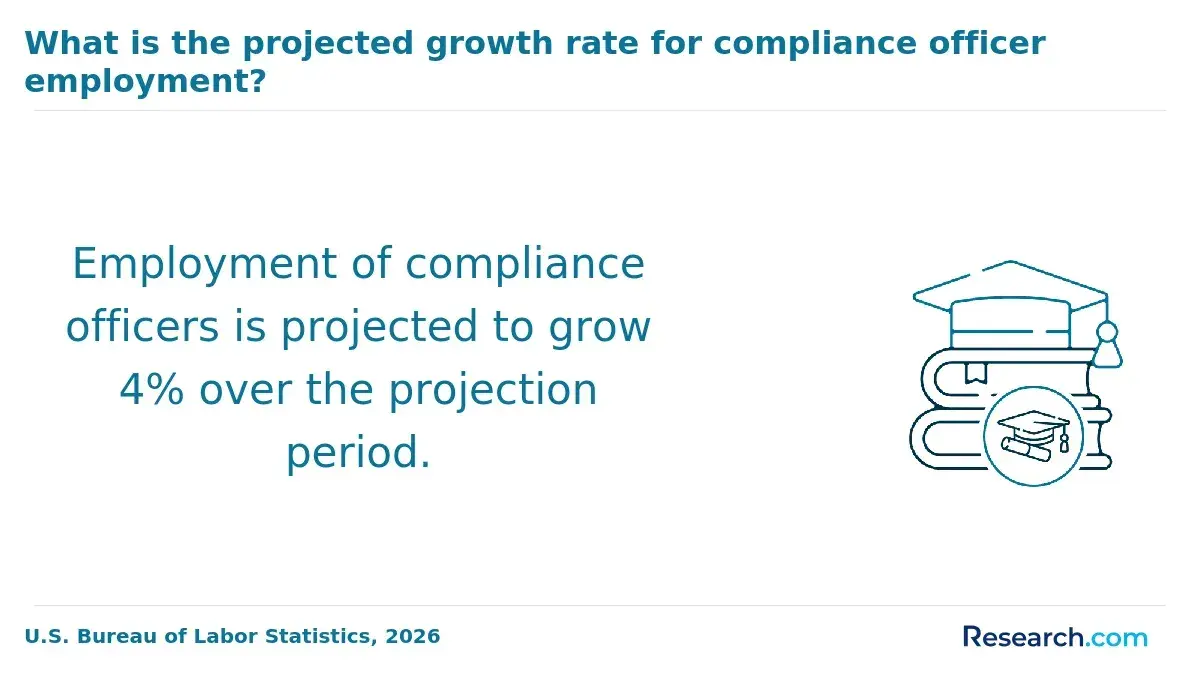
- The Bureau of Labor Statistics reports $80,730 median annual pay for compliance officers in May 2025 and 4% projected growth for 2025-2035, but those figures describe a broad occupation, not workplace investigators specifically.
What is an MLS degree for workplace investigators?
An MLS is a graduate degree designed to help nonlawyers understand and apply legal concepts in their work. Schools may use names such as Master of Studies in Law (MSL) or Master of Jurisprudence for related non-JD degrees. An MLS does not qualify graduates to practice law or replace advice from counsel.
Workplace investigators gather and assess information about allegations such as harassment, discrimination, retaliation, or policy violations. They plan interviews, review records, assess credibility, and write findings that an employer can use to decide what to do next. Legal study can help them identify relevant issues and communicate findings precisely, but the degree is most useful when it adds to practical investigation skills and experience.
When comparing programs, distinguish a formal concentration from a few relevant electives. A concentration has published requirements; electives may depend on availability. Neither label proves that students practice interviews or prepare investigation reports.
What coursework prepares students for workplace investigations?
The strongest curriculum connects legal rules to fact-finding. The comparison below shows what to look for in course descriptions and assignments, rather than assuming that a course title establishes practical training.
| Coursework area | Useful investigation application | Evidence of practical learning |
| Employment discrimination and retaliation | Identify legally relevant allegations and protected activity | Analyze a workplace fact pattern and distinguish policy from legal issues |
| Interviewing or investigations | Plan neutral questions, follow up on inconsistencies, and document accounts | Conduct a simulated interview with feedback |
| Evidence and legal research | Assess documents, timelines, credibility, and gaps in the record | Evaluate a case file using applicable authority |
| Legal writing or dispute resolution | Present supported findings without overstating conclusions | Draft a findings memorandum or investigation report |
| Privacy and information governance | Handle sensitive records and limit unnecessary disclosure | Apply retention and access rules to a scenario |
An evidence course may focus on courtroom admissibility rather than internal investigations, where different rules can apply. Ask for a syllabus or sample assignment to see whether students actually practice weighing conflicting accounts, preserving records, and explaining the basis for a finding.
What employment law skills do workplace investigators need?
Investigators need enough employment law knowledge to spot the issues an allegation raises, ask relevant questions, and know when to involve counsel. Federal topics commonly include discrimination and harassment under Title VII, disability-related issues under the Americans with Disabilities Act, age discrimination, and retaliation. Leave, wage-and-hour, labor, and state or local requirements may also matter, depending on the allegation and workplace.
The skill is not merely memorizing statutes. An investigator must separate what a witness observed from what they inferred, compare accounts against records, document both supporting and contrary evidence, and apply the employer's stated standard of proof. They should avoid promising absolute confidentiality or assuming that an internal investigation is automatically protected by attorney-client privilege.
Look for coursework that addresses employee privacy, record preservation, and clear findings. Those subjects become especially important when interviews or evidence are collected remotely. Legal questions, privilege decisions, and the employer's response should be escalated to qualified counsel when appropriate; an MLS does not authorize independent legal advice.
Are online or campus-based MLS programs better for investigators?
Neither format is inherently better. For an investigator, the decisive question is whether the schedule allows participation in realistic exercises and feedback. An online course can be highly interactive, while a campus course can still rely primarily on lectures.
Check whether online classes meet at scheduled times, whether interviews are simulated live, and whether any campus visits or proctored assessments are required. For campus programs, compare commute time and course availability with your work schedule. In either format, ask who reviews written findings and whether students can take the employment law and practical-skills courses in a workable sequence.
If your immediate goal is a faster entry into legal-support work rather than graduate-level employment law study, online paralegal programs with faster completion pathways offer a different route to compare. Paralegal education is not a substitute for investigation experience, and an MLS is not a substitute for paralegal training when that is what a job requires.
What are the admission requirements for MLS programs?
MLS programs generally expect applicants to hold a bachelor's degree, but GPA thresholds, recommendations, statements, résumés, and test policies vary by school. A JD or previous legal coursework is generally not the point of a non-JD legal studies degree. Check the current admissions page for the specific program rather than assuming that one university's rules apply elsewhere.
Applicants with HR, employee relations, compliance, labor relations, or investigation experience can use their statement to explain the legal questions they encounter and the skills they want to develop. Career changers should ask whether introductory legal research and writing support is available.
If you are still completing an undergraduate degree, explore business law degree transfer options separately from MLS admission. The receiving undergraduate institution decides how prior credits apply; an MLS program separately decides whether your completed degree meets its admission rules.
How long do MLS programs take, and how much do they cost?
Completion time depends on required credits, course sequencing, and whether you study full time or part time. Before accepting an advertised timeline, confirm when required employment law courses are offered and whether a capstone or other culminating requirement can be completed while working.
Compare total expected cost, not just tuition per credit. Request an itemized estimate covering mandatory fees, books, technology, any required travel, and the credits you must actually complete. Ask whether employer tuition assistance applies and confirm financial aid eligibility with the school's financial aid office; admission to a graduate program does not itself establish a particular aid award.
A lower-priced program can be a good choice if its courses and schedule support your goals. Use cheapest online legal studies master's degrees as a starting point for cost comparisons, then verify current tuition and required fees directly with each school. Include the value of time spent studying instead of gaining supervised investigation experience.
Is an MLS degree required to become a workplace investigator?
No general U.S. requirement makes an MLS the entry credential for workplace investigations. Employers set their own qualifications, and requirements can differ for an in-house investigator, an HR generalist who handles complaints, and an outside investigator. State rules may also affect independent investigation work.
A paralegal certificate is another distinct option if the goal is legal-support work. Resources on finding an online paralegal certificate program can help with that comparison. Completing a certificate does not automatically make someone professionally certified, and neither a paralegal certificate nor an MLS independently authorizes the practice of law.
What careers can workplace investigators pursue after an MLS?
Possible paths include employee relations investigator, HR investigations specialist, ethics or compliance investigator, labor relations specialist, and investigations manager. The degree may support a move into work involving legal analysis or policy interpretation, but hiring and advancement depend on case experience, judgment, writing, and the employer's needs.
A practical progression is to handle appropriately supervised complaints, build a record of well-documented investigations, and then seek roles with broader or more complex caseloads. HR and compliance professionals may already have valuable interviewing and workplace-policy knowledge; career changers must also learn how to manage evidence, assess credibility fairly, and write defensible findings.
If you do not yet have a bachelor's degree and are exploring entry-level legal-support work, our list of online associate programs in legal studies addresses a different starting point. An associate degree is not an MLS admission substitute; compare it against the requirements of the jobs you intend to pursue.
What salary and job outlook can workplace investigators expect?
The Bureau of Labor Statistics (BLS) does not provide a single wage and growth figure for every job titled "workplace investigator." These broader occupations offer context, not a salary prediction for an investigator or an estimate of the payoff from an MLS.
| Related BLS occupation | Median annual pay | Projected employment growth |
| Compliance officers | $80,730 in May 2025 | 4%, 2025-2035 |
| Labor relations specialists | $95,420 in May 2025 | 2%, 2025-2035 |
Compliance officers work across many regulatory areas, while labor relations specialists focus on a broader set of employer-employee issues. Neither category isolates workplace investigation duties. Compare actual postings by location, sector, and experience level before using either benchmark to judge whether graduate tuition is worthwhile.
How can students choose an accredited MLS program?
First, confirm that the university holds recognized institutional accreditation, using its accreditor's records and, if needed, U.S. Department of Education or CHEA resources. Accreditation of the institution is distinct from the American Bar Association's approval of qualifying paralegal education programs; ABA paralegal program approval is not an MLS quality designation.
Then compare programs against the work you want to do. This short review sequence helps reveal gaps that a concentration name or marketing description may conceal.
- Map required and elective courses to employment law, interviewing, evidence assessment, privacy, and report writing.
- Request syllabi or assignment descriptions showing whether students receive feedback on interviews and findings.
- Confirm course rotation, live-session expectations, campus visits, and realistic completion time.
- Get a current itemized cost estimate and ask employers whether the degree would change your eligibility for target roles.
A warning sign is a program marketed for investigators that offers relevant legal theory but no opportunity to practice fact-finding. That program may still be useful for legal knowledge; it should not be mistaken for complete investigation training.
Other Things You Should Know About Law & Paralegal
Recording rules vary by state and circumstances. Follow applicable consent law and employer policy, and determine whether recording is appropriate before the interview begins.
Usually, an investigator should not promise absolute confidentiality. Explain that information will be shared only as needed to investigate, respond, or meet legal obligations, subject to the employer's actual practices.
No. Privilege depends on the purpose and circumstances of the communication, among other factors. Involving a lawyer does not automatically make every note or report privileged.
Requirements can vary by state and by the services offered. Before accepting outside investigation work, check the rules in each relevant state and obtain legal guidance if the requirements are unclear.
References
- Enforcement Guidance on Disability-Related Inquiries and Medical Examinations of Employees under the ADA https://www.eeoc.gov/laws/guidance/enforcement-guidance-disability-related-inquiries-and-medical-examinations-employees
- The Chain of Custody in the Era of Modern Forensics - PMC https://pmc.ncbi.nlm.nih.gov/articles/PMC10000967/
- Labor laws and worker protection | usa.gov https://www.usa.gov/labor-laws
- Employment | CRD - Civil Rights Department - CA.gov https://calcivilrights.ca.gov/employment/
- What Can You Do with a Master's in Legal Studies Degree? | Vanderbilt Master of Legal Studies https://law.vanderbilt.edu/master-legal-studies/articles/what-jobs-can-you-earn-with-masters-in-legal-studies/
- Tuition & Financial Aid | MSEd, Literacy Specialist - Pace Online https://online.pace.edu/graduate-programs/msed-literacy-specialist/tuition-financial-aid/
- Online Master of Legal Studies (MLS) | William & Mary Law School https://online.law.wm.edu/master-of-legal-studies
- Master of Legal Studies Online (MLS) | Pepperdine Caruso School of Law https://law.pepperdine.edu/online-master-of-legal-studies/
- How Is Digital Evidence Preserved in Modern Investigations? | American Military University https://www.amu.apus.edu/area-of-study/criminal-justice/resources/how-is-digital-evidence-preserved/
- Trauma-Informed Interviewing Techniques | Stanford Center for Health Education https://digitalmedic.stanford.edu/trauma-informed-interviewing-techniques