
2027 Paralegal Certificate Programs With Internship Alternatives: Comparing the Learning Experience

Co-Founder and Chief Data Scientist
An internship can be difficult to fit around a job, caregiving, or a move - but skipping one should not mean graduating without practice. Paralegal certificate programs may offer supervised projects, simulations, clinics, or other ways to apply legal skills. This guide compares what those experiences actually teach, where they fall short of a workplace placement, and what to confirm before enrolling. It is for prospective paralegals and career changers who need a practical learning experience without assuming they can commit to a conventional internship.
Key Things You Should Know
- A simulation can build a writing portfolio, but it cannot fully replicate workplace deadlines, client confidentiality, and attorney feedback. Look for assessed work products, not just a promise of "hands-on" learning.
- "Online" does not mean self-paced or internship-free. Confirm scheduled meetings, placement requirements, and whether an alternative satisfies a required practicum before enrolling.
- The Bureau of Labor Statistics projects about 40,800 paralegal and legal assistant openings per year in 2025-2035, despite 0% projected employment growth. Practical skills matter, but a certificate does not guarantee a job.
What are paralegal certificate programs with internship alternatives?
These are paralegal education programs that let students complete practical learning through something other than a conventional placement at a law office or legal department. Depending on the school, the alternative might be a supervised capstone, a simulated case file, a campus legal clinic, or approved legal work the student already performs. An alternative is available only if the specific program permits it; some programs require an internship with no substitution.
A certificate is an educational award for completing a program. It is not the same as professional certification, a credential granted under a certification body's separate rules. Certificate programs also differ in level: some admit applicants with a high school diploma, while post-baccalaureate certificates require a bachelor's degree. Readers considering certificate-level paralegal education online should check both the entry requirement and the practical-work requirement on each program's current catalog page.
For this decision, the most useful distinction is not "internship versus no internship." It is whether students repeatedly research, draft, revise, organize, and explain legal work under meaningful supervision. Neither a certificate nor its practical component authorizes a graduate to practice law or give independent legal advice.
How do online and campus-based paralegal certificate programs compare?
Delivery format affects when and how students practice, but it does not determine whether practical training is strong. This comparison separates class access from the scheduling and feedback commitments that matter most.
| Learning feature | Online program | Campus-based program |
| Schedule | May use live meetings, fixed deadlines, or asynchronous lessons | Usually requires travel for scheduled classes |
| Practice and feedback | May use shared case files, recorded exercises, and written instructor comments | May offer in-person drafting workshops, role-play, and immediate discussion |
| Workplace exposure | Remote study does not remove a required local placement | Campus attendance does not guarantee a placement |
| Main constraint to check | Time-zone, technology, live-session, and practicum rules | Commute, class times, and practicum rules |
An online program may be the better fit if its scheduled work is manageable and its assignments produce instructor-reviewed documents. A campus program may suit someone who learns best through face-to-face workshops or has access to a local clinic. In either case, inspect a sample weekly schedule and ask how often substantive work receives individual feedback. A program described as flexible may still require daytime placement hours or live evening classes.
What alternatives to internships provide practical paralegal experience?
The strongest alternative lets a student complete a sequence of realistic tasks and improve the work after feedback. Options vary by program; the table shows what each can demonstrate and what it may leave out.
| Alternative | What students may practice | Important limitation |
| Simulated case file or capstone | Research, document drafting, file organization, and deadline tracking | Does not reproduce unpredictable client or workplace demands |
| Supervised legal clinic or service project | Workflows involving real matters under appropriate supervision | May still require fixed hours, screening, or on-site attendance |
| Approved current legal employment | Applying coursework to existing workplace tasks | Routine duties may not meet a program's learning objectives |
| Faculty-supervised research project | Source evaluation, legal analysis, and writing | May provide less practice with case management and teamwork |
Before relying on an alternative, get the program's approval conditions in writing. Ask who evaluates the work, what deliverables are required, whether the activity earns the same credit as an internship, and whether an employer must sign an agreement. Students working with real matters must follow the supervising organization's confidentiality and unauthorized-practice rules; an academic project is not permission to serve clients independently.
What do paralegal certificate programs teach?
Typical subjects include the U.S. legal system, legal research and writing, civil litigation, ethics, and the organization of legal documents. Programs may add contracts, real estate, family law, business law, or electronic discovery. The value of an internship alternative depends on whether students use those subjects - for example, finding authority, drafting a memo from a fact pattern, revising it after feedback, and maintaining an accurate case file.
Technology descriptions deserve a close read. A course that mentions legal research databases or artificial intelligence is different from one that provides student access and graded, hands-on assignments. Ask which tools students actually use, what access costs, and how instructors teach verification and confidentiality. Familiarity with a tool is not the same as workplace proficiency or an external software credential.
Paralegal coursework prepares students for supervised legal-support work, not attorney practice. Someone whose primary goal is broad legal knowledge for a non-paralegal role may need a different curriculum; a non-JD legal studies degree likewise does not qualify its holder to practice law.
How long do paralegal certificate programs take, and what do they cost?
Completion time depends on prerequisites, required courses, course sequencing, and whether students attend full time or part time. An internship alternative may remove placement-search time without shortening the academic calendar: a capstone can still run for a full term. Ask for a course-by-course schedule based on your intended start date rather than relying on an advertised "finish in" claim.
For a useful 2026 cost comparison, request a written estimate of total required cost, not tuition alone. Include mandatory fees, books, research-platform access, technology, travel or campus visits, and any costs tied to a clinic or placement. Compare programs using the same unit - total certificate cost or cost per credit - and note whether the award is credit-bearing. A cheaper noncredit course may meet an immediate skills goal but may be less useful to someone seeking future college credit.
Do not assume that a certificate qualifies for federal financial aid, even at an accredited college. Eligibility depends on the specific program and the student's circumstances. If paying over time would help, distinguish a school's certificate payment arrangement from paralegal degree programs with installment payment plans; degree-program terms may not apply to a separate certificate. Request the current aid and payment terms directly from the school.
What are the admission requirements for paralegal certificate programs?
Requirements vary substantially. An entry-level certificate may accept applicants with a high school diploma or equivalent, while a post-baccalaureate certificate requires a completed bachelor's degree. Other programs require prior college coursework, particular general education classes, or a minimum academic standing. A preferred background is not necessarily a formal prerequisite, so use the current admissions and catalog language to distinguish the two.
If you already have college credit, ask whether it can satisfy a prerequisite or a certificate requirement and whether the completed certificate credits could later apply to a degree. The receiving institution decides how transfer credit counts. Students planning beyond a certificate can compare transferring an associate degree into legal studies bachelor's study, but should obtain a program-specific credit evaluation before treating that route as assured.
How do accreditation and professional standards apply to paralegal programs?
Institutional accreditation concerns the college or other educational institution. American Bar Association approval applies to qualifying paralegal education programs, not to an institution as a whole. They are separate statuses: attendance at an accredited college does not establish that its paralegal program is ABA-approved, and the ABA does not certify individual graduates.
If ABA approval matters to an employer, your education plans, or your own preference, check the program's current status in the ABA's official paralegal program directory. Check institutional accreditation through the institution's recognized accreditor or U.S. Department of Education resources. Then examine the particular certificate: a school may offer multiple paralegal credentials, and you should not assume they all have identical approval or practical-training requirements.
Approval can be a useful quality signal, but it is not a substitute for checking how students receive feedback and complete practical work. Conversely, the absence of ABA approval does not by itself establish that a program is poor or that its graduates cannot seek paralegal jobs. Employer preferences and applicable state rules still matter.
Do paralegals need certification or a state license?
There is no single nationwide paralegal license or professional certification required for every paralegal job. Employers may prefer particular education or experience, and state rules can affect who may use certain titles or perform particular tasks. Check the rules where you intend to work rather than treating another state's standard as universal.
Professional credentials offered by organizations such as the National Association of Legal Assistants and the National Federation of Paralegal Associations have their own eligibility and examination rules. A school certificate does not automatically award one of those credentials or establish exam eligibility. Ask a prospective program which credential, if any, its coursework is designed to support, then confirm the current requirements with the credentialing body.
Whatever their education or certification, paralegals generally perform substantive legal-support work under attorney supervision and must not independently give legal advice or represent themselves as attorneys.
What careers and salaries can paralegal certificate graduates expect?
Graduates may seek paralegal or legal assistant positions supporting research, document preparation, discovery, transactions, or case organization. Job titles and entry requirements vary by employer; some positions prefer prior legal experience or a degree in addition to a certificate. A supervised project can help demonstrate skills, but it is not the same hiring signal as documented workplace experience.
The Bureau of Labor Statistics reports $62,890 in median annual pay for paralegals and legal assistants in May 2025 and 0% projected job growth, 2025-2035. The median describes workers across experience levels and settings, not an expected starting salary. The projection makes it especially important to compare local openings and employer requirements rather than assuming that completing a program will lead directly to a position.
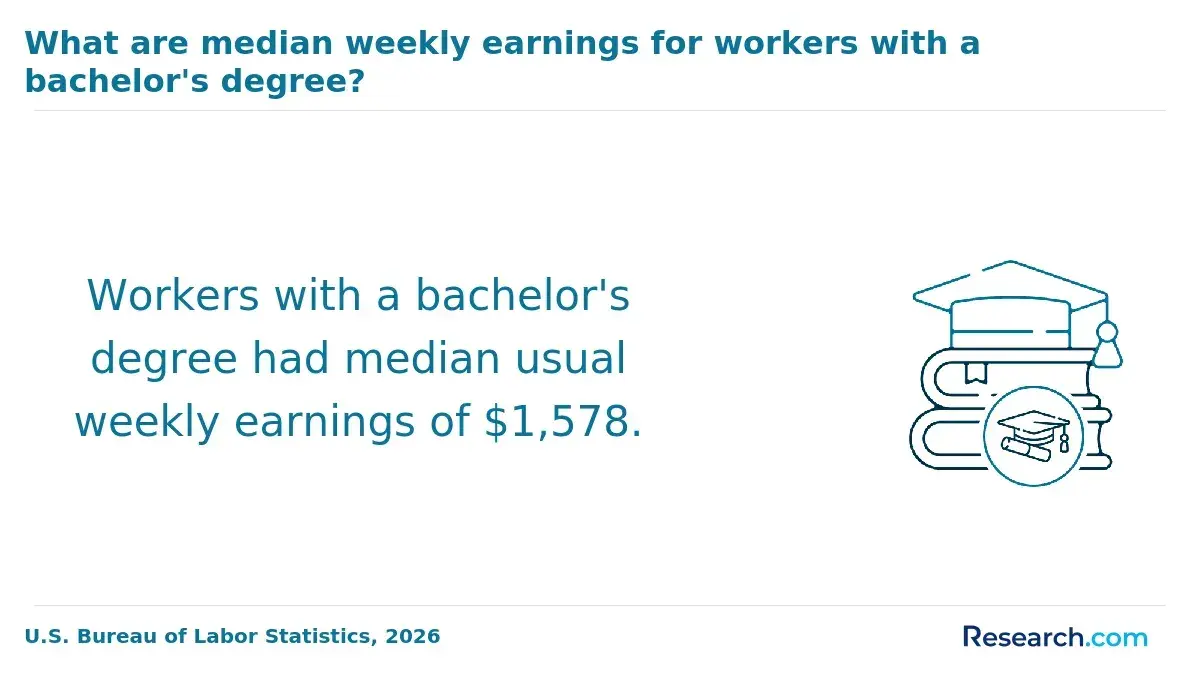
A certificate may be an efficient route for someone who already meets local employers' education preferences. If job postings consistently call for a bachelor's degree, compare the time and cost of shorter paralegal bachelor's degree pathways before paying for a certificate that may not address that requirement.
How can you choose a reputable paralegal certificate program?
Start with the legal-support jobs you would realistically apply for, then compare programs against those employers' stated preferences. The following checks expose the differences that a "hands-on" or "flexible" label can hide.
- Confirm the exact certificate name, admission prerequisites, credit status, institutional accreditation, and any claimed ABA program approval using current official records.
- Request the practical-course syllabus and identify the work products, number and type of feedback opportunities, and qualifications of the person evaluating the work.
- Ask whether an internship is required, who finds placements, and precisely which simulations, clinics, remote arrangements, or current-employment substitutions are permitted.
- Map live classes, campus visits, exams, and practical-work hours onto your actual weekly schedule; then compare written total-cost estimates and program-specific aid eligibility.
- Check local job postings and ask the school for clearly defined outcomes, including how it counts graduates who already worked in legal roles.
A red flag is an internship waiver promised in conversation but absent from written policy. Another is an employment claim with no definition of the graduates or jobs counted. If your intended role is in compliance or another field that needs legal knowledge rather than paralegal training, compare the certificate's opportunity cost with alternatives such as employer training or affordable graduate programs in legal studies. A graduate legal studies degree is a different investment and does not qualify someone to practice law.
Other Things You Should Know About Law & Paralegal
Usually, if it is your work and the program permits sharing it. Label it as a simulation, remove any restricted course materials, and be prepared to explain your research and revisions.
Do not use client or employer materials without explicit permission. Even redacted documents can disclose sensitive information. A new, fictionalized sample is often a safer way to show the same skill.
Describe it accurately as a capstone, clinic, or simulated project, including your tasks and supervision. Do not list a classroom simulation as employment or imply that you served actual clients.
No. Law schools set their own admission requirements, and a paralegal certificate does not replace a required undergraduate degree or the law degree and licensing steps needed to become an attorney.
References
- Program Eligibility, Written Arrangements, and Distance Education | 2024-2025 Federal Student Aid Handbook https://fsapartners.ed.gov/knowledge-center/fsa-handbook/2024-2025/vol2/ch2-program-eligibility-written-arrangements-and-distance-education
- Internship Supervisors | Communication | SUNY Buffalo State University https://communication.buffalostate.edu/internship-supervisors
- Practicums, Internships and Projects What's the Difference? | Oregon State University https://health.oregonstate.edu/internships/types-of-experiential-learning
- Gaining Experience During Law School: What You Need to Know | Ohio Northern University https://law.onu.edu/news/gaining-experience-during-law-school-what-you-need-know
- Paralegal Certificate vs. Degree: Which Is Right for You? | Online Paralegal Studies Certificate Program https://paralegalonline.bu.edu/articles/paralegal-certificate-vs-degree/
- Professional Responsibility | Georgetown Law https://www.law.georgetown.edu/experiential-learning/pro-bono-community-service/what-is-pro-bono/professional-responsibility/
- 10 Skills Every Paralegal Needs to Succeed in Today's Legal Industry https://sopa.tulane.edu/blog/10-skills-every-paralegal-needs-succeed-todays-legal-industry
- Student internships and employment opportunities after graduation: A field experiment - ScienceDirect https://www.sciencedirect.com/science/article/pii/S0272775721000601
- Paralegal Certificate Program | UC San Diego Division of Extended Studies https://extendedstudies.ucsd.edu/educational-programs/paralegal-certificate-program
- Legal Studies for the Paralegal Programs | STLCC https://stlcc.edu/pathways/social/legal-studies-paralegal/


