2027 Online MLS Programs for Entrepreneurs Building Regulated Businesses

Co-Founder and Chief Data Scientist
A founder in healthcare, financial services, or another regulated industry must make decisions that ordinary business courses may not prepare them for: which rules apply, what records to keep, and when to call a lawyer. An online Master of Legal Studies (MLS) can build legal literacy without requiring a career change.
However, graduate study takes time and money that could also go toward specialized training or legal counsel. This guide explains what an MLS can - and cannot - do for a regulated business, then shows you how to evaluate programs against your company's actual risks.
Key Things You Should Know
- An MLS can help founders recognize regulatory issues and manage compliance processes, but it does not authorize them to practice law or replace industry-specific counsel.
- Compare programs by courses tied to your product and jurisdiction, assessed practical work, online scheduling, institutional accreditation, and total cost - not by a concentration's name alone.
- The U.S. Bureau of Labor Statistics reports $80,730 median annual pay for compliance officers in May 2025 and 4% projected growth for 2025-2035; those occupation-wide figures do not predict a founder's return on an MLS.
What is an online MLS degree for entrepreneurs in regulated industries?
An online MLS is a graduate, non-Juris Doctor (non-JD) degree designed to help people use legal concepts in work that does not require an attorney license. Schools may call a related degree a Master of Studies in Law (MSL) or Master of Jurisprudence; the credential name matters less than its courses and requirements.
For a founder, the potential value is practical: identifying when a business decision raises a legal issue, asking counsel better questions, and building processes that employees can follow. Consider a health-technology company evaluating patient information practices or a financial-services startup planning a new product. Both need to understand which obligations may apply before turning a legal opinion into operating procedures.
An MLS is most plausible when the founder expects sustained responsibility for legal and regulatory coordination. If the immediate need is a single launch decision, specialized counsel or a short course may be a better first investment. Compare legal studies master's or shorter graduate certificate study before committing to a full degree.
Can an online MLS prepare entrepreneurs to manage legal and regulatory compliance?
Yes, it can strengthen a founder's ability to organize compliance work, provided the curriculum matches the business. Compliance management means identifying applicable obligations, assigning responsibility, documenting controls, training staff, monitoring problems, and escalating issues. An MLS can teach the legal framework and analytical habits behind that work; it cannot establish that a company's particular product is compliant.
The distinction matters when deciding what to study and what to delegate. This table separates work a legally trained founder may help coordinate from matters that call for qualified advice.
| Business task | Potential contribution from MLS study | Important limit |
| Regulatory change tracking | Locate rules, summarize changes, and route them to the right team. | Counsel may need to determine whether a rule applies to the company. |
| Policies and controls | Turn established requirements into workflows, records, and training. | A lawyer or specialist should review consequential legal interpretations. |
| Product expansion | Spot questions about licensing, privacy, contracts, or marketing early. | State-specific permissions and product-specific advice require separate verification. |
Before enrolling, write down the regulatory decisions your business expects to face over the next year. If a program cannot connect its assignments or electives to those decisions, the degree may be less useful than targeted training and an ongoing relationship with counsel.
Does an MLS qualify graduates to practice law or take the bar exam?
No. An MLS, MSL, or similar non-JD legal studies degree does not by itself qualify a graduate to practice law, represent clients, or sit for a bar exam. Attorney admission rules vary by jurisdiction, and an entrepreneur who wants to become a lawyer should investigate that jurisdiction's approved routes to bar eligibility rather than assume MLS credits will count.
A founder can use legal knowledge to participate in their own company's compliance work, but the degree does not create a license to provide legal services to others. It also does not eliminate the need for counsel when the company faces a licensing question, enforcement matter, complex transaction, or disputed interpretation.
What do online MLS programs teach about business law and regulation?
Relevant courses may cover contracts, business organizations, administrative law, employment law, privacy, risk management, and regulatory research. Founders should look past course titles: an introduction to privacy law is different from an assignment that requires evaluating a data-handling scenario and explaining an escalation decision.
Match the curriculum to the business model. A founder hiring across states may prioritize employment and contracts; a company handling sensitive information may need deeper privacy and security-related coursework. Industry labels also need scrutiny: a formal concentration has defined requirements, while a few electives or an embedded certificate may offer a different level of depth.
If business-law knowledge is the primary goal and timing matters, compare course sequences as well as advertised completion times. Resources on faster routes to a master's in business law can help frame that comparison, but confirm that the courses you need are offered when you plan to take them.
How do you choose an accredited online MLS program?
Start with the institution's current accreditation status and confirm that the degree appears in its official catalog. Institutional accreditation is different from American Bar Association (ABA) approval of a paralegal education program; ABA paralegal approval is not an accreditation requirement for an MLS.
Next, test the program against your operating needs. Ask for the current course schedule, syllabi or assignment examples, and a complete account of any live meetings, campus visits, examinations, or capstone requirements. "Online" does not necessarily mean asynchronous or self-paced.
Finally, ask who teaches the relevant courses and whether you can complete substantial work on realistic regulatory problems. A useful red flag is a program that markets an industry specialization but cannot identify its required courses, practical assessments, or how often those courses run. Choose on documented fit, not the specialization label.
What are the admission requirements for online MLS programs?
Most MLS programs are graduate degrees intended for applicants who already hold a bachelor's degree. Individual schools set their own rules for transcripts, minimum academic standing, statements of purpose, recommendations, testing, and professional experience. Treat an admissions page as the authority for that program rather than assuming another school's requirements apply.
Applicants without a bachelor's degree should not assume business experience substitutes for it. They can explore undergraduate routes first, including legal studies associate degree study options, while checking how any later institution would evaluate transfer credit. The receiving school decides whether prior coursework applies to its degree.
If you already have a bachelor's degree in a technical or business field, ask whether legal coursework is a prerequisite or simply helpful preparation. Also confirm whether admission to the MLS automatically permits enrollment in the electives most relevant to your industry.
How long do online MLS programs take, and what do they cost?
Completion time depends on required credits, course availability, and whether you study full time or part time. A published fastest-possible timeline may assume a course load that is unrealistic while building a company. Ask the school to map the required courses to your intended schedule, including any courses offered only at particular times.
Compare total educational cost, not just advertised tuition. Request the current tuition and mandatory-fee schedule and check for books, technology or legal-research charges, and travel for any required visits. If financing matters, confirm the specific program's federal aid eligibility and review its official aid offer before relying on loans or employer benefits.
The opportunity cost is equally important: time spent on coursework cannot also be spent on customers, operations, or a targeted consultation with counsel. Use comparing cost and earnings for legal studies master's degrees as a starting framework, then assess the expense against the work you personally expect to do - not a promised salary increase.
Which careers can entrepreneurs pursue with an online MLS degree?
A founder may use MLS training inside their own business to oversee policies, coordinate outside counsel, or lead a growing compliance function. If they later move into employment, relevant roles may include compliance officer, regulatory affairs professional, contract manager, or risk manager. Hiring standards vary by employer and industry; an MLS is generally an optional qualification, not a universal entry requirement.
Entrepreneurial experience can be valuable evidence of project management, documentation, and cross-functional decision-making. Employers may still expect direct experience with their regulations, audits, investigations, or products. An MLS can help explain the legal context of that work, but it does not replace a track record.
Paralegal work is a different route, usually focused on supporting lawyers rather than running a company's compliance program. Someone considering that pivot should check employer education preferences and, if pursuing an undergraduate degree, review credit transfer considerations for paralegal bachelor's programs. Paralegal education, institutional accreditation, and any professional certification are separate questions.
What salaries and job outlook can MLS graduates expect?
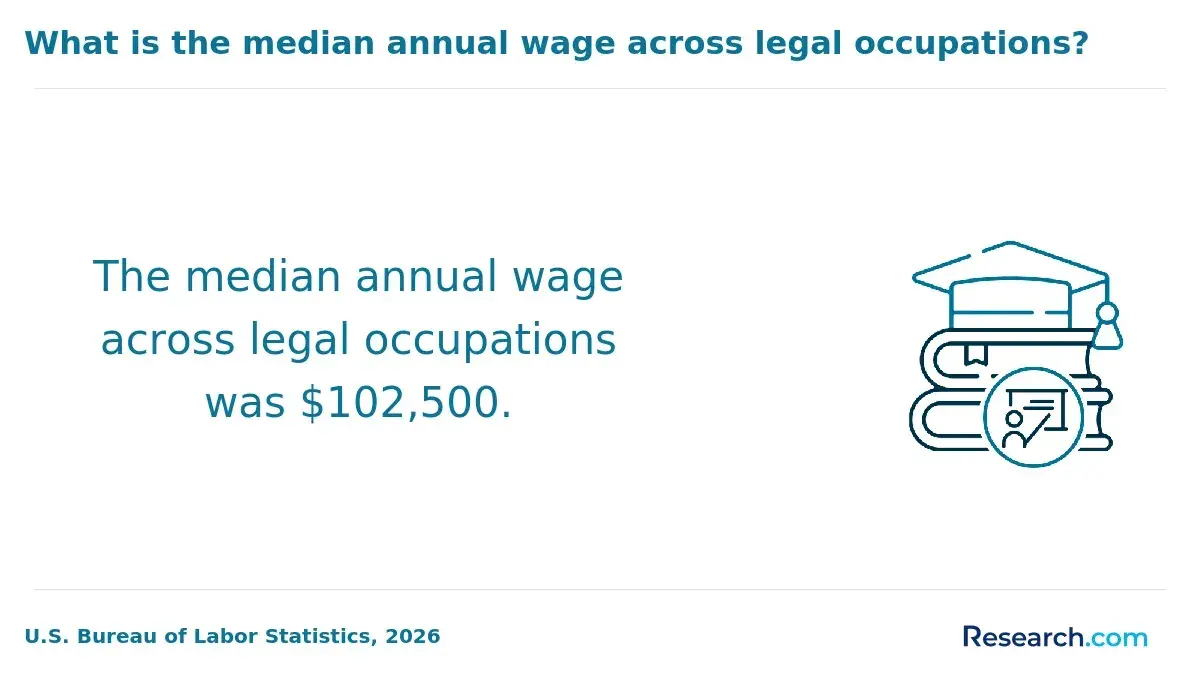
There is no reliable occupation-wide "MLS graduate salary" that predicts what a founder or graduate will earn. U.S. Bureau of Labor Statistics figures instead describe occupations with many entry routes. The benchmarks below are useful for evaluating a potential career change, not for estimating the degree's return.
| Occupation | Median annual pay | Projected net employment growth | Relevance to an MLS holder |
| Compliance officers | $80,730 in May 2025 | 4%, 2025-2035 | A broad benchmark for roles that monitor adherence to laws and policies. |
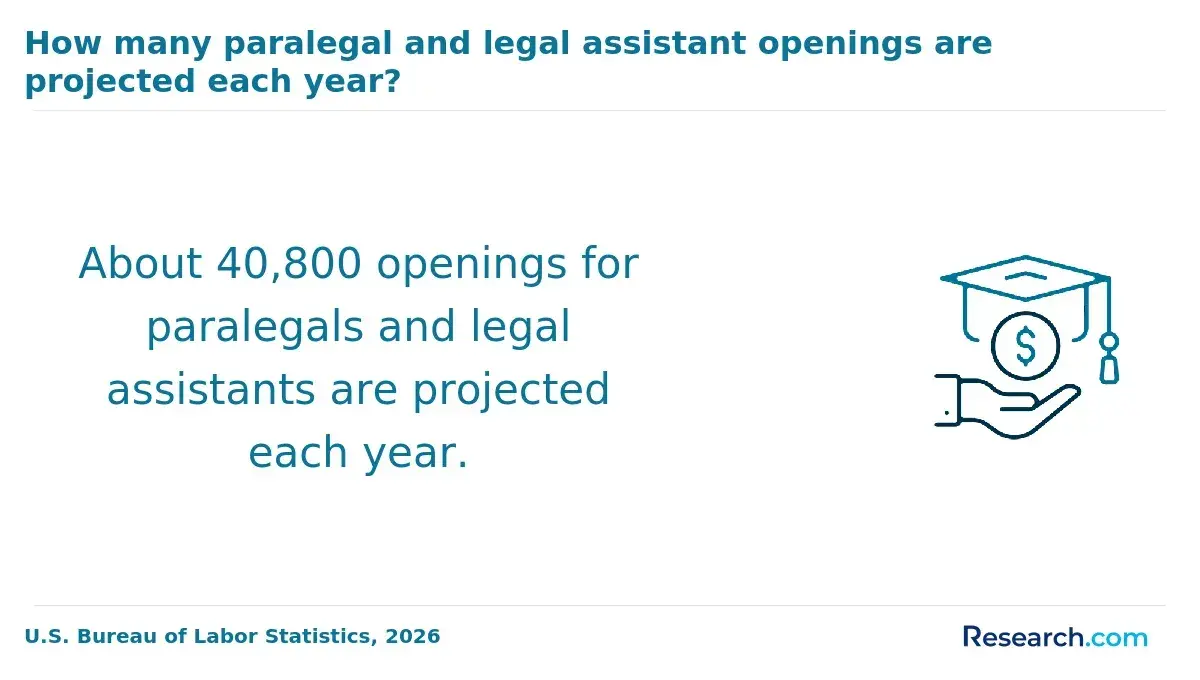
| Paralegals and legal assistants | $62,890 in May 2025 | 0%, 2025-2035 | A legal-support benchmark, not a direct measure of founder or compliance pay. |
The Bureau of Labor Statistics also projects about 32,700 compliance-officer openings per year over 2025-2035. Openings do not mean that an MLS is required or that a new graduate will qualify. For a founder, business revenue, ownership, prior experience, and industry conditions will usually matter more than an occupation-wide wage median.
Which certifications complement an MLS for regulated-business compliance?
A professional certification is a credential awarded by a certifying organization under its own eligibility and assessment rules. It is not the same as a university certificate, which documents completion of a course or program. Neither automatically confers legal authority.
Choose a credential only after identifying the work you intend to perform. The Compliance Certification Board's Certified Compliance & Ethics Professional (CCEP) addresses general compliance and ethics; its Certified in Healthcare Compliance (CHC) is more specifically oriented toward healthcare. The International Association of Privacy Professionals offers the Certified Information Privacy Professional/United States (CIPP/US) for U.S. privacy knowledge. Financial-crime work may point toward the Association of Certified Anti-Money Laundering Specialists' Certified Anti-Money Laundering Specialist (CAMS).
Check each issuer's current eligibility, exam, renewal, and experience rules before paying for preparation. For a founder facing one immediate regulatory question, counsel and product-specific training may be more valuable than either a certification or an MLS. For sustained responsibility across legal issues, the degree's broader coursework may be worth considering alongside a focused credential.
Other Things You Should Know About Law & Paralegal
Possibly. Ask the program whether it permits work based on a student's business, how it handles confidential information, and whether the assignment requires access to records or a supervisor.
Often, but confirm that the school can enroll students in your state and that you can meet any required in-person components. Distance-learning availability can depend on where you reside.
It may help you organize contracts, policies, and regulatory questions and communicate with advisers. It does not replace legal review of disclosures, financing documents, or unresolved compliance risks.
That depends on when the knowledge becomes useful and whether coursework would delay launch-critical work. If a decision needs an answer now, obtain qualified advice first; you can decide later whether recurring issues justify a degree.
References
- Free small business counseling & local mentoring | Small Business Administration https://www.sba.gov/counseling/
- Summary of the HIPAA Security Rule | hhs.gov https://www.hhs.gov/hipaa/for-professionals/security/laws-regulations/index.html
- OFAC Consolidated Frequently Asked Questions | U.S. Department of the Treasury https://ofac.treasury.gov/faqs/all-faqs
- Online Master's Degree in General Legal Studies (MLS) | shu.edu https://catalogue.shu.edu/graduate/seton-hall-university-school-law/master-science-jurisprudence/
- Master of Business, Law, and Technology | collegesoflaw.edu https://www.collegesoflaw.edu/academics/business-law-technology-programs/master/
- Online Master of Legal Studies (MLS) | William & Mary Law School https://online.law.wm.edu/master-of-legal-studies
- Online Master of Legal Studies (MLS) - Emory Law School https://law.emory.edu/admission/online-master-legal-studies-mls/index.html
- 10 Experiential Learning Examples for Graduate Students | Northeastern University Graduate Programs https://graduate.northeastern.edu/knowledge-hub/experiential-learning-examples/
- Disclosures about State Licensure for the Practice of Law | NYU School of Law https://www.law.nyu.edu/recordsandregistration/barexams/disclosures-state-licensure
- Introduction to the Online Learning Regulatory Landscape | UPCEA https://upcea.edu/news/government-affairs/introduction-to-the-online-learning-regulatory-landscape/