2027 Choosing an Online MLS With Case-Based Learning Rather Than Lecture-Only Classes

Co-Founder and Chief Data Scientist
An online Master of Legal Studies (MLS) can teach legal concepts without preparing you to practice law, but programs differ sharply in how students use what they learn. If your work involves policies, contracts, investigations, or regulatory decisions, a case-based curriculum may be more useful than one built mainly around recorded lectures.
This guide shows prospective students how to identify genuinely applied coursework, compare schedules and costs, and decide whether an MLS - or a smaller educational commitment - fits their goals.
Key Things You Should Know
- Choose a case-based MLS when graded analysis, written decisions, and faculty feedback closely match the legal issues you handle at work; a course labeled "interactive" is not enough evidence.
- Check the syllabus for how often cases appear, whether meetings are live, and what students submit before paying a deposit. "Online" does not mean self-paced.
- An MLS does not qualify graduates to practice law. For career context, the Bureau of Labor Statistics reports $80,730 in May 2025 median pay and 4% projected growth, 2025-2035, for compliance officers - not for MLS graduates specifically.
What is an online Master of Legal Studies with case-based learning?
An online MLS is a graduate degree designed to build legal knowledge, generally for people who do not intend to become attorneys. Schools may use related names, such as Master of Studies in Law (MSL) or Master of Jurisprudence; the curriculum and credential should be checked rather than assumed equivalent.
Case-based learning asks students to apply law to a set of facts. A student might read a court opinion, identify the rule it establishes, apply that rule to a new workplace scenario, and defend a recommendation in a memo or discussion. Some courses instead use realistic but fictional compliance problems. That approach differs from merely watching a lecture about the same rule, although a well-designed course may use both methods.
The distinction is in the work students do and the feedback they receive, not the program's marketing label. A case mentioned in a video is not the same as a recurring, graded exercise in legal analysis.
Why choose case-based learning over lecture-only online law classes?
Case work can be especially valuable when your goal is to recognize legally significant facts, explain uncertainty, and communicate a defensible recommendation to colleagues. Those are different tasks from recalling terminology on an exam. For someone entering an unfamiliar legal field, however, clear lectures and guided readings may be essential before complex cases become useful.
The formats differ most in what they ask students to produce. This comparison describes typical approaches, not a guarantee about every course with either label.
| Course approach | Typical student activity | Potential limitation |
| Lecture-centered | Watch explanations, read assigned material, and complete quizzes or exams | May offer limited practice applying rules to ambiguous facts |
| Case-based | Analyze facts, compare interpretations, and write or discuss a reasoned response | Can demand more scheduled preparation and substantive feedback to work well |
| Blended | Learn foundational concepts, then apply them in cases or simulations | Depth depends on how often applied work is assigned and assessed |
Case-based teaching is not automatically worth a higher price. If your employer needs knowledge of a narrow subject rather than a full graduate degree, exploring graduate certificate alternatives to a legal studies master's may reveal a shorter route. Compare the actual assignments and credential value, not just the delivery style.
How do you compare online MLS programs with case-based curricula?
Request a recent syllabus or assignment description for a required foundational course and one course in your intended subject area. Promotional references to "real-world learning" cannot show whether case analysis is central to the degree or confined to an elective.
Use the following checks to compare programs on the same terms before applying:
- Examine the work: Ask how often students analyze new fact patterns and whether they write memos, draft policies, prepare presentations, or only post brief discussion replies.
- Inspect the feedback: Ask who evaluates the work, whether students receive individual comments, and whether they can revise an analysis after feedback.
- Test relevance: Look for cases involving the regulations, contracts, employment issues, or organizational decisions you expect to encounter.
- Confirm the timetable: Identify live meetings, group projects, deadlines, campus visits, and courses offered only in particular terms.
- Compare required courses: Determine whether applied work runs through the curriculum or depends on electives that may not be offered when you need them.
A useful final test is to ask an admissions adviser what a student submits in a representative course and how it is graded. If the answer describes only video access or discussion-board participation, ask for more concrete evidence of case-based instruction.
What do students learn in an online Master of Legal Studies program?
Curricula vary, but foundational courses commonly introduce legal systems, research, interpretation, and subjects such as contracts or regulation. In an applied course, the learning objective should extend beyond naming a legal rule: students may have to separate facts from assumptions, identify missing information, and explain when a matter requires an attorney's advice.
Electives can make an MLS more relevant to compliance, health care, business, or human resources. Someone evaluating workplace investigations, for example, could compare HR law study options within legal studies degrees against their job duties. Check whether a school offers a formally recorded concentration, an embedded certificate, or simply related electives; those are not interchangeable credentials.
Review the required coursework as closely as the electives. A compelling case-study course may have limited practical value to you if the rest of the degree does not address your intended work.
How can you verify online MLS accreditation and academic quality?
Start with the university's institutional accreditation: confirm its current status with the named accreditor and, if needed, the U.S. Department of Education's accreditation database. Then check that the MLS is an official degree in the current university catalog and that its online requirements match the admissions page. Accreditation establishes an institutional quality-review framework; it does not establish that particular courses use effective case-based teaching.
Do not confuse institutional accreditation with American Bar Association (ABA) approval. The ABA's approval process for qualifying paralegal education programs is distinct from institutional accreditation, and an MLS should not be described as ABA-approved merely because it is taught by a law school. Likewise, a law school's status does not make its non-JD MLS an attorney-qualifying degree.
For academic quality beyond status checks, seek current syllabi, faculty information, examples of assessed work, research-library access, and clear policies on feedback and academic support. If a school cannot explain how it teaches or assesses case analysis, treat that as a more relevant warning sign than an impressive course title.
What are the admission requirements for an online MLS degree?
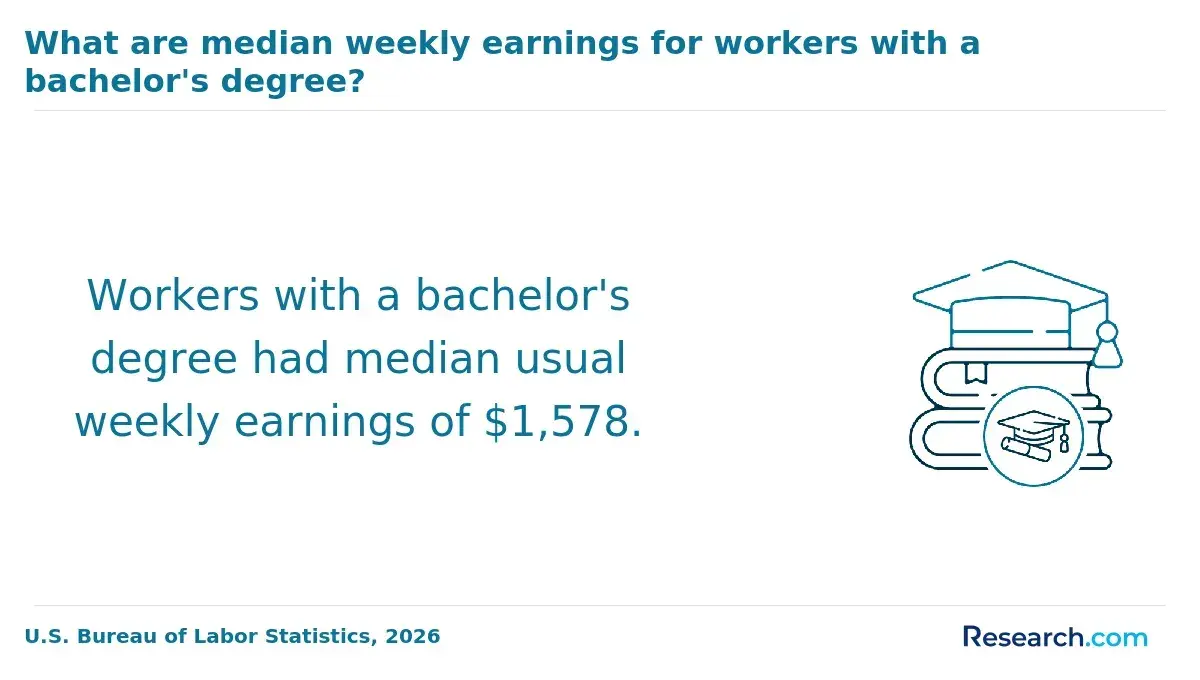
MLS programs generally target applicants who already hold a bachelor's degree, but each university sets its own eligibility rules. Check the current admissions page for accepted prior degrees, transcript requirements, application materials, English-language requirements where applicable, and any deadlines. Do not assume legal work experience, a particular undergraduate major, or a standardized test is required - or waived - without checking the program.
If you are changing careers, use the application to connect prior work to specific legal decisions you want to understand. Experience reviewing policies, managing employees, handling contracts, or documenting investigations may provide useful context for case discussions, but it does not replace the need to learn legal research and analysis.
Ask whether entry is possible in multiple terms and whether prerequisite or introductory courses must be completed before the cases most relevant to you. Admission to the degree does not necessarily mean immediate access to every elective.
How long does an online MLS take, and what does it cost?
Completion time depends on required credits, course availability, and how many classes you can take while working. A program advertised as flexible may still require sequenced courses or live sessions. Ask for a term-by-term plan based on your intended enrollment pace rather than relying on the shortest advertised completion time.
No single tuition figure represents online MLS programs. Compare each school's current tuition schedule with its required credits and fees, and request a written estimate for your enrollment plan. The following cost categories explain why advertised tuition and the amount you pay can differ.
| Cost category | Why it matters |
| Tuition | May be charged per credit or per term; the required course load determines the comparison. |
| Mandatory fees | Technology, university, or graduation charges may apply in addition to tuition. |
| Materials and access | Books, research platforms, and required equipment may not be included in the published rate. |
| Attendance-related expenses | Required campus visits or scheduled activities can add travel costs or time away from work. |
Financial aid eligibility depends on the institution, the specific program, and the student's circumstances; confirm it with the financial aid office rather than assuming every online or certificate option qualifies. Also weigh the income and personal time committed to study. If speed is the priority and the target job is paralegal work rather than graduate-level legal knowledge, accelerated paralegal programs online are a different route worth comparing, not a substitute credential with identical outcomes.
What careers can an online MLS prepare you for?
An MLS may strengthen legal knowledge used in compliance, contracts administration, human resources, risk management, and policy work. In those roles, case-based assignments can provide practice spotting issues, comparing possible responses, and explaining when to involve counsel. The degree does not itself qualify someone for a particular job; employers may weigh industry experience, technical expertise, and other credentials more heavily.
For an established professional, the strongest fit is often a program whose cases resemble decisions already encountered at work or in a desired next role. For a prospective paralegal, the calculation differs: employers may seek paralegal-specific education and skills, while an MLS is a broader graduate degree. Students who already have college coursework may want to compare paralegal bachelor's options for students with college credits before committing to graduate study. Any transfer credit remains subject to the receiving school's decision.
Before enrolling, review job postings for your intended role and ask whether the degree fills an actual skills gap. If employers emphasize experience with an industry's regulations or internal systems, supervised work or employer training may offer a more direct first step.
What salaries and job outlook apply to MLS graduates and paralegals?
There is no single salary or employment projection for "MLS graduate": it is a degree, not an occupation tracked by the Bureau of Labor Statistics (BLS). Occupational figures can provide context, but they cannot show what an individual will earn because of an MLS.
For compliance officers, BLS reports median annual pay of $80,730 in May 2025 and 4% projected growth, 2025-2035. That benchmark is relevant if your goal involves monitoring requirements or evaluating organizational practices, but compliance jobs differ in their education and experience expectations.
For paralegals and legal assistants, BLS reports median annual pay of $62,890 in May 2025 and 0% projected net growth, 2025-2035, with about 40,800 openings per year projected despite little or no net employment growth. Openings do not mean an MLS is the preferred entry credential. Compare local job requirements with the courses and practical training you would receive.
Does an online MLS lead to legal licensure or professional certification?
No. An MLS is a non-JD legal studies degree and does not, by itself, qualify a graduate to practice law or provide legal advice as an attorney. Attorney licensure follows separate jurisdiction-specific rules. An MLS also does not automatically confer a professional compliance credential or paralegal certification.
A paralegal education certificate is an academic award; professional certification is a credential granted by a certifying organization or applicable state system after its own requirements are met. Requirements and employer preferences vary. The ABA approves qualifying paralegal education programs, but it does not certify individual paralegals. If paralegal training is your goal, compare program-specific requirements and costs, including those of low-cost ABA-approved online paralegal programs, rather than treating ABA approval as a feature of an MLS.
Choose an MLS for the legal knowledge and applied analysis it can add to work you are authorized to perform. If your goal is a licensed profession or a named certification, check that authority's current eligibility rules before selecting any degree.
Other Things You Should Know About Law & Paralegal
Do not upload employer or client materials without authorization. Ask whether the program supplies fictional cases or permits appropriately approved, de-identified workplace scenarios.
They can be, but formats matter. Ask the disability services office how accommodations apply to timed case exercises, live discussions, document formats, and group work.
Possibly. Ask whether students may retain and share graded work, and remove any confidential or restricted material before using an assignment as a portfolio sample.
Check reimbursement limits, approved-program rules, grade requirements, and any obligation to remain employed afterward. Those terms may change which program is financially sensible.
References
- Cost of Attendance (Budget) | 2025-2026 Federal Student Aid Handbook https://fsapartners.ed.gov/knowledge-center/fsa-handbook/2025-2026/vol3/ch2-cost-attendance-budget
- Case Method Teaching and Learning | columbia.edu https://ctl.columbia.edu/resources-and-technology/resources/case-method/
- Alternatives to Traditional Exams and Papers | indiana.edu https://citl.indiana.edu/teaching-resources/assessing-student-learning/alternatives-traditional-exams-papers/index.html
- Case-Based and Problem-Based Learning - Poorvu Center | Poorvu Center for Teaching and Learning https://poorvucenter.yale.edu/teaching/teaching-resource-library/case-based-and-problem-based-learning
- Discussions in Online Courses: Best Practices & Expectations | jhu.edu https://ep.jhu.edu/faculty-staff/teaching-technology-resources/discussions-in-online-courses-best-practices-and-expectations/
- In-Person vs. Online Learning: An Educator's Guide | American College of Education https://ace.edu/blog/examining-in-person-instruction-from-a-virtual-mindset-what-can-we-improve/
- Cost of Attendance - Financial Aid and Scholarships | The University of Utah https://financialaid.utah.edu/tuition-and-fees/cost-of-attendance.php
- Designing Assessments of Student Learning | Teaching and Learning Resource Center https://teaching.resources.osu.edu/teaching-topics/designing-assessments-student
- Types of Assessment | Seattle Colleges https://www.seattlecolleges.edu/employees/elearning/instructional-design-pedagogy-support/course-design/types-assessment