2027 MLS Programs for Behavioral Health Organization Compliance Teams

Co-Founder and Chief Data Scientist
Behavioral health compliance teams work across patient privacy, substance use disorder records, billing, and state-specific rules. A Master of Legal Studies (MLS) can build legal literacy, but it is a substantial commitment - and a degree may be more than a particular role requires. This guide is for compliance staff and managers deciding whether graduate legal study is worthwhile. It explains what to look for in a program, how online study fits working teams, and when a narrower credential or employer training may be the better choice.
Key Things You Should Know
- An MLS is a non-JD degree that can strengthen legal analysis for compliance work; it does not qualify graduates to practice law or replace clinical credentials.
- Prioritize coursework that applies privacy, 42 CFR Part 2, reimbursement, investigations, and state law to behavioral health operations - not a healthcare label alone.
- The U.S. Bureau of Labor Statistics reports $80,730 median annual pay for compliance officers in May 2025 and 4% projected growth for 2025-2035; those occupation-wide figures do not establish an MLS salary premium.
What Is an MLS Degree for Behavioral Health Compliance Professionals?
An MLS - sometimes called a Master of Studies in Law (MSL) or Master of Jurisprudence - is graduate legal education designed primarily for people who do not plan to become attorneys. In a behavioral health organization, its value lies in learning to read legal requirements, identify operational risks, communicate with counsel, and help turn advice into workable policies.
That work can involve the Health Insurance Portability and Accountability Act (HIPAA), state privacy law, Medicaid and Medicare requirements, and 42 CFR Part 2, which provides special protections for records held by covered substance use disorder programs. Part 2 does not automatically apply to every behavioral health record. A useful program teaches students to determine which rule applies before proposing a policy.
An MLS is not a Juris Doctor (JD), a license to practice law, or a substitute for supervision by an attorney where legal advice is needed. It also differs from paralegal education: a compliance manager may need broad regulatory judgment, while a legal-support employee may benefit more from exploring paralegal certificate options. Completing an educational certificate does not, by itself, confer professional certification.
What Compliance Careers Can an MLS Prepare You For?
Behavioral health compliance work spans prevention, monitoring, and response. The following roles show where legal study may add value; job titles and hiring requirements vary by employer.
| Role | Typical work | Potential MLS value |
| Compliance officer or manager | Oversees policies, training, monitoring, and corrective action | Interprets overlapping requirements and documents risk decisions |
| Privacy officer or specialist | Reviews access, disclosures, incidents, and record-handling practices | Applies privacy rules to operational scenarios |
| Revenue-cycle compliance specialist | Examines documentation, coding concerns, and payer requirements | Connects reimbursement rules with audit findings |
| Internal investigations or audit staff | Collects facts, tests controls, and recommends remediation | Frames issues clearly for leadership and counsel |
Experience in clinical operations, health information management, billing, or quality improvement can be as important as graduate study. An MLS may support advancement into broader responsibility, but it is rarely the only entry route. For a position centered on organizing legal files or supporting attorneys rather than running a compliance program, paralegal training may be the closer match.
What Accreditation Should Behavioral Health Compliance MLS Programs Have?
Start by confirming that the university holds institutional accreditation from an accreditor recognized by the U.S. Department of Education or the Council for Higher Education Accreditation. Check the institution's current status directly with the accreditor, especially if transfer credit, employer reimbursement, or further study matters to you.
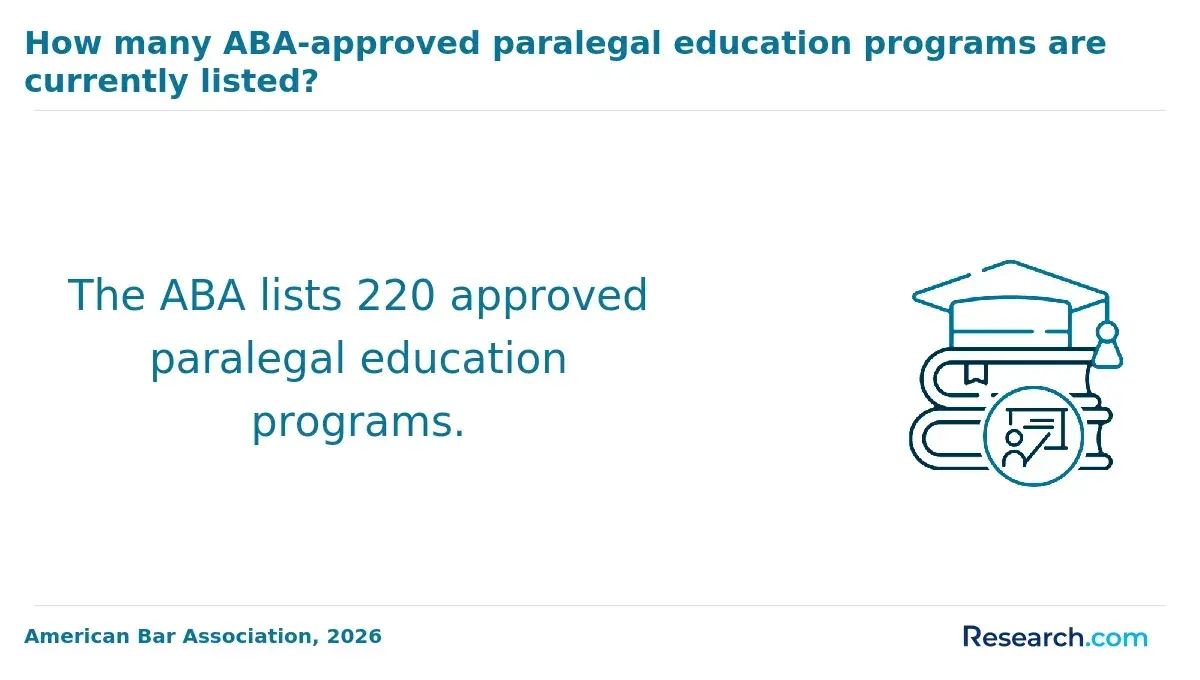
Do not confuse institutional accreditation with approval of an individual program. The American Bar Association (ABA) approves qualifying paralegal education programs; ABA paralegal approval is not an accreditation requirement for an MLS. Likewise, an MLS offered by a law school should not be assumed to have the same status or professional effect as that school's JD program.
Accreditation is a baseline, not proof that a curriculum covers behavioral health. Ask for the current catalog, course descriptions, and any concentration requirements before treating a program's "healthcare" branding as evidence of fit.
What Courses Are Included in Behavioral Health Compliance MLS Programs?
Most MLS programs combine foundational legal reasoning with electives or a concentration. Compare required courses - not just the electives a school advertises - against the decisions your team makes. A formal concentration has published requirements; several relevant electives do not necessarily constitute one.
The strongest curriculum connects legal concepts to recognizable work. This comparison helps distinguish useful applied instruction from a course title that only sounds relevant.
| Course area to look for | Behavioral health application |
| Legal research and regulatory interpretation | Identifying controlling federal and state requirements and recognizing when counsel is needed |
| Health privacy and information governance | Evaluating access, disclosures, incidents, HIPAA, and potentially applicable Part 2 rules |
| Healthcare fraud, reimbursement, and administrative law | Assessing documentation, billing controls, audits, and government oversight |
| Investigations, employment law, or organizational compliance | Handling reports, training, corrective action, and workforce issues |
Check whether assignments use realistic policy reviews or fact patterns and whether they address current rules. A general healthcare law course may be useful, but it may not cover substance use disorder records, multistate operations, or the payer rules that matter most to your organization.
What Are the Admission Requirements for MLS Compliance Programs?
MLS applicants generally need a bachelor's degree, but each school sets its own requirements for transcripts, academic standing, recommendations, résumés, essays, and English-language proficiency where applicable. A JD or prior legal coursework is generally not the point of entry for a non-JD legal studies degree; confirm the individual program's rules rather than assuming an exception.
Working compliance professionals should ask whether the program values relevant experience, permits a transfer-credit review, or offers admission before a concentration is selected. If an essay is the obstacle, compare legal studies degree applications without an admissions essay - but verify each program's current checklist. Fewer application materials do not establish that a program is easier academically or better suited to behavioral health.
Previous graduate credits are not automatically transferable, even between accredited universities. Obtain a written evaluation explaining which credits, if any, satisfy degree requirements.
Are Online MLS Programs Effective for Behavioral Health Compliance Teams?
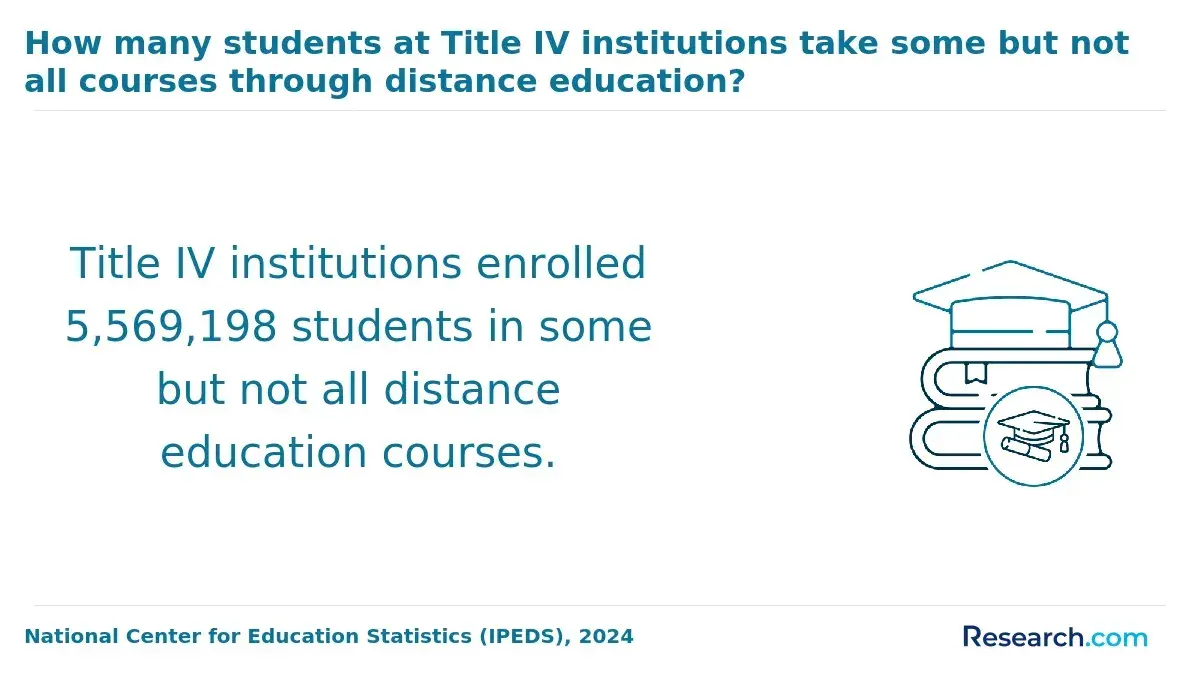
Online study can work well when courses require students to analyze regulations, draft policies, and discuss operational scenarios. Its effectiveness depends more on curriculum, feedback, and scheduling than on the delivery label alone. An online course may still have live meetings, timed exams, a fixed sequence, or an in-person requirement.
For employees across shifts or locations, compare online legal studies master's programs by duration alongside their actual weekly schedules. A shorter advertised completion path may depend on taking a heavier course load than a full-time compliance employee can manage.
Before enrolling a team member, request a sample course calendar and ask whether group projects, live sessions, or a capstone can accommodate work hours. If the employer plans to use workplace problems in assignments, confirm how the school handles confidential organizational and patient information.
How Long Do MLS Programs Take and How Much Do They Cost?
There is no reliable single timeline or price for an MLS: required credits, term schedules, enrollment pace, and tuition policies differ. Compare each school's published part-time and full-time pathways, including how often essential courses run. A nominally flexible program may take longer if a required course is offered infrequently.
Calculate the likely total educational cost from current tuition and mandatory fees, then account for books, technology, any required travel, and time away from work. Do not compare a per-credit quote with another school's full-program price. Ask whether employer assistance has grade, service, or repayment conditions, and confirm the specific degree's financial-aid eligibility with the school; institutional accreditation alone does not establish an individual student's aid eligibility.
If the desired role is legal support rather than graduate-level compliance leadership, online paralegal degree tuition and fees offer a comparison point for a different educational route. Compare the work each credential prepares you to do, not tuition alone.
Do Behavioral Health Compliance Professionals Need Licensure or Certification?
An MLS does not confer an attorney license, and there is no universal U.S. professional license required solely to hold a behavioral health compliance job. Clinical licenses may be necessary for clinical duties, but an MLS does not replace them. Employers may nevertheless prefer experience or an optional compliance credential for particular positions.
Professional certification is separate from an academic certificate or degree. For example, the Health Care Compliance Association administers the Certified in Healthcare Compliance credential under its published eligibility and examination rules. Check the certifying organization's current requirements before assuming MLS coursework meets them.
If your immediate goal is to demonstrate healthcare compliance knowledge, a professional credential and focused training may be a more direct investment than a full master's degree. If your work demands sustained legal analysis across several regulatory areas, an MLS may offer broader preparation. Neither route replaces an attorney's role in providing legal advice.
What Salaries and Job Outlook Can MLS Compliance Graduates Expect?
The U.S. Bureau of Labor Statistics reports median annual pay of $80,730 in May 2025 for compliance officers, with 4% projected employment growth for 2025-2035 and about 32,700 openings per year. These are national figures for the broad compliance officer occupation - not behavioral health-specific pay, MLS graduate earnings, or a prediction of an individual's prospects.
Compensation depends on the role, region, organization, and relevant experience. Before treating tuition as a career investment, review actual job postings you would pursue: note whether they require a master's degree, prefer a compliance certification, or emphasize privacy, billing, investigation, or leadership experience. An MLS has the clearest potential value when it closes a documented skills gap for a role you can realistically pursue.
How Can You Choose a Reputable MLS Program for Behavioral Health Compliance?
Choose against a defined job goal rather than a degree title. A privacy lead, a revenue-cycle auditor, and a future chief compliance officer may need different coursework. Use the following checks to narrow programs before paying an application fee:
- Write down the regulatory problems you handle or expect to handle, then match them to required courses and available electives.
- Confirm institutional accreditation and ask whether any advertised healthcare concentration appears on the transcript and has fixed requirements.
- Request current syllabi or assignment examples to assess applied work, faculty feedback, and coverage of behavioral health issues.
- Check live-session, sequencing, and capstone requirements against your work schedule; obtain a complete cost estimate.
- Compare the MLS with employer training, a graduate certificate, professional certification, or relevant work experience before committing.
A warning sign is a school implying that its MLS provides attorney licensure, guarantees a compliance job, or offers specialized behavioral health preparation without identifying the courses that deliver it. If a narrower paralegal path would serve your goal, paralegal tuition installment options to compare may help with budgeting; payment flexibility does not reduce the total price. The best choice is the least extensive credible education that develops the skills your target role actually requires.
Other Things You Should Know About Law & Paralegal
Do not assume you can. Follow your employer's privacy policies and the school's assignment rules; use fictional or appropriately de-identified scenarios unless authorized personnel approve another arrangement.
Do not count on it. A JD program decides whether it accepts prior coursework and how any credit applies. Ask the prospective law school for its written policy before enrolling in an MLS as a stepping stone.
Possibly, but individual degree enrollment may be unnecessary for every role. Ask the school about nondegree courses and compare those with role-specific training before sponsoring a team-wide degree plan.
They might, depending on the credential and the course. Check the certifying organization's current continuing-education rules and keep the syllabus and completion records rather than assuming graduate credit automatically qualifies.
References
- Understanding Confidentiality of Substance Use Disorder (SUD) Patient Records or "Part 2" | HHS.gov https://www.hhs.gov/hipaa/part-2/index.html
- Compliance Program Guidance | ny.gov https://omig.ny.gov/media/80796/download
- eCFR:: 42 CFR Part 2 -- Confidentiality of Substance Use Disorder Patient Records https://www.ecfr.gov/current/title-42/chapter-I/subchapter-A/part-2
- Healthcare Compliance MLS: Advance in Risk Management | wsulaw.edu https://www.wsulaw.edu/news/how-an-mls-in-healthcare-compliance-helps-you-advance-in-risk-management/
- Healthcare Compliance Law: Key Insights from an M.L.S. Degree | University of Miami School of Law https://news.miami.edu/law/stories/2025/08/healthcare-compliance-law-key-insights-from-an-mls-degree.html
- How to Become a Compliance Officer | DePaul University Online Master of Legal Studies https://onlinemls.depaul.edu/articles/how-to-become-a-compliance-officer/
- Medical Coding Compliance: Best Practices to Ensure Accuracy in 2025 | LexiCode https://lexicode.com/blog/medical-coding-compliance
- Fundamentals of 42 CFR Part 2 and SUD Treatment Privacy | lac.org https://www.lac.org/resource/the-fundamentals-of-42-cfr-part-2
- Changes to Substance Use Disorder Confidentiality Regulations - Center for Health Care Strategies https://www.chcs.org/resource/changes-to-substance-use-disorder-confidentiality-regulations/
- Series: 42 CFR Part 2 Compliance | Feldesman Training Solutions https://training.feldesman.com/privacy-and-confidentiality/content/series-42-cfr-part-2-compliance-0