2027 MLS vs. a Financial Regulation Graduate Certificate for Banking Professionals

Co-Founder and Chief Data Scientist
Banking professionals who want to move into compliance face a choice: study law broadly through a Master of Legal Studies (MLS), or focus on financial rules through a graduate certificate. The difference matters when tuition, work schedules, and a specific promotion are at stake. This guide compares what each credential teaches, where it may help, and what it cannot promise. You'll leave with a way to match a program to the regulatory work you want to do - and questions to ask before enrolling.
Key Things You Should Know
- Choose a financial regulation graduate certificate when you already have a bachelor's degree and need focused preparation for a defined banking compliance responsibility; consider an MLS when you need broader legal analysis across several functions.
- Neither credential is required for all compliance jobs or qualifies you to practice law. The U.S. median pay for compliance officers was $80,730 in May 2025, according to the Bureau of Labor Statistics (BLS); that occupation-wide figure is not a graduate earnings estimate.
- Compare the actual courses, total required cost, schedule, and accreditation before applying. A shorter certificate is not automatically cheaper per credit, eligible for federal aid, or transferable into an MLS.
What Is the Difference Between an MLS and a Financial Regulation Graduate Certificate?
An MLS is a graduate degree designed to build legal knowledge for people who do not intend to become attorneys. A financial regulation graduate certificate is a shorter academic credential focused on selected regulatory topics. Schools may use other names, such as Master of Science in Law or banking compliance certificate, so compare requirements rather than labels.
This comparison shows where the two routes usually differ. Individual programs can depart from these patterns, particularly in their admissions rules and course offerings.
| Decision point | MLS | Financial regulation graduate certificate |
| Scope | Legal foundations plus electives or a concentration | A smaller set of specialized courses |
| Best fit | Roles spanning legal, risk, governance, and compliance issues | A specific regulatory skill gap or near-term role change |
| Main trade-off | More breadth, with a larger time and tuition commitment | Less time in school, with less room for broad legal study |
| Credential earned | Master's degree | Academic certificate, not a professional certification |
Both routes generally target applicants with a bachelor's degree, but each school sets its own prerequisites. Neither route is a Juris Doctor (JD) degree or, by itself, qualifies a graduate to practice law.
Which Program Better Prepares Banking Professionals for Compliance Careers?
Bank compliance work includes interpreting applicable rules, testing controls, documenting findings, escalating problems, and helping the business correct them. The right program depends on which of those tasks you need to perform next.
A certificate may be the more direct choice for a banker moving into a defined area such as anti-money-laundering controls, consumer compliance, or regulatory examinations - provided its courses address that area in depth. An MLS may be more useful for someone who must analyze unfamiliar legal issues across products, contracts, privacy, governance, and risk. Neither substitutes for experience with a bank's procedures, systems, and examination process.
Some readers are considering legal-support work rather than bank compliance. In that case, paralegal bachelor's degree duration and salary outlook addresses a different career path; an MLS or financial regulation certificate should not be treated as interchangeable paralegal preparation.
Do MLS or Financial Regulation Certificates Lead to Higher Salaries?
There is no reliable salary premium that applies to every MLS or financial regulation certificate holder. Pay depends on the job, employer, location, experience, and responsibilities - not the credential alone.
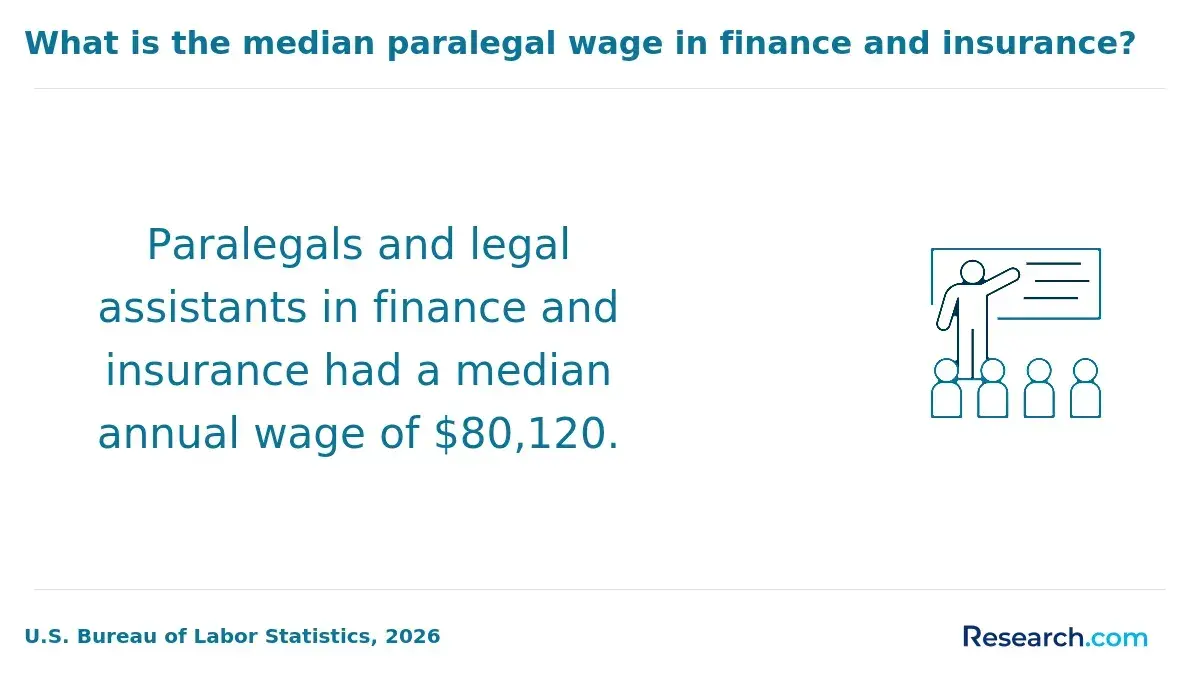
BLS reports median annual pay of $80,730 in May 2025 for compliance officers, with 4% projected employment growth for 2025-2035. That broad occupation includes positions outside banking and does not separate workers by graduate credential. Use the figure as career context, not a forecast of your pay after graduation.
For a practical return-on-investment check, identify roles at your bank that you could realistically seek, review their qualifications and pay ranges, and ask whether the coursework would fill a documented gap. If relevant experience or employer training would meet the same requirement, an additional degree may not justify its cost.
What Do MLS and Financial Regulation Certificate Programs Teach?
An MLS commonly combines legal research, statutory and regulatory interpretation, and foundational legal concepts with electives. A banking-focused student might look for courses in financial institutions law, consumer financial protection, privacy, enforcement, or corporate governance. Confirm whether those courses are required, optional, and offered often enough to fit your schedule; a listed elective is not necessarily an available concentration.
A financial regulation certificate usually devotes more of its limited coursework to a defined set of rules or compliance practices. Compare syllabi with the work you want to do: does the program require students to analyze regulations, write findings, assess controls, or respond to a realistic examination scenario? A course title alone cannot establish hands-on preparation.
If your goal is to support attorneys with legal research and casework rather than manage bank controls, online study for a paralegal associate degree is a separate educational route worth evaluating.
Are MLS and Financial Regulation Certificate Programs Accredited?
Check the institution's accreditation first, then confirm that the specific degree or certificate appears in its current academic catalog. Institutional accreditation does not mean every course has a separate industry endorsement, and a certificate's presence at an accredited university does not establish that it qualifies for federal financial aid.
Do not confuse these credentials with paralegal programs. The American Bar Association approves certain paralegal education programs; that approval is distinct from institutional accreditation and is not a general approval system for MLS degrees or banking regulation certificates. Readers comparing affordable accredited online paralegal degrees should check both distinctions for that separate route.
Do These Programs Require a Bar License or Professional Certification?
Typically, applicants do not need an attorney's bar license to enter an MLS or financial regulation graduate certificate intended for nonlawyers. Check the particular program's admissions rules, especially if a course is restricted to practicing lawyers.
An academic certificate is also different from a professional certification awarded by a credentialing organization. Banking employers may value role-specific certifications, but eligibility, examinations, experience requirements, and renewal rules depend on the issuing organization. Neither an MLS nor a graduate certificate automatically awards one. If a job posting names a certification, verify that organization's current requirements before paying for academic coursework.
How Long Do MLS and Financial Regulation Certificate Programs Take?
An MLS generally requires more courses than a graduate certificate and therefore a longer commitment. A working professional might finish a certificate over several terms, while a part-time MLS may extend over multiple years. The dependable comparison is each program's required credits, course rotation, maximum completion window, and your realistic term-by-term load - not an advertised fastest completion time.
Ask whether certificate courses can later count toward an MLS if your goals change. The receiving program decides whether to accept them, how many apply, and whether time limits or grade rules intervene. The same caution applies when exploring prior college credits and business law degree study: prior coursework is a possibility to investigate, not credit you can assume you will receive.
How Much Do MLS and Financial Regulation Certificate Programs Cost?
There is no responsible national price to assign to either route: required credits, per-credit tuition, fees, and enrollment status vary by school. A certificate may have a lower total tuition bill because it requires fewer credits, yet a higher per-credit price. Request a written estimate for the entire credential, including mandatory fees, books, technology, and any required travel.
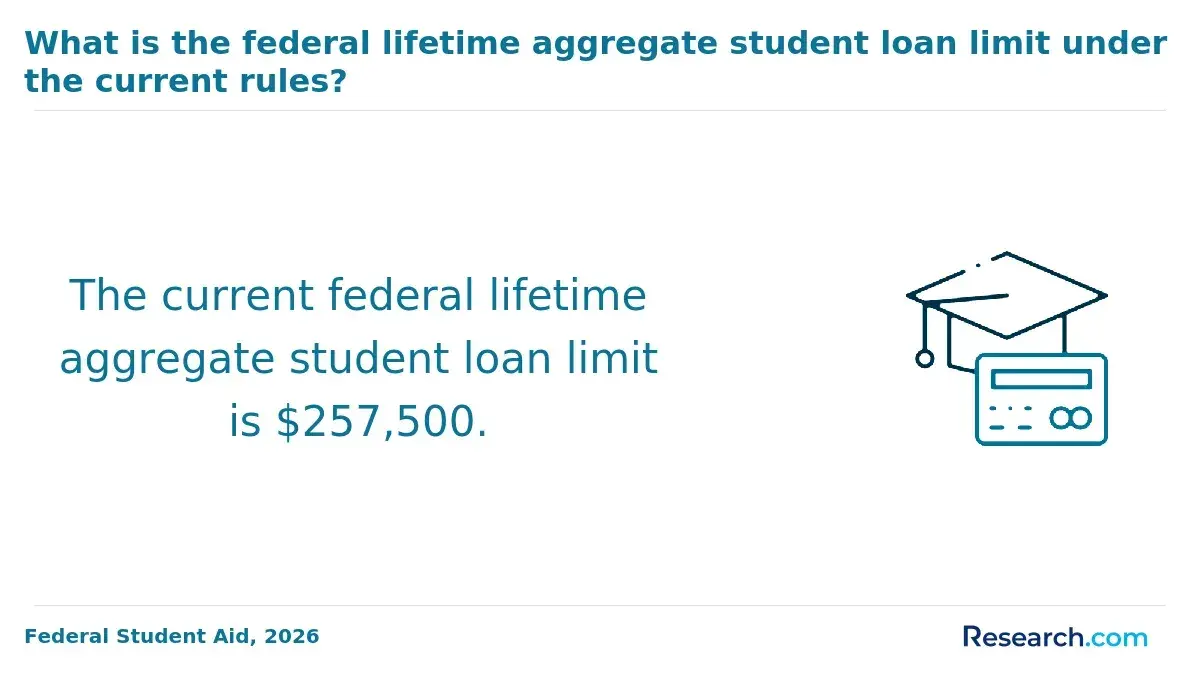
Ask the financial aid office whether the specific program is credit-bearing and eligible for federal aid; do not assume a graduate certificate qualifies. Check employer tuition assistance and any repayment obligation if you leave the bank. Payment timing is a separate issue from total cost: comparing installment options for online paralegal programs illustrates a financing question, but those options should not be assumed to apply to an MLS or banking certificate.
Are Online or Campus-Based Programs Better for Banking Professionals?
For a banker balancing classes with examinations, reporting deadlines, or branch hours, scheduling matters more than the delivery label. An online program may still require live meetings, timed exams, group projects, or campus visits. A campus program may offer useful discussion with instructors and classmates but add travel and fixed meeting times.
Request a sample term schedule and ask how frequently required courses run. If the program includes a capstone or workplace project, check whether your employer must approve it and whether confidential customer or supervisory information can be excluded. Choose the format that lets you complete the required work consistently, not the one that merely advertises flexibility.
How Should You Choose a Reputable Financial Regulation Program?
Start with the responsibilities in your target role, then test programs against those responsibilities. These checks can prevent an expensive mismatch between a credible-looking credential and the work you actually want to do.
- Match required courses - not just elective titles - to the regulatory topics, writing, and control-testing skills your target role uses.
- Verify institutional accreditation, the credential listed in the current catalog, admission requirements, and any claimed pathway from certificate to MLS.
- Obtain the full required-cost estimate and a realistic course sequence for your work schedule; confirm program-specific aid eligibility with the school.
- Ask how instructors assess applied work and whether graduates receive an academic credential, eligibility for an external certification, or neither.
A useful final comparison is the smallest credible option that closes your skill gap. Choose the certificate if its focused coursework does that; choose the MLS if broader legal training is necessary for the roles you are pursuing. Pause if a program promises a promotion, implies that its certificate is a professional certification, or cannot explain when required courses will be available.
Other Things You Should Know About Law & Paralegal
Possibly, if the program permits workplace projects and your employer approves the subject. Get guidance before using customer, examination, or other confidential information; a hypothetical or anonymized case may be safer.
Policies vary. Ask human resources whether the specific credential, school, and courses qualify, what grades are required, and whether you must repay assistance if you leave.
Some skills transfer, but bank-focused courses may not address the rules and supervisory structure relevant to your credit union. Review the syllabus against your institution's actual compliance duties.
No. List it as a graduate certificate under education. Reserve "certification" for a professional credential you have earned from its issuing organization.
References
- BSA Compliance Officer | ffiec.gov https://bsaaml.ffiec.gov/manual/AssessingTheBSAAMLComplianceProgram/04
- The Bank Secrecy Act | FinCEN.gov https://www.fincen.gov/resources/statutes-and-regulations/bank-secrecy-act
- Frequently Asked Questions: Certification Procedures for Title IV of the HEA | U.S. Department of Education http://www.ed.gov/laws-and-policy/higher-education-laws-and-policy/higher-education-policy/ope-guidance-documents/frequently-asked-questions-certification-procedures-title-iv-of-hea
- Bank Secrecy Act (BSA) | OCC.gov https://www.occ.gov/topics/supervision-and-examination/bsa/index-bsa.html
- Cost of Attendance (Budget) | 2025-2026 Federal Student Aid Handbook https://fsapartners.ed.gov/knowledge-center/fsa-handbook/2025-2026/vol3/ch2-cost-attendance-budget
- Bank Secrecy Act / Anti-Money Laundering Resources | NCUA https://ncua.gov/regulation-supervision/regulatory-compliance-resources/bank-secrecy-act-resources
- Employer-offered educational assistance programs can help pay for college | Internal Revenue Service https://www.irs.gov/newsroom/employer-offered-educational-assistance-programs-can-help-pay-for-college
- Types of Financial Aid: Grants, Work-Study, and Loans | studentaid.gov https://studentaid.gov/understand-aid/types
- Online Master of Legal Studies (MLS) | William & Mary Law School https://online.law.wm.edu/master-of-legal-studies
- Is an MLS Worth It? ROI and Career Outcomes for Non-Lawyers | Drexel University Kline School of Law https://drexel.edu/law/news/legal-studies-blog/is-an-mls-worth-it-roi-and-career-outcomes-for-non-lawyers/