2027 Choosing an MLS Program That Connects Legal Analysis With Business Decision-Making

Co-Founder and Chief Data Scientist
Business decisions often turn on contracts, employment rules, privacy obligations, and regulatory risk. A Master of Legal Studies (MLS) can help professionals analyze those issues without training to become attorneys - but programs differ in how well they connect legal coursework to decisions at work. This guide is for managers, compliance staff, HR professionals, and career changers comparing MLS options. It shows what to look for in the curriculum, what the degree cannot do, and how to weigh cost and scheduling against the skills you expect to use.
Key Things You Should Know
- Choose an MLS that requires you to apply legal analysis to contracts, policies, investigations, or other decisions relevant to your job - not one that merely lists business-related electives.
- An MLS is a non-JD degree: it does not qualify you to practice law, and many business and compliance roles do not require it.
- The Bureau of Labor Statistics reports $80,730 in May 2025 median annual pay for compliance officers and 4% projected growth, 2025-2035. Those occupation-wide figures are context, not predicted outcomes for MLS graduates.
What is a Master of Legal Studies degree for business professionals?
An MLS is a graduate degree designed to build legal knowledge for people who generally do not intend to become lawyers. Schools may use names such as Master of Studies in Law (MSL) or Master of Jurisprudence for related non-JD degrees; the curriculum matters more than the label. A business-focused program should teach students to identify legal issues, interpret relevant rules, and recognize when counsel must make the legal judgment.
The degree may be useful if your work regularly involves regulated products, vendor agreements, employee policies, or internal controls. If you need knowledge in only one area, compare the full degree with a graduate certificate, employer training, or a targeted professional credential before committing. An overview of legal studies master's specializations and career paths can help you identify which subject area deserves closer investigation.
How does an MLS program connect legal analysis with business decision-making?
The connection is strongest when students must move beyond finding a rule: they assess uncertainty, explain operational consequences, and recommend an appropriate next step. The examples below show what that looks like in coursework and on the job.
| Business situation | Legal analysis to practice | Decision-making skill to demonstrate |
| A proposed vendor agreement | Identify obligations, liability terms, and issues needing counsel's review | Explain which terms affect cost, timing, or acceptable risk |
| A new employee policy | Spot potentially relevant employment requirements and jurisdictional differences | Recommend a review and implementation process |
| A product using customer data | Map data practices to potentially applicable privacy obligations | Compare design options and escalate unresolved legal questions |
When evaluating a syllabus, look for applied assignments such as policy reviews, contract-issue memos, simulations, or a capstone tied to an organizational problem. Ask who grades the business recommendation as well as the legal analysis. A course can be rigorous without teaching you to turn its findings into a usable decision.
Does a Master of Legal Studies qualify you to practice law?
No. An MLS does not, by itself, qualify a graduate to practice law, represent clients, or give legal advice reserved for licensed attorneys. Attorney licensing requirements are set by jurisdictions and generally involve a qualifying legal education and other admission requirements. An MLS holder working in a business role can identify issues, help implement approved policies, and coordinate with counsel, but should not treat the degree as authority to make decisions reserved for a lawyer.
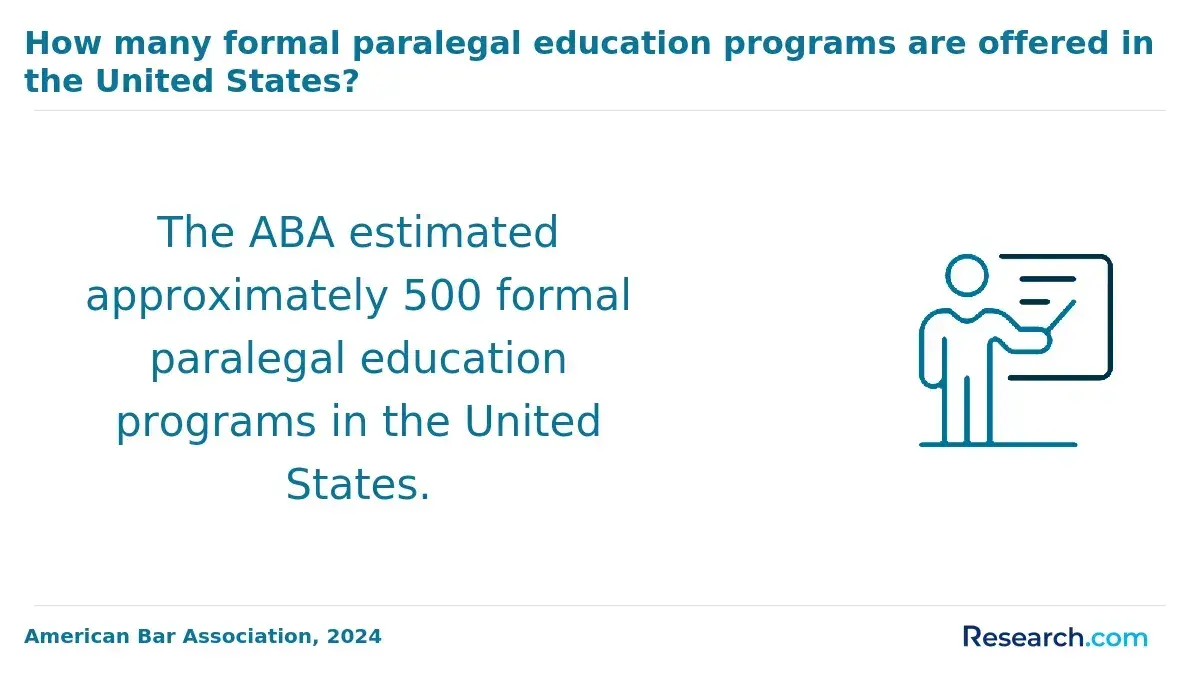
If your goal is legal-support work rather than business leadership or compliance, a paralegal education program may be a more direct route. Compare its tasks, credential level, and cost - including affordable tuition at ABA-approved paralegal programs - with what an MLS offers. The American Bar Association (ABA) approves qualifying paralegal education programs; that approval is distinct from institutional accreditation and does not certify individual graduates.
What do you study in a business-focused MLS program?
Programs commonly combine an introduction to legal reasoning with subjects such as contracts, business organizations, employment law, regulatory compliance, privacy, dispute resolution, or risk management. Course titles alone reveal little about depth: a survey of employment law is different from repeated practice analyzing workplace scenarios.
If employment decisions are central to your role, compare the required courses and applied assignments with legal studies education with an employment and HR law focus. Confirm whether the school awards a formal concentration, permits relevant electives, or simply offers a few courses in the subject. Then check whether those courses are offered often enough for your intended schedule.
A useful curriculum should also teach research, clear writing for nonlawyers, and how to work with counsel. For privacy or legal-technology interests, ask whether students complete hands-on assignments with current tools; a software name in a course description does not establish proficiency or preparation for an external certification.
How do online and campus-based MLS programs compare?
Neither format is automatically more practical. The comparison below highlights scheduling differences that can determine whether you can complete the applied work alongside a job.
| Consideration | Online program | Campus-based program |
| Class schedule | May use recorded lessons, live meetings, or both | Typically requires travel for scheduled classes |
| Applied collaboration | May rely on virtual teams and remote presentations | May offer in-person workshops and discussion |
| Location-dependent requirements | Can still include residencies or scheduled exams | Requires a workable commute or relocation plan |
"Online" does not mean asynchronous or self-paced. Request the current course schedule and ask about live sessions, campus visits, exam timing, group projects, and course sequencing. If a practicum is required, confirm who arranges it and whether your current job can satisfy its rules. The better format is the one whose actual commitments you can meet consistently.
What are the admission requirements for an MLS program?
Requirements vary by school, but applicants generally need a bachelor's degree and may be asked for transcripts, a résumé, recommendations, or a statement of purpose. Some programs seek relevant work experience; others welcome applicants changing fields. An MLS is designed for nonlawyers, so a law degree is generally not an admission prerequisite. Check each program's published requirements rather than treating a suggested applicant profile as a rule.
If preparing an admissions essay is a barrier, research legal studies programs without personal statement submissions, then verify the current application for the specific intake. Also ask how the program assesses applicants without substantial business experience and whether any foundational coursework is expected before advanced electives.
How long does an MLS program take, and how much does it cost?
Completion time depends on required credits, part-time or full-time enrollment, course availability, and any capstone or practicum. A short advertised timeline may assume a course load that is difficult to combine with full-time work. Compare online legal studies master's programs by duration, but confirm the current degree plan and the schedule available to part-time students.
For cost, request an itemized estimate based on the credits you would actually take. Include tuition, mandatory fees, books, technology or research-platform charges, and any required travel. Ask whether tuition changes between academic years and whether an employer will reimburse only courses with a passing grade. Federal aid may be available to eligible students in eligible graduate programs, but eligibility and borrowing terms should be checked for the specific school and student; employer assistance or a smaller credential may reduce the amount you need to finance.
Opportunity cost matters even if you keep working. Study hours, reduced overtime, and delayed career moves can change the value of a lower-priced or faster program. Compare the total commitment with a graduate certificate or targeted training if you need only one legal subject.
What careers can you pursue with a business-focused MLS degree?
An MLS may complement experience in compliance, contracts administration, HR, privacy operations, procurement, or risk management. In those roles, employees may review processes, document controls, coordinate investigations, flag contract issues, or communicate requirements across teams. Hiring criteria vary: employers may place more weight on industry knowledge, work experience, and demonstrated judgment than on a particular graduate degree.
For a career changer, transferable strengths might include project management, auditing, data analysis, or employee relations. The gap to close is often legal research and issue-spotting within a specific industry. Review job postings you would realistically pursue: if they consistently call for a professional certification or direct experience instead of a master's degree, consider building that qualification first. The MLS can strengthen a career path; it is not an entry ticket to every legal or business role.
How much can MLS graduates earn in legal and business roles?
There is no single reliable salary figure for MLS graduates because they work in different occupations and bring different levels of experience. The Bureau of Labor Statistics reports median annual pay of $80,730 in May 2025 for compliance officers, with 4% projected growth, 2025-2035. That benchmark describes the occupation, not a salary attributable to an MLS.
For comparison, the BLS reports $95,420 in May 2025 median annual pay for labor relations specialists, with 2% projected growth, 2025-2035. That occupation also has its own skill and experience requirements. Use salary data for the specific roles and locations you are targeting, and do not count a projected pay increase as a return on the degree unless you have evidence that the credential would change your prospects.
How do you choose an accredited and reputable MLS program?
First, verify that the university holds recognized institutional accreditation; do not confuse that status with ABA approval of certain paralegal programs. For an MLS, the more revealing quality test is whether current courses and assignments build the legal-to-business skills you need. Published career examples can suggest possibilities, but they are not independently verified outcomes for every graduate.
Before applying, use these checks to narrow your shortlist and surface costs or requirements that are easy to miss:
- Match required courses and actual assignment types to decisions you make - or want to make - at work; verify how often the relevant electives run.
- Confirm accreditation, the exact credential and any formal concentration, instructor qualifications, and access to academic and career support.
- Request a part-time course plan and a complete cost estimate, including mandatory fees and any campus or practicum requirements.
- Compare the degree with a smaller credential or employer training, then ask whether the additional coursework serves a specific career goal.
A warning sign is a program that promises career advancement but cannot provide a current syllabus, clear completion plan, or itemized charges. Choose only after you can explain which work decisions the curriculum will help you handle better - and why that benefit justifies the time and cost.
Other Things You Should Know About Law & Paralegal
It may if legal or regulatory analysis is a recurring gap in your work. Compare specific MLS assignments with what your MBA and job experience already cover; a focused course may be enough.
Do not assume so. A law school decides whether any previous coursework can apply to its JD requirements. Ask the receiving school for its policy before enrolling in an MLS as a possible bridge.
Possibly. Check your employer's eligible-program rules, reimbursement limits, grade requirements, and any obligation to remain employed after payment before relying on the benefit.
Not automatically. A degree and a professional certification are separate credentials. If certification is your goal, check the issuing organization's current eligibility and examination requirements.
References
- Partnering with Students to Develop a Capstone for a... - PMC https://pmc.ncbi.nlm.nih.gov/articles/PMC11732519/
- Cost of Attendance (Budget) | 2025-2026 Federal Student Aid Handbook https://fsapartners.ed.gov/knowledge-center/fsa-handbook/2025-2026/vol3/ch2-cost-attendance-budget
- Types of Financial Aid: Grants, Work-Study, and Loans | studentaid.gov https://studentaid.gov/understand-aid/types
- Healthcare Compliance MLS: Advance in Risk Management | wsulaw.edu https://www.wsulaw.edu/news/how-an-mls-in-healthcare-compliance-helps-you-advance-in-risk-management/
- MLS vs J.D.: Which Legal Degree Fits Your Career Goals? | UC Law San Francisco MLS https://mls.uclawsf.edu/articles/mls-vs-jd/
- What Is a Capstone Project? - Boston University Questrom https://www.bu.edu/questrom/blog/what-is-a-capstone-project/
- Business Specialization Curriculum | AU-LAW https://onlinelaw.wcl.american.edu/legal-studies/curriculum/business-specialization/
- Master of Legal Studies Jobs: Career Paths, Salaries & ROI | Wake Forest MLS https://mls.law.wfu.edu/articles/what-can-you-do-with-a-master-of-legal-studies/
- What Can You Do With an MLS: Is It Worth It? - SMU https://onlinemasterlegalstudies.smu.edu/articles/what-can-you-do-with-an-mls/
- Business Enterprise, Concentrations, Academics & Clinical: Northwestern Pritzker School of Law https://www.law.northwestern.edu/academics/curricular-offerings/concentrations/business/