2027 Legal Studies Master's Programs for Hospital Compliance Analysts

Co-Founder and Chief Data Scientist
Hospital compliance analysts must turn complex healthcare rules into workable policies, audits, and corrective actions. A legal studies master's degree can deepen that regulatory knowledge, but it is not the only route into the field - and the wrong curriculum can be an expensive detour.
This guide is for analysts, healthcare staff, and career changers weighing graduate study. It explains which programs and courses fit hospital work, how to compare time and cost, and when experience or a narrower credential may be the better next step.
Key Things You Should Know
- A healthcare-focused Master of Legal Studies (MLS) or Master of Studies in Law (MSL) can support hospital compliance work, but the degree is not a standard legal requirement for the job and does not qualify graduates to practice law.
- Prioritize coursework and projects involving healthcare regulation, privacy, billing, investigations, and corrective action over a broad legal-studies label alone.
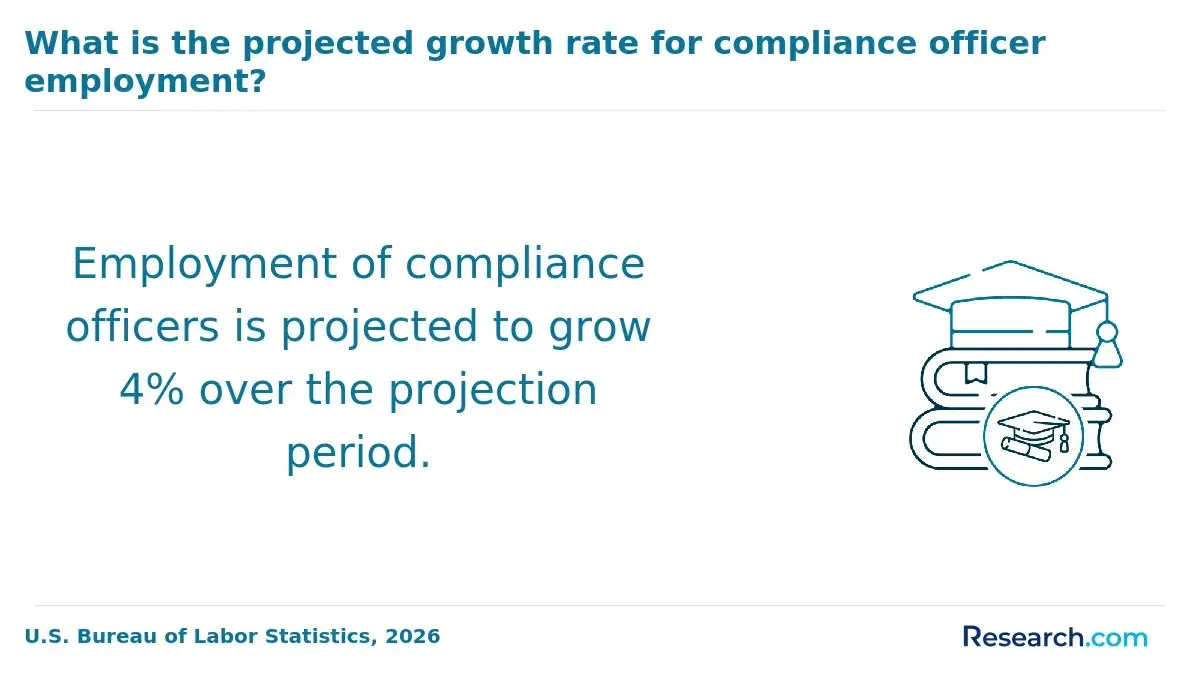
- The U.S. Bureau of Labor Statistics reports $80,730 in May 2025 median annual pay for compliance officers and 4% projected growth, 2025-2035; those figures cover a broader occupation, not hospital analysts specifically.
What is a legal studies master's degree for hospital compliance analysts?
A hospital compliance analyst helps an organization identify regulatory risks, review practices, document findings, and follow through on corrective actions. Work may involve patient privacy, billing, conflicts of interest, training, or responses to reported concerns. Analysts generally work with compliance leaders, clinicians, revenue-cycle teams, and counsel; they do not replace an attorney's legal advice.
An MLS, MSL, or similarly named non-Juris Doctor (JD) degree teaches professionals to understand and apply legal concepts without preparing them for attorney licensure. For this occupation, its value depends less on the degree's initials than on whether students practice interpreting healthcare requirements and translating them into operational decisions.
It is also distinct from paralegal education. A paralegal program focuses on legal support work, while a hospital-facing graduate curriculum may focus on organizational risk and regulatory implementation. Someone exploring an earlier entry point can review online associate degree options in legal studies, but an associate degree is not interchangeable with a graduate credential.
What education does a hospital compliance analyst need?
There is no single nationwide degree requirement for the job title. Employers set their own qualifications, and openings may favor backgrounds in healthcare administration, nursing, health information management, accounting, public health, or law-related studies. Relevant experience - such as auditing claims, handling privacy incidents, writing policies, or investigating concerns - can matter as much as a degree title.
For an applicant without hospital experience, a master's alone may not solve the main hiring gap: knowing how care delivery and payment workflows operate. An entry-level healthcare operations, revenue-cycle, privacy, or audit role may provide a more direct first step. Applicants who already hold a bachelor's degree and perform compliance-adjacent work have a clearer reason to consider graduate study if their target positions call for broader legal analysis or leadership.
If a bachelor's degree is still the immediate goal, examine how legal studies associate-to-bachelor's pathways work before planning for graduate admissions. The receiving institution decides which prior credits apply; neither a legal-studies major nor an MLS substitutes for the education and licensure required to become an attorney.
Which master's programs prepare students for hospital compliance careers?
Start with the work you want to do, then compare curricula rather than assuming every program with "healthcare" in its name teaches the same skills. The following program types offer different preparation for hospital compliance roles.
| Program type | Potential strength for hospital compliance | Limitation to check |
| MLS, MSL, or Master of Jurisprudence with a formal healthcare compliance concentration | Focused study of healthcare law and regulatory interpretation | Whether required courses address audits, investigations, and hospital operations - not just legal doctrine |
| General legal studies master's with healthcare electives | Flexibility to combine privacy, employment, and regulatory subjects | Whether relevant electives run often enough to complete the intended plan |
| Master of Healthcare Administration or public health master's | Deeper study of health systems, operations, or population-health policy | Whether legal research and compliance-specific work receive enough attention |
| Graduate certificate in healthcare compliance | A narrower way to address a defined skills gap | Whether its credits can later apply to a degree, if that matters to you |
A formal concentration has published requirements; a few healthcare electives do not necessarily amount to one. An embedded certificate has its own completion rules and should not be assumed to come with the degree. For a broader view of legal studies master's degree types and career options, compare each option against the actual qualifications in hospital postings you would pursue.
Before applying, request the current course schedule and a sample capstone description. A program is a stronger fit if you can identify where students analyze a regulation, assess an operational risk, and communicate a defensible recommendation.
Are online legal studies programs effective for hospital compliance careers?
They can be, particularly for professionals who need to remain employed while studying. Effectiveness depends on the curriculum and learning activities, not on the word "online." A course that requires students to investigate a simulated privacy incident or draft a corrective-action plan offers more directly relevant practice than one assessed only through general legal essays.
Confirm whether courses meet live, follow a cohort sequence, require campus visits, or include a practicum. "Online" does not mean asynchronous or self-paced. If practical experience is required, ask whether the school arranges placements, permits a project at your current employer, or restricts remote work. Compare those obligations with your shift schedule and access to an appropriate supervisor.
Students considering accelerated legal studies master's pathways should also check when required healthcare courses are offered. A shorter advertised timeline is useful only if its workload and sequencing are realistic alongside hospital work.
What courses do healthcare compliance master's programs include?
Course titles vary, so read descriptions and assignments. The most relevant curriculum connects legal rules to the records, decisions, and teams an analyst encounters. Look for healthcare regulation; fraud, waste, and abuse; health information privacy and security; investigations and auditing; legal research; and organizational ethics or risk management.
Useful assignments might involve applying Health Insurance Portability and Accountability Act (HIPAA) requirements to an incident, examining billing concerns under the False Claims Act, or mapping how a hospital responds to a potential Emergency Medical Treatment and Labor Act (EMTALA) issue. Coverage of the physician self-referral law, commonly called the Stark Law, and the federal Anti-Kickback Statute may also matter for roles involving referrals and financial relationships. Coursework should distinguish these rules rather than treating "healthcare compliance" as one subject.
Analysts also need to write findings clearly, use data responsibly, and monitor whether a corrective action worked. If the curriculum is heavily theoretical, ask what opportunities students have to practice those tasks. No course by itself establishes professional proficiency or authorizes a graduate to give legal advice.
What are the admission requirements for legal studies master's programs?
Applicants generally need a completed bachelor's degree, but each school sets its own rules for academic records, essays, references, resumes, prerequisites, and test scores. A JD is generally not the purpose of these non-JD programs. Prior healthcare employment may strengthen an application without being a universal admission requirement.
Read the current admissions page rather than assuming requirements from the program name. If your degree or experience is outside healthcare, ask whether applicants must complete introductory law or health-systems coursework and whether those courses add time or cost. If you already hold graduate credit, obtain a written explanation of the school's transfer-credit policy; eligibility to request transfer does not mean credit will be accepted or applied to healthcare requirements.
Check the institution's recognized accreditation separately from any claims about a particular curriculum. American Bar Association approval, when applicable, concerns qualifying paralegal education programs; it is not institutional accreditation or a standard approval requirement for an MLS.
How long do these programs take and how much do they cost?
Completion time depends on required credits, course availability, and whether you study full-time or part-time. Compare each school's published plan with the schedule you could actually maintain; a missed once-a-year course could extend completion. A graduate certificate may require a smaller commitment than a full master's, but it may also cover fewer topics.
For cost, request a written estimate covering tuition for all required credits plus mandatory fees, books or materials, technology, travel for any campus sessions, and expenses associated with a practicum. Ask whether tuition changes during enrollment and whether employer assistance is available. Advertised per-credit tuition alone cannot establish the total price or value of a program.
Federal aid depends on the student's eligibility and the specific institution and program, not merely on graduate-level branding; do not assume a standalone certificate qualifies. When choosing a legal studies master's with cost and career fit in mind, weigh lost work time and borrowing against the skills your target role requires. A shorter course, employer training, or certificate may be the better investment if it closes the same gap.
What jobs can graduates pursue in hospital compliance?
Relevant job titles include compliance analyst, privacy analyst, revenue-cycle compliance specialist, internal auditor, and compliance program coordinator. Responsibilities vary by hospital: one analyst may review documentation and billing patterns, while another tracks privacy incidents or tests whether staff follow policies.
A graduate degree may help an experienced employee compete for work involving regulatory interpretation, program design, or management, but it does not guarantee a promotion. Career changers can make a stronger case by connecting prior audit, clinical, records, data-analysis, or investigation work to a hospital's specific risks. If postings consistently request experience you lack, prioritize projects or roles that let you document those skills before committing to a master's.
How much do hospital compliance analysts earn?
The U.S. Bureau of Labor Statistics reports median annual pay of $80,730 in May 2025 for compliance officers, with 4% projected job growth, 2025-2035 and about 32,700 projected openings per year. This is a broad occupational benchmark, not a salary survey of hospital compliance analysts or MLS graduates. Pay for a particular role can differ with employer, location, responsibilities, and experience.
Use that distinction when evaluating a program's return on investment. Compare the compensation and qualifications in relevant hospital postings with your current position and likely education costs; do not treat the occupational median as an expected starting salary or a degree-related raise.
Which certifications and standards support hospital compliance careers?
Professional certification can demonstrate defined knowledge, but it is separate from earning a university certificate or master's degree. The Health Care Compliance Association administers the Certified in Healthcare Compliance (CHC) credential and a healthcare privacy compliance credential; certification bodies set their own current eligibility, examination, and renewal rules. Check those rules directly before treating a degree or job title as a route to certification.
For practice, hospital analysts should understand which authorities govern their assignments. Federal sources include guidance from the Department of Health and Human Services Office of Inspector General for compliance programs, the Office for Civil Rights for HIPAA privacy and security enforcement, and the Centers for Medicare & Medicaid Services for applicable participation and payment requirements. State law, contracts, and employer policies may add obligations.
Choose training by the work you need to perform: privacy-focused work may warrant deeper information-governance study, while billing investigations call for reimbursement and fraud-and-abuse knowledge. A credential can complement that experience; it cannot replace familiarity with the hospital's actual systems and procedures.
Other Things You Should Know About Law & Paralegal
No. An MLS or MSL does not qualify someone to practice law. Analysts can research rules and support compliance decisions within their roles, while questions requiring legal advice should go to authorized counsel.
No. Compliance covers applicable laws, regulations, and organizational policies. Hospital accreditation involves assessment against an accrediting organization's standards. The work can overlap, but a program focused only on accreditation preparation may not cover the full compliance role.
Possibly, if the program and employer permit it. Obtain approval before using internal information, remove or protect sensitive details as required, and clarify who may review the finished work.
Choose based on the work you want. A paralegal certificate is designed for legal-support preparation, not specifically for hospital compliance. Completing one also does not automatically confer professional paralegal certification or qualify its holder to practice law.
References
- Compliance | Office of Inspector General | Government Oversight | U.S. Department of Health and Human Services https://oig.hhs.gov/compliance/
- Requirements | The State Bar of California - CA.gov https://www.calbar.ca.gov/admissions/requirements
- Employer-offered educational assistance programs can help pay for college | Internal Revenue Service https://www.irs.gov/newsroom/employer-offered-educational-assistance-programs-can-help-pay-for-college
- Types of Financial Aid: Grants, Work-Study, and Loans | studentaid.gov https://studentaid.gov/understand-aid/types
- Online Master's in Health Care Compliance, MLS | ASU Online https://asuonline.asu.edu/online-degree-programs/graduate/masters-in-healthcare-compliance/
- 6 Benefits of a Master's in Healthcare Management | Northeastern Online https://online.northeastern.edu/resources/healthcare-management-online-degree/
- Health Care Compliance Specialization Curriculum | AU-LAW https://onlinelaw.wcl.american.edu/legal-studies/curriculum/health-care-compliance-specialization/
- Master of Legal Studies in Healthcare Compliance | wsulaw.edu https://www.wsulaw.edu/academics/master-of-legal-studies/
- Employer Tuition Reimbursement: How It Works and How to Pay for College | Winston-Salem State University https://ramsonline.wssu.edu/blog/employer-education-benefits/
- How Can You Land a Career in Health Care Compliance? | USC Online https://online.usc.edu/news/health-care-compliance-jobs-how-to-land-career/