2027 Legal Studies Master's Programs for Talent Acquisition Compliance Teams

Co-Founder and Chief Data Scientist
A recruiting team can make a costly mistake long before someone is hired: an unlawful screening question, an inconsistent selection rule, or a mishandled background check can create compliance risk. A master's in legal studies may help talent acquisition professionals understand those rules, but it is a substantial investment - not a default requirement for HR work. This guide explains what to look for in a program, when a shorter credential may be enough, and how to compare the time, cost, and career value before enrolling.
Key Things You Should Know
- Choose a non-JD legal studies master's for sustained responsibility over hiring policy, investigations, or compliance - not because talent acquisition jobs generally require one.
- Prioritize employment law, discrimination, background screening, privacy, and applied policy work; a relevant elective is not necessarily a formal HR law concentration.
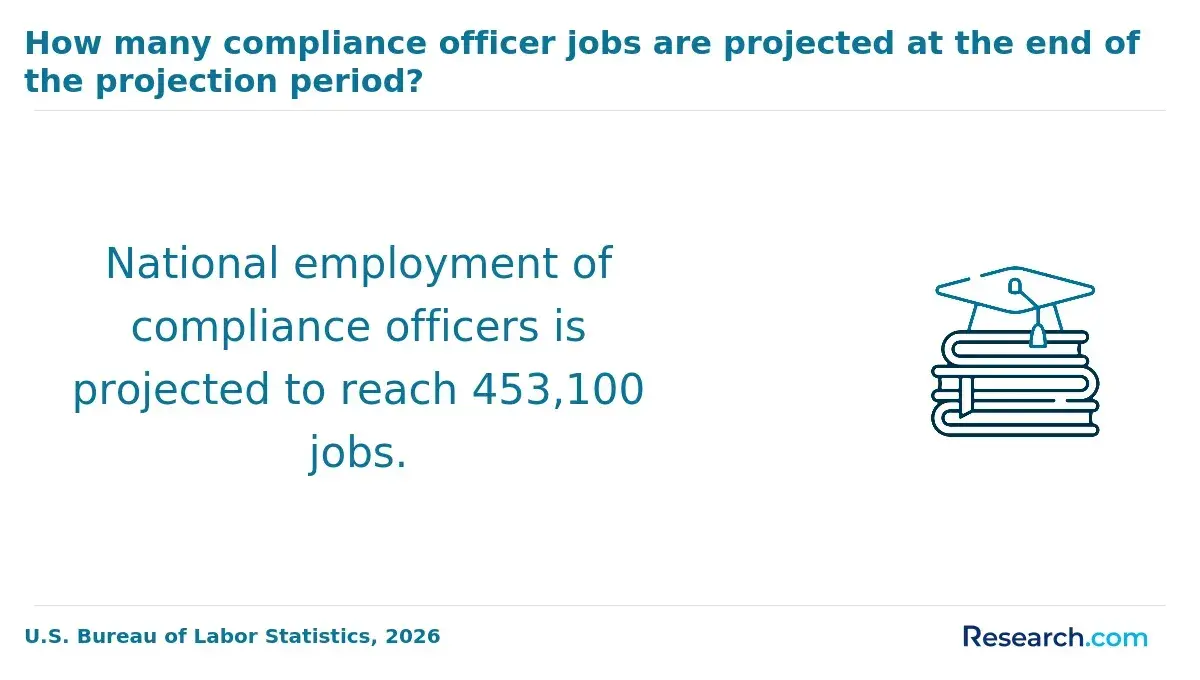
- Compliance officers earned a median $80,730 in May 2025, with 4% projected job growth from 2025-2035; that broad occupation is a benchmark, not a promised talent acquisition salary.
What are master's legal studies programs for talent acquisition compliance teams?
A Master of Legal Studies (MLS), Master of Studies in Law (MSL), or similarly named Master of Jurisprudence is generally a non-JD graduate degree designed to help professionals work with legal rules without becoming attorneys. For talent acquisition teams, the useful application is translating employment requirements into recruiting procedures, manager guidance, vendor oversight, and escalation protocols.
Few programs need to carry the exact label "talent acquisition compliance." Evaluate the actual course catalog instead: an employment-law concentration may be relevant, while a general MLS with suitable electives may also work. Confirm whether the school offers a formally designated concentration, an embedded certificate, or simply a choice of courses; those are different credentials.
The degree is most defensible for someone who regularly designs or oversees hiring controls. A recruiter who needs to apply an existing policy may get more immediate value from employer training or a targeted course. An MLS or MSL does not qualify its holder to practice law or independently give legal advice.
Why do talent acquisition teams need legal and compliance training?
Recruiting decisions create records and obligations at several points: job advertising, interview questions, accommodations, selection criteria, background screening, and retention of applicant information. Federal rules matter, but state and local requirements can differ across the locations where an employer recruits. Compliance training helps staff recognize when a routine workflow needs review by HR leadership or counsel.
The value of graduate study depends on the job. A compliance lead may need to interpret rules, document decisions, audit processes, and work with counsel to update policy. A recruiter may instead need clear procedures and prompt access to specialists. Neither role should treat coursework as a substitute for current employer policies or legal advice about a specific hiring decision.
What degree and accreditation requirements apply to legal studies master's programs?
Applicants generally need a bachelor's degree to enter a legal studies master's program. For the school itself, verify institutional accreditation with the institution's recognized accreditor or the U.S. Department of Education. Accreditation matters for academic oversight and may affect aid eligibility and how another institution evaluates prior study; it does not mean that every credit will transfer.
Do not confuse institutional accreditation with American Bar Association (ABA) approval. The ABA approves qualifying paralegal education programs; that approval is not a general accreditation requirement for an MLS or MSL, and it does not turn a legal studies master's into a law degree. If the intended job is paralegal work rather than recruiting compliance, compare the credential and curriculum separately - including lower-tuition online paralegal programs with ABA approval. ABA approval of a paralegal program does not certify its graduates as paralegals.
What do talent acquisition compliance master's programs teach?
The strongest curriculum connects legal doctrine to decisions the team actually makes. Look for employment discrimination and accommodations, wage-and-hour issues affecting job design, background-check rules, workplace investigations, privacy, administrative regulation, and legal research. Contract or vendor-management work can be useful when the team relies on screening firms or recruiting platforms.
Depth matters more than a course title. Compare syllabi, required courses, elective availability, and the final project. An applied assignment might ask students to evaluate a hiring policy or document an audit process; confirm that the school permits work-based projects and how confidential information must be handled. If a named specialization is important to your employer, distinguish a transcripted concentration from a few relevant electives when choosing legal studies programs with an HR law concentration.
Also ask who teaches the courses and when the catalog was last updated. Rules and hiring technologies change, so a useful program should teach students how to research and escalate new issues, not just memorize today's procedures.
Are online or campus-based legal studies programs better for working professionals?
Online is usually the easier format to fit around a full-time recruiting job, but it is not necessarily self-paced. An online program may require live evening classes, group meetings, scheduled exams, or a fixed sequence of courses. Campus study may offer more face-to-face discussion and local networking but add travel and time away from work.
Judge practical flexibility by the published schedule, not the delivery label. Before applying, confirm whether classes are asynchronous, whether any campus visits are required, how often essential employment-law courses run, and whether a capstone or practicum can be completed through current employment. If fieldwork is required, ask who arranges it and whether the school restricts remote placements or projects with your employer. The better format is the one whose actual obligations you can meet without delaying completion.
What are the admission requirements for a master's in legal studies?
Requirements vary by school, but applicants commonly submit proof of a completed bachelor's degree and transcripts. A program may also request a résumé, recommendations, a statement of purpose, or an interview. Legal work experience may strengthen an application without being a formal prerequisite; do not assume that a program requires prior law coursework or an entrance test unless its current admissions page says so.
For a team member already working in HR, the application should connect concrete responsibilities - such as reviewing selection procedures or coordinating screening vendors - to the program's curriculum. If preparing an essay is a barrier, comparing no-personal-statement legal studies programs can help narrow the search, but confirm each school's current requirements before applying.
Ask admissions whether graduate certificate credits can later apply to the master's. Admission to a degree program and acceptance of earlier credits are separate decisions controlled by the receiving institution.
How long do legal studies master's programs take and what do they cost?
Completion time depends on required credits, whether courses run year-round, and how many a working student can take at once. An accelerated calendar is useful only if the required employment-law courses are available when needed and the weekly workload is manageable. If timing is decisive, compare course sequencing - not just advertised completion time - when considering legal studies master's study on a faster schedule.
There is no reliable single tuition figure for this category: schools set different per-credit rates, fees, and enrollment rules. Request a written 2026-27 total-cost estimate for your intended course load. It should separate tuition from mandatory fees, books or research tools, technology, travel, and any capstone-related expenses. Ask whether the quoted price can change before graduation and whether your employer reimburses the specific program.
Compare that total with the time and cost of a graduate certificate or focused professional training. Federal aid eligibility depends on the institution, the specific program, and the student; do not assume that a certificate qualifies or that aid makes the degree inexpensive. Borrowing also raises the cost beyond the advertised tuition.
What careers can a legal studies master's support in talent acquisition compliance?
An MLS can support progression from recruiting operations toward roles such as hiring compliance specialist, HR compliance analyst, background-screening program manager, or employment-policy lead. These titles do not have uniform education requirements. Employers may weigh demonstrated HR experience, sound judgment, policy-writing ability, and familiarity with their hiring jurisdictions more heavily than a graduate degree.
For a career changer, experience with audits, data handling, vendor oversight, or process improvement may transfer well. The missing piece is usually the ability to apply employment rules to specific recruiting decisions and recognize when counsel should be involved. Seek projects that produce evidence of that work, such as a documented process review, rather than assuming the degree alone will establish it.
A different destination calls for different education. Someone aiming for legal-support work should compare paralegal curricula and employer expectations, including options for comparing online paralegal certificates. A paralegal certificate is an educational award, not professional certification or a qualification to practice law. For talent acquisition compliance, targeted HR training may be the less costly first step.
How much can talent acquisition compliance professionals earn?
The Bureau of Labor Statistics (BLS) does not provide a single wage figure for "talent acquisition compliance." The occupations below offer U.S. context for related work, but their medians cover people with different duties, industries, and education levels. They are not forecasts of what an MLS graduate will earn.
| Related BLS occupation | Median annual pay | Projected job growth |
| Compliance officers | $80,730 in May 2025 | 4%, 2025-2035 |
| Compensation, benefits, and job analysis specialists | $78,210 in May 2025 | 6%, 2025-2035 |
| Labor relations specialists | $95,420 in May 2025 | 2%, 2025-2035 |
The compliance-officer figure is the closest broad benchmark for oversight work, while the other occupations illustrate adjacent HR specialties - not interchangeable job titles. For a personal return-on-investment decision, compare local postings for the exact role you want with your current compensation and the program's full cost. Check whether those postings actually request a master's degree.
What certifications strengthen talent acquisition compliance credentials?
A professional certification can signal knowledge more narrowly - and often with less time away from work - than a master's degree. HR practitioners may consider credentials offered by the Society for Human Resource Management or the HR Certification Institute; their current eligibility, exam, and renewal rules differ. For compliance-focused work, examine the Compliance Certification Board's credentials and choose only one that matches your responsibilities and eligibility.
These are certifications granted by professional organizations, not academic certificates issued for completing college courses. Neither type replaces employer training or authorizes legal practice. Before paying for an exam or a degree, review postings for your target role: if employers chiefly request HR experience and a particular certification, that may be the better next investment. If the work instead requires sustained legal analysis and policy design, a relevant master's curriculum may offer greater depth.
Other Things You Should Know About Law & Paralegal
It may, if your employer's policy covers the school, degree, and courses. Confirm approval deadlines, grade requirements, payment timing, and any repayment obligation before enrolling.
Do not assume so. Ask the school about project rules and your employer about confidentiality requirements; use approved, de-identified, or fictional materials when necessary.
Usually not. Employers and applicable laws may require training tied to particular duties or jurisdictions. Check those requirements separately from the degree curriculum.
Do not plan on it without written confirmation from the law school. JD admissions and credit policies are separate, and completing an MLS does not provide a route to attorney licensure by itself.
References
- Employment Tests and Selection Procedures | U.S. Equal Employment Opportunity Commission https://www.eeoc.gov/laws/guidance/employment-tests-and-selection-procedures
- Cost of Attendance (Budget) | 2025-2026 Federal Student Aid Handbook https://fsapartners.ed.gov/knowledge-center/fsa-handbook/2025-2026/vol3/ch2-cost-attendance-budget
- Types of Financial Aid: Grants, Work-Study, and Loans | studentaid.gov https://studentaid.gov/understand-aid/types
- Master of Legal Studies (MLS) vs. JD: Which Is Right for You? | Wake Forest MLS https://mls.law.wfu.edu/articles/mls-vs-jd-which-is-right-for-you/
- Master of Legal Studies (MLS) vs. JD: What's the Difference? | SMU Online Master of Legal Studies https://onlinemasterlegalstudies.smu.edu/articles/mls-vs-jd/
- Certification in Employment and Human Resources Law | fsu.edu https://law.fsu.edu/academics/stoops-center-law-and-business/certification-employment-and-human-resources-law
- Human Resources Law, MSL - McGeorge School of Law https://onlinelaw.pacific.edu/human-resources-law/
- MLS vs J.D.: Which Legal Degree Fits Your Career Goals? | UC Law San Francisco MLS https://mls.uclawsf.edu/articles/mls-vs-jd/
- Employment Law - eCornell - Cornell University https://ecornell.cornell.edu/certificates/human-resources/employment-law/
- Human Resources and Employment Law Master's - ASU Online https://asuonline.asu.edu/online-degree-programs/graduate/hr-and-employment-law/