2027 MLS Programs for Contract Lifecycle Management Implementation Teams

Co-Founder and Chief Data Scientist
Contract lifecycle management (CLM) teams need people who can translate contract requirements into workable approval processes, data fields, and software rules. A Master of Legal Studies (MLS) can strengthen that legal understanding, but it may not teach implementation skills - or be the most efficient credential for someone who already knows contract operations.
This guide helps prospective students compare relevant programs, identify curriculum gaps, estimate the full commitment, and decide when an MLS is worth pursuing instead of narrower training.
Key Things You Should Know
- An MLS can support CLM implementation work, but it is a non-JD degree: it is not required for most team roles and does not qualify graduates to practice law.
- Prioritize contract drafting and interpretation, procurement, privacy, process design, and hands-on technology assignments over a specialization's name alone.
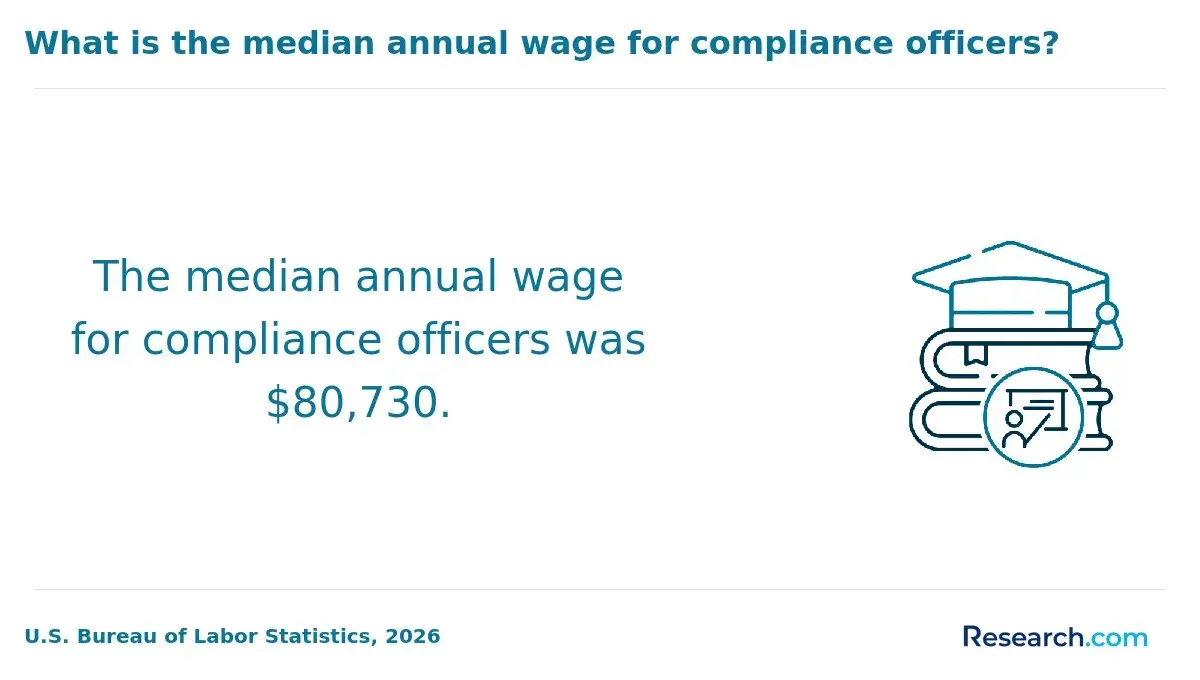
- The Bureau of Labor Statistics reports $80,730 in May 2025 median pay and 4% projected growth, 2025-2035, for compliance officers; those figures describe a broad occupation, not CLM specialists or MLS graduates.
What are MLS programs for contract lifecycle management implementation teams?
CLM covers the processes and systems used to request, draft, negotiate, approve, sign, store, monitor, and renew contracts. An implementation team turns those processes into a functioning workflow: it maps approvals, configures templates and contract data, migrates records, tests rules, trains users, and resolves problems after launch.
An MLS is a graduate legal-knowledge degree for professionals who generally do not plan to become attorneys. Some schools use names such as Master of Studies in Law (MSL) or Master of Jurisprudence for related non-JD degrees. For CLM work, the degree's potential value is helping a project manager, analyst, procurement professional, or legal operations specialist understand why a clause, approval, retention rule, or escalation path matters. The degree does not itself provide software proficiency or authorize independent legal advice.
Not every implementation role warrants graduate study. Someone who primarily configures a platform may benefit more immediately from vendor training and supervised project work; someone responsible for designing contract policy across departments may gain more from deeper legal coursework. Professionals comparing adjacent routes can also review a guide to faster online business law graduate study, while checking whether any shorter program actually covers their CLM responsibilities.
What education and skills do CLM implementation professionals need?
Employers set requirements by role; an MLS is not a universal hiring requirement. A legal operations analyst may need contract terminology and reporting skills, while a systems lead may need experience with data migration, integrations, access controls, and user acceptance testing. Both need to communicate with attorneys and business owners without confusing a software setting with a legal decision.
Strong preparation combines contract fundamentals with practical abilities: identifying the information a contract record must capture, documenting exceptions, mapping a process before automating it, testing sample transactions, and explaining changes to users. Experience in procurement, sales operations, compliance, paralegal work, or enterprise software can transfer, but each starting point leaves different gaps.
For an aspiring legal-support professional without a bachelor's degree, associate-level paralegal programs online may be a more appropriate first comparison than graduate school. Paralegal education and CLM systems training overlap in document work but serve different purposes; neither route permits a nonlawyer to practice law.
Which MLS programs offer contract management or legal operations specializations?
Arizona State University's Master of Legal Studies offers a Contract Management emphasis, making it a direct program to examine for contract-focused legal study. A contract-management label is useful for finding candidates, but it does not establish that students configure CLM software, complete an implementation project, or receive vendor credentials. Confirm the current degree plan, course availability, delivery format, and applied assignments with the school before relying on the emphasis.
Programs described as business law, compliance, or legal technology may also fit particular CLM roles, even when they have no formal contract-management or legal-operations specialization. Distinguish a formal emphasis or concentration from a set of electives, an embedded certificate, and a marketing description of relevant courses. A school offering one contract law class should not be treated as offering a CLM specialization.
Compare candidates using the same evidence: required contract coursework, electives relevant to the contracts your organization handles, opportunities to practice workflow design, scheduling constraints, and total cost. If a school advertises legal technology, ask whether students merely discuss tools, receive access to them, or complete assessed work in them. These are materially different experiences.
Are online or campus-based MLS programs better for CLM careers?
Neither format is inherently better. Online study can reduce travel and let employed students apply course concepts at work; campus study may make scheduled collaboration and local networking easier. For a CLM implementation professional, the decisive issue is whether the program supports sustained practice with contracts, processes, and colleagues - not whether lectures are delivered through a screen.
"Online" does not necessarily mean asynchronous or self-paced. Ask about live class meetings, group-project hours, exams, campus visits, course sequencing, and whether required electives run often enough for your intended graduation date. If you expect to build an implementation portfolio using workplace materials, ask what the school permits before sharing any confidential contract or system information.
Working students considering a broader alternative can use comparing business law degrees for adult learners to frame the format decision. Check each school's current schedule rather than assuming that two online programs offer equal flexibility.
What courses do MLS programs teach for contract lifecycle management?
Course titles vary, so judge a curriculum by the work it prepares you to do. Contract law and drafting can help you recognize obligations and exceptions; business organizations, procurement, privacy, and compliance courses can explain why different agreements need different approval or retention rules. Legal research can help you locate and assess authority, but it does not replace an attorney's judgment on a live matter.
CLM implementation also calls for skills a law-focused degree may not teach: requirements gathering, process mapping, metadata design, reporting, change management, and software testing. An applied course or capstone is particularly valuable if students must turn a contract process into documented requirements and test cases. Verify that the assignment is required, not merely available as an elective.
Where a program's legal coursework is strong but its technical training is limited, pair it with supervised implementation work or platform-specific instruction. The practical question is whether the combined plan fills your own skill gaps without paying graduate tuition to repeat knowledge you already use at work.
What are the admission requirements for MLS programs?
MLS programs generally target applicants who already hold a bachelor's degree, but each school sets its own eligibility rules. Review its current admissions page for required transcripts, statements, résumés, recommendations, English-language requirements where applicable, and any program-specific prerequisites. Do not assume that professional CLM experience substitutes for a stated degree requirement - or that a particular undergraduate major is required when the school does not say so.
Applicants can make a stronger case for fit by describing a specific process problem they have worked on, such as inconsistent approvals or incomplete contract data, and explaining what legal knowledge they lack. If you have only an associate degree, continuing from an associate degree to legal studies is a potential route to graduate eligibility. The receiving college decides which prior credits apply; admission to a later MLS is a separate decision.
How long do MLS programs take, and how much do they cost?
Completion time depends on required credits, course availability, and whether you enroll full- or part-time. Ask for a course-by-course plan based on your actual starting term, especially if a contract-focused elective is not offered every term. A published fastest-completion timeline may assume a workload that is impractical during a CLM rollout.
For a meaningful price comparison, request each school's current 2026-27 tuition and mandatory fees and calculate the cost using the credits you would need to complete. Add books, technology requirements, possible travel, and any project-related expenses; advertised per-credit tuition is not the total educational cost. Compare the resulting figure with lower-cost graduate legal studies options, but check whether a cheaper curriculum still includes the contract work you need.
Ask the financial aid office what assistance applies to the specific degree and your enrollment status. Do not assume that a short certificate, noncredit course, or vendor credential has the same aid eligibility as an eligible graduate degree. Count time away from paid work and employer training as part of the decision, too.
What jobs can graduates pursue on CLM implementation teams?
Relevant titles include CLM analyst, contract operations specialist, legal operations analyst, implementation consultant, and contract manager. Titles overlap across employers: one analyst may maintain templates and data quality, while another leads integrations and testing. An MLS may support advancement into policy-heavy or cross-functional work, but employers can also prioritize implementation experience, product knowledge, or procurement expertise.
A practical entry route is to take responsibility for a contained part of a project - such as documenting an approval workflow or checking migrated contract records - then record the requirements, tests, and results you can discuss without disclosing confidential information. For someone already implementing software, the better next step may be contract training rather than a second graduate qualification. For someone who understands contracts but has not worked on a rollout, hands-on project experience may matter more than another legal elective.
How much do CLM implementation and contract management professionals earn?
The Bureau of Labor Statistics does not publish a single wage or growth figure for "CLM implementation professional." Its broader categories provide context, not a salary prediction: legal support workers, all other had median annual pay of $72,110 in May 2025 and 0% projected growth, 2025-2035. The category includes work beyond CLM and cannot show what an MLS, a particular platform skill, or a contract manager title adds to pay.
For a role centered on regulatory controls, the compliance-officer figures noted above may be more relevant; a technical implementation role may sit in a different occupational category altogether. Compare actual job postings by duties, location, experience level, and required systems before using any broad benchmark to justify tuition. A degree does not guarantee a raise or promotion.
How can students choose an accredited MLS program for CLM careers?
Start by checking the university's current institutional accreditation with its recognized accreditor or the U.S. Department of Education. Accreditation concerns the institution; it does not verify that a particular MLS teaches CLM implementation. American Bar Association approval of qualifying paralegal education programs is a different status and should not be used as a quality label for an MLS.
Then obtain the current degree plan, course descriptions, sample schedules, and a written estimate of your full cost. Ask who teaches contract and technology courses, what students actually produce in applied assignments, and whether you can use a suitably anonymized workplace problem. A warning sign is a program that promises "legal tech" experience but cannot identify a required, assessed technology or process-design task.
Choose a contract-focused MLS if its legal depth addresses a real gap in the work you want to lead and its cost and schedule are manageable. Choose targeted courses, employer training, or vendor instruction first if your main gap is configuring a platform. Reassess the degree after you know which responsibilities you want next.
Other Things You Should Know About Law & Paralegal
Not usually for process or contract-operations roles. Technical positions involving integrations or data engineering may require coding; other team members still need to specify requirements and test whether the system behaves as intended.
A nonlawyer can administer approved playbooks and route exceptions, but should not independently give legal advice or make decisions reserved for counsel. Responsibilities and unauthorized-practice rules vary by state and employer.
Only with appropriate employer and instructor permission and safeguards. Anonymizing a document may not remove confidential information; a simulated contract process can be a safer alternative.
No. Vendor credentials generally concern a provider's platform, while a university certificate reflects completion of its stated coursework. Check who issues either credential, what assessment it requires, and whether prospective employers use that system.
References
- Federal Contracting Law Master's - MLS Emphasis - ASU Online https://asuonline.asu.edu/online-degree-programs/graduate/federal-contracting-law-mls/
- Tuition & Financial Aid | Seattle U Online MLS https://onlinelaw.seattleu.edu/tuition-and-financial-aid/
- What to Look For in an Online MLS Program | stevenson.edu https://www.stevenson.edu/online/about-us/news/what-to-look-for-in-an-online-mls-program/
- Online Master of Legal Studies (MLS) | William & Mary Law School https://online.law.wm.edu/master-of-legal-studies
- A Guide To Experiential Learning, Internships, Capstones, and Practicums - UOnline - The University of Utah https://online.utah.edu/blog/posts/learning-experiences.php
- Mastering the Full Contract Lifecycle: What Today's Agencies Expect | Villanova University https://www.villanova.edu/university/professional-studies/about/news-events/2025/05140.html
- Contract Drafting Course | McGeorge School of Law https://onlinelaw.pacific.edu/blog/practical-legal-skills-for-professionals-inside-mcgeorges-contract-drafting-course/
- Tuition and Financing - College of Pharmacy https://www.pharmacy.umn.edu/medical-laboratory-sciences/degrees-and-programs/tuition-and-financing
- When Is It the Right Time To Earn a Master of Legal Studies? | UMKC Online Master of Legal Studies https://onlinemls.law.umkc.edu/articles/when-to-get-a-master-of-legal-studies/
- Inside the MLS Curriculum: What You'll Actually Learn | Goodwin College of Professional Studies https://drexel.edu/law/news/legal-studies-blog/inside-the-mls-curriculum/