2027 MLS Programs With Team-Based Compliance Projects: Workload and Scheduling Questions

Co-Founder and Chief Data Scientist
A Master of Legal Studies (MLS) program may advertise online flexibility while requiring students to coordinate compliance projects with classmates on fixed deadlines. For working adults, that difference can determine whether the degree is manageable. This guide explains what team projects involve, where the work tends to accumulate, and which scheduling and cost details to confirm before enrolling. It also helps you decide whether collaborative graduate study offers enough value for your career goal - or whether a shorter route would serve you better.
Key Things You Should Know
- Online does not mean self-paced: Team projects can require live meetings, shared drafts, and deadlines outside scheduled classes.
- Budget for coordination as well as coursework: Ask for a current syllabus and project calendar before assuming that published study-hour estimates cover group work.
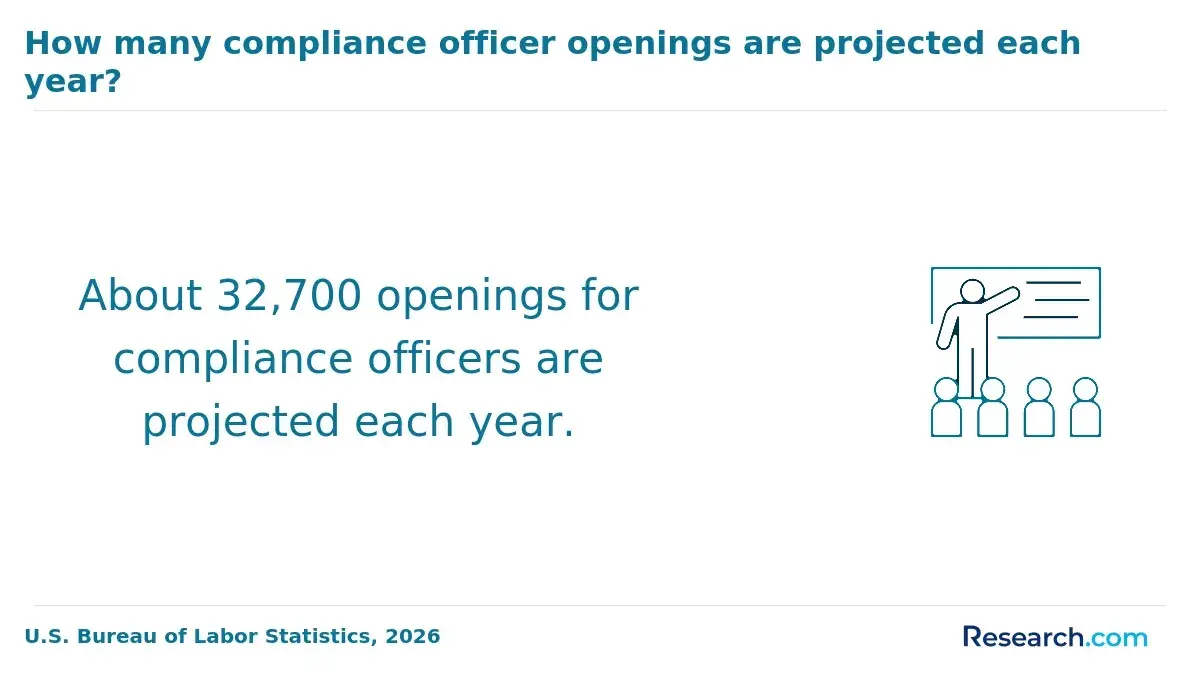
- Check the career payoff: The U.S. Bureau of Labor Statistics reports $80,730 median annual pay for compliance officers in May 2025 and 4% projected job growth for 2025-2035; an MLS is not a universal requirement for those jobs.
What Is an MLS Program With Team-Based Compliance Projects?
An MLS is a graduate legal-knowledge degree generally designed for people who do not intend to practice law. Some schools use names such as Master of Science in Law or Master of Jurisprudence for related non-JD degrees. In a team-based compliance project, students apply legal and regulatory concepts to a shared problem - for example, identifying risks in a hypothetical organization, drafting a policy, or presenting a response plan.
The term team-based describes an assignment, not necessarily a formal concentration or a program-wide teaching method. One course might include a group presentation, while another might require a term-long compliance plan. A program's course descriptions alone may not establish how often students collaborate; recent syllabi, assignment briefs, and program staff can clarify that distinction.
These projects can help students practice dividing responsibilities, reconciling different interpretations, and writing for nonlawyer decision-makers. They do not authorize graduates to give legal advice or practice law. The strongest fit is often a professional who expects to work with legal counsel and operational teams rather than act as counsel.
How Do Team-Based Compliance Projects Affect MLS Student Workload?
Group work adds a coordination layer to the reading, research, and writing expected in graduate courses. Even when individual tasks are manageable, a shared deliverable can create a busy period while teammates settle the scope, combine drafts, and resolve inconsistent conclusions.
The table separates ordinary coursework from the additional work a team assignment may create. It is a planning aid, not an estimate of hours: actual demands depend on the syllabus, team size, and project design.
| Project stage | Individual work | Added team work |
| Scoping | Read the scenario and relevant rules | Agree on assumptions, roles, and a shared outline |
| Drafting | Research and prepare an assigned portion | Review teammates' work and reconcile overlapping sections |
| Submission | Check citations and complete any reflection | Edit one consistent deliverable and rehearse a presentation if required |
The workload risk is deadline compression. If several teammates can meet only shortly before submission, revisions may spill into evenings or weekends. Ask whether grades reflect individual contributions, the shared result, or both; that policy affects how much time you may need for documentation and peer review. Students with unpredictable shifts should also find out whether missed meetings can be handled through recorded updates or written collaboration.
How Are Team-Based MLS Projects Scheduled Online and On Campus?
Delivery format and scheduling flexibility are separate questions. An asynchronous online course may let students view lectures on their own time while still requiring a live team presentation. A campus course may provide a regular class period for collaboration but require additional meetings to finish the project.
Check the published course schedule for synchronous sessions, campus visits, presentation dates, and course sequencing. Then ask how teams arrange meetings, which time zones govern deadlines, and whether a student can join a different project group when work schedules conflict. If the program uses cohorts, confirm whether a missed course delays the next opportunity to take it.
For students whose main constraint is completion time rather than group scheduling, legal studies master's programs with shorter timelines provide a separate comparison. A faster calendar is useful only if its course load and required meeting times remain workable.
What Compliance Courses Are Included in an MLS Curriculum?
Relevant coursework may cover legal research, contracts, administrative law, regulatory processes, employment law, privacy, corporate governance, or industry-specific rules. Compliance projects are most useful when courses connect those topics to tasks such as mapping an obligation to a business process, documenting a control, or explaining an escalation decision.
Distinguish a formal compliance concentration, which has published requirements, from a set of electives that happen to address compliance. An embedded graduate certificate is another arrangement and may have its own completion rules. Check the current catalog rather than assuming that a concentration name guarantees a project course or that every elective runs each term.
If your work centers on contracts and organizational decisions rather than a dedicated compliance role, compare business law programs for working professionals alongside compliance-focused MLS options. The better curriculum is the one that teaches the legal issues and applied skills you expect to use.
Do MLS Programs Require Prior Legal or Compliance Experience?
Requirements vary by school. MLS programs commonly target nonlawyers, so prior legal practice is not inherently necessary; applicants generally need to satisfy the institution's graduate admissions rules. Some programs may value relevant employment or require particular materials, but a preference for experience is not the same as an admissions prerequisite. Verify the current degree, transcript, and application requirements with each school.
Experience still affects the learning curve. Someone who has handled audits, HR policies, contracts, or risk reviews may recognize the workplace context quickly, while a career changer may need more time with legal terminology and research. Neither background eliminates the need to learn how to identify an applicable rule and communicate its limits accurately.
If you do not yet hold the undergraduate degree required for graduate admission, an MLS may not be the next step. Online paralegal bachelor's credit transfer pathways offer one undergraduate route to investigate. Do not assume previous credits will count: the receiving school decides how they apply.
How Long Do MLS Programs Take, and What Do They Cost?
Completion time depends on required credits, term length, course availability, and whether you study full- or part-time. Team projects can also make an otherwise feasible course load difficult if several deliverables fall in the same week. Request a sample plan for your intended enrollment pace, including when required project courses are offered.
Published tuition is not the full cost. Compare the price for all required credits and mandatory fees, then account for books, technology, travel for any campus requirements, and income you might forgo by reducing work hours. Ask whether employer tuition assistance applies and whether the specific degree is eligible for the financial aid you plan to use; eligibility and borrowing terms depend on the student and program.
Our guide to cheaper online legal studies master's degrees can help identify options to investigate, but obtain a current, itemized estimate from each school before comparing prices. A lower tuition quote may not compensate for required travel or an inflexible schedule.
Are Online MLS Programs Effective for Collaborative Compliance Training?
They can be, when projects require substantive shared work and provide timely instructor feedback. Students can practice reviewing drafts, documenting decisions, and presenting recommendations without being in the same room. The format is less effective for a student who cannot reliably join required discussions or whose team has no workable process for resolving disagreements.
Look beyond a program's claim that it is "interactive." A sample syllabus can show whether collaboration means a brief discussion-board exchange or a jointly researched deliverable. Ask what platform students use, whether they can access necessary research materials remotely, and how instructors address uneven participation. Access to a platform does not, by itself, establish proficiency with it.
Online delivery is a good fit when you have predictable windows for communication, even if your study hours vary. If your availability changes with little notice, an individually completed project or employer-based training may offer more practical flexibility.
Is an MLS Degree Accredited, and Does It Qualify Graduates for Licensure?
Check the institution's current accreditation through its recognized institutional accreditor. Institutional accreditation concerns the school; it should not be confused with American Bar Association approval of qualifying paralegal education programs. ABA paralegal-program approval is not a general requirement or accreditation label for an MLS.
An MLS is a non-JD degree. It does not, by itself, qualify a graduate to take a bar examination, become a licensed attorney, or provide legal services reserved for lawyers. Requirements for other regulated roles or credentials vary by state and credentialing body. If you have a particular license in mind, check that authority's eligibility rules before enrolling rather than relying on a program's broad career descriptions.
What Careers and Salaries Can MLS Compliance Graduates Expect?
Compliance officers commonly help organizations understand applicable requirements, review practices, document findings, and address potential violations. Legal knowledge can strengthen that work, but employers may also prioritize industry experience, investigative ability, and familiarity with their operations. The Bureau of Labor Statistics reports median annual pay of $80,730 in May 2025 for compliance officers, with 4% projected growth for 2025-2035. Those occupation-wide figures are not salaries or outcomes for MLS graduates.
Possible directions include compliance, risk, contracts, and policy-related work, depending on prior experience and an employer's requirements. Before committing to graduate study, compare local job postings with your current qualifications. If postings emphasize a specific regulatory area or hands-on experience, a targeted course, professional certification, or employer training may close the gap more directly.
Paralegal work is a different route, generally focused on supporting legal matters under attorney supervision. Readers considering that occupation can explore choosing an online paralegal certificate rather than assuming an MLS is the most direct preparation. Completing a certificate is not the same as earning a professional certification, and neither credential authorizes independent law practice.
How Can Students Choose a Reputable MLS Compliance Program?
Start with the job you want and the hours you can reliably protect each week. Then compare programs using documents and answers that reveal what participation actually requires, not just labels such as "online" or "flexible."
These questions target the commitments most likely to change your decision:
- Can the school provide recent syllabi showing which required courses have team projects, live meetings, and presentations?
- How are project teams formed, contributions graded, and scheduling conflicts handled?
- What is the itemized cost at your intended enrollment pace, and when are required courses offered?
- Is the institution currently accredited, and do the courses teach the regulatory topics and deliverables relevant to your target role?
A warning sign is a program that promises flexibility but cannot clarify required meeting times or project policies before enrollment. Favor an MLS when its curriculum fills a meaningful knowledge gap and its team schedule fits your life. Favor a shorter credential or workplace training when you need a narrow skill sooner, at a lower total cost, or with fewer coordination demands.
Other Things You Should Know About Law & Paralegal
Only if your employer permits it and the instructor approves the approach. Remove confidential or personal information as required; a fictional or publicly available scenario is often safer.
Ownership and reuse depend on the school's policies, project terms, and any employer agreement. Check those rules before putting team work in a professional portfolio.
Students can contact the school's disability services office about its accommodation process. Discuss arrangements early enough for the instructor to plan how required team participation will work.
You can describe the task and your individual contribution accurately, subject to confidentiality and school policies. Label it as academic work rather than professional compliance experience.
References
- Summary of the HIPAA Security Rule | hhs.gov https://www.hhs.gov/hipaa/for-professionals/security/laws-regulations/index.html
- What Can You Do With an MLS: Is It Worth It? - SMU https://onlinemasterlegalstudies.smu.edu/articles/what-can-you-do-with-an-mls/
- How Much Should We Assign? Estimating Out of... - Rice CTE https://cte.rice.edu/blog/2016/workload
- Group Work | McGraw Center for Teaching and Learning https://mcgraw.princeton.edu/group-work
- Master of Legal Studies in Healthcare Compliance | wsulaw.edu https://www.wsulaw.edu/academics/master-of-legal-studies/
- The Hidden Cost of Working Across Time Zones - Rice Business https://business.rice.edu/wisdom/hidden-cost-working-across-time-zones
- Class Formats | Scottsdale Community College https://www.scottsdalecc.edu/academics/class-formats
- Master of Legal Studies (MLS) vs. JD: Which Is Right for You? | Wake Forest MLS https://mls.law.wfu.edu/articles/mls-vs-jd-which-is-right-for-you/
- Master of Legal Studies & Graduate Certificates | Winston College of Law https://winston.utk.edu/admissions/degree-programs/master-of-legal-studies/
- What Can You Do With a Master of Legal Studies? | WashU Law https://online.law.washu.edu/articles/what-can-you-do-with-master-of-legal-studies/