
2027 MLS Programs for Compliance Professionals Moving Into Team Leadership

Co-Founder and Chief Data Scientist
Moving from compliance specialist to team leader changes the job: you may need to interpret rules, direct investigations, explain risk to executives, and coach colleagues who handle day-to-day controls. A Master of Legal Studies (MLS) can strengthen the legal knowledge behind those decisions, but it is not the only route to promotion. This guide helps working compliance professionals compare program formats, leadership-focused coursework, costs, and alternatives so they can decide whether an MLS addresses a specific gap in their experience.
Key Things You Should Know
- An MLS can deepen regulatory analysis and legal communication, but it does not qualify graduates to practice law or automatically prepare them to manage people.
- Prioritize programs with compliance coursework, applied projects, and a schedule that permits continued work; compare them with employer training, a graduate certificate, or professional certification.
- The Bureau of Labor Statistics reports $80,730 in median annual pay for compliance officers in May 2025 and 4% projected job growth for 2025-2035; neither figure predicts an MLS graduate's pay or promotion.
What is a Master of Legal Studies degree for compliance professionals?
An MLS is a graduate degree designed to teach legal concepts to people who do not intend to become attorneys. Schools may use names such as Master of Studies in Law or Master of Jurisprudence for related non-JD degrees. For a compliance professional, the useful question is whether the curriculum helps with the regulations, contracts, investigations, and organizational decisions encountered at work - not which degree abbreviation appears on the diploma.
An MLS is not a Juris Doctor (JD), does not itself permit someone to give legal advice as an attorney, and is not generally required for compliance employment. Compliance leaders still need to recognize when a matter requires licensed counsel. The degree is most compelling when a candidate already understands operational compliance but needs more rigorous legal analysis to lead complex work.
Applicants who have not yet earned a bachelor's degree need an undergraduate route before applying to most MLS programs. For someone establishing that foundation, finding an online legal studies associate program may be an earlier step, not a substitute for graduate study.
How can an MLS prepare compliance professionals for team leadership?
Compliance team leaders translate legal requirements into workable policies, assign and review investigations, escalate significant findings, and communicate with counsel and business leaders. An MLS can help with the legal reasoning behind those tasks. Its value depends on whether students also practice applying that reasoning to decisions involving people, budgets, and competing risks.
Legal knowledge and management ability are different. The comparison below helps identify which development route addresses the skill gap standing between a professional and a leadership role.
| Development route | Most useful when the gap is | Important limitation |
| MLS with compliance and applied coursework | Interpreting complex rules and defending recommendations across functions | May offer limited practice supervising staff |
| Employer-led leadership training or a stretch assignment | Delegation, coaching, performance management, and internal influence | May not deepen legal analysis |
| Focused graduate certificate or professional certification | Knowledge of a defined compliance field or a recognized body of practice | May be narrower than a degree and may require separate work experience |
Before enrolling, compare the MLS learning outcomes with a real job posting for the role you want. If the posting emphasizes supervising investigators and managing stakeholders more than interpreting law, seek a stretch assignment or management training alongside - or instead of - the degree.
What are the best MLS program formats for working compliance professionals?
The best format is the one whose actual attendance rules fit your workload. "Online" does not necessarily mean self-paced: a program may require live evening classes, group work, fixed exam windows, or occasional campus visits. A working manager may find a predictable part-time sequence more useful than a faster program that conflicts with investigation deadlines.
These format distinctions reveal scheduling commitments that a delivery label alone can hide.
| Format | Potential advantage | Commitment to check |
| Asynchronous online | Coursework can often fit around changing work hours | Weekly deadlines, group meetings, and exams may still be fixed |
| Live online or cohort-based | Scheduled discussion can support collaboration and accountability | Attendance times may be difficult during audits or investigations |
| Hybrid or campus-based | In-person interaction may suit students who learn through discussion | Travel, residency dates, and time away from work add to the commitment |
Ask for the current course rotation, attendance policy, assessment schedule, and rules for pausing enrollment. If you are still completing an undergraduate degree, comparing faster bachelor's pathways in paralegal studies may clarify your timeline before you commit to an MLS plan; a faster bachelor's route is not, by itself, leadership preparation.
What accreditation should compliance professionals look for in an MLS program?
Check that the university holds institutional accreditation from an accreditor recognized by the U.S. Department of Education, using the Department's accreditation records or the accreditor's directory. Confirm that the MLS is an authorized university offering and ask whether it is housed in a law school, another academic unit, or a partnership. Accreditation establishes an important institutional baseline; it does not establish that a particular compliance curriculum meets your career goals.
Do not confuse institutional accreditation with American Bar Association (ABA) status. The ABA's approval of qualifying paralegal education programs is a separate matter, and ABA approval of a law school's JD program does not mean the ABA approves its MLS. Neither status turns an MLS into an attorney-qualifying degree. A claim of "ABA-approved MLS" warrants clarification directly from the school.
Which courses do MLS programs offer in compliance and legal leadership?
Course titles vary, and a relevant elective is not the same as a formal compliance concentration. Compare required courses, available electives, their rotation, and any capstone before relying on a program's advertised specialty. A concentration should have published requirements; an embedded certificate should have its own stated completion rules.
For prospective team leaders, the following coursework matters most when it includes applied assignments rather than only introductory surveys.
| Course area | Leadership application to look for |
| Administrative law and regulatory interpretation | Explaining how a rule affects policies, controls, and escalation |
| Investigations, evidence, and employment law | Planning defensible fact-finding and working appropriately with counsel and HR |
| Privacy, cybersecurity, or industry-specific regulation | Assessing risks relevant to your sector rather than studying unrelated specialties |
| Risk management, ethics, and legal communication | Presenting findings to executives and explaining decisions to a team |
Request recent syllabi or assignment descriptions. A course that mentions investigations or artificial intelligence is less persuasive than one requiring students to write a policy, analyze a regulatory problem, or present a risk recommendation. Access to a legal research tool should not be assumed merely because a course teaches legal research.
What are the admission requirements for an MLS compliance program?
Most MLS programs require a bachelor's degree and an application that may include transcripts, a résumé, a statement of purpose, and recommendations. Schools differ on minimum academic standards, test policies, prerequisites, and whether compliance experience is preferred or required. Check the current admissions page for the specific program rather than assuming that a common requirement applies everywhere.
A useful statement of purpose connects your current responsibilities to a defined leadership gap: for example, leading regulatory change projects or presenting investigation findings. Ask admissions whether relevant work experience affects eligibility, whether any prerequisite coursework is necessary, and whether previously earned graduate credit can apply. The receiving institution decides whether transfer credit counts toward its degree.
For experienced legal-support professionals who lack a bachelor's degree, paralegal bachelor's degree transfer options may help identify an undergraduate completion route. Confirm accepted credits with each receiving school; prior study does not automatically transfer or meet MLS admission requirements.
How long do MLS compliance programs take and what do they cost?
Completion time depends on required credits, course sequencing, enrollment intensity, and whether a capstone must be scheduled near the end. Full-time study may shorten the calendar but can increase time away from work; part-time study may preserve earnings while extending tuition payments and the time needed to finish. Obtain the current degree plan for the pace you can sustain.
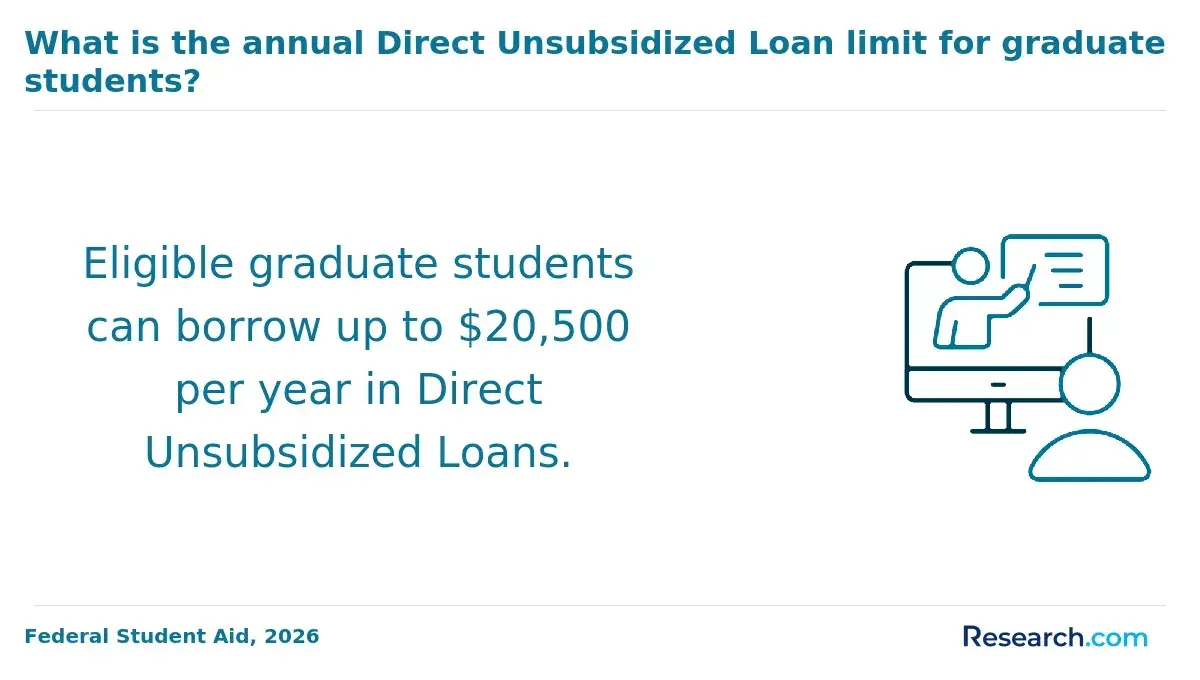
There is no reliable single price for an MLS. Build a program-specific budget from published tuition and mandatory fees, then ask about books, technology, travel, and any required in-person work. If an employer offers tuition assistance, confirm its annual cap, grade rules, and repayment terms before counting it toward your budget. Federal graduate aid may be available to eligible students at eligible programs, but admission alone does not establish eligibility or make borrowing a good return on investment.
When comparing online legal studies master's tuition and career prospects, compare total expected cost at your intended pace - not one school's per-credit rate against another's advertised program total. Weigh that cost against a smaller credential or employer-funded training if those options address the same skill gap.
What careers can compliance professionals pursue after earning an MLS?
For a professional already working in compliance, the most relevant targets are compliance team lead, investigations lead, regulatory affairs manager, ethics and compliance manager, or a risk-focused role. Titles and hiring standards vary by industry and employer. An MLS can support a move into work that requires legal interpretation and cross-functional communication, but supervisory experience and a record of sound decisions may matter more than the degree alone.
Evaluate opportunities by responsibility rather than title. A role supervising analysts, setting investigation procedures, and reporting material risks offers a clearer leadership step than a position with "manager" in its title but no staff or decision-making authority. Professionals entering compliance from legal support may first need direct experience with monitoring, controls, and internal reporting. For that different starting point, online paralegal associate degree programs provide a legal-support education route, not an MLS equivalent or a guaranteed entry into compliance leadership.
What salaries can MLS graduates earn in compliance leadership roles?
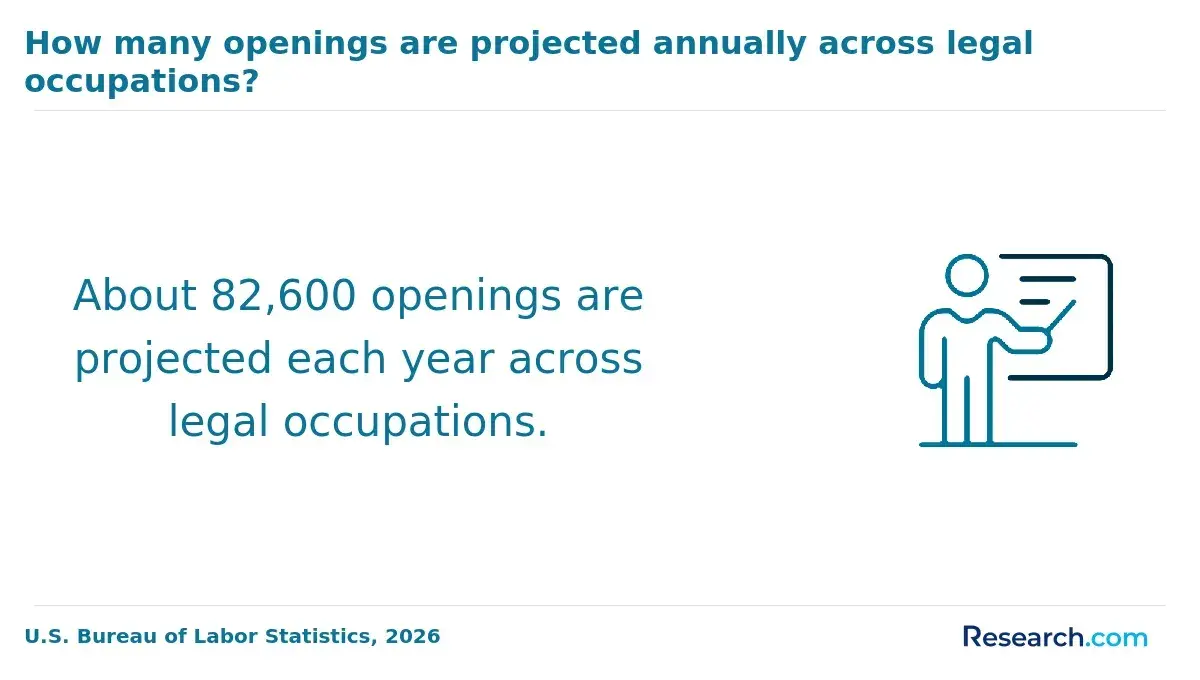
There is no dependable national salary figure for "MLS graduate" or for every variation of "compliance team lead." The Bureau of Labor Statistics reports median annual pay of $80,730 in May 2025 for compliance officers, with 4% projected growth for 2025-2035 and about 32,700 projected openings per year. These are occupation-wide figures, not salaries or vacancies reserved for degree holders or managers.
Actual offers depend on industry, location, scope of supervision, and prior experience. To judge the degree's financial value, compare local postings for the specific roles you could realistically obtain with your current qualifications against those requiring deeper legal expertise. Do not treat the difference between posted salary ranges as an MLS pay premium: the jobs may differ in responsibility and experience requirements.
Do compliance professionals need certifications or licenses after an MLS?
An MLS does not create a general compliance license, and most compliance team-lead roles do not have one universal certification requirement. Employers or regulated sectors may prefer particular credentials. For example, the Society of Corporate Compliance and Ethics administers the Certified Compliance & Ethics Professional credential, while the Health Care Compliance Association administers the Certified in Healthcare Compliance credential. The International Association of Privacy Professionals offers privacy certifications, including CIPP/US. Each organization sets its own eligibility, examination, and maintenance rules.
Certification differs from a university certificate: certification is a credential awarded under a certifying body's standards, while a certificate documents completion of an educational program. An MLS does not automatically confer either professional certification or eligibility for every exam. Review current rules from the credentialing organization and the preferences in your target job postings before paying for additional training. Legal practice remains a separate matter requiring the applicable attorney qualifications and licensure.
Other Things You Should Know About Law & Paralegal
Do not assume they will. A JD program decides whether any prior graduate coursework can apply under its own academic rules. Get a written answer from the prospective law school before enrolling in an MLS for that purpose.
Possibly, if the school permits it and your employer authorizes the use of the material. Ask about confidentiality, privilege, data handling, and whether a fictionalized or publicly sourced project is acceptable.
Coverage depends on your benefit eligibility and the specific program's applicable approval status. Confirm both with the school's veterans benefits office and the U.S. Department of Veterans Affairs before budgeting for enrollment.
Often, but confirm that the school can enroll students where you live. Ask whether a move during the program would affect enrollment, required activities, or available student services.
References
- Qualified Ed expenses | Internal Revenue Service https://www.irs.gov/credits-deductions/individuals/qualified-ed-expenses
- Types of Financial Aid: Grants, Work-Study, and Loans | studentaid.gov https://studentaid.gov/understand-aid/types
- Cost of Attendance (Budget) | 2025-2026 Federal Student Aid Handbook https://fsapartners.ed.gov/knowledge-center/fsa-handbook/2025-2026/vol3/ch2-cost-attendance-budget
- What Can You Do With an MLS: Is It Worth It? - SMU https://onlinemasterlegalstudies.smu.edu/articles/what-can-you-do-with-an-mls/
- Compliance and Risk Management | Programs | Case Western Reserve University https://case.edu/programs/compliance-and-risk-management
- MLS vs Graduate Certificate: What's the Better Career Investment? | wsulaw.edu https://www.wsulaw.edu/news/why-choose-a-master-of-legal-studies-over-a-graduate-certificate/
- Compliance and Risk Management | William & Mary Law School https://online.law.wm.edu/master-of-legal-studies/concentrations/compliance-risk-management
- Is an MLS Worth It? ROI and Career Outcomes for Non-Lawyers | Drexel University Kline School of Law https://drexel.edu/law/news/legal-studies-blog/is-an-mls-worth-it-roi-and-career-outcomes-for-non-lawyers/
- The Power of Partnerships in Experiential Learning | AACSB https://www.aacsb.edu/insights/articles/2025/04/the-power-of-partnerships-in-experiential-learning
- MLS - Corporate Compliance - Seton Hall Law School https://law.shu.edu/academics/mls-corporate-compliance-online.html


