
2027 Different Types of Electrical Engineering Degrees and Their Salaries

Co-Founder and Chief Data Scientist
The demand for skilled professionals in electrical engineering continues to rise as technology advances and industries expand their reliance on electrical systems. Employment in this field is projected to grow significantly over the next decade, reflecting the critical role engineers play in innovation and infrastructure development.
Choosing the right educational path is essential for those seeking to capitalize on these opportunities and secure a rewarding career. This article provides a comprehensive guide to the various types of electrical engineering degrees and details what graduates can expect to earn, helping prospective students make informed decisions aligned with their career goals.
Key Points About Different Types of Electrical Engineering Degrees and Their Salaries
- Students with a bachelor's degree in electrical engineering typically earn a median annual salary of around $101,600, making it the most common entry point into well-paying engineering roles and offering a strong foundation for diverse career paths.
- An associate degree in electrical engineering technology often leads to technician roles with median salaries near $65,000, providing quicker workforce entry but with more limited long-term salary growth and advancement compared to bachelor's or higher degrees.
- Graduate degrees such as a master's or PhD in electrical engineering unlock higher-level research, design, and leadership positions with salaries exceeding $120,000 on average and greater opportunities for advancement in academia, industry, and specialized fields.
What Are the Different Types of Electrical Engineering Degrees Available?
Understanding the different types and levels of electrical engineering degrees is crucial for students to choose the right program that aligns with their career goals and educational backgrounds.
To help clarify these options, here is an overview of the main types of electrical engineering degrees and what makes each distinct.
- Associate Degree in Electrical Engineering: Provides foundational knowledge in electrical circuitry, electronic systems, and engineering drawing. Coursework typically includes hands-on lab experience and introduces essential math and science concepts to prepare students for further study or basic technical roles.
- Bachelor's Degree in Electrical Engineering: Emphasizes both theoretical and practical aspects, covering circuit analysis, electric networks, and engineering economics. Students take advanced physics, mathematics, and design courses, with opportunities for laboratory and internship experiences.
- Master's Degree in Electrical Engineering: Builds on undergraduate knowledge with advanced study in areas like electrical systems modeling, system protection, and risk assessment. Coursework includes complex problem-solving and research-oriented projects.
- Doctoral Degree in Electrical Engineering: Centers on original research, design, and new technology development in specialized areas such as chip architecture or energy systems. It includes technical, managerial, and safety-related coursework to support significant individual innovation.
- Electrical Engineering Technology degree: Focuses on practical application of principles including passive and active circuit analysis, AC networks, and system troubleshooting. This program is more hands-on and applied, ideal for those interested in operational roles within electrical systems.
For students seeking a pathway to enter the workforce quickly, exploring a fastest associates degree in electrical engineering can be a strategic choice, providing essential skills to start technical careers promptly.
What Specializations Are Available in Electrical Engineering Degrees?
Specialization is a key factor when choosing an electrical engineering degree because it helps students tailor their education to fit specific career objectives and industry demands. By focusing on a particular area, students gain targeted skills that enhance their job readiness and long-term professional success.
Here are some common electrical engineering specializations that reflect diverse career paths and skill sets:
- Power Systems Electrical Engineering: This specialization focuses on the generation, transmission, and distribution of electrical power. Students develop skills in grid management, renewable energy integration, and power electronics.
- Communications Electrical Engineering: Concentrating on information transmission via wired, wireless, optical, and satellite systems, this area builds expertise in signal processing, network architecture, and modulation schemes.
- Control Systems Electrical Engineering: Centered on automation and regulation of dynamic systems, this specialization includes robotics and industrial machinery. Skills gained include feedback control, system modeling, and design.
- Computer Engineering Electrical Engineering: Combining hardware and software, this field covers microprocessors, embedded systems, and computer architecture. Key abilities include digital circuit design, programming, and systems integration.
- Microelectronics Electrical Engineering: Focused on small-scale electronic device design, such as integrated circuits and semiconductors, this area teaches VLSI design, semiconductor physics, and fabrication techniques.
- Electromagnetics Electrical Engineering: This specialization explores electromagnetic fields and applications like antennas, microwave circuits, and wireless transmission. Skills include field theory, antenna design, and RF engineering.
- Bioengineering Electrical Engineering: Applying engineering to medical and biological systems, students learn biomedical device design, signal analysis, and system integration.
For those considering an easy masters, focusing on the right specialization in electrical engineering can significantly improve career alignment and earning potential.
How Long Does It Take to Complete Each Type of Electrical Engineering Degree?
Knowing how long it takes to complete various electrical engineering degrees is crucial for students planning their education and career paths. This understanding helps in setting realistic timelines for academic and professional goals.
Here are the common electrical engineering degree types and the average time required to complete each:
- Associate Degree in Electrical Engineering: Typically takes about two years to complete at community colleges or technical schools. Part-time students may take longer, while some programs offer accelerated courses or online classes for added flexibility.
- Bachelor's Degree in Electrical Engineering: Usually requires four years of full-time study at a university. Transfer credits from community colleges can shorten this period, and some schools offer accelerated or online options that may reduce the time slightly.
- Master's Degree in Electrical Engineering: Generally takes one to two years beyond the bachelor's degree. Factors such as thesis requirements or part-time enrollment impact duration. Online and accelerated master's programs are available to accommodate working professionals.
- Doctorate (PhD) in Electrical Engineering: Completion times vary widely but often range from four to six years post-bachelor's. The length depends on research progress, dissertation work, and funding availability, with some programs offering part-time options.
Accelerated electrical engineering degree programs provide an efficient pathway for students to earn both a bachelor's and a master's degree in less time than traditional programs.
Typically, these combined programs reduce the standard six to seven years of study to about five years by allowing students to double-count certain graduate-level courses toward both degree requirements. Some institutions even offer flexible timelines that range from four to six years depending on the program format and student pacing.
Commonly, students engage in graduate courses during their junior and senior undergraduate years, which count as advanced electives and fulfill graduate credit requirements simultaneously. These programs may also offer online, on-campus, or hybrid course delivery, giving students flexibility in how they balance coursework.
By compressing academic requirements and credit hours, accelerated programs help students enter the workforce sooner while gaining advanced credentials critical for career advancement.
Despite the appeal of faster completion, accelerated electrical engineering degrees require a significantly higher workload and strong academic discipline. Admission often mandates maintaining a minimum GPA-usually around 3.0-and approval from both undergraduate and graduate program directors.
The intensity of the condensed curriculum means students must manage an accelerated pace and sustain high performance under demanding timelines. Applications are generally submitted during the junior year, so candidates need to plan carefully to meet deadlines and ensure they can handle the academic rigor.
Ultimately, students should weigh their ability to commit the necessary time and effort to thrive in such an environment while reaping the benefits of expedited degree completion.
I spoke with a graduate of an accelerated electrical engineering program who reflected on his journey with candor and insight. He described managing simultaneous undergraduate and graduate coursework as "like running a marathon at sprint pace," requiring meticulous time management and constant focus.
Despite the challenges, he found the overlap of courses helped reinforce concepts deeply, stating, "It was intense, but the integrated learning made me feel more prepared for real-world engineering challenges."
He also highlighted the emotional rollercoaster of balancing demanding studies with personal life, noting moments of doubt followed by satisfaction upon meeting milestones.
Overall, his experience affirmed that accelerated programs, while tough, offer a rewarding path for motivated students eager to advance rapidly in electrical engineering careers.
Traditional and online electrical engineering degree programs both maintain rigorous academic standards, though their approaches differ. Traditional programs emphasize hands-on laboratory work, face-to-face faculty interaction, and collaborative learning experiences, which are vital for mastering complex engineering skills.
Most campus-based programs hold ABET accreditation, ensuring their curricula meet recognized industry and academic benchmarks. Online electrical engineering degrees, offered by reputable institutions like Arizona State University, also hold ABET accreditation and typically feature virtual labs, mailed kits, and digital simulations.
The coursework in online programs is often identical to that of on-campus programs, frequently taught by the same faculty. However, online learning demands a higher degree of independence and self-discipline, which might be challenging for some students, particularly those new to the field.
Recent trends indicate growing employer acceptance of online electrical engineering degrees, especially when the degree comes from a well-known, accredited institution. Research shows no significant difference in job performance between graduates of online and traditional programs.
Major companies such as Google and Lockheed Martin actively recruit from accredited online programs. Employer emphasis has shifted toward the institution's reputation and accreditation rather than the mode of delivery.
Although some employers express concerns about the depth of hands-on training in online programs, the prevailing view is that the credibility of an electrical engineering degree depends primarily on the quality and reputation of the institution awarding it, not whether the program was completed online or in person.

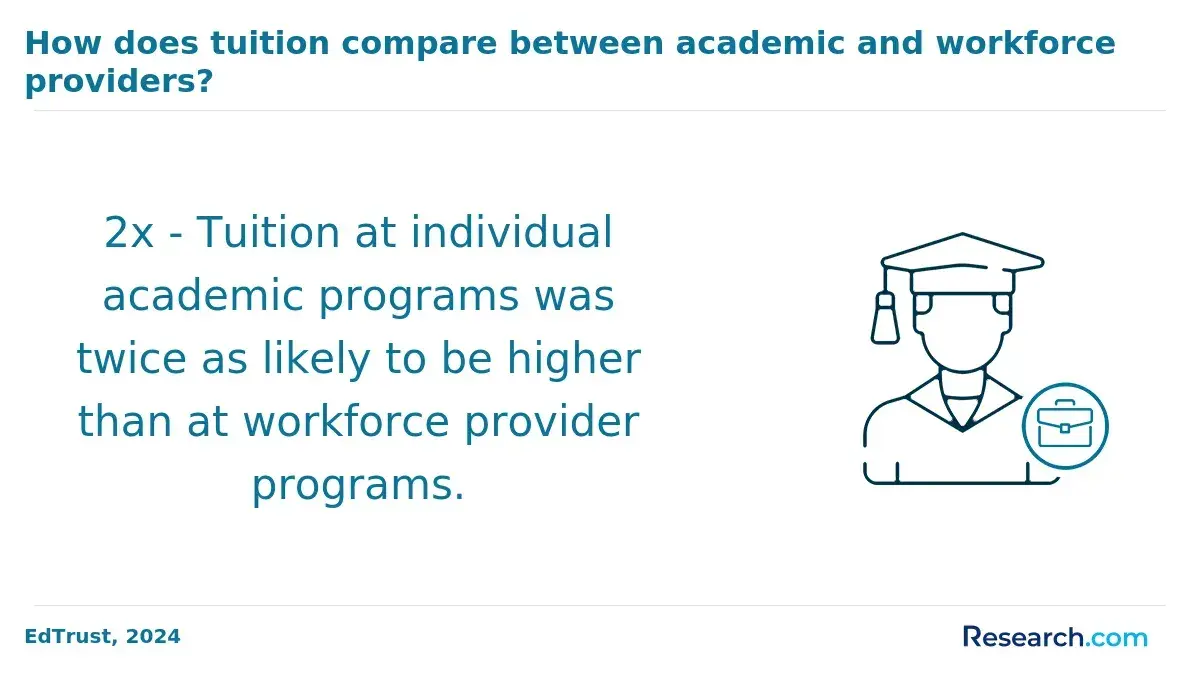
Understanding the differences in tuition costs across various degree levels in electrical engineering is crucial for effective budgeting and long-term financial planning.
Below is an overview of typical tuition ranges for each type of electrical engineering degree to help guide those decisions.
- Associate Degree in Electrical Engineering: This is the most affordable entry point, with average annual tuition around $3,885 at community colleges. Total costs typically range from $7,000 to $12,000 for the full two-year program.
- Bachelor's Degree in Electrical Engineering: Tuition varies considerably, with in-state public university costs averaging $11,214 per year, while out-of-state rates approach $32,883 annually. Private and top-tier schools can charge more than $50,000 each year. Online bachelor's programs average about $46,100 for completion.
- Master's in Electrical Engineering: Graduate tuition for master's students ranges from about $12,605 per year at public universities up to $28,170 at private institutions. Many students benefit from teaching or research assistantships that cover tuition and often provide stipends.
- PhD in Electrical Engineering: Doctoral students frequently receive tuition waivers when they obtain research or teaching assistantships. For programs that do charge tuition, annual costs can vary widely-from $12,000 to over $60,000 at prestigious schools.
I recently spoke with a graduate of an electrical engineering degree program who reflected on her experience managing the financial aspects of her education. She recalled, "Balancing tuition costs with available scholarships and part-time work was a challenge, but it taught me valuable financial discipline."
She emphasized how crucial it was to research all aid opportunities early on and to participate in internship programs that helped offset living expenses.
According to her, "The investment in my degree truly paid off, as the practical skills I gained opened doors to well-paying roles immediately after graduation." Her journey illustrates that with careful planning and resourcefulness, students can navigate the financial demands of electrical engineering degrees and realize tangible career benefits.
Breakdown of All 4-Year Online Title IV Institutions

The level of your electrical engineering degree greatly influences your career opportunities, affecting the types of roles you can pursue, your responsibilities, and your earning potential. Graduates at different educational stages qualify for varied positions across multiple industries, each with distinct expectations.
Below is a bullet list outlining common jobs associated with each electrical engineering degree type to help you explore potential career paths.
- Associate Degree in Electrical Engineering: Graduates often qualify for roles such as electrical technician, engineering assistant, or test technician. These jobs typically involve assisting engineers with installing, troubleshooting, and maintaining electrical systems in settings like manufacturing plants, utilities, and repair shops.
- Bachelor's Degree in Electrical Engineering: This degree is the standard qualification for positions such as electrical engineer, design engineer, control systems engineer, and electronics engineer. Responsibilities include designing and developing electrical systems, managing projects, and ensuring safety compliance.
- Master's Degree in Electrical Engineering: Holding a master's degree opens doors to advanced roles like project manager, research engineer, systems engineer, and energy consultant. These positions demand leadership in complex projects, specialized research expertise, and team management.
- Doctoral Degree (Ph.D.) in Electrical Engineering: Doctorate holders pursue careers in academia or technical leadership. Job titles include university professor, principal research scientist, and R&D director. For those interested in pursuing higher education, exploring the cheapest doctoral degree online options can be a strategic step.
Degree level often plays a significant role in determining earning potential in electrical engineering careers. Understanding these differences can help students make informed educational and career decisions.
The following list outlines typical salary ranges for each degree type, highlighting how advancing education can improve compensation and opportunities.
- Associate Degree in Electrical Engineering: Graduates with an associate degree typically qualify for technician or support roles, earning starting salaries around $40,000 to $55,000 per year. Pay varies based on location and industry, with sectors like utilities and manufacturing generally offering higher wages.
- Bachelor's Degree in Electrical Engineering: This is the standard entry-level degree, with average starting salaries ranging from $74,000 to $92,000 annually. Median annual wages for electrical engineers hover near $111,910. Metropolitan areas such as San Francisco and Los Angeles tend to offer above-average pay.
- Master's Degree in Electrical Engineering: A master's degree can raise starting salaries to between $95,000 and $120,000, depending on specialization and location. Professionals with this level of education often qualify for advanced design, project management, or research roles.
- Doctorate (PhD) in Electrical Engineering: Doctoral degrees are commonly required for careers in research, academia, and high-level industry positions. Starting salaries for those with a PhD typically begin at $120,000 and can surpass $150,000 in research-intensive or leadership roles within government or private labs.
Students considering their educational path should also explore options such as the best affordable online universities that accept fafsa to balance costs and flexibility while aiming for advanced degrees that boost earning potential.
There is currently high demand for electrical engineering degree holders in the U.S. job market, driven by rapid technological advancements and critical workforce needs.
The integration of artificial intelligence, automation, and the rise of sectors such as renewable energy, electric vehicles, and data centers have all contributed to the surge in demand for skilled electrical engineers.
According to the U.S. Bureau of Labor Statistics, employment for electrical and electronics engineers is projected to grow 7% from 2024 to 2034, which is much faster than the average for all occupations.
Employers report particular challenges in filling roles related to power systems, AI-driven hardware, and advanced manufacturing, with more than 70% of energy sector employers struggling to find enough skilled engineers to meet project needs.
A range of emerging job titles—such as AI systems engineer, robotics hardware developer, and edge AI architect—reflects the evolving landscape and the interdisciplinary skills now valued in the field.
Demand is strongest in industries undergoing digital transformation or investing in sustainable infrastructure, such as the automotive sector for electric and autonomous vehicles, semiconductors, and renewable energy industries.
Regional differences exist, with urban areas experiencing more competition for jobs due to higher concentrations of graduates. However, the overall outlook remains positive nationwide.
Salaries are competitive, especially for those with specialized expertise or advanced degrees, and expected to rise in high-demand sectors like renewable energy and automation. Students and job seekers may also find value in researching the cheapest online schools for job holders to acquire or enhance their qualifications while working.
Choosing the right degree level in electrical engineering is a critical decision that shapes your career trajectory, earning potential, and ability to balance education with personal life. This choice must align with both your professional goals and individual circumstances for the best outcomes.
Below are key factors to consider when deciding which electrical engineering degree to pursue:
- Career Goals: An associate degree may prepare you for technician roles, while a bachelor's degree is typically needed for entry-level engineering positions. Advanced roles in research or leadership often demand a master's or doctoral degree, unlocking higher-paying and specialized opportunities.
- Salary Potential: Bachelor's degree holders have a median salary around $104,610, while those with master's or PhDs may earn over $120,000, particularly in research or management tracks. Technicians with associate degrees generally earn less, reflecting their scope of work.
- Time Commitment: The duration of study varies widely-from about 2 years for an associate degree to 4 years for a bachelor's, plus 1-3 more years for a master's and several additional years for doctoral programs. Balancing this timeline with career plans and financial resources is essential.
- Personal Interests and Aptitude: Passion for math, physics, and engineering principles should guide your choice. Students motivated by these subjects and confident in their skills are more likely to succeed and complete their programs.
- Job Market and Flexibility: The bachelor's degree remains the most versatile and sought-after credential in the job market. Meanwhile, associate degrees offer quicker workforce entry, and graduate degrees open doors to academic and specialized careers.
What Electrical Engineering Graduates Say About Their Degree and Salary
- Aaliyah: "Completing my bachelor's in electrical engineering opened doors I hadn't imagined. The hands-on experience with circuit design and renewable energy projects gave me the confidence to launch a career in sustainable technology. What I love most is the dynamic environment where innovation meets real-world challenges, allowing me to contribute to a greener future. This degree didn't just teach me technical skills; it helped me develop as a problem solver and a team leader in a fast-evolving industry."
- Seymour: "Pursuing my master's degree in electrical engineering was a transformative journey that deepened my understanding of control systems and automation. The advanced curriculum challenged me to think critically and pushed the boundaries of what I thought possible. This elevated education was instrumental in securing a senior engineering role at a top robotics firm. It's fulfilling to apply my knowledge to develop technologies that improve industrial efficiency while continually growing as a professional and mentor."
- Heath: "After finishing my associate degree in electrical engineering technology, I found a solid foundation that helped me start a reliable career in power system maintenance. The focused, practical training allowed me to quickly adapt to real-world equipment and safety standards. What stands out is how this degree connected me with a community of experienced technicians and engineers, fostering continuous learning and personal growth. It's rewarding to know my work keeps the lights on for so many and that my path encourages others from diverse backgrounds to pursue engineering trades."
Other Things You Should Know About Electrical Engineering Degree Programs & Salaries
Yes, graduating from an ABET-accredited program often enhances job prospects and salary potential for electrical engineering positions. Accreditation ensures the degree meets industry standards, which can be crucial for employment and advancement in high-paying roles.
Specializations like Power Systems Engineering and Robotics have the highest projected salaries in 2027. Engineers in these fields can expect salaries over $100,000, driven by advancements in renewable energy, automation, and smart grid technologies according to industry reports.
In 2027, entry-level electrical engineer salaries are influenced by factors such as the geographic location of employment, industry demand, size of the hiring company, and the engineer's level of education and relevant certifications. Larger tech companies and high-demand regions usually offer higher starting salaries.
- Study Electrical & Electronic Engineering, why & how to study https://www.thecompleteuniversityguide.co.uk/subject-guide/electrical-and-electronic-engineering
- What Employers Really Think about Your Online Degree https://bachelors-completion.northeastern.edu/knowledge-hub/are-online-degrees-respected/
- Is Online Learning Effective for Engineering Courses? An In-Depth Analysis with iLearn Engineering® - iLearn Engineering® https://www.ilearnengineering.com/online-engineering-courses/is-online-learning-effective-for-engineering-courses-an-in-depth-analysis-with-ilearn-engineering
- Online vs Traditional Degrees: Similarities and Differences https://www.aiu.edu/blog/online-vs-traditional-degrees/
- Electrical engineering jobs for graduates - Graduate Programs https://gradprograms.mines.edu/blog/electrical-engineering-jobs-for-graduates/
- Ajman University https://www.ajman.ac.ae/en/academics/academic-programs-majors/programs/bachelor-of-science-in-electrical-engineering


