2027 Contract-Focused MLS Programs: How to Compare Drafting Exercises and Negotiation Simulations

Co-Founder and Chief Data Scientist
A contract-focused Master of Legal Studies (MLS) can look practical on a course list yet offer little opportunity to draft, revise, or negotiate an agreement. That difference matters if you work in procurement, compliance, operations, or legal support and want skills you can use on the job.
This guide shows you how to compare assignments and simulations, check whether feedback is meaningful, and weigh those benefits against cost, schedule, and alternatives. The goal is to help you choose evidence of practical training - not just a promising course title.
Key Things You Should Know
- Favor programs that require a complete contract draft or redline, instructor feedback, and a revised submission; a course description alone does not establish hands-on training.
- For negotiation training, look for assigned roles, a live or structured exchange, and feedback on both the agreement reached and the reasoning behind it.
- Compare the full educational cost with your likely responsibilities. An MLS does not qualify you to practice law, and a shorter course or employer training may meet a narrower goal.
What Is a Contract-Focused Master of Legal Studies Program?
An MLS is a graduate-level legal-knowledge degree generally intended for people who do not plan to become attorneys. Schools may use other names, including Master of Studies in Law (MSL) or Master of Jurisprudence. A contract-focused program applies legal concepts to tasks such as identifying contract risk, reviewing terms, supporting negotiations, and managing agreements within an organization.
Check what "contract-focused" means at each school. It might be a named concentration with required courses, a set of electives, an embedded graduate certificate, or simply several relevant classes. Those structures do not necessarily provide the same depth or guarantee that the courses will be offered when you need them.
The degree can make sense for a professional who regularly works with contracts but needs broader legal context and repeated practice. If your goal is primarily to enter paralegal work, compare the role-specific curriculum and entry requirements in paralegal certificate program comparisons before paying for a graduate degree. A certificate is an educational award; it is not the same thing as professional certification.
How Do Contract MLS Programs Teach Drafting and Negotiation Skills?
The strongest evidence of practical training is an assignment sequence, not a promise that a course is "experiential." In drafting, students might review a business scenario, identify the parties' objectives, write or mark up provisions, receive comments, and submit a revision. In negotiation, they might prepare priorities and fallback positions, exchange proposals with a classmate, document the result, and assess concessions afterward.
Ask for a current syllabus or a sample assignment with its grading rubric. Look for feedback on clarity, allocation of risk, consistency across provisions, and whether the language reflects the client or business objective. For negotiations, look for assessment of preparation, listening, issue spotting, and how well the final terms match the stated priorities—not merely whether the student "won."
A useful follow-up is to ask who provides feedback and when. Instructor comments on a first draft leave room to improve; a single graded submission does not. If a program advertises legal technology, distinguish a demonstration of a redlining or contract-management tool from student access and required hands-on use. Neither access nor one assignment establishes professional proficiency.
What Courses Should Contract-Focused MLS Programs Include?
Start with contract law and legal research: students need to understand how agreements are formed, interpreted, performed, and disputed before deciding what to put in a clause. Drafting and negotiation courses should then require application of those concepts, rather than repeating them through lectures alone.
The most valuable electives depend on the agreements you encounter. Procurement and vendor management may call for courses addressing commercial transactions, privacy, information security, and dispute resolution. Human resources professionals may place more weight on employment-related agreements; real estate staff may need property and leasing context. Business law programs to compare when you work full time can provide a broader comparison if contracts are only one part of your role.
Before treating an elective as a reason to enroll, verify its prerequisites, rotation, and seat availability. A relevant course that is rarely offered—or conflicts with a required drafting class—may not strengthen your actual plan of study.
How Do Drafting Exercises Differ From Negotiation Simulations?
Both teach contract judgment, but they test different parts of the work. Drafting focuses on expressing agreed priorities in workable language. Negotiation tests how a person gathers information, manages trade-offs, and responds when the other side has different priorities. A program that teaches only one leaves a practical gap.
The comparison below shows what to look for in actual coursework. Use it to distinguish a substantial assignment from a brief classroom illustration.
| Feature | Drafting exercise | Negotiation simulation |
| Typical task | Create or redline contract language from a fact pattern | Represent assigned interests in a structured exchange |
| Evidence of skill | Annotated draft and reasoned revisions | Preparation memo, proposals, outcome, and reflection |
| Useful feedback | Precision, internal consistency, and risk allocation | Priorities, communication, concessions, and documentation |
| Common limitation | A polished clause may not survive competing demands | A successful conversation may leave ambiguous written terms |
The best sequence connects the two: students negotiate a scenario, turn the result into written terms, then check whether the draft captures what the parties intended. Ask whether a program makes that connection explicitly.
Are Online or Campus Contract MLS Programs Better for Practical Training?
Neither format is inherently better. Online students can draft, redline, and receive detailed written feedback without traveling. Negotiation can also work through scheduled video sessions, provided students have reliable partners, enough time to prepare, and a way to review their performance. Campus meetings can make spontaneous exchanges easier but may be less workable for a professional with fixed hours.
"Online" does not mean asynchronous or self-paced. Ask whether simulations have mandatory live meeting times, whether partners are assigned, whether attendance is graded, and how missed sessions are handled. Also confirm any campus visits, cohort sequencing, or required software before assuming the format fits your schedule.
If speed matters, use our guide to accelerated online legal studies master's study as a starting point, then check the current schedule for practical courses. A faster path is a poor trade if it removes the revision cycle or makes live simulations difficult to attend.
What Accreditation Should You Verify Before Choosing an MLS Program?
Verify the university's institutional accreditation through its recognized accreditor and current institutional disclosures. Accreditation concerns the institution's educational oversight; it does not establish that a particular contracts course includes drafting practice or that credits will transfer elsewhere. Ask the school separately for evidence of the assignments you want.
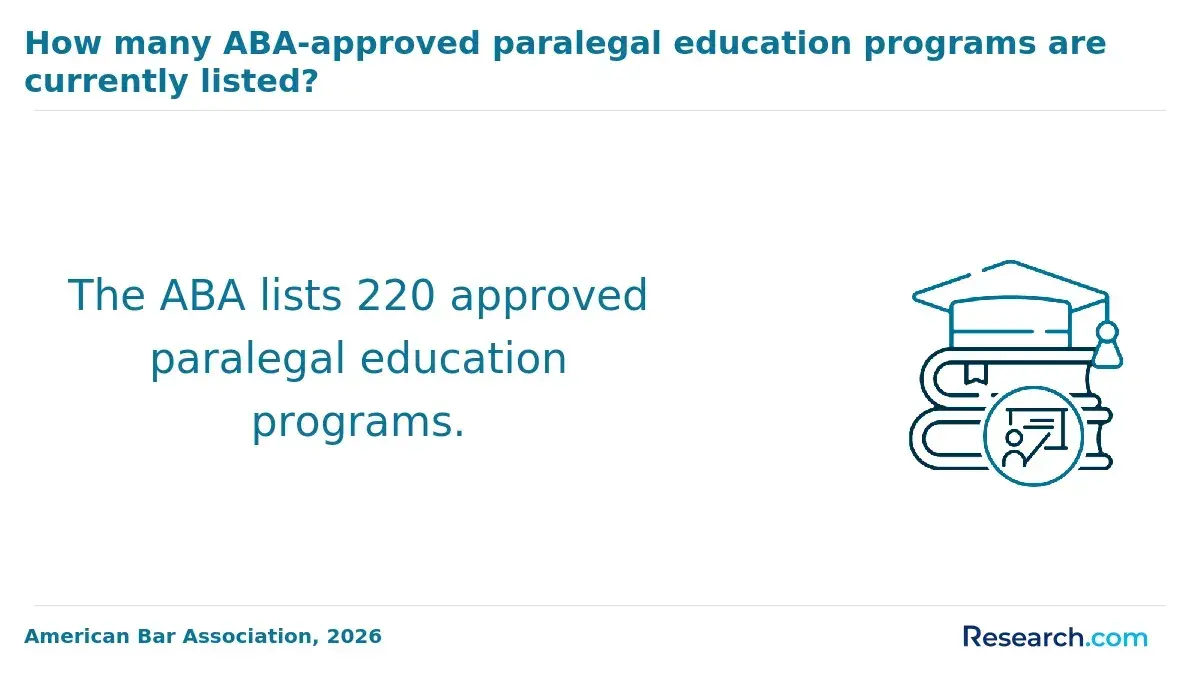
Do not confuse an MLS with an ABA-approved paralegal program. The American Bar Association approves qualifying paralegal education programs; that is distinct from institutional accreditation and is not a general quality label for MLS degrees. The ABA also does not certify individual paralegals. If you are considering paralegal education as an alternative, check the status of that specific program rather than inferring approval from the university's name.
What Are the Admission Requirements for Contract-Focused MLS Programs?
MLS admission generally centers on a bachelor's degree and the graduate school's application requirements, which may include transcripts, a résumé, and a statement of purpose. Individual schools determine acceptable prior degrees, grade standards, language requirements, and whether standardized test scores are needed. A law degree is generally not the point of a non-JD MLS, but check the published eligibility rules rather than assuming every program is open to every applicant.
If you hold an associate degree, confirm the bachelor's prerequisite before planning around MLS coursework. Bachelor's pathways after an associate degree in a related field may help you assess that earlier step. The receiving institution decides whether and how prior credits apply; accreditation alone does not guarantee transfer.
Applicants with contract experience should ask whether it affects admission, placement, or credit—and request the answer in writing. Professional experience may improve your ability to use the assignments without reducing the program's required coursework.
How Long Do Contract MLS Programs Take and What Do They Cost?
Completion time depends on required credits, course rotation, and whether you study full time or part time. Do not rely on an advertised "finish as quickly as" timeline without checking when drafting and negotiation courses run. If either is offered infrequently, it may control your graduation date.
There is no single meaningful MLS price: tuition policies and required charges vary by school and enrollment pattern. Request a current 2026-27 estimate covering tuition, mandatory fees, books, technology or research-platform charges, and any required travel. Ask how a part-time schedule changes the total and whether your employer will reimburse courses that directly support your job. Federal aid availability depends on the institution, program, and student's eligibility; confirm the specific degree's status with its financial aid office before budgeting around aid.
The opportunity cost matters as much as the bill. If you need targeted contract-review skills rather than graduate-level legal study, employer training or a shorter course may be sufficient. If you are choosing between an MLS and a paralegal route, budget-friendly ABA-approved paralegal programs offer a different educational comparison - not a like-for-like MLS price substitute.
What Careers and Salaries Can Contract-Focused MLS Graduates Expect?
Contract-focused study may be useful in contract administration, procurement, compliance, operations, or legal-support work. Responsibilities vary: one employee may track renewals and approved templates, while another reviews proposed terms and routes legal questions to counsel. Employers, not the degree title, determine the experience and credentials required for a position.
For context, the U.S. Bureau of Labor Statistics reports a median annual pay of $80,730 in May 2025 for compliance officers, with 4% projected growth, 2025-2035. That broad occupation is not an MLS-graduate salary measure or a forecast for contract managers specifically. It is most useful as a benchmark when comparing openings, duties, and pay in the field you already work in or hope to enter.
Before enrolling for a career change, review actual job postings for your target role. Separate requirements for contract experience, industry knowledge, software use, and legal education. If employers primarily seek experience you lack, an MLS may strengthen your knowledge without solving the immediate hiring gap.
Does an MLS Prepare Graduates for Legal Practice or Certification?
No. An MLS is a non-JD degree and does not, by itself, qualify a graduate for attorney licensure or independent legal practice. Rules for becoming a lawyer are set by the relevant jurisdiction; drafting exercises in an MLS do not replace its required education and licensing process. In a workplace, students should learn when to escalate legal advice and final legal judgments to qualified counsel.
An MLS also does not automatically award professional certification. Certification requirements depend on the credentialing organization and may involve separate education, experience, or assessment. If a specific credential is your goal, check that organization's current eligibility rules before choosing a degree. The practical value of an MLS lies instead in whether its legal foundation, feedback, and repeated exercises help you perform responsibilities you are permitted to hold.
Other Things You Should Know About Law & Paralegal
Only if your employer permits it and the instructor accepts it. Confidentiality and data-handling rules may prohibit sharing even an apparently anonymized agreement. Ask whether the course supplies realistic substitute documents.
Possibly. Switching roles can expose assumptions you might miss when representing only your usual business function. Ask how roles are assigned if practicing your own role is important to you.
Policies vary. A fair assessment may combine the group's written outcome with individual preparation and reflection, but you should check the current rubric - especially if group members have different schedules.
Check the school's assignment rules and remove confidential or identifying material first. A clean, permitted sample paired with a brief explanation of your decisions is usually more informative than an unexplained markup.
References
- Part 15 - Contracting by Negotiation | Acquisition. GOV https://www.acquisition.gov/far/part-15
- Designing an Assessment Strategy | U.S. Office of Personnel Management https://www.opm.gov/policy-data-oversight/assessment-and-selection/assessment-strategy/
- Commercial Contract Fundamentals - Berkeley Law Executive Education https://executive.law.berkeley.edu/programs/commercial-contract-fundamentals/
- Raising the Bar: The NextGen Bar Exam and Contract Drafting | mercer.edu https://digitalcommons.law.mercer.edu/cgi/viewcontent.cgi
- What Can You Do with a Master of Legal Studies (MLS) Degree? | Drexel University Kline School of Law https://drexel.edu/law/news/legal-studies-blog/what-can-you-do-with-a-master-of-legal-studies-degree/
- Strengthening Contract Negotiation Skills in Construction and Development with an M.L.S. Degree | miami.edu https://news.miami.edu/law/stories/2024/12/stregthening-contract-negotiation-skills-with-an-mls-degree.html
- Student revision with peer and expert reviewing | sciencedirect.com https://www.sciencedirect.com/science/article/abs/pii/S0959475209000747
- Contract Drafting Course | McGeorge School of Law https://onlinelaw.pacific.edu/blog/practical-legal-skills-for-professionals-inside-mcgeorges-contract-drafting-course/
- Curriculum - Online Master of Legal Studies - DePaul University https://onlinemls.depaul.edu/curriculum/
- Effective Feedback | Academy for Teaching & Learning https://atl.web.baylor.edu/teaching-guides/assessing-student-learning-and-teaching/effective-feedback