2027 Legal Studies Master's Programs for Digital Records and Information Governance Teams

Co-Founder and Chief Data Scientist
Digital records teams must make defensible decisions about retention, legal holds, privacy, and access to information. A legal studies master's can strengthen the legal judgment behind that work, but it may be more education than a particular role requires. This guide is for records, compliance, legal operations, and information technology professionals weighing graduate study. It explains what to look for in a program, how to compare it with shorter credentials, and which costs and career limitations to check before enrolling.
Key Things You Should Know
- A non-JD legal studies master's can support information governance work, but it is not a law license and is not generally required for records or compliance jobs.
- Prioritize courses and applied work in retention, legal holds, privacy, and electronic discovery over a program's general legal-technology label.
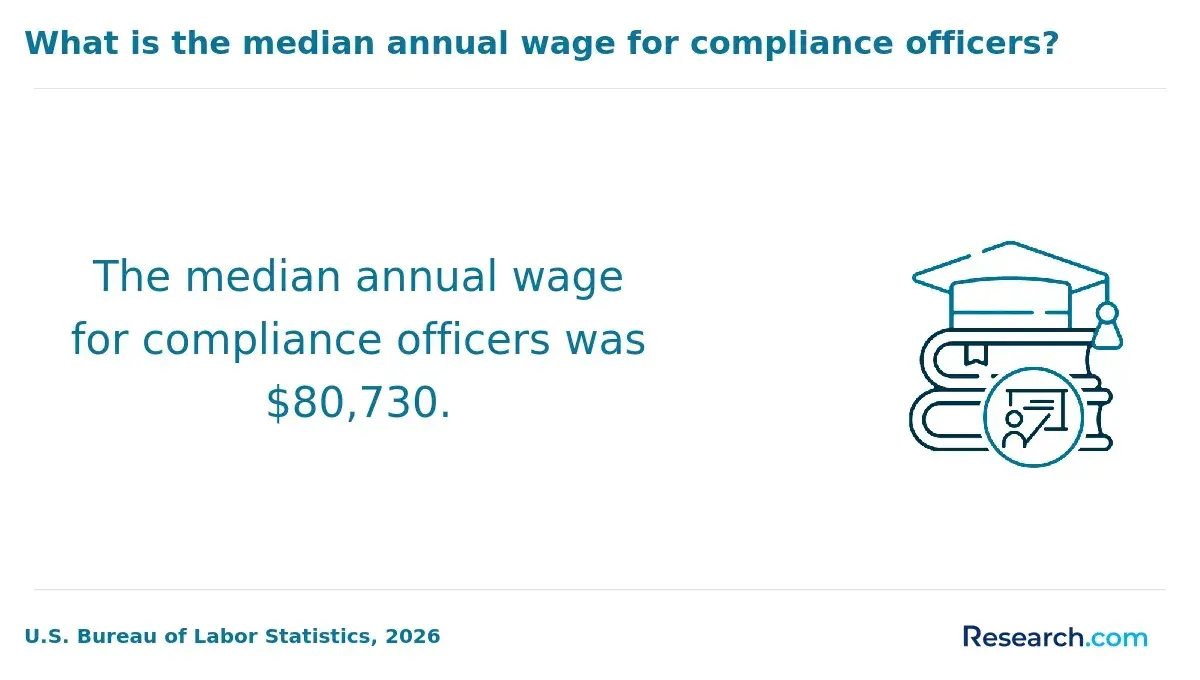
- For salary context, the U.S. Bureau of Labor Statistics reports median pay of $80,730 in May 2025 for compliance officers; that broad occupation is not a salary estimate for information governance specialists.
What is a legal studies master's degree for digital records and information governance?
A legal studies master's is a graduate degree in law-related subjects for people who generally do not intend to practice as attorneys. Schools may use names such as Master of Legal Studies (MLS), Master of Studies in Law (MSL), or Master of Jurisprudence. Information governance is the set of policies and practices an organization uses to classify, retain, protect, retrieve, and dispose of information.
For a digital records team, the degree's potential value lies in connecting operational decisions to legal obligations. Staff may need to understand why a litigation hold pauses routine deletion, how a retention schedule interacts with regulation, or when a privacy issue needs counsel's review. A general legal studies curriculum may help, but it is not automatically an information governance specialization. Check whether the school offers a formal concentration, relevant electives, or only occasional coverage of these topics.
The degree is distinct from a JD, which is the usual educational route toward attorney licensure. It is also more extensive than many job-focused certificates. If the immediate goal is an entry-level legal support position rather than governance responsibility, paralegal certificate programs to compare may be a more direct starting point.
What careers can a legal studies master's prepare you for in information governance?
Information governance work spans records management, privacy operations, compliance, legal operations, and electronic discovery. Titles vary by employer, so compare job descriptions rather than assuming a degree leads to a particular title. A records manager might oversee retention and disposition; an e-discovery specialist might coordinate the preservation and collection of electronically stored information; a compliance analyst might document controls and investigate whether procedures are being followed.
A legal studies master's may be most useful when a current role already involves interpreting requirements, drafting policies, or coordinating with counsel and technical teams. It is less likely to replace the hands-on experience needed to administer a records system, manage a collection workflow, or supervise a team. Employers may accept backgrounds in records management, information science, technology, business, or law-related fields, depending on the job.
For someone seeking a first legal support role, the opportunity cost matters: paralegal programs with accelerated online study may offer a shorter route to relevant entry-level skills. Paralegal work is not identical to information governance, however, and paralegals work under attorney supervision rather than independently providing legal advice.

What do digital records and information governance master's programs teach?
Relevant programs connect legal rules with the lifecycle of digital information. Look for substantial work in records retention, litigation holds, electronic discovery, privacy and cybersecurity law, regulatory compliance, contracts, and administrative law. A course title alone tells you little about practical depth: review syllabi or ask what students actually produce.
A useful applied assignment could require a student to map information assets, draft a retention policy, document a hold workflow, or evaluate a hypothetical data incident. These exercises show whether the program develops judgment across legal, records, and technical functions. Ask who teaches the work and whether a capstone can address a real governance problem.
Technology claims need the same scrutiny. A syllabus that mentions an e-discovery platform or artificial intelligence is different from student access, supervised hands-on assignments, or preparation for an external credential. As organizations evaluate AI-assisted search and classification, teams still need to consider accuracy, confidentiality, preservation, and human review. Choose coursework that teaches those decisions, not just tool names.
Are online legal studies master's programs suitable for working professionals?
They can be, provided the schedule fits the job. Online does not necessarily mean self-paced: classes may have live meetings, fixed assignment deadlines, group projects, proctored exams, or campus visits. A working records or compliance professional should ask when required courses run, whether part-time students can maintain a manageable sequence, and whether a capstone or practicum can be completed through current employment.
Format also affects the budget. Check whether the school charges online or technology fees and whether required activities create travel or time-off costs. If the goal is a shorter, lower-commitment route into legal support, compare both scheduling and financing with alternatives such as monthly tuition payment options for online paralegal degrees. A payment plan spreads charges; it does not reduce the total price.
How do you choose an accredited legal studies master's program?
Start by checking that the university holds recognized institutional accreditation. Confirm its current status through the institution's accreditor or U.S. Department of Education resources, then examine the specific graduate program rather than treating accreditation as proof of curriculum fit. American Bar Association approval of qualifying paralegal education programs is separate from institutional accreditation; it is not a general approval standard for MLS or MSL degrees.
For this career focus, use a consistent comparison across schools: required courses, depth of governance electives, applied assignments, faculty experience, schedule, total cost, and published graduate outcomes. Ask whether the advertised "concentration" appears on the academic record or is simply a suggested set of electives. Confirm that needed courses are offered often enough for a part-time student to finish without avoidable delays.
A warning sign is a program that promises readiness for information governance work but cannot identify relevant coursework or show what students practice. Another is treating access to software as evidence that graduates will be proficient in it. Request a sample course sequence and recent syllabi before paying a deposit.
What are the admission requirements for legal studies master's programs?
Applicants generally need a bachelor's degree, but schools set their own rules for academic records, statements of purpose, recommendations, work history, and English-language proficiency where applicable. A JD or prior legal coursework is not necessarily required. Confirm current requirements with each admissions office rather than assuming that professional experience substitutes for an academic prerequisite.
Applicants entering from an associate degree first need a path to a bachelor's degree. Legal studies transfer pathways from associate to bachelor's can help frame that earlier decision, but the receiving university determines which credits transfer and how they apply. Already hold a bachelor's in another field? Ask whether relevant records, privacy, or technology experience can strengthen the application and whether the curriculum assumes any prior legal knowledge.
How long do these master's programs take and how much do they cost?
Completion time depends on required credits, course availability, and enrollment pace. A part-time plan may preserve income and allow immediate use of coursework at work, but it also extends the time commitment. Ask for a term-by-term plan based on the number of courses you can realistically take, including when any capstone or required elective is available.
Compare the total expected educational cost, not advertised tuition alone. Request current tuition and mandatory fees for your intended enrollment period, then account for books, research-platform charges, technology, travel, and any required in-person work. School-specific prices change, so use each school's current published schedule and ask which charges may rise before completion. Our list of affordable online legal studies master's programs is a starting point for comparison, not a substitute for a personalized cost estimate.
Ask the financial aid office whether the specific program qualifies for federal graduate aid and what borrowing terms apply to you. Compare that answer with employer tuition assistance or a smaller graduate certificate. A lower tuition figure is not necessarily better value if the program lacks the courses or schedule needed for your goal.
Do information governance careers require a law license or certification?
Information governance roles generally do not require an attorney license, though a particular employer may require one for a position involving the practice of law. An MLS, MSL, or similar non-JD degree does not itself qualify a graduate to practice law. Governance professionals should know when to escalate legal interpretation or advice to licensed counsel.
Professional certification is a separate choice from earning a degree or completing an academic certificate. Depending on the role, employers may value credentials offered by organizations such as ARMA International for information governance, the Institute of Certified Records Managers for records management, or the International Association of Privacy Professionals for privacy. Eligibility, exams, and renewal rules belong to the issuing organization and should be checked before enrolling in coursework on the assumption that it leads to certification.
For an experienced specialist with a narrow skills gap, targeted training or certification preparation may be less costly than a master's. Graduate legal study becomes more compelling when the work calls for sustained legal and policy analysis across several governance areas.
What salaries can digital records and information governance professionals earn?
No single national wage figure precisely describes information governance jobs, whose titles and duties differ across employers. These U.S. Bureau of Labor Statistics occupational medians provide context for adjacent roles, not a prediction of what a degree holder will earn.
| Broad occupation | Median annual pay | How to interpret it |
| Compliance officers | $80,730 in May 2025 | Relevant to some regulatory oversight roles, but not specific to digital records. |
| Paralegals and legal assistants | $62,890 in May 2025 | A legal support benchmark, not a measure of governance manager pay. |
Pay for a particular opening depends on duties, industry, location, seniority, and technical experience. When assessing a master's degree, compare local job postings you would actually qualify for with your current compensation and the full cost of study. Do not assume the difference between these broad occupational medians represents a return on the degree.
What is the job outlook for digital records and information governance careers?
The Bureau of Labor Statistics projects 4% growth for compliance officers in 2025-2035, with about 32,700 openings per year. That suggests continuing opportunities in a broad field, but it is not a forecast for information governance specialists specifically. For paralegals and legal assistants, BLS projects 0% growth in 2025-2035 while still estimating about 40,800 openings per year, largely reflecting the need to replace workers who leave the occupation.
Use those projections as context, then test demand for the work you want to do. Review current postings for retention schedules, legal holds, privacy operations, records systems, and e-discovery responsibilities. Note which ask for graduate legal study and which emphasize experience or a professional credential instead. If the degree rarely appears in your target postings, an employer-supported project or focused credential may be the stronger next step.
Other Things You Should Know About Law & Paralegal
Yes. When information may be relevant to a legal matter, an organization may need to suspend routine deletion even if its retention period has ended. Follow the organization's hold procedures and counsel's instructions rather than making an independent legal determination.
Only if your employer and instructor permit it and confidentiality, privacy, and security requirements are met. A fictional or properly approved, de-identified scenario may be safer; removing names alone may not adequately protect sensitive information.
Do not count on it. The JD-granting school decides whether any prior coursework can count, subject to its own policies and applicable rules. Get a written answer from schools you may apply to before using JD transferability to justify an MLS or MSL.
Look for coursework addressing public records access, government retention requirements, and the rules of the jurisdiction where you work. A general corporate compliance course may not cover the disclosure and preservation duties central to a government records role.
References
- Research Your Options: U.S. Online Learning | EducationUSA https://educationusa.state.gov/your-5-steps-us-study/research-your-options/online-learning
- National Centers of Academic Excellence in Cybersecurity | nsa.gov https://www.nsa.gov/Academics/Centers-of-Academic-Excellence/
- Cost of Attendance (Budget) | 2025-2026 Federal Student Aid Handbook https://fsapartners.ed.gov/knowledge-center/fsa-handbook/2025-2026/vol3/ch2-cost-attendance-budget
- A Guide To Experiential Learning, Internships, Capstones, and Practicums - UOnline - The University of Utah https://online.utah.edu/blog/posts/learning-experiences.php
- INST - Information Studies | University of Maryland Catalog https://academiccatalog.umd.edu/graduate/courses/inst/
- Online Law Certificate Programs for Lawyers | W&M Law | William & Mary Law https://online.law.wm.edu/certificates
- Practicum and Capstone: COPHP MPH | Health Systems and Population Health https://hspop.uw.edu/cophpmph/program-experience/practicum-capstone/
- Records Management Specialization | St. John's University Programs https://online.stjohns.edu/online-programs/mslis/records-management-specialization
- Hybrid Juris Doctor, JD | collegesoflaw.edu https://www.collegesoflaw.edu/academics/hybrid-juris-doctor/
- Typical Law School Requirements & Prerequisites | Ohio Northern University https://law.onu.edu/news/law-school-admissions-101-typical-law-school-requirements-prerequisites