2027 How to Compare Document Automation Training in Paralegal Programs

Co-Founder and Chief Data Scientist
A paralegal program may advertise legal technology without giving students much practice building documents. That distinction matters if you want to prepare pleadings, contracts, or client forms efficiently while catching errors before they reach an attorney.
This guide is for prospective paralegal students and career changers comparing programs. It explains what worthwhile document automation training looks like, how to test schools' claims, and when a broader legal education or a shorter course may be the better investment.
Key Things You Should Know
- Prioritize programs that require you to build, test, revise, and quality-check automated legal documents - not merely watch software demonstrations.
- Compare access to software, instructor feedback, legal drafting instruction, total cost, and scheduling using the same criteria for every program.
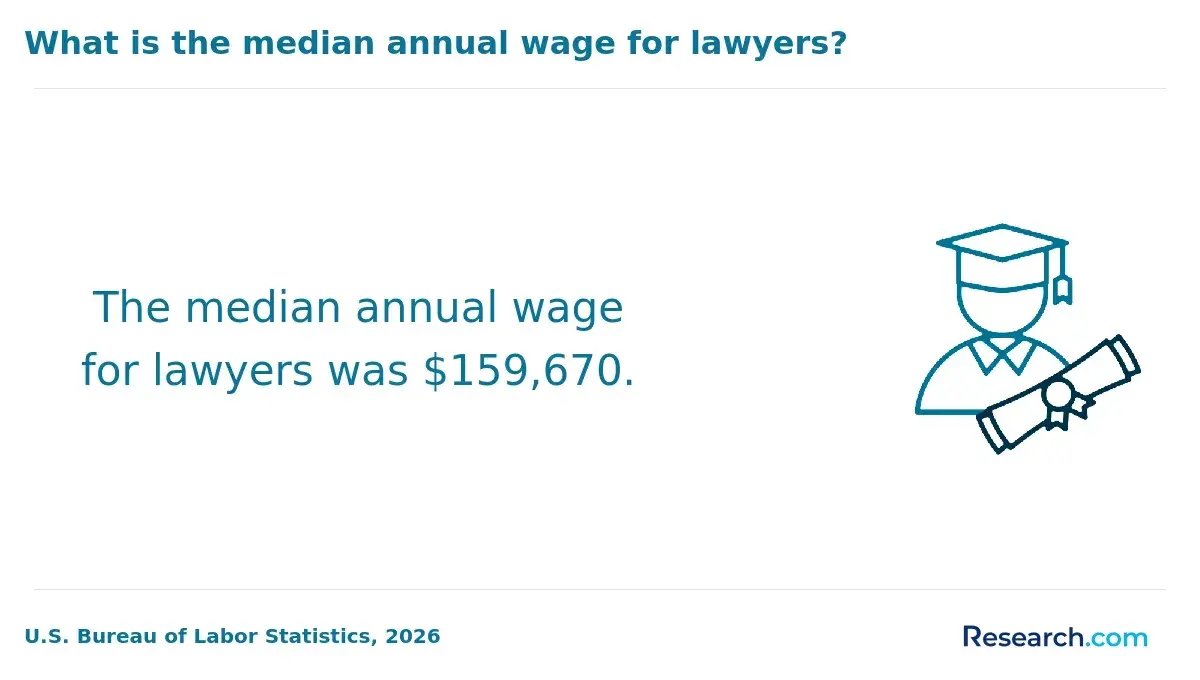
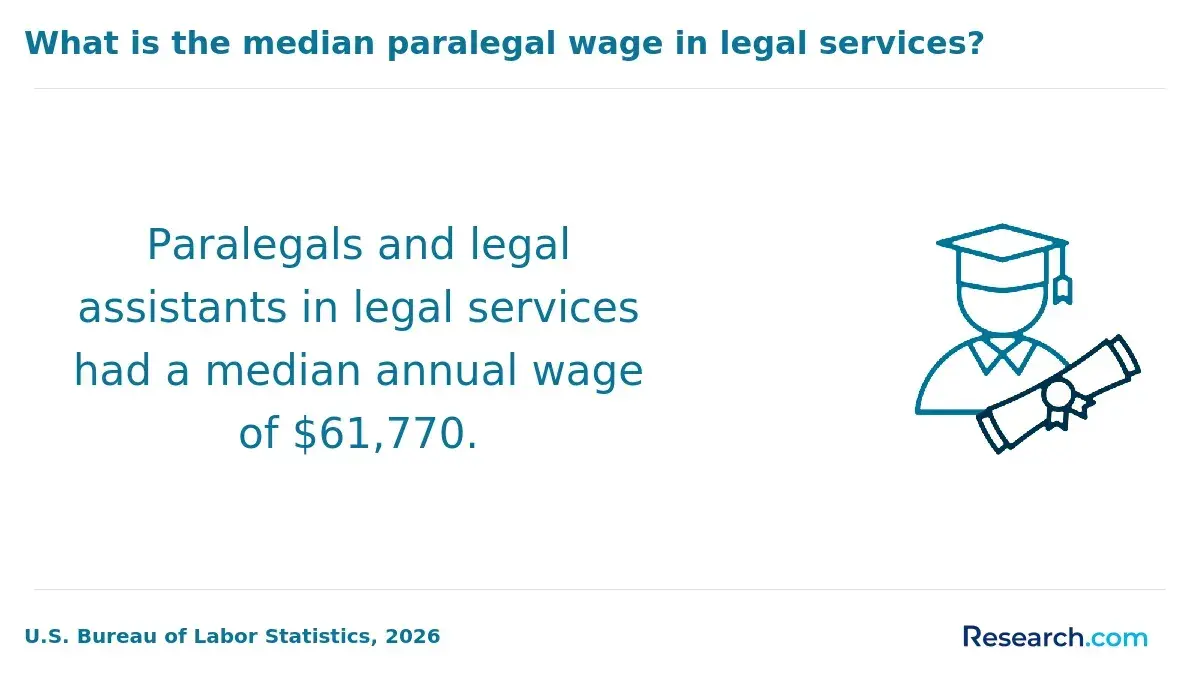
- The Bureau of Labor Statistics reports $62,890 in median annual pay for paralegals and legal assistants in May 2025, but technology coursework alone does not establish eligibility for a job or a higher salary.
What Is Document Automation Training in Paralegal Programs?
Document automation uses templates, reusable language, data fields, and rules to generate drafts from information entered by a user or drawn from an approved source. In a paralegal program, training should connect that technology to legal work: gathering accurate information, preparing drafts under attorney supervision, checking jurisdiction-specific requirements, and maintaining confidential records.
Automation is not the same as asking an AI tool to write a document. A conventional template may follow defined rules; an AI-generated draft may introduce unsupported language and needs its own verification. Neither replaces an attorney's legal judgment. If you are exploring paralegal certificate options, look for an actual drafting assignment in the course description or syllabus rather than assuming a "legal technology" course covers automation.
Why Does Document Automation Matter for Paralegal Careers?
Paralegals may help prepare recurring documents such as intake forms, discovery materials, agreements, and correspondence. Automation can reduce repetitive entry and make revisions easier, but a flawed template can also repeat the same mistake across many matters. Employers therefore have reason to value people who can follow a documented workflow and spot errors - not simply operate an application.
The skill is most useful when paired with legal terminology, research, drafting, and an understanding of attorney review. Training may help you discuss concrete work in an interview, but employer expectations vary by practice area and office. Paralegals generally work under attorney supervision and cannot independently provide legal advice or perform work that constitutes the unauthorized practice of law.
What Should Document Automation Coursework Teach Paralegal Students?
Strong coursework follows a document from source information to an attorney-ready draft. Students should practice creating fields and conditional clauses, handling missing or conflicting answers, applying version control, and checking names, dates, citations, formatting, and filing requirements. They should also learn when an exception calls for attorney review instead of another automation rule.
Ask whether a graded assignment requires an original template, realistic test inputs, documented corrections, and instructor feedback. Access to a platform matters, but access without practice is a weaker signal. Instruction should also address confidentiality, approved storage, and whether client information may be entered into third-party or AI tools.
If you need foundational legal writing and research as well as technology skills, our guide to legal studies associate programs can help you compare a broader educational route with a focused course. A program centered only on software may leave important legal-context gaps.
How Do Online and Campus Paralegal Programs Teach Document Automation?
Delivery format affects how you receive demonstrations, practice, and feedback. The distinctions below are possibilities, not promises; confirm the schedule and assignments for each program you consider.
| Format | Potential advantage | Point to verify |
| Online, asynchronous | Draft and test documents around other commitments | Software access, feedback turnaround, and deadlines |
| Online, scheduled meetings | Live demonstrations and troubleshooting | Required meeting times and time zone |
| Campus or hybrid | In-person lab support or collaborative review | Lab hours, travel, and any work completed independently |
An online label does not mean self-paced study. Check whether the automation course is offered every term, whether attendance is required, and whether software works on your computer. If a program includes an internship, ask who arranges it and whether the placement involves document production; an internship alone does not ensure automation experience.
How Can You Compare Document Automation Software and Technology Training?
Compare evidence of learning rather than counting product names. A course might mention a tool, provide a demonstration, give students access, or require them to use it independently - four meaningfully different claims.
Request a current syllabus or assignment description from each school, then apply the same checks:
- Identify the exact software or tool category taught and whether students receive individual access for the full assignment.
- Confirm that students build and test a document using multiple inputs, rather than only filling in an existing form.
- Look for feedback on legal accuracy, data handling, exceptions, and revisions - not just successful file generation.
- Ask what work students may retain in a portfolio and whether access ends when the course finishes.
- If an external software credential is advertised, verify that the course prepares students for its current assessment; course completion is not the credential itself.
Product names can change faster than catalogs. Transferable skills - testing rules, documenting a workflow, and recognizing when a draft needs attorney attention - may be more valuable than brief exposure to a particular interface.
What Accreditation Standards Apply to Paralegal Document Automation Programs?
Institutional accreditation concerns the school; American Bar Association approval concerns a qualifying paralegal education program. Neither is a separate ABA endorsement of a document automation course. Check a school's current accreditation through its recognized accreditor and confirm any claimed ABA program approval in the ABA's paralegal program directory. Do not assume every program at an approved institution is itself ABA-approved.
Approval and accreditation can matter for educational quality, employer preferences, credit recognition, and aid eligibility, but they do not prove that students complete hands-on automation assignments. Ask for the current syllabus as well. The ABA does not certify individual paralegals, and completing an ABA-approved program does not make a graduate an "ABA-certified paralegal."
What Are the Admission Requirements for Paralegal Technology Programs?
Admissions depend on the credential, not the presence of a technology course. Some certificate programs are designed for people with prior college study; associate and bachelor's programs have different entry requirements. A standalone continuing-education course may have a separate enrollment process and may not award college credit. Check published prerequisites for legal writing, computer skills, and any required device or operating system.
If you already have college credit, paralegal bachelor's degree completion using transfer credits is worth considering when you want the broader degree, not just one technology skill. The receiving institution decides whether earlier coursework transfers and how it applies. Get that evaluation before treating a shorter completion path as certain.
How Long Do Paralegal Document Automation Programs Take and Cost?
A document automation unit within a degree or certificate is a different commitment from a standalone course. Compare the published credits, course sequence, term availability, and required internship or practicum before estimating when you could finish. A short course may be enough if you already have legal drafting experience; a broader program may be more useful if you need entry-level paralegal preparation.
For cost, obtain a written breakdown of tuition, mandatory fees, software or research access, books, equipment, and any travel or internship expenses. Compare total required spending for the credential you would actually earn, not one school's per-credit price against another's course price. Paralegal degree tuition and financial aid options can provide a starting point, but confirm current charges with the school.
Do not assume a standalone course or certificate qualifies for federal student aid. Eligibility depends on the institution, the specific program, and the student; ask the financial aid office to confirm before counting aid in your budget. Time away from paid work and prerequisites also belong in the comparison.
Which Certifications Support Paralegal Document Automation Training?
A school-issued certificate records completion of an educational program. Professional certification is a separate credential awarded under an organization's eligibility and assessment rules. For example, NALA administers the Certified Paralegal credential, and the National Federation of Paralegal Associations administers the PACE examination associated with its Registered Paralegal credential. Neither should be treated as automatic proof of proficiency in a particular automation platform.
Check each credentialing organization's current eligibility rules before choosing coursework to support certification. Professional certification is not universally required for paralegal employment, and state-specific rules or employer preferences may differ. If your immediate goal is document production, a reviewed work sample may demonstrate that skill more directly than pursuing a credential unrelated to the software or workflow you expect to use.
What Career Outcomes and Salaries Follow Document Automation Training?
Relevant roles include paralegal and legal assistant positions involving document preparation, as well as legal operations support roles where an employer needs workflow documentation or template maintenance. Job titles and duties vary, so read postings for the actual drafting, review, and software responsibilities rather than assuming "legal tech" means automation.
The Bureau of Labor Statistics reports median annual pay of $62,890 in May 2025 for paralegals and legal assistants and projects 0% employment growth from 2025-2035, with about 40,800 openings per year. Those figures cover the occupation broadly; they do not isolate automation specialists or predict what a course graduate will earn. They make a practical case for evaluating a program's cost against demonstrable skills rather than an implied salary premium.
If your goal is broader business-law or compliance knowledge rather than paralegal document production, accelerated online business law master's programs represent a different educational route with a larger potential time and cost commitment. A non-JD legal studies master's degree does not, by itself, qualify someone to practice law. For an automation-focused goal, start by comparing assignments and total costs at a few programs, then ask an employer or practitioner whether their work calls for a broad credential or a narrower, well-documented skill.
Other Things You Should Know About Law & Paralegal
Usually not for introductory template work, though comfort with conditional logic and spreadsheets can help. Check the course prerequisites if it advertises scripting or advanced integrations.
Often, if the work is your own and the school permits it. Use fictional or properly approved sample information, and never include confidential client material.
Some concepts transfer, including fields, rules, testing, and version control. Expect to learn a new interface and its security procedures before using it in a workplace.
Training does not authorize independent legal practice. Rules on legal services and unauthorized practice vary by state; get appropriate legal guidance before offering forms or document services to the public.
References
- General Schedule Qualification Standards | U.S. Office of Personnel Management https://www.opm.gov/policy-data-oversight/classification-qualifications/general-schedule-qualification-standards/
- What Does a Paralegal Do? | Purdue Global https://www.purdueglobal.edu/blog/legal-studies/what-does-paralegal-do/
- Practical Legal Skills Training - Seton Hall Law School https://law.shu.edu/experiential/legal-skills-training.html
- Understanding The Paralegal Profession | uprovidence.edu https://www.uprovidence.edu/about/news/understanding-the-paralegal-profession/
- What Does a Paralegal Do? Key Roles & Responsibilities | American Public University https://www.apu.apus.edu/area-of-study/security-and-global-studies/resources/what-does-a-paralegal-do/
- Using Google Doc "Versions" to Detect Student Originality vs. AI Abuse - Division of Information Technology - UMBC https://doit.umbc.edu/post/150153/
- 8 Types of Paralegal Software Solutions To Optimize Workflows | MyCase https://www.mycase.com/blog/law-firm-operations/paralegal-software/
- Document Automation Software: Documate, Easy and Powerful | Articles, Tips and Tech for Law Firms and Lawyers https://www.attorneyatwork.com/short-cut-documate-offers-an-easier-and-more-powerful-rendition-of-document-automation-software/
- What Is Document Automation? - Top Use Cases And Benefits | DocsAutomator https://www.docsautomator.co/blog/what-is-document-automation/