
2027 MLS vs. a Second Bachelor's in Legal Studies for Experienced Professionals

Co-Founder and Chief Data Scientist
If you already have a bachelor's degree and want to work more effectively with legal or regulatory issues, a second undergraduate degree may not be the most useful next step. A Master of Legal Studies (MLS) offers graduate-level legal study, while a second bachelor's in legal studies may provide a more structured foundation in legal research and support work. This guide compares what each route teaches, what it costs you in time and money, and how employers may use it - so you can choose based on the work you actually want to do.
Key Things You Should Know
- For an experienced professional advancing in compliance, contracts, or another regulation-heavy role, an MLS is usually the more targeted degree; it does not qualify you to practice law.
- A second legal studies bachelor's may make sense if you need undergraduate legal fundamentals or a specific hiring qualification, but first ask how many credits your school will require after your first degree.
- Neither degree guarantees a pay increase: the median annual pay for paralegals and legal assistants was $62,890 in May 2025, with 0% projected growth from 2025-2035, according to the Bureau of Labor Statistics (BLS).
What is the difference between an MLS and a second bachelor's in legal studies?
An MLS is a graduate degree designed primarily for people who need legal knowledge without becoming attorneys. Schools may use other names, such as Master of Science in Law or Master of Jurisprudence; compare the curriculum rather than assuming the names mean identical programs. A second bachelor's in legal studies is another undergraduate degree, generally combining legal coursework with any degree requirements the institution still applies to second-degree students.
The distinction that matters most is whether you need advanced study tied to your existing profession or foundational training for a different kind of job. The comparison below identifies what to investigate before treating either credential as the stronger choice.
| Decision factor | MLS | Second legal studies bachelor's |
| Starting point | Requires an existing bachelor's degree | Requires a prior bachelor's degree under the school's second-degree policy |
| Academic focus | Graduate study of law as it applies to professional decisions | Undergraduate legal foundations and, depending on the program, legal-support skills |
| Credit from prior study | Prior bachelor's establishes eligibility; graduate transfer credit is usually limited by program rules | Prior coursework may satisfy requirements, but the school determines remaining credits and residency requirements |
| Best potential fit | Advancing within an established field involving legal or regulatory issues | Changing fields when undergraduate legal coursework matches the target job |
| Major limitation | Not a law license or a substitute for role-specific experience | May repeat work already covered by the first degree without adding a graduate credential |
Which degree is better for experienced professionals seeking legal career advancement?
For most experienced professionals seeking advancement within their current field, an MLS is the more direct choice if the coursework addresses decisions they already make. An HR manager, for example, might value employment-law analysis; a healthcare administrator might prioritize privacy and regulatory obligations. Existing industry experience still matters: an MLS adds legal fluency rather than replacing the judgment developed on the job.
A second bachelor's is more defensible when you are changing into legal support, lack the research and writing fundamentals the target role expects, or find that a particular employer recognizes relevant undergraduate coursework. It is less compelling when you already have those skills and would need to repeat substantial general education. Before enrolling in either route, compare it with a focused course, employer training, or a graduate certificate. If the MLS fits your goal but time away from work is the main obstacle, examine legal studies master's programs with shorter timelines and check whether their actual course schedules are workable.
Does an MLS or legal studies bachelor's qualify you to practice law?
No. Neither an MLS nor a legal studies bachelor's, by itself, qualifies a graduate to practice law or represent clients as an attorney. Attorney admission generally involves a qualifying law degree and other requirements set by the relevant state or jurisdiction, which can include examinations and character review. An MLS is not a Juris Doctor (JD), even if a law school offers it.
The distinction also matters in legal-support jobs. Paralegals typically perform delegated work under attorney supervision; a degree does not authorize them to give independent legal advice or perform services their state treats as the unauthorized practice of law. Check the rules in the state where you intend to work rather than assuming a degree changes your permitted duties.
What do you learn in an MLS compared with a legal studies bachelor's program?
MLS curricula commonly examine how law affects organizational decisions, with offerings that may include contracts, regulatory compliance, employment law, privacy, or healthcare law. A legal studies bachelor's typically starts with the legal system, research, writing, and substantive areas of law; some programs add drafting, litigation support, or an internship. Neither description applies to every school, so inspect required courses, electives, and sample assignments.
Match coursework to the tasks you want to perform. A professional responsible for workplace policies should look for applied employment-law work, not just a course title that mentions HR; these HR law study options within legal studies degrees can help frame that comparison. A prospective paralegal should instead look for substantial legal research and writing practice. A named concentration is also different from simply choosing related electives, so confirm what appears on the transcript.
How do online and campus-based legal studies programs compare?
Online delivery can reduce commuting, but it does not necessarily make a program asynchronous or self-paced. An online MLS may require live discussions or courses taken in sequence. An online bachelor's may also have scheduled classes, proctored assessments, or an internship. Campus-based study can make in-person discussion and local networking easier, but its timetable may be harder to combine with full-time work.
Compare the required schedule, not the format label. Ask each school when courses meet, whether any campus visits are mandatory, how often required courses run, and whether a practicum is required. If there is an internship, establish who finds the placement and whether your current workplace can qualify. A flexible elective list offers little practical benefit if a required course conflicts with your job.
What are the admission requirements for an MLS or second bachelor's?
Both routes generally begin with a completed bachelor's degree, but their admissions reviews differ. MLS programs may request transcripts, a résumé, recommendations, and a statement explaining professional goals; individual schools set their own GPA and testing policies. A second-bachelor's applicant must follow the institution's second-degree rules, which may differ from first-time undergraduate admissions and may restrict access to particular majors.
Before applying, obtain a written evaluation of which previous credits satisfy degree requirements and which must be completed at the new school. Accreditation does not make credits automatically transferable: the receiving institution decides how they apply. If an essay is a barrier, review legal studies admissions without a personal statement, then verify the current requirements of each program you consider.
How long do these degrees take and how much do they cost?
Completion time varies with required credits, course availability, enrollment pace, and - in a second bachelor's - how much of the first degree the new institution accepts. An MLS may be quicker for someone who already meets all prerequisites, but a second bachelor's with generous application of prior credit could also be comparatively short. Request a term-by-term completion plan for your intended enrollment pace rather than relying on an advertised minimum.
Compare total expected cost to completion, not just tuition per credit. Include mandatory fees, books, research tools, technology, travel or campus visits, and any additional terms caused by course sequencing. Ask about employer tuition assistance and whether your specific program and enrollment pattern qualify for the financial aid you expect; borrowing is a cost, not a discount. If your goal is paralegal work, comparing costs of ABA-approved online paralegal programs may reveal a shorter alternative, but verify each program's current approval and full costs before comparing it with a degree.
What careers can you pursue with an MLS or legal studies bachelor's?
An MLS may strengthen the legal knowledge used in an existing compliance, HR, contracts, risk, or operations role. A legal studies bachelor's may support applications for paralegal, legal assistant, or other legal-support positions when its practical coursework meets employer expectations. Neither degree alone establishes eligibility for every job: employers may prioritize industry experience, writing samples, software skills, or a particular educational background.
If you want to become a paralegal, compare the second bachelor's with paralegal certificate program comparisons before committing to another full degree. A certificate documents completion of an educational program; it is not the same as professional certification awarded by a certifying organization or state system. Certification rules and employer preferences vary, so check the requirements that apply to your intended workplace.
How do salary potential and job outlook compare between these degrees?
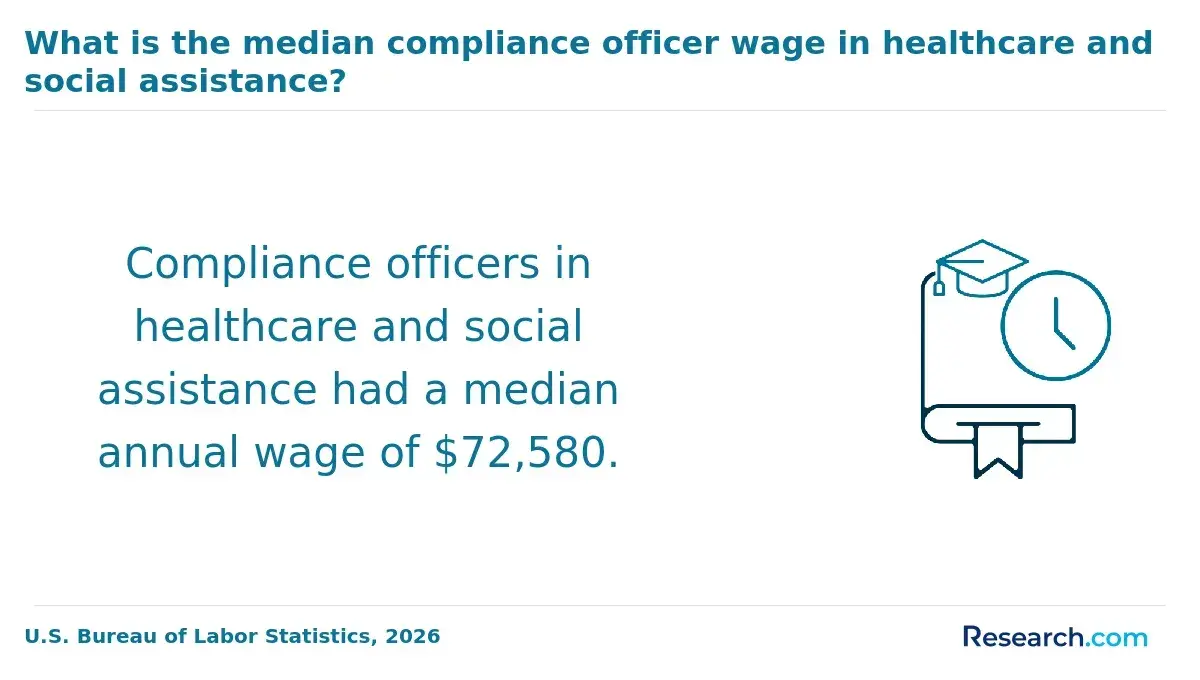
There is no reliable salary premium that applies universally to an MLS over a second legal studies bachelor's. Pay depends more directly on the occupation, location, employer, responsibilities, and relevant experience. BLS reports median annual pay of $80,730 in May 2025 for compliance officers and projects 4% employment growth from 2025-2035. That figure describes an occupation - not MLS graduates - and an MLS is not a standard requirement for every compliance job.
For paralegals and legal assistants, BLS projects about 40,800 openings per year from 2025-2035 despite 0% net employment growth over that period. Openings can arise when workers leave or change occupations; they do not establish that a second bachelor's improves hiring odds. To assess potential return, compare job postings you could realistically pursue now with those you expect to pursue after graduation, then weigh any likely change in opportunity against tuition and time.
How can you choose an accredited and reputable legal studies program?
Start by confirming that the institution holds accreditation from a recognized institutional accreditor and that the degree appears in its current catalog. Then check whether required courses, faculty expertise, assignments, and completion policies fit your target work. Ask for a written cost estimate and clarify any transfer-credit, internship, or in-person requirements before paying a deposit.
If paralegal education is your goal, check the American Bar Association's current paralegal program directory when a school claims ABA approval. That is approval of a qualifying paralegal education program, not accreditation of the university or certification of its graduates. An MLS or legal studies degree is not automatically an ABA-approved paralegal program. Treat vague claims about guaranteed jobs, automatic credit transfer, or eligibility to practice law as reasons to seek written clarification - or consider another school.
Other Things You Should Know About Law & Paralegal
Some schools permit nondegree enrollment, but access to courses and whether the credit later applies to a degree depend on school policy. Get both answers in writing before registering.
Some employers offer tuition assistance, often subject to eligibility, grade, and repayment conditions. Ask HR whether the specific degree and institution qualify and whether funding requires advance approval.
Generally, MLS programs are designed for applicants from varied fields. A particular program may still require prerequisites or evidence of relevant experience, so check its published admissions criteria.
If the school permits supplemental materials, a relevant writing sample or description of compliance, contracts, or legal-support work may help explain your goals. Follow the application instructions and remove confidential employer or client information.
References
- Minimum Threshold Requirements | virginia.gov https://barexam.virginia.gov/motion-threshold
- Cost of Attendance (Budget) | 2025-2026 Federal Student Aid Handbook https://fsapartners.ed.gov/knowledge-center/fsa-handbook/2025-2026/vol3/ch2-cost-attendance-budget
- Master of Legal Studies (MLS) vs. JD: What's the Difference? | SMU Online Master of Legal Studies https://onlinemasterlegalstudies.smu.edu/articles/mls-vs-jd/
- How Should I Complete My Master's Degree? | Walden University https://www.waldenu.edu/online-masters-programs/resource/full-time-vs-part-time-how-should-i-complete-my-masters-degree
- Bachelor of Science in MLS - College of Pharmacy https://www.pharmacy.umn.edu/medical-laboratory-sciences/degrees-and-programs/bachelor-science-mls-0
- What Can You Do With a Master of Legal Studies? | WashU Law https://online.law.washu.edu/articles/what-can-you-do-with-master-of-legal-studies/
- Cost of Attendance - Texas One Stop https://onestop.utexas.edu/managing-costs/cost-tuition-rates/cost-of-attendance/
- MLS vs. JD vs. LLM: Which Law Degree Is Right for You? | DePaul University Online Master of Legal Studies https://onlinemls.depaul.edu/articles/mls-vs-jd-vs-llm/
- What Admissions Committees Look for in MLS Applicants | Goodwin College of Professional Studies https://drexel.edu/law/news/legal-studies-blog/what-admissions-committees-look-for-in-mls-applicants/
- Curriculum | Master of Legal Studies Online Missouri | UMKC https://onlinemls.law.umkc.edu/curriculum/


